Get 20% OFF All Premium 3D & STL Models!

In the dynamic world of 3D visualization, the demand for high-fidelity automotive assets is perpetually on the rise. Whether you’re a game developer crafting immersive open-world experiences, an architect integrating vehicles into sprawling urban scenes, or a marketer producing stunning product renders, the quality of your 3D car models can make or break a project. The intricate balance between detail, performance, and flexibility is paramount.
Today, we delve into the comprehensive journey of leveraging professional-grade 3D vehicle assets, focusing on how a meticulously crafted model like the Cadillac Escalade ESV 2008 3D Model can elevate your digital creations. This iconic luxury SUV, known for its commanding presence and opulent design, serves as an excellent case study for understanding the technical nuances and creative potential inherent in premium 3D assets.
Navigating the landscape of 3D modeling often requires a deep understanding of file formats. Each format serves a specific purpose, offering unique advantages depending on your project’s requirements, target software, and desired output. Selecting the correct format can significantly streamline your workflow, optimize performance, and ensure compatibility across various platforms. The Cadillac Escalade ESV 2008 3D Model, for instance, comes equipped with a versatile array of formats, preparing it for virtually any professional application.
The .blend format is the native file type for Blender, a powerful open-source 3D creation suite. When you acquire a .blend file, you’re not just getting the model; you’re getting a fully editable Blender scene. This includes all geometry, materials, textures, lighting setups, animation data, and even camera views as they were configured by the artist. For users deeply integrated into the Blender ecosystem, this format offers unparalleled flexibility. You can easily tweak shaders, adjust subdivision levels, modify mesh topology, or integrate the asset seamlessly into existing Blender projects without any loss of data fidelity. It’s the go-to for deep customization and iterative design within Blender.
.fbx (Filmbox) is arguably one of the most popular and versatile 3D file formats, developed by Autodesk. It’s designed for maximum interoperability between various 3D applications, making it ideal for pipelines involving Unreal Engine, Unity, 3ds Max, Maya, Cinema 4D, and more. FBX excels at preserving a wide range of data, including geometry, materials, textures, animations, skinning, and camera information, making it perfect for real-time environments. For game developers and those needing to move assets between multiple software packages, the .fbx variant of the Cadillac Escalade ESV 2008 3D Model is typically the preferred choice due to its robust support for skeletal animation and PBR (Physically Based Rendering) materials, ensuring consistent visual fidelity across different engines.
The .obj (Wavefront OBJ) format is a widely supported and venerable format primarily focused on representing raw 3D geometry. It’s a text-based format that defines vertices, normals, UV coordinates, and faces, often accompanied by a separate .mtl (material template library) file for basic material properties. While it doesn’t support animation or complex rigging, its universal compatibility makes it an excellent choice for cross-software data exchange when you primarily need the mesh data. For archival purposes or when beginning a new project in a less common software, the .obj version of a high-detail automotive asset like the Escalade provides a clean starting point, ready for material assignment and further setup.
.glb (GLB, Binary GL Transmission Format) is an efficient, single-file format that bundles 3D model data – geometry, materials, textures, and even animations – into a self-contained binary. This optimization makes it incredibly lightweight and fast-loading, perfect for web-based 3D viewers, augmented reality (AR) applications, virtual reality (VR) experiences, and e-commerce platforms. The Cadillac Escalade ESV 2008 in .glb format would be ideal for a virtual car configurator in a browser or an AR app showcasing the vehicle in a real-world setting, as it ensures rapid deployment and consistent appearance across different devices and platforms.
.stl (STereoLithography) is the de facto standard for 3D printing. This format represents 3D objects as a collection of unconnected triangular facets, defining only the surface geometry without color, texture, or material information. Its simplicity makes it universally compatible with 3D printers and slicing software. When designing for physical output, like a scale model of the Cadillac Escalade ESV 2008, the .stl file is essential. It provides the pure geometric data necessary for manufacturing, with considerations for wall thickness, supports, and print orientation becoming critical during preparation. The product description for the Escalade model even provides specific 3D print settings, highlighting its readiness for physical fabrication.
The .ply (Polygon File Format) is similar to .obj but often stores additional data like color per vertex, normal information, transparency, and sometimes even material properties directly within the file. It’s frequently used in scientific, engineering, and CAD applications where precise mesh data, often captured via 3D scanning, is crucial. While less common for general-purpose rendering or gaming compared to .fbx, the .ply format offers a robust solution for detailed analysis, reverse engineering, or high-precision industrial visualization of components like a vehicle chassis or engine block.
The inclusion of an .unreal file (or an Unreal Engine-optimized package) signifies a model specifically prepared for direct import and use within the Unreal Engine. This often means the asset has been properly scaled, collision meshes generated, materials configured using Unreal’s PBR workflow, and possibly even skeletal meshes set up with appropriate physics assets. For developers working with Unreal, this format drastically cuts down on import and setup time, allowing for immediate integration of the Cadillac Escalade ESV 2008 into cinematic sequences, gameplay, or interactive experiences. It’s a testament to the “game-ready” optimization mentioned in the product’s technical specifications.
Finally, the .max format is the native file type for Autodesk 3ds Max, a leading software for 3D modeling, animation, and rendering. Like .blend for Blender, a .max file contains the complete scene data, including editable geometry, complex material setups (V-Ray, Corona, Arnold), advanced rigging, lighting, and camera views. For professionals using 3ds Max for architectural visualization, product rendering, or animation, the .max file provides the highest level of detail and customization, allowing artists to leverage the full power of 3ds Max’s toolset to render the Cadillac Escalade ESV 2008 with photorealistic precision for marketing materials or high-end cinematics.
Creating a truly exceptional 3D car model goes far beyond simply sculpting the exterior. It demands an obsessive attention to detail, a deep understanding of automotive design, and technical mastery to ensure it performs optimally across diverse applications. The Cadillac Escalade ESV 2008 3D Model from 88cars3d.com exemplifies this philosophy.
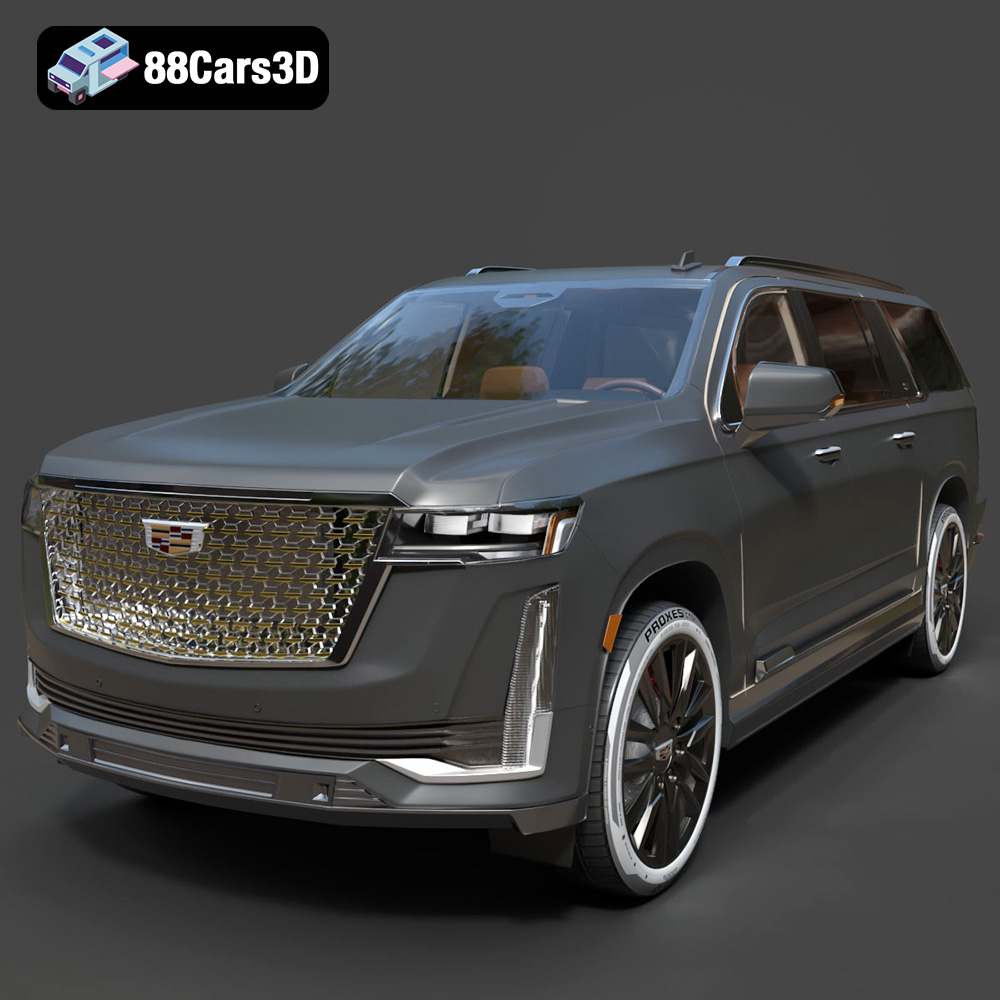
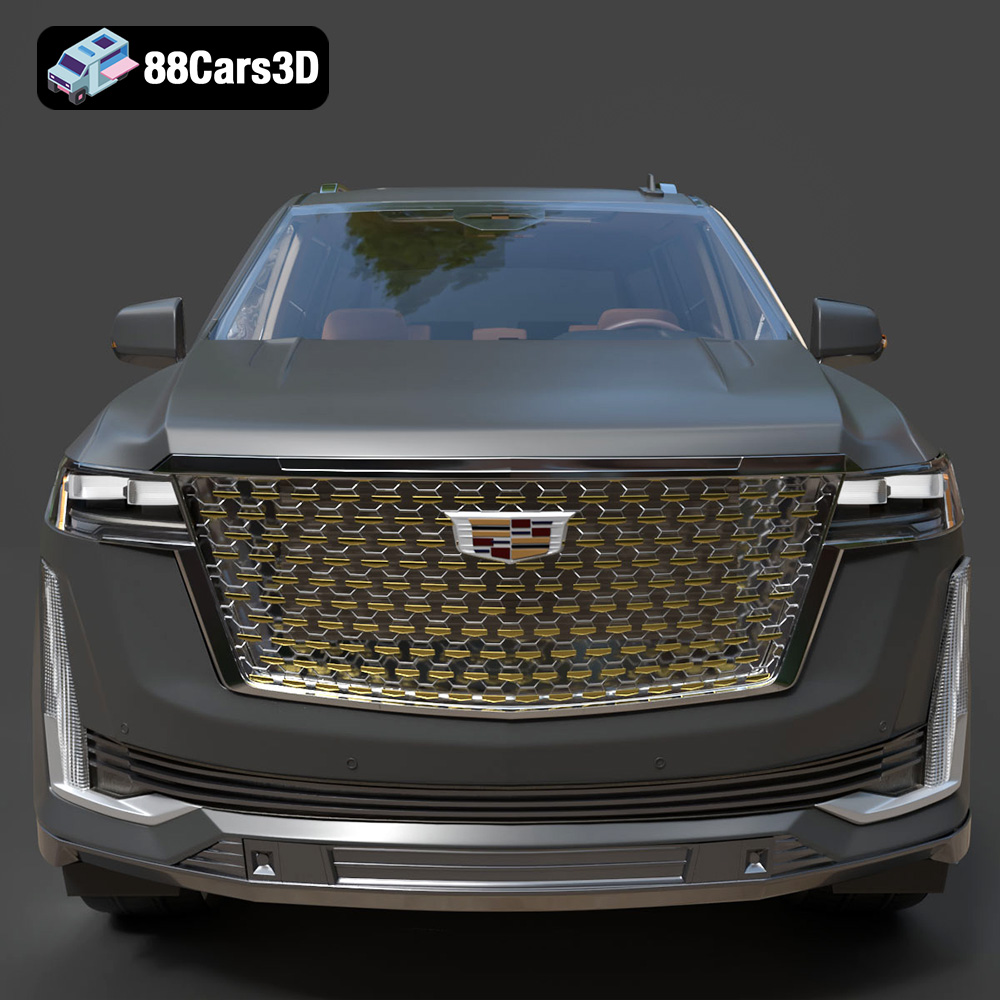
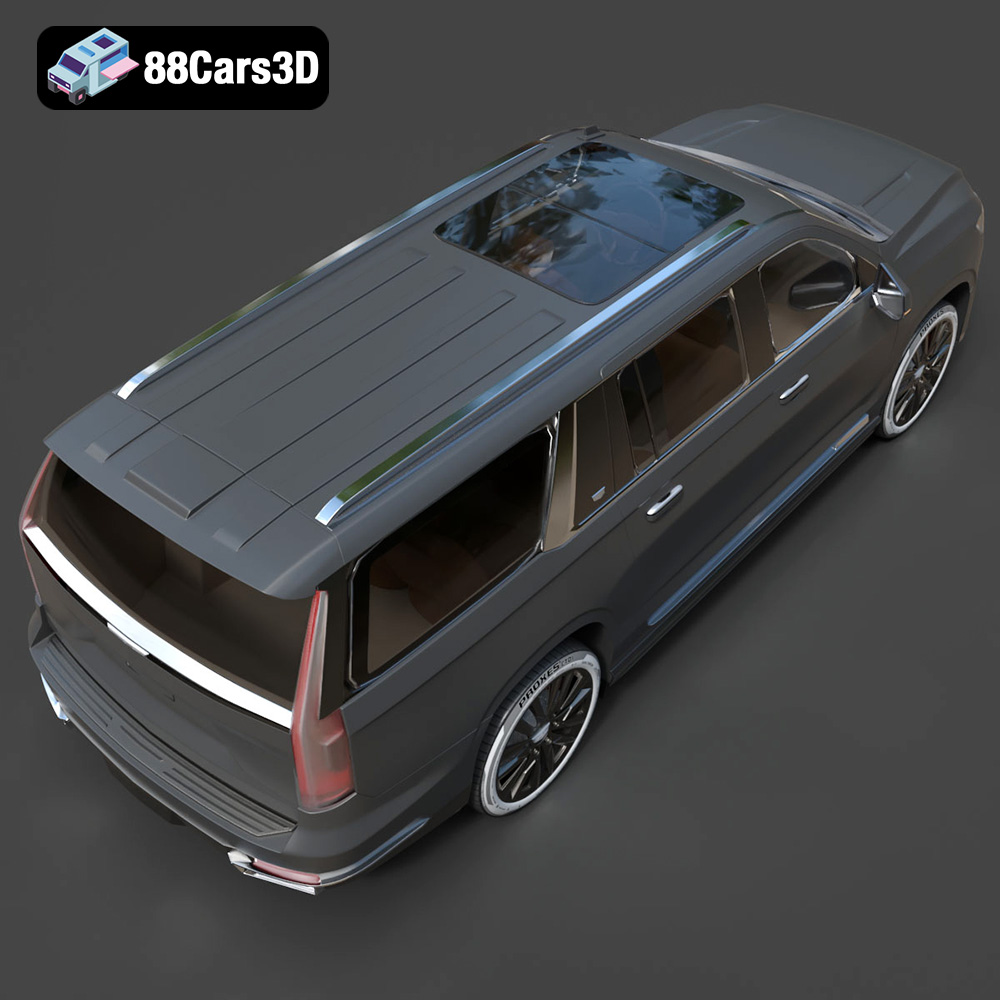
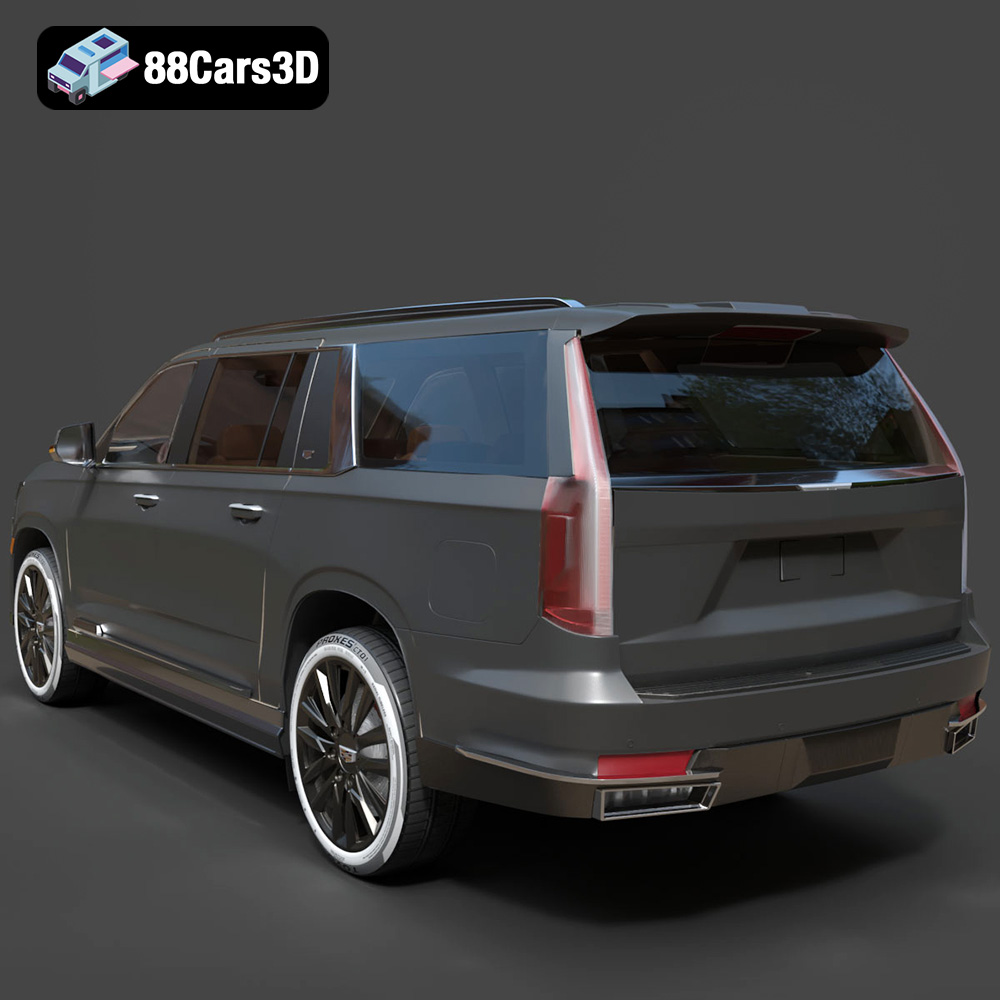
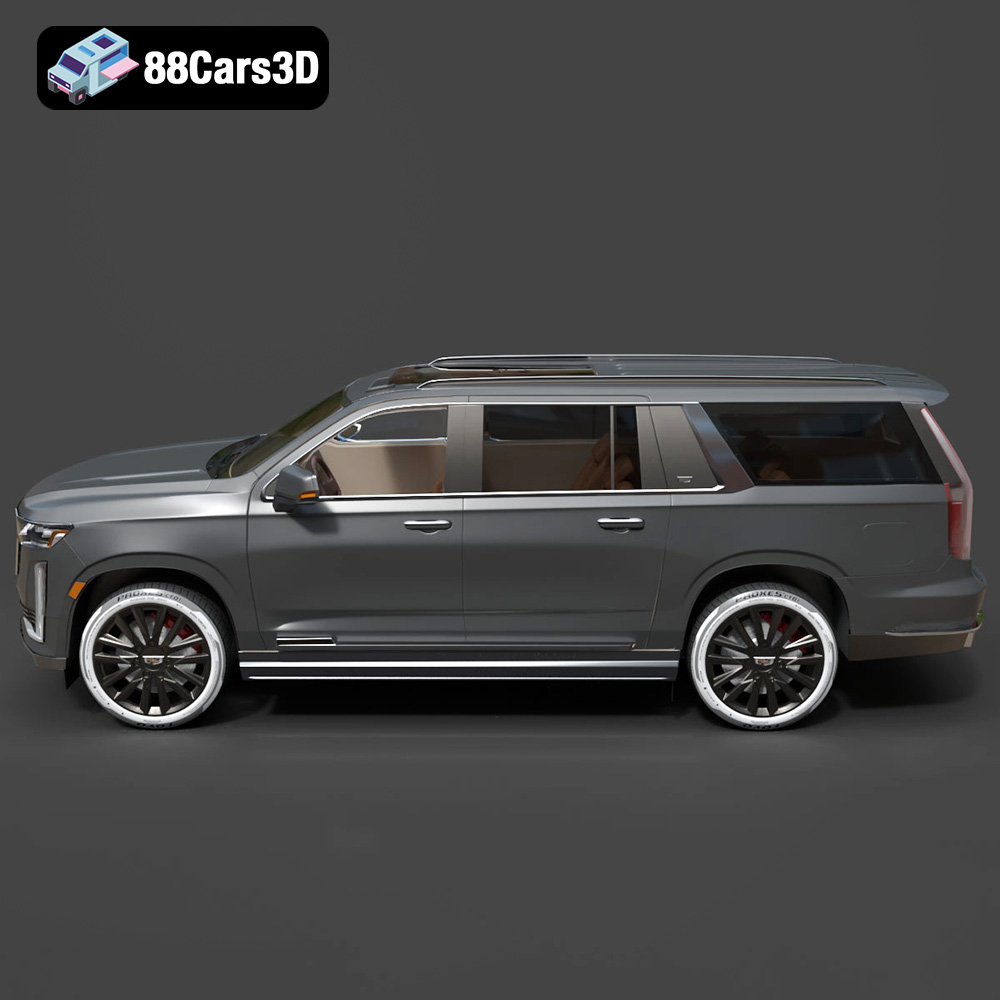
The initial impression of any 3D vehicle comes from its exterior. For the Cadillac Escalade ESV 2008 model, this means accurately capturing its imposing presence. Key elements like the bold front grille, signature vertical HID headlights, and the massive, elongated silhouette are meticulously recreated. Real-world scale accuracy is critical, ensuring the model fits seamlessly into architectural visualization scenes or aligns correctly with other vehicles in a game environment. Proportional fidelity is paramount for realism, extending to details like the luxury multi-spoke wheels and all-season tires, which are high-resolution assets in themselves. Even the robust V8 engine bay layout, though often unseen, is faithfully detailed, adding to the model’s overall integrity.
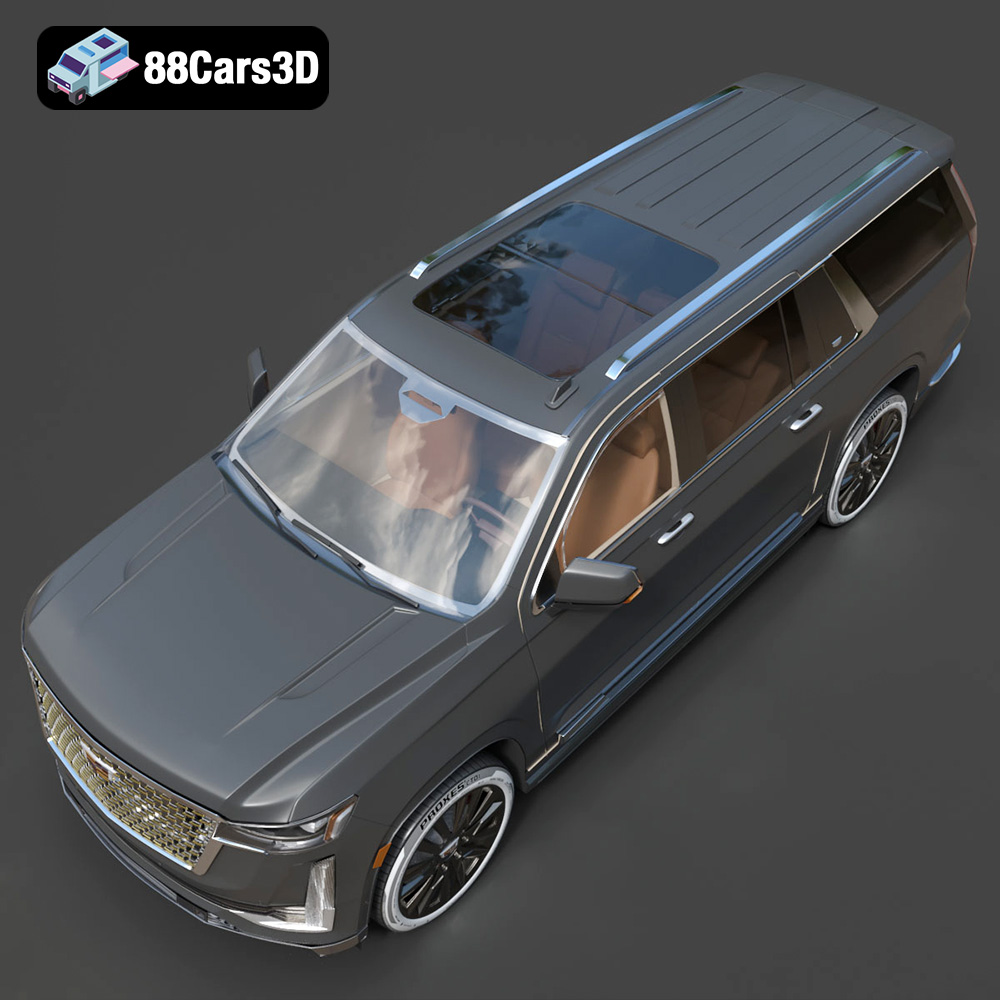
For modern 3D applications like AR/VR or first-person gaming, the interior of a vehicle is just as important as the exterior. The Cadillac Escalade ESV 2008 3D model boasts a rich, detailed cockpit and three-row cabin. Premium leather-appointed seats, wood-trimmed steering wheel, and a classic column shifter are recreated to evoke the luxury feel of the original. This level of interior fidelity is crucial for immersive experiences.
The true value of a premium 3D car model lies in its seamless integration into diverse professional pipelines. From high-end cinematic rendering to interactive real-time applications, the Cadillac Escalade ESV 2008 3D Model is designed to be a versatile asset.
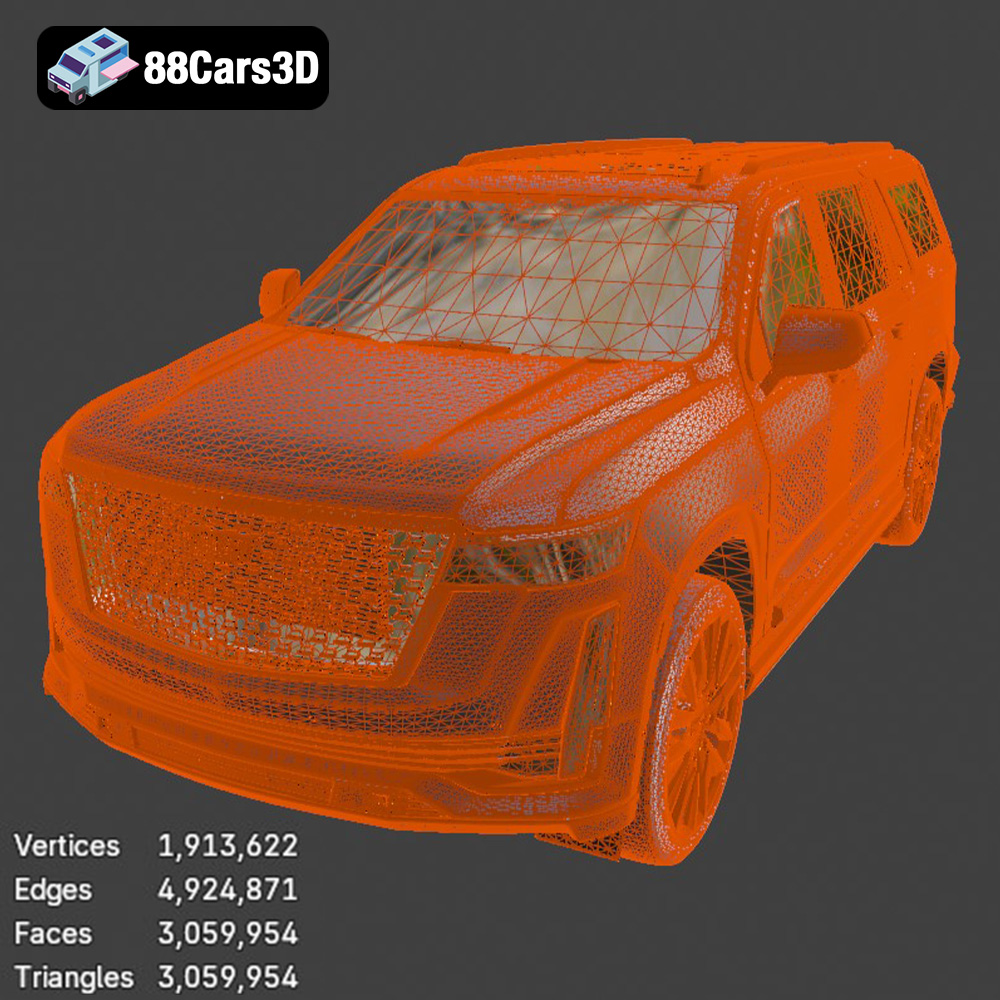
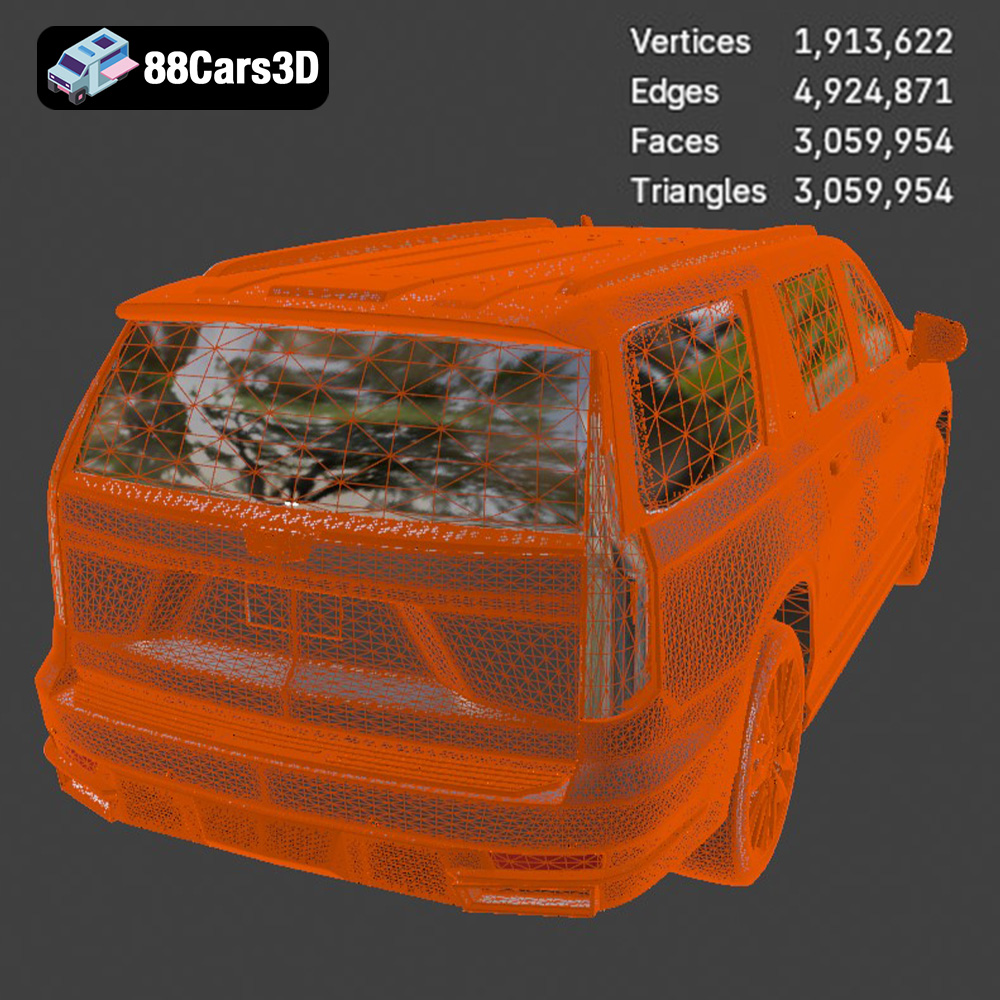
Game development demands efficiency and optimized assets. The “game-ready” nature of the Escalade model, with its balanced 3,059,954 triangle count, makes it ideal for modern game engines. When working in Unreal Engine, developers can leverage the provided .fbx or .unreal files for quick import. Proper pivot setups for wheels and steering mean that vehicle physics can be applied relatively easily. For racing titles or open-world games, this level of detail enhances player immersion. For example, a developer could quickly drop the Escalade into an urban environment, setting up destruction physics, custom paint jobs, and driveable mechanics without extensive optimization work.
For advertising, product showcases, or architectural visualization, photorealism is the ultimate goal. Software like 3ds Max and Blender, often coupled with rendering engines like V-Ray, Corona, or Cycles, are the tools of choice. The Cadillac Escalade ESV 2008 3D Model’s meticulous detail, from chrome tips to intricate headlight geometry, truly shines in these environments.
Augmented Reality (AR) and Virtual Reality (VR) are transforming how we interact with products. The Cadillac Escalade ESV 2008 3D Model is an excellent candidate for these immersive applications. Its optimized geometry and inclusion of the .glb format make it highly suitable for virtual showrooms or interactive configurators.
A high-quality 3D asset is not static; it should offer a degree of flexibility and customization to fit diverse project needs. The Cadillac Escalade ESV 2008 3D Model provides several options for artists and developers to tailor its appearance.
The ability to modify material properties is fundamental. Whether you need to change the body color to match a specific brand palette, adjust the metallic flake, or switch from a glossy finish to a matte one, the underlying material setup allows for this. This extends to tire textures, offering the possibility to swap between street variants and perhaps more rugged off-road styles if the project demands a different aesthetic. These adjustments are typically handled within the 3D software (Blender, 3ds Max) or game engine (Unreal, Unity) by modifying the material shaders and textures.
While the model itself is meticulously detailed, its visual impact is heavily influenced by lighting. The modularity of a professional 3D car model allows for significant adaptation to different lighting environments. For a dramatic night scene, specific lighting for the HID headlights and LED taillights can be activated and intensified. For a sunny outdoor render, global illumination and environmental light sources take precedence. This adaptability ensures the Escalade always looks its best, whether showcased in a bustling city street at dusk or a pristine showroom at noon.
Beyond digital visualization, the physical manifestation of a 3D model through 3D printing offers a tangible connection to the digital world. The Cadillac Escalade ESV 2008 3D Model is also prepared for this fascinating application, offering specific guidelines for optimal results.
Converting a high-detail rendering model into a 3D printable object requires careful consideration. The .stl format is provided specifically for this purpose. The recommended scales (1:12, 1:18, 1:24) are popular for display models, balancing size with detail retention. Key settings like layer height, wall thickness, and infill are crucial for print quality and structural integrity. Resin printing is specifically recommended for this model, indicating the fine details present that would benefit from the precision offered by resin technologies over filament-based FDM printers.
Once printed, the physical model enters the post-processing phase. Sanding helps smooth layer lines, while primer prepares the surface for painting. The ultimate goal is to apply authentic factory colors, potentially with metallic finishes, to mirror the luxurious aesthetic of the real Cadillac Escalade ESV 2008. This process transforms a raw 3D print into a display-worthy miniature, a tangible testament to the model’s digital fidelity. This entire process, from digital file to physical object, showcases the incredible versatility of high-quality 3D car models available on platforms like 88cars3d.com.
The journey from a digital concept to a fully realized 3D asset is a complex yet rewarding one. As we’ve explored with the Cadillac Escalade ESV 2008 3D Model, a truly comprehensive product provides not just stunning visuals but also the technical foundation for seamless integration into a myriad of professional workflows. From the critical understanding of file formats like .fbx for game development and .max for high-end rendering, to the detailed interior and exterior features that elevate realism, every aspect contributes to its value.
Whether you’re developing the next blockbuster game, producing photorealistic automotive renders for a marketing campaign, designing immersive AR/VR experiences, or even creating physical 3D prints, the right asset can significantly accelerate your progress and elevate your output. The Cadillac Escalade ESV 2008 3D Model stands as a prime example of a meticulously crafted asset, ready to empower your creative vision across any medium. For a wide selection of professional-grade 3D car models and game assets, explore the offerings at 88cars3d.com – your premier source for digital automotive excellence.
The Cadillac Escalade ESV 2008 represents the pinnacle of American full-size luxury SUVs, renowned for its imposing presence, extended wheelbase, and premium design. This 3D model perfectly captures the iconic bold front grille, signature vertical headlights, and the massive, elongated silhouette that made the ESV a staple of luxury transport. Every detail, from the robust V8 engine bay layout to the chrome-accented exterior trims and exhaust tips, has been faithfully recreated to deliver an authentic visual experience. Constructed with meticulous attention to detail, this model features a triangle count of 3,059,954, ensuring exceptional high-fidelity geometry for close-up renders while maintaining a clean topology. Engineered for maximum visual fidelity, it is perfectly suited for high-end rendering, game development, AR/VR applications, and cinematic animations where striking realism is required. Perfect for luxury automotive showcases, urban environment gaming scenes, high-end architectural visualizations, and virtual reality configurators.
$90.00
.blend
.cadillac
.fbx
.glb
.luxury suv
.max
.obj
.ply
.rendering
.stl
.unreal
car-3d-model
escalade-esv
game asset
game-ready
low-poly
optimized
SUV
VR/AR