The roar of a V-Twin engine, the gleam of chrome, the unmistakable silhouette — the Harley Davidson is more than just a motorcycle; it’s a cultural icon, a symbol of freedom, rebellion, and American craftsmanship. For digital artists, game developers, architects, and product visualizers, capturing this essence in a 3D model is paramount. A truly exceptional digital representation goes beyond mere aesthetics; it embodies technical precision, allowing for seamless integration into diverse projects from high-fidelity cinematic renders to immersive real-time experiences.
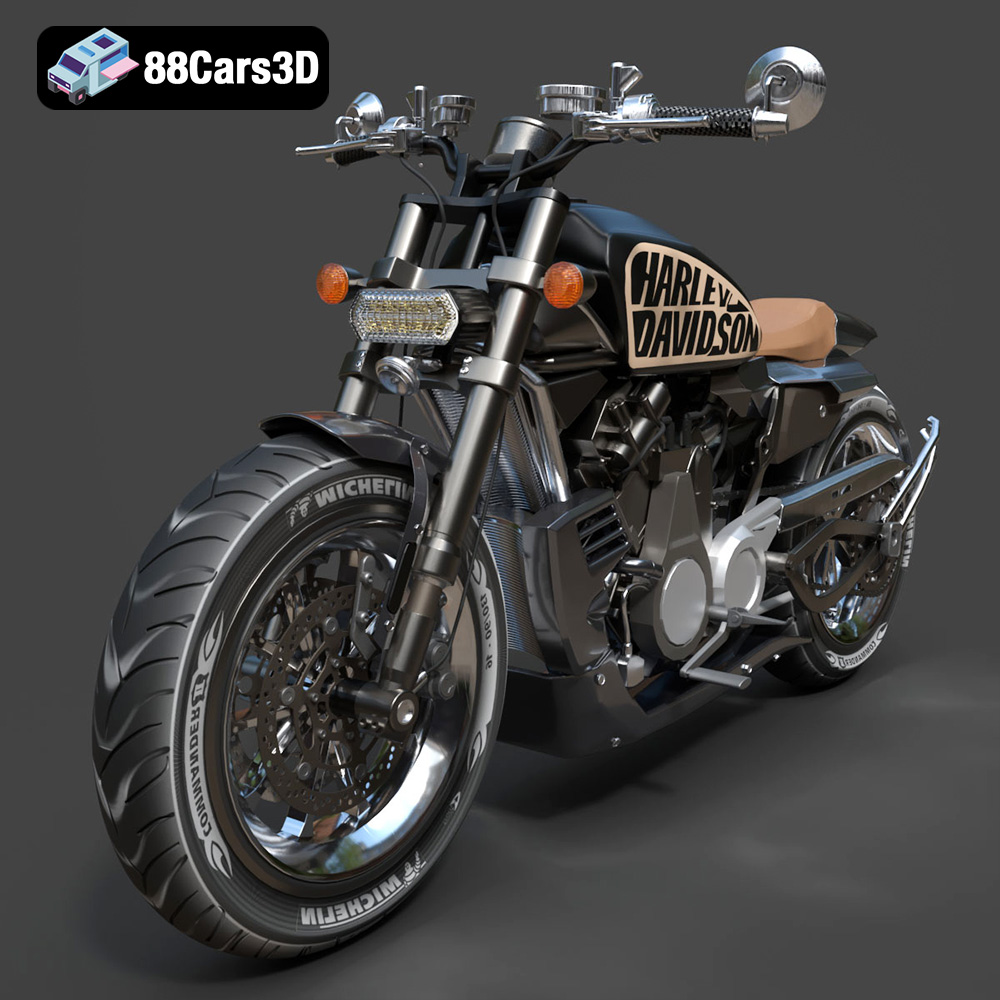
In the vast landscape of 3D content, finding a model that balances intricate detail with optimal performance can be a challenge. That’s why assets like the Harley Davidson 3D Model available at 88cars3d.com stand out. This particular model doesn’t just look the part; it’s engineered for versatility, offering the kind of robust presence and mechanical beauty that professional workflows demand. From its beautifully sculpted fuel tanks to the sprawling exhaust systems and meticulously rendered chrome accents, it’s a testament to digital artistry and technical excellence.
This comprehensive guide will delve into the critical aspects of working with high-quality 3D car models, using the Harley Davidson model as our prime example. We’ll explore the importance of file formats, dissect technical specifications, walk through professional integration workflows, and showcase the myriad applications for such a detailed asset in today’s demanding digital landscape.
Understanding 3D Model File Formats
The success of any 3D project often hinges on choosing the correct file format. Each format offers unique advantages and disadvantages, tailored for specific uses, software compatibility, and optimization levels. Understanding these distinctions is crucial for seamless workflows, especially when dealing with complex 3D car models like our featured Harley Davidson, which is provided in a multitude of formats to ensure maximum flexibility for artists and developers.
Choosing the Right Format for Your Workflow
- .blend (Blender Scene): This is Blender’s native file format, offering a fully editable scene with all materials, textures, lighting, and animation data intact. For users deeply integrated into the Blender ecosystem, a .blend file is the ultimate starting point. It allows for complete customization, from modifying geometry and UVs to tweaking shader networks for Cycles or Eevee rendering. When precision and deep editing capabilities are required for automotive rendering or creating bespoke game assets, starting with the native .blend is invaluable.
- .fbx (Filmbox): Developed by Autodesk, FBX is arguably the most widely adopted interchange format in the 3D industry. It’s ideal for transferring models between different software packages and is the go-to format for real-time pipelines like Unreal Engine and Unity. FBX supports geometry, materials (though often simplified), textures, animations, and even basic rigging. The Harley Davidson’s .fbx version ensures seamless import into game engines, preserving pivot points, hierarchies, and potentially even initial skeletal setups for wheels and steering. Its robust nature makes it indispensable for game development and complex animation projects.
- .obj (Wavefront OBJ): A universal format, OBJ is known for its simplicity and wide cross-software compatibility. It primarily stores geometry (vertices, normals, UVs) and can reference external .mtl (material) files for basic material properties. While it doesn’t support animation or rigging, its widespread support makes it excellent for static model transfers, especially when you need a clean mesh to start with in a new application. For quick imports and universal accessibility of 3D car models, OBJ remains a reliable choice.
- .glb (GLB/glTF Binary): GLB is the binary version of glTF (Graphics Library Transmission Format), a relatively newer format gaining rapid traction for web-based 3D, AR, and VR applications. Optimized for efficient transmission and loading, GLB packs geometry, textures, materials, and animations into a single file. It’s designed for real-time rendering and is excellent for interactive experiences on the web or mobile devices. The Harley Davidson in .glb format is perfect for virtual showrooms, online configurators, and mobile AR apps, providing high visual quality with small file sizes.
- .stl (Stereolithography): STL is the standard file format for 3D printing. It represents a 3D model as a collection of unconnected triangular facets, making it suitable for manufacturing processes. While it lacks color and texture information, its simplicity ensures compatibility with virtually all 3D printers and slicing software. The Harley Davidson .stl file is specifically provided for display-scale hobbyists looking to bring this digital icon into the physical world, enabling detailed physical replicas through 3D printing.
- .ply (Polygon File Format): PLY is a polygon file format primarily used for storing 3D data from 3D scanners, CAD software, and other applications that require precise mesh representation. It can store not only geometry but also color, transparency, texture coordinates, and even reliability information. While less common for general content creation than FBX or OBJ, PLY offers precision and extensibility, making it valuable for engineering analysis or highly accurate reproductions.
- .unreal (Unreal Engine Asset): This isn’t a generic file format but refers to a pre-packaged asset optimized and sometimes partially implemented within Unreal Engine itself. This indicates that the Harley Davidson model has undergone specific preparation for Unreal, potentially including collision meshes, LODs (Levels of Detail), and a basic material setup, making it an engine-ready asset for real-time environments. This streamlines the integration process for game development in Unreal Engine, saving significant time on setup.
- .max (3ds Max Project): As 3ds Max’s native file format, .max files contain all scene data, including geometry, materials, textures, lights, cameras, and animations. Similar to .blend for Blender, the .max file provides the fullest editing capabilities within 3ds Max. For professionals working with 3ds Max for high-end cinematic automotive rendering, detailed animation, or product visualization, this format offers unparalleled control and flexibility.
Interoperability and Industry Standards
The provision of multiple formats, as seen with the Harley Davidson 3D model on 88cars3d.com, is a hallmark of a high-quality asset provider. It acknowledges the diverse ecosystems prevalent in the 3D industry, ensuring that regardless of an artist’s preferred software or project requirements, they have an accessible and optimized version of the model. This commitment to interoperability not only simplifies workflow but also extends the model’s utility across different creative pipelines, from conceptualization and design to final production and deployment.
Crafting Excellence: Technical Specifications of the Harley Davidson 3D Model
Beyond file formats, the true measure of a 3D model’s quality lies in its technical execution. The Harley Davidson 3D model boasts specifications designed to deliver uncompromised visual fidelity while maintaining a balance suitable for various applications, especially in the demanding fields of game assets and professional rendering.
Balancing Detail and Performance for Game Assets
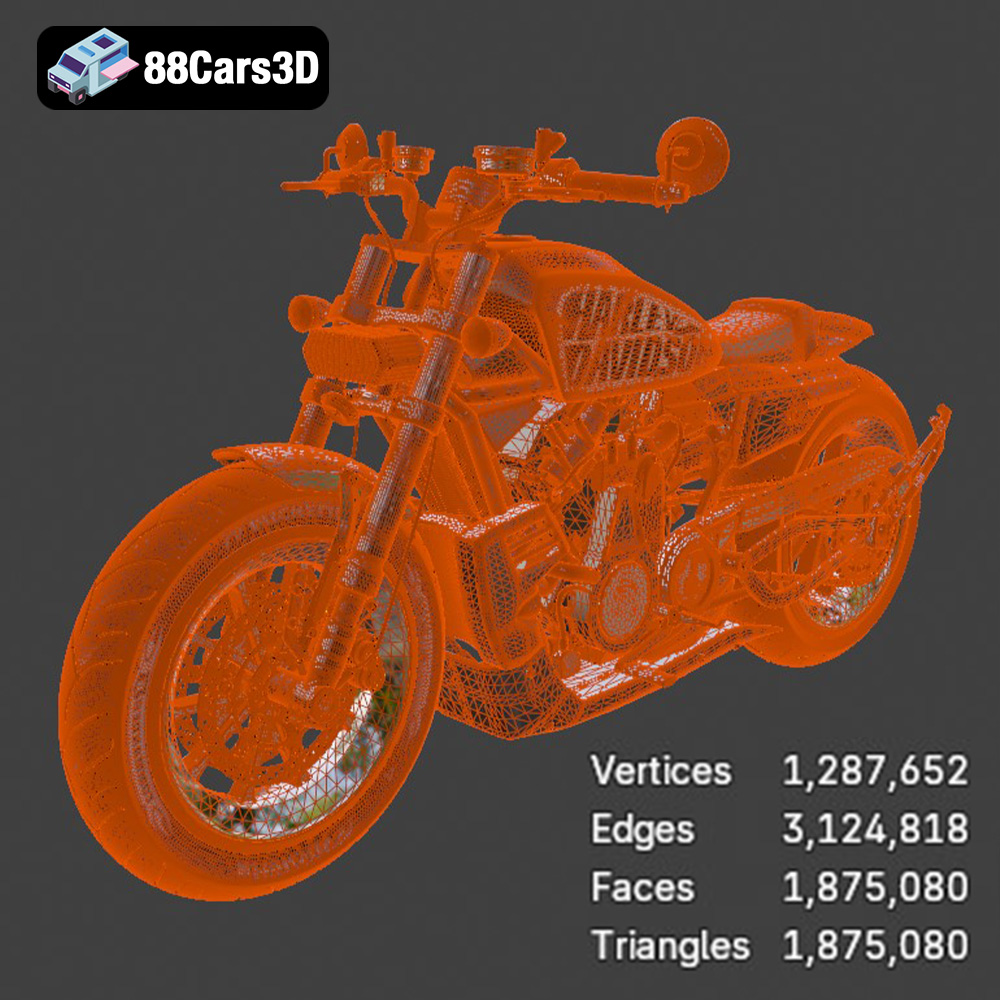
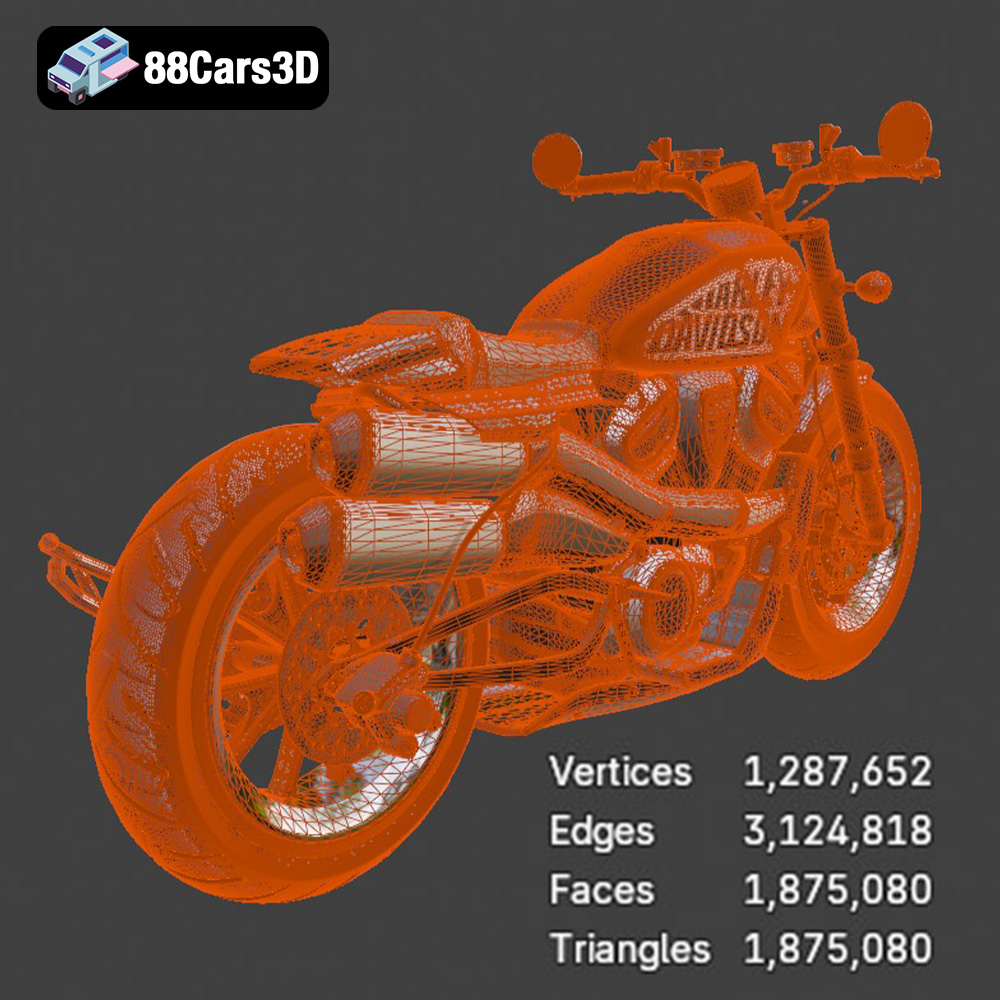
With a meticulous topology comprising 1,875,080 triangles, this model strikes an impressive balance. For high-end game development, virtual reality (AR/VR), and immersive animations, this polycount provides sufficient detail for close-up shots and realistic surface articulation without being excessively heavy for modern real-time engines like Unreal and Unity. The geometry is structured to support optimization processes, such as LOD generation and baked normal maps, ensuring crisp reflections and stunning material responses even under constrained performance budgets.
The model adheres to real-world scale accuracy, a critical feature for architectural visualization, automotive configurators, and realistic simulations. This precise scaling ensures the Harley Davidson model integrates seamlessly into scenes with other accurate 3D car models or environmental elements without requiring manual resizing or adjustments that could introduce inaccuracies.
The Art of Mechanical Fidelity
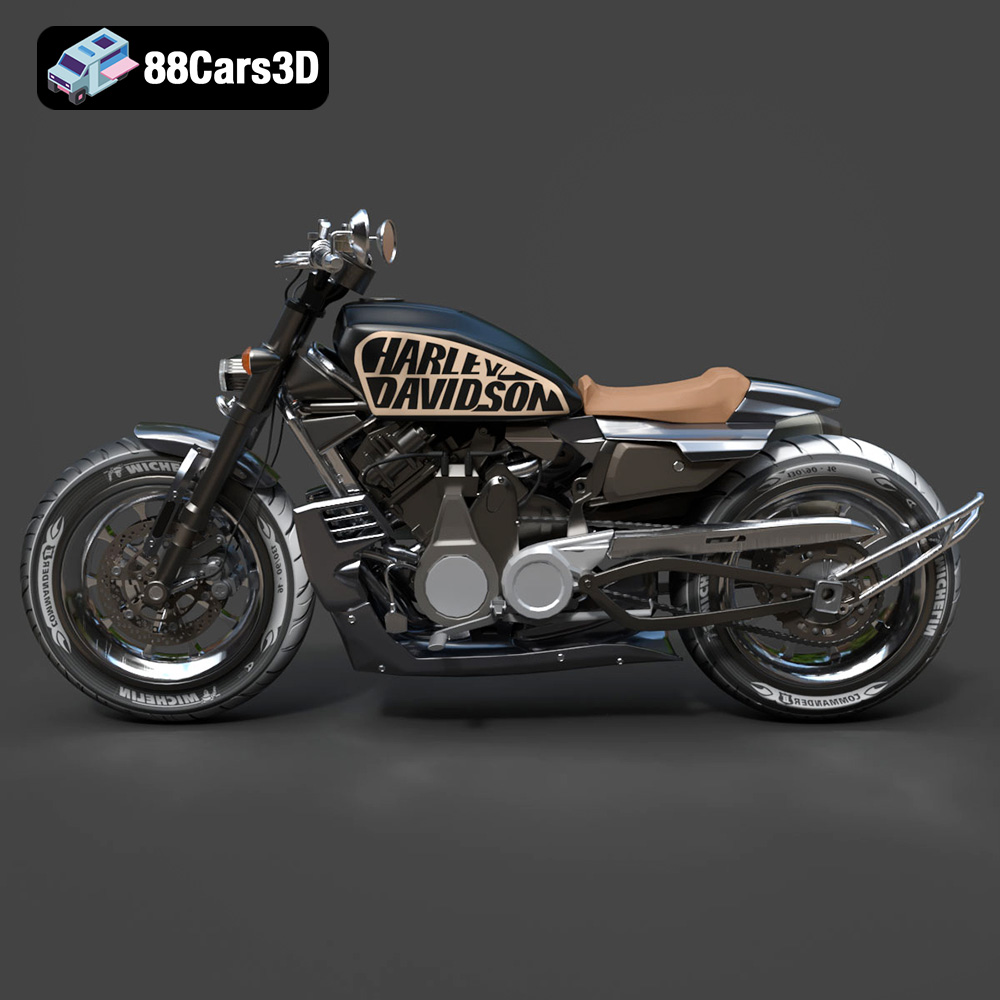
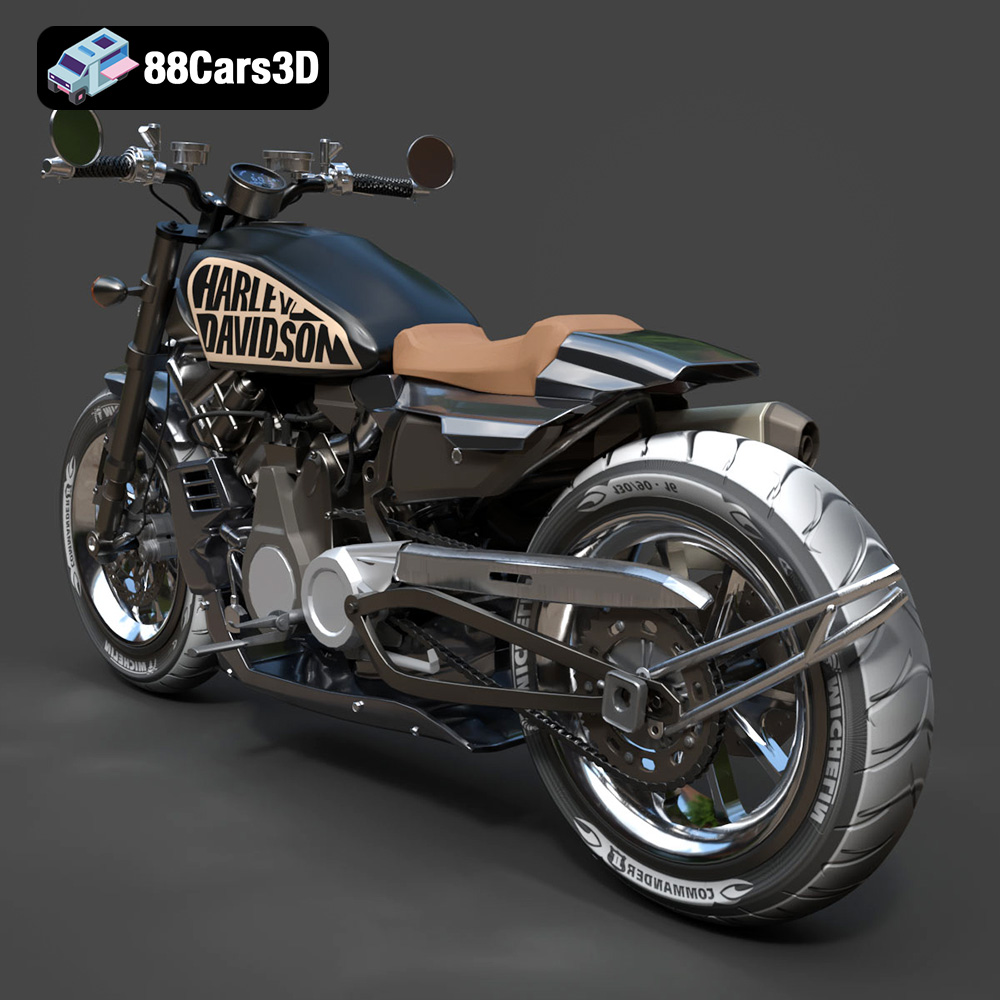
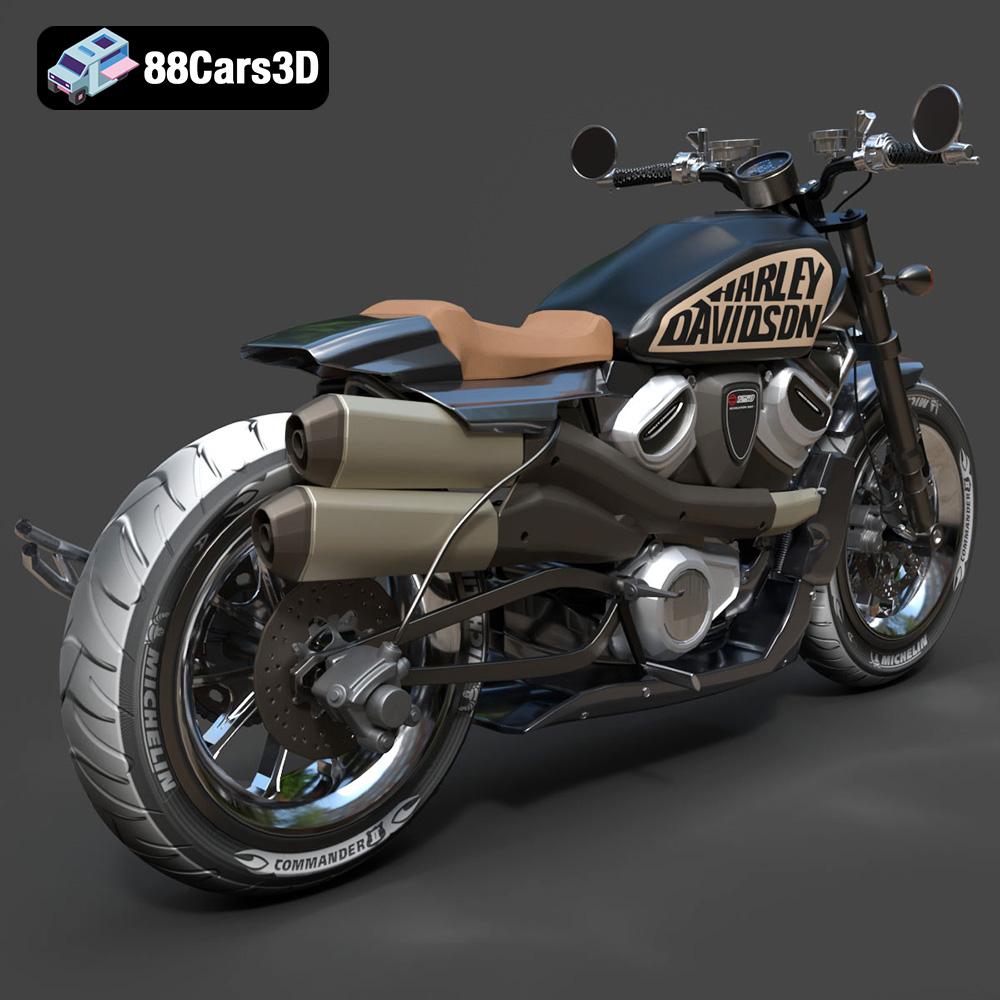
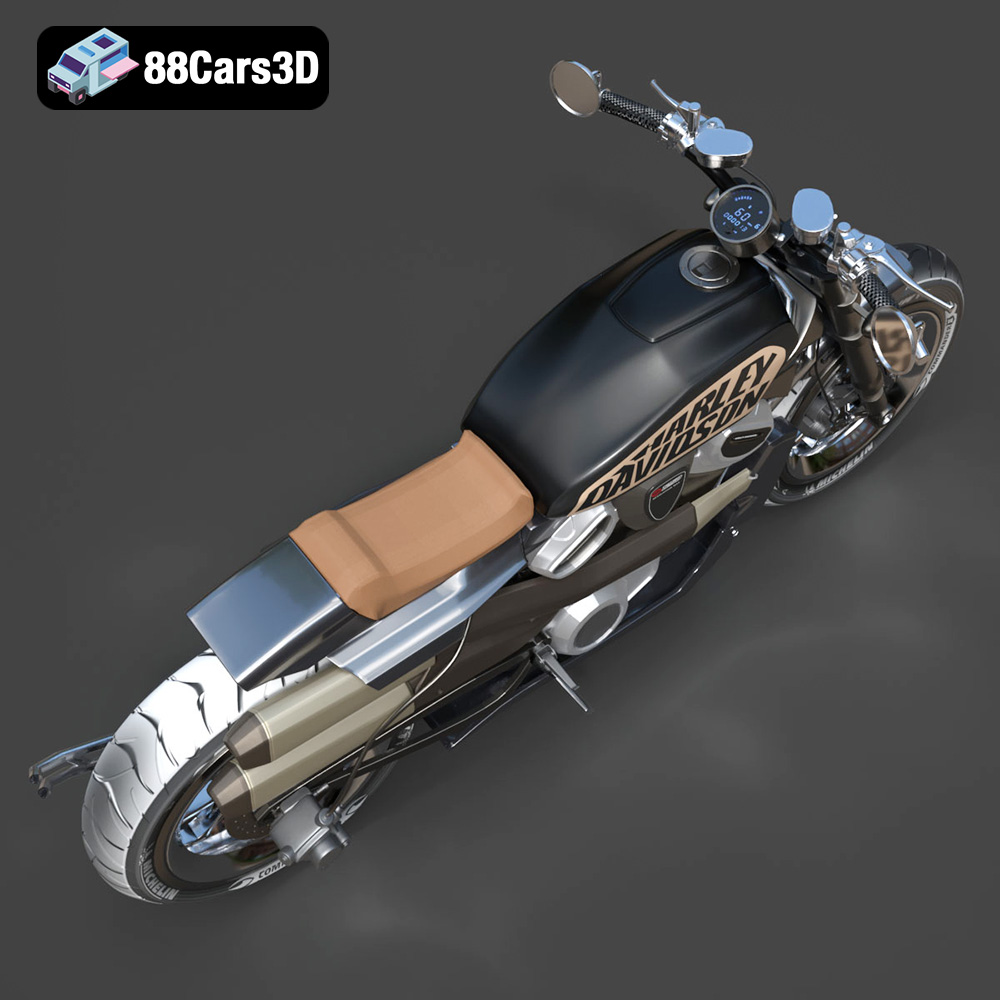
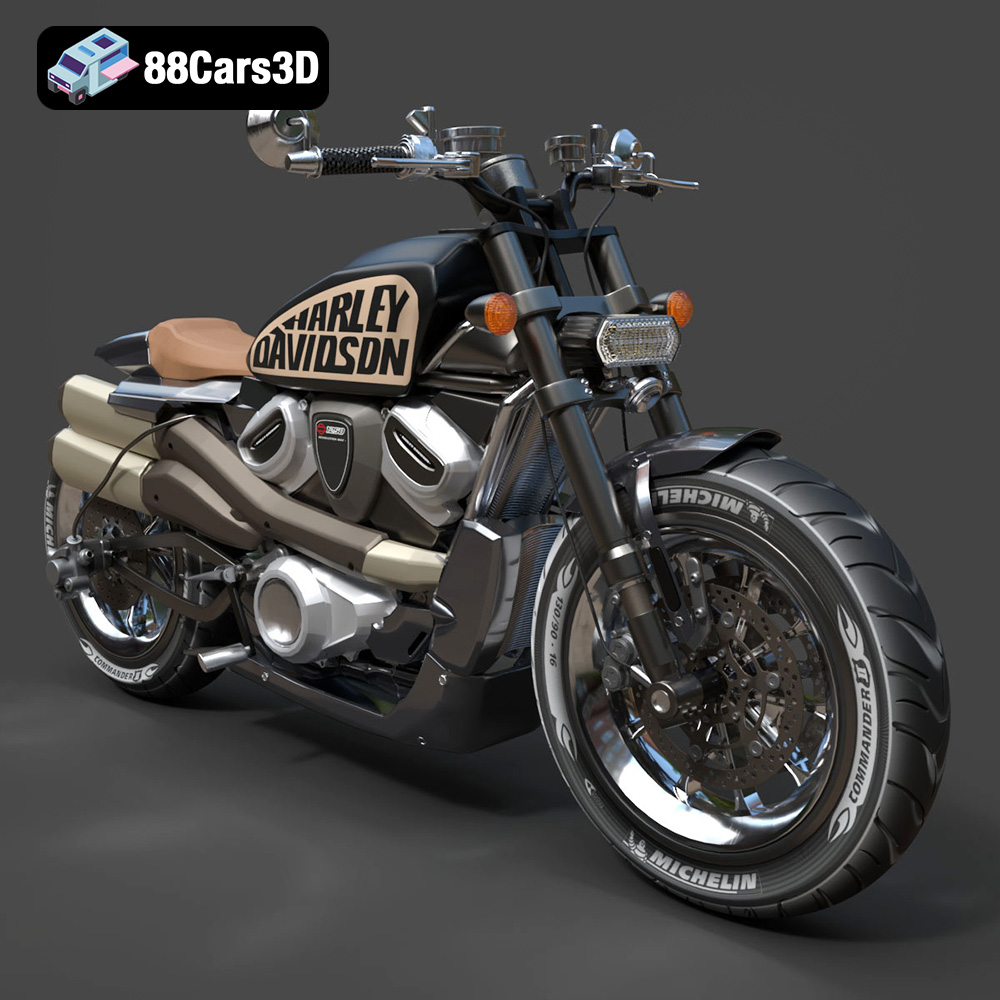
The devil is in the details, and this Harley Davidson model excels in mechanical fidelity. Every element, from the distinctive frame geometry to the classic cruiser proportions, has been faithfully recreated:
- Detailed V-Twin Engine Block: Intricate cooling fins, hardware, and cabling are modeled, giving the heart of the motorcycle a realistic and robust presence.
- Sweeping Dual Exhaust System: High-shine chrome finishes on the exhaust system capture the iconic aesthetic and react beautifully to environmental lighting.
- Lighting Components: Classic round headlight casing with realistic internal reflectors and prominent taillights are accurately modeled for dynamic lighting setups.
- Wheels and Suspension: Heavy-duty wire-spoke or cast alloy wheels are featured, along with thick, textured cruiser tires. Crucially, separate components for wheels, suspension (front telescopic forks, rear dual shock), and steering are included. This modularity is vital for animation, allowing for realistic rotation, travel, and steering movements in complex simulations or game physics.
- Cockpit and Controls: The rider’s area is equally detailed, featuring a deep-sculpted leather-textured solo saddle or two-up seat. Wide pullback handlebars with meticulously modeled grips and switchgear, a tank-mounted instrument cluster with analog speedometer dials, and detailed foot controls (brake pedals, shift levers, floorboards) all contribute to an immersive experience. This level of detail makes the model suitable for first-person POV in gaming and close-up renders.
These technical specifications collectively ensure that the Harley Davidson 3D model is not just a visual treat but a highly functional and adaptable asset, ready for professional use in a wide array of applications.
Professional Workflows: Integrating the Harley Davidson Model into Your Projects
The true power of a versatile 3D asset lies in its ability to integrate smoothly into various professional pipelines. Thanks to the comprehensive file format support, the Harley Davidson 3D model is primed for use across industry-standard software for automotive rendering, game development, and animation.
Achieving Photorealism in Automotive Rendering
For artists focused on photorealistic rendering, the .blend and .max files offer the deepest level of control. In software like Blender or 3ds Max:
- Import and Scene Setup: Importing the native file allows immediate access to pre-configured materials and potentially UV maps. Artists can then set up their desired lighting environment, whether it’s an HDRI (High Dynamic Range Image) for realistic reflections or a studio lighting rig for product shots.
- Material Refinement: While initial materials are often good, professionals will want to refine them. For the chrome on the exhaust and engine components, PBR (Physically Based Rendering) workflows are essential. This involves tweaking metallic, roughness, and normal maps to achieve accurate light interaction. The leather on the saddle might require subsurface scattering for a softer look or micro-normal details for texture.
- Rendering with Cycles/Eevee (Blender) or V-Ray/Corona (3ds Max): These powerful render engines can leverage the model’s high polycount to produce stunningly detailed images. Experiment with depth of field, motion blur for animated sequences, and post-processing effects to bring the renders to life. The accurate geometry and separate components of the Harley Davidson model simplify tasks like animating wheel spin or suspension compression for realistic camera movements.
Game Development Optimization Strategies
For game developers, the .fbx and .unreal formats are paramount. These are optimized for real-time engines where performance is critical:
- Import into Unreal Engine/Unity: The .fbx file imports seamlessly, preserving hierarchies and pivot points. If using the .unreal asset, much of the initial setup is already complete.
- PBR Material Workflow: Game engines heavily rely on PBR. Artists will need to ensure that the textures (Albedo, Normal, Roughness, Metallic, AO) are correctly applied and that material instances are set up for easy customization, such as changing paint colors or tire types as suggested by the product description.
- LODs (Levels of Detail): To maintain performance across varying distances, multiple LODs are crucial. The initial 1.8 million triangles are perfect for close-up views, but lower polycount versions should be generated for distant views to reduce draw calls and polygon count.
- Collision Meshes: For realistic interaction with the game world, custom collision meshes should be created. These are simpler versions of the model used by the physics engine, ensuring the motorcycle interacts correctly with terrain and other objects.
- Animation and Rigging: The separate components (wheels, steering, suspension) are game-ready for rigging and animation. Developers can create blueprints (Unreal) or scripts (Unity) to control steering, suspension bounce, and wheel rotation based on player input or physics simulations, bringing the Harley Davidson to life as a playable vehicle or dynamic environmental element.
Expanding Creative Horizons: Applications Beyond the Screen
A high-quality 3D car model like the Harley Davidson isn’t just for games or static renders. Its robust design and multiple format offerings open doors to innovative applications across various industries.
Immersive Showrooms and Configurators
The rise of AR/VR technology has transformed how consumers interact with products. The Harley Davidson 3D model is perfectly suited for:
- Virtual Showrooms: Imagine potential buyers exploring the motorcycle in a fully immersive VR environment, walking around it, inspecting details, and even “sitting” on it. The model’s high fidelity ensures a realistic and engaging experience.
- Augmented Reality Configurators: Using a smartphone or tablet, customers could place the Harley Davidson model in their driveway or living room via AR. The customization options (changing tank colors, tire textures, material finishes) can be integrated, allowing users to personalize their dream bike in real-time before making a purchase decision. The .glb format is particularly excellent for these web and mobile-based AR/VR experiences, due to its optimization for quick loading and rendering.
- Training and Education: For mechanics or enthusiasts, an AR/VR application could allow for interactive exploration of the V-Twin engine, understanding its components and how they function without needing a physical model.
Bringing Digital Designs to the Physical World
One of the most exciting applications for 3D car models today is 3D printing. The Harley Davidson model, provided in .stl format, allows hobbyists and professionals alike to create physical replicas.
- Recommended Print Settings:
- Scale: Recommended scales like 1:12, 1:18, or 1:24 offer a good balance of size and detail.
- Layer Height: For fine details, especially with resin printers, a layer height of 0.04–0.12 mm is ideal.
- Wall Thickness: 1.2–2.0 mm ensures structural integrity.
- Infill: 20–30% provides a good balance of strength and material usage.
- Supports: Required for intricate parts like the exhaust, mirrors, and handlebars to prevent sagging during printing.
- Print Orientation: Angling the frame can improve structural integrity, while wheels are best printed separately for cleaner results.
- Post-processing: After printing, sanding, priming, and painting with authentic factory colors and metallic finishes can elevate the printed model to a museum-quality display piece. This blends the digital artistry with traditional craftsmanship.
Furthermore, the model is excellent for high-resolution rendering scenes for brand campaigns, lifestyle scenes, and studio lighting setups, making it a powerful tool for marketing and visualization agencies.
Customization and Future-Proofing Your 3D Car Models
The long-term value of a 3D asset often comes down to its adaptability and the ease with which it can be customized. The Harley Davidson 3D model is built with flexibility in mind, ensuring it remains a valuable resource for countless projects.
Tailoring Your Asset for Unique Visions
The customization options outlined for this model are extensive and cater to a wide range of creative needs:
- Body/Tank Colors: Easily change the iconic fuel tank and fender colors to match factory specifications, custom paint jobs, or even conceptual designs. This is crucial for automotive configurators or showcasing different editions of the motorcycle.
- Tire Textures: Modify tire textures to represent different variants, such as off-road treads for an adventure-themed scene versus street-specific patterns for urban environments. This seemingly small detail significantly alters the vehicle’s character.
- Material Finishes: Adjust material properties like matte, gloss, or various metallic finishes to fine-tune the visual appearance. Whether you need a weathered, gritty look or a pristine, showroom shine, the underlying PBR setup supports these changes.
- Lighting Adaptations: The model’s clean topology and well-defined materials mean it responds exceptionally well to diverse lighting conditions. Artists can adapt lighting for different environments – a sunny outdoor scene, a moody garage interior, or a dramatic studio setup – without compromising the model’s visual integrity.
Long-Term Value of High-Quality Assets
Investing in high-quality 3D car models like the Harley Davidson from 88cars3d.com is a strategic move for any professional. A well-structured, technically sound model ensures that it can be reused, repurposed, and updated for future projects. Its modularity means individual parts can be extracted for other scenes, textures can be swapped for new looks, and the core geometry remains robust enough to support advanced rendering techniques or future engine optimizations.
This future-proofing capability saves immense amounts of time and resources in the long run, allowing artists and developers to focus on creative execution rather than wrestling with poorly constructed assets. The provided range of file formats further solidifies its longevity, ensuring compatibility as software and industry standards evolve.
Conclusion
The Harley Davidson is a machine that embodies a rich legacy, and its digital counterpart must live up to that same standard of excellence. The Harley Davidson 3D Model delivers precisely that: a meticulously crafted asset that combines visual authenticity with technical versatility. From its optimized polycount and real-world scale to the detailed mechanical components and extensive file format support, it’s engineered for success across the most demanding professional workflows.
Whether you’re an aspiring game developer building immersive worlds, an architectural visualizer populating a scene, a marketing professional creating captivating automotive rendering, or a hobbyist bringing digital designs to life through 3D printing, this model offers a robust foundation. Its adaptability for customization ensures it can be tailored to fit any unique creative vision, making it an invaluable addition to any digital asset library. Explore this exceptional model and a wide range of other premium 3D car models by visiting 88cars3d.com today, and elevate your projects with assets that truly stand out.
Featured 3D Model
Harley Davidson 3D Model Download STL FBX OBJ GLB Blend
The Harley Davidson is an undisputed icon of American motorcycling, celebrated for its legendary heritage, unmistakable cruiser silhouette, and signature V-Twin engine. This 3D model perfectly captures the robust presence and mechanical beauty of the classic cruiser, featuring beautifully sculpted fuel tanks, sprawling exhaust systems, and detailed chrome accents that define its timeless styling. Boasting a meticulous topology with 1,875,080 triangles, this model offers uncompromised visual fidelity tailored for high-end game development, virtual reality (AR/VR), immersive animations, and photorealistic visualizations. Despite the dense detail, the geometry is structured to support optimization processes for modern real-time engines, ensuring crisp reflections and stunning material responses. Perfect for open-world gaming environments, detailed virtual garages, automotive configurators, and high-resolution rendering scenes.
$82.99
View This Model
Related Tags
.blend
.cruiser
.fbx
.glb
.max
.obj
.ply
.rendering
.stl
.unreal
game asset
game-ready
harley-davidson
high poly
motorcycle-3d-model
optimized
VR/AR