Get 20% OFF All Premium 3D & STL Models!

In the vibrant world of digital creation, where photorealism meets boundless imagination, the demand for high-quality 3D assets is ever-growing. From cinematic spectacles and immersive virtual realities to cutting-edge game development and intricate architectural visualizations, the foundation of a compelling project often lies in the precision and detail of its core assets. Automotive design, in particular, stands as a testament to this pursuit of perfection, requiring models that capture every curve, reflection, and material nuance with breathtaking accuracy.
Today, we embark on an in-depth exploration of what defines a truly exceptional 3D vehicle, using the magnificent Lexus LX600 3D Model as our prime example. This isn’t just a digital representation; it’s a meticulously crafted asset designed to serve a myriad of professional applications, bridging the gap between artistic vision and technical execution. Whether you’re a seasoned game developer, a visualization artist, or a VR/AR specialist, understanding the intricacies of such a model is crucial for elevating your projects to an unparalleled level of realism and performance. This premium asset, available for download, exemplifies the quality of 3D car models found at 88cars3d.com, a trusted source for professional-grade automotive assets.
Navigating the landscape of 3D production necessitates a foundational understanding of the various file formats available. Each format serves a distinct purpose, offering specific advantages and limitations depending on your workflow and target application. The Lexus LX600 3D Model, for instance, comes equipped with a comprehensive suite of formats, ensuring maximum compatibility and utility across diverse professional pipelines. Let’s break down these essential formats:
The .blend format is Blender’s native file type, representing a complete, fully editable Blender scene. When you download a .blend file, you’re not just getting a mesh; you’re gaining access to materials, textures, lighting setups, cameras, animation data, and even custom nodes. For artists and studios primarily working within Blender, this format offers unparalleled flexibility for customization, rigging, and rendering. It allows for deep dives into the model’s construction, enabling extensive modifications and creative explorations without losing any original scene data.
Autodesk’s .fbx (Filmbox) format is arguably the most widely adopted 3D asset exchange format in the industry. Its strength lies in its ability to efficiently transfer 3D model data, including geometry, materials, textures, animation, and rigging information, between different software applications. This makes .fbx an indispensable choice for real-time pipelines, particularly for game engines like Unreal Engine and Unity. When integrating a 3D car model like the Lexus LX600 into a game, .fbx ensures that all animation pivots, material assignments, and skeletal structures transfer seamlessly, making it ideal for creating dynamic game assets.
The .obj (Wavefront OBJ) format is a universally recognized, geometry-only file format. It’s excellent for transmitting mesh data, UV coordinates, and material group assignments. While it doesn’t typically store advanced scene information like animations, rigging, or complex material node setups, its widespread compatibility makes it a safe bet for cross-software transfers when the primary concern is the raw geometric data. It’s a robust choice for archival purposes or when you need a clean mesh to start building materials and rigging from scratch in a new environment.
.glb (GLB) is the binary version of the glTF (GL Transmission Format) format, specifically designed for efficient transmission and loading of 3D scenes and models by applications. It’s a compact, single-file container that includes geometry, textures, materials, and animations, making it perfectly suited for web-based 3D, AR (Augmented Reality), and VR (Virtual Reality) applications. For interactive configurators or virtual showrooms of the Lexus LX600 in a browser, the .glb format offers optimal performance and visual fidelity.
.stl (Stereolithography) is the standard file format for 3D printing. It represents a 3D model as a series of connected triangles, defining only the surface geometry without color, texture, or internal structure information. When preparing the Lexus LX600 for physical production, such as creating a scale model, the .stl format is the go-to. Its simplicity ensures compatibility with virtually all 3D printers and slicing software, making the journey from digital asset to tangible object straightforward.
.ply (Polygon File Format) is another format for storing 3D data, particularly known for its ability to store properties beyond just geometry, such as color, transparency, and texture coordinates per vertex or face. It’s often used in scientific and engineering applications, as well as for storing data from 3D scanners. While less common for general asset exchange than .fbx or .obj, it offers a high degree of precision and detail for complex meshes, making it suitable for CAD integration or detailed analysis.
While not a standard external file format, a direct “unreal” package or asset typically refers to a model that has been specifically prepared and optimized for direct import and use within Unreal Engine. This often implies that the asset has appropriate scaling, collision meshes, LODs (Levels of Detail), and material setups ready for the engine’s rendering pipeline. Having an .unreal version of the Lexus LX600 streamlines the integration process, saving significant time on asset preparation for real-time environments.
The .max format is the native file type for Autodesk 3ds Max, a powerful 3D modeling, animation, and rendering software. Similar to .blend for Blender, a .max file contains the entire scene, including complex hierarchies, modifiers, animation curves, and advanced material setups. For professionals working in 3ds Max, this format offers full editing capabilities, allowing for deep modifications and leveraging the software’s robust rendering engines for high-end automotive rendering and visualization projects.
Crafting a premium 3D car model like the Lexus LX600 requires an intricate balance of artistic skill and technical precision. It’s about capturing the soul of the vehicle, not just its silhouette. The Lexus LX600 3D Model exemplifies this, offering a product that is both visually stunning and functionally robust for diverse digital applications.
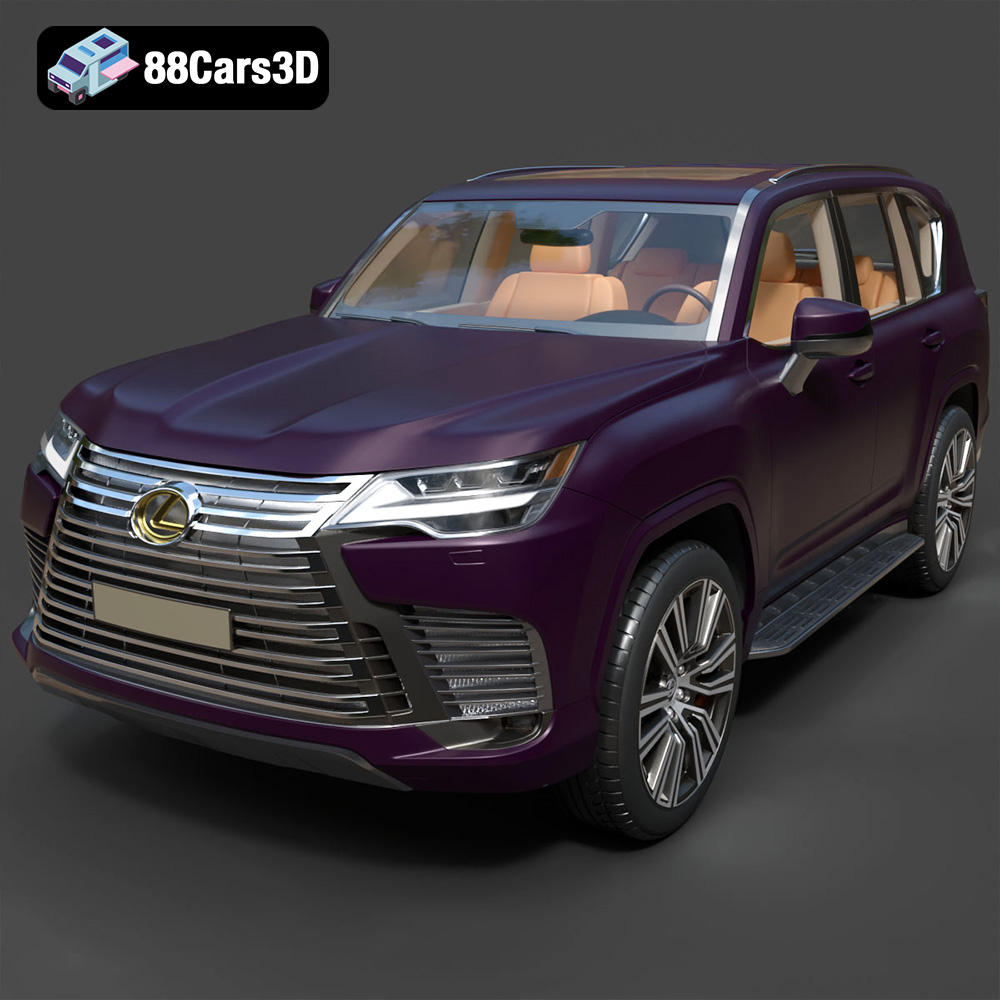
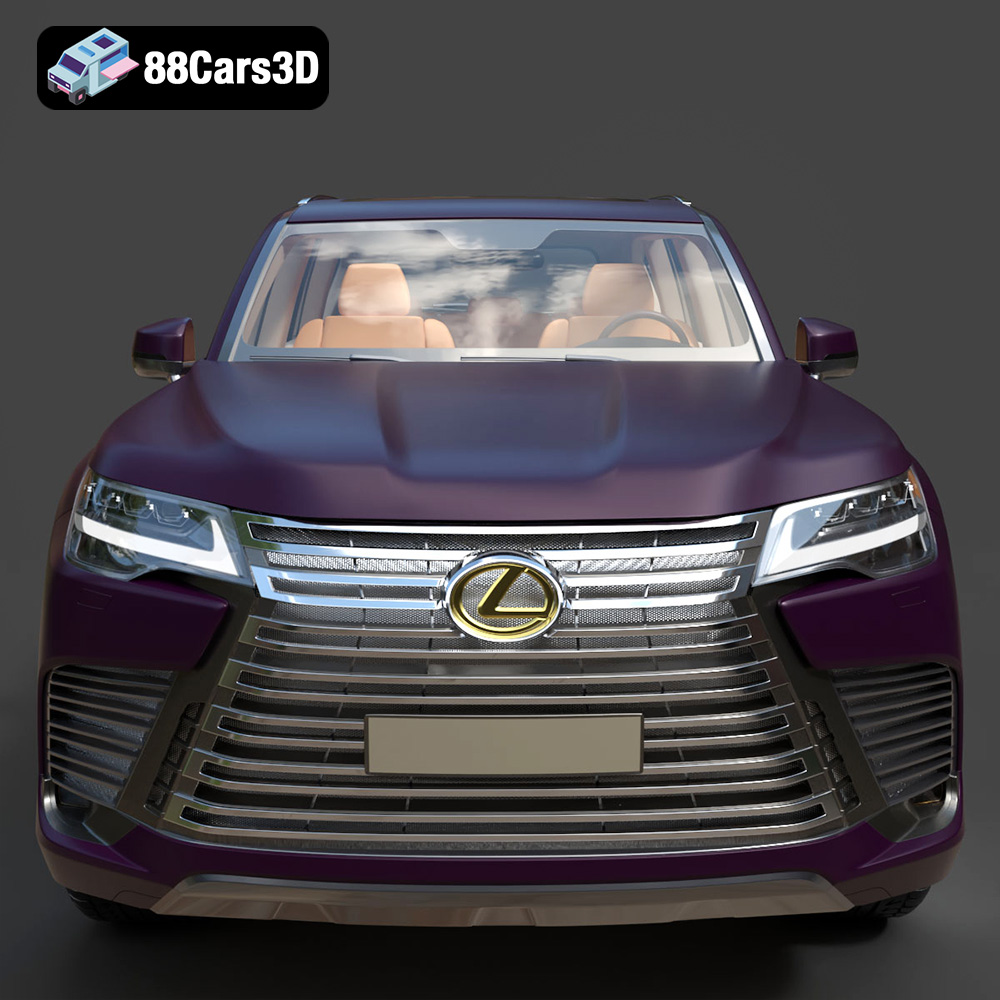
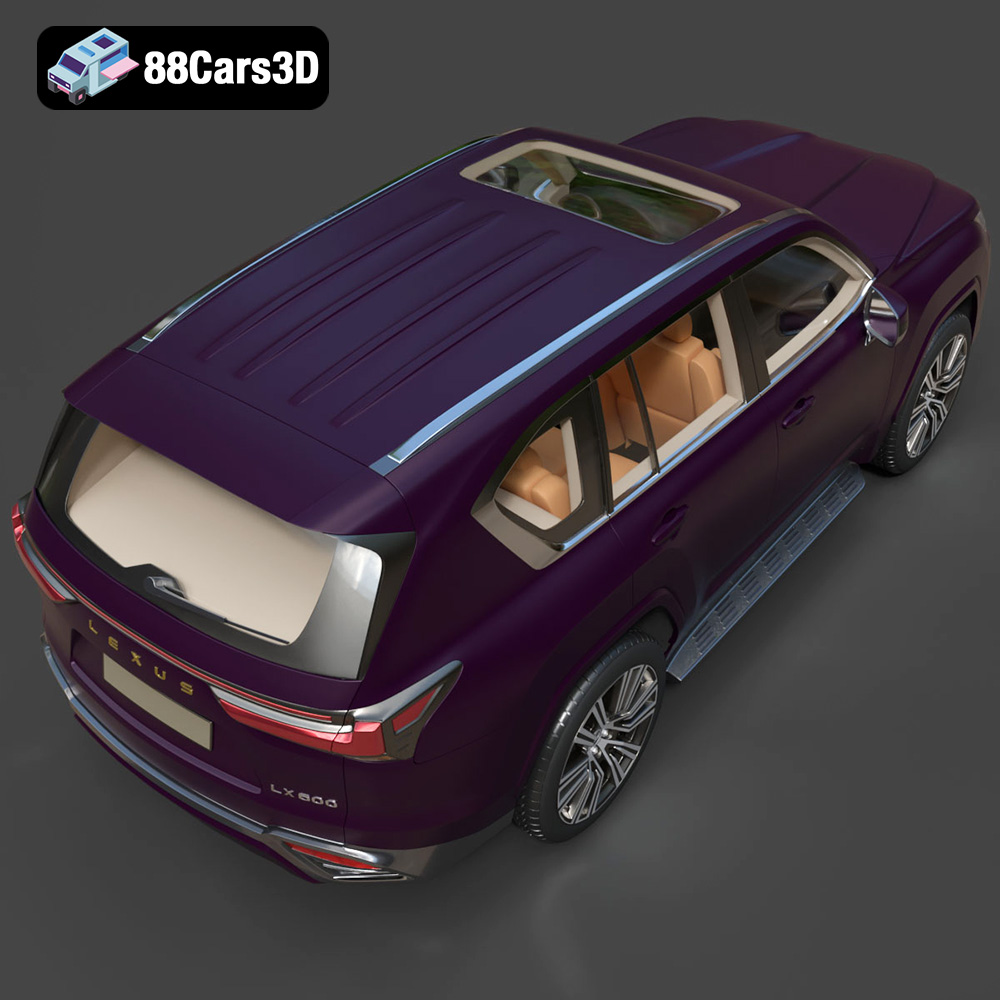
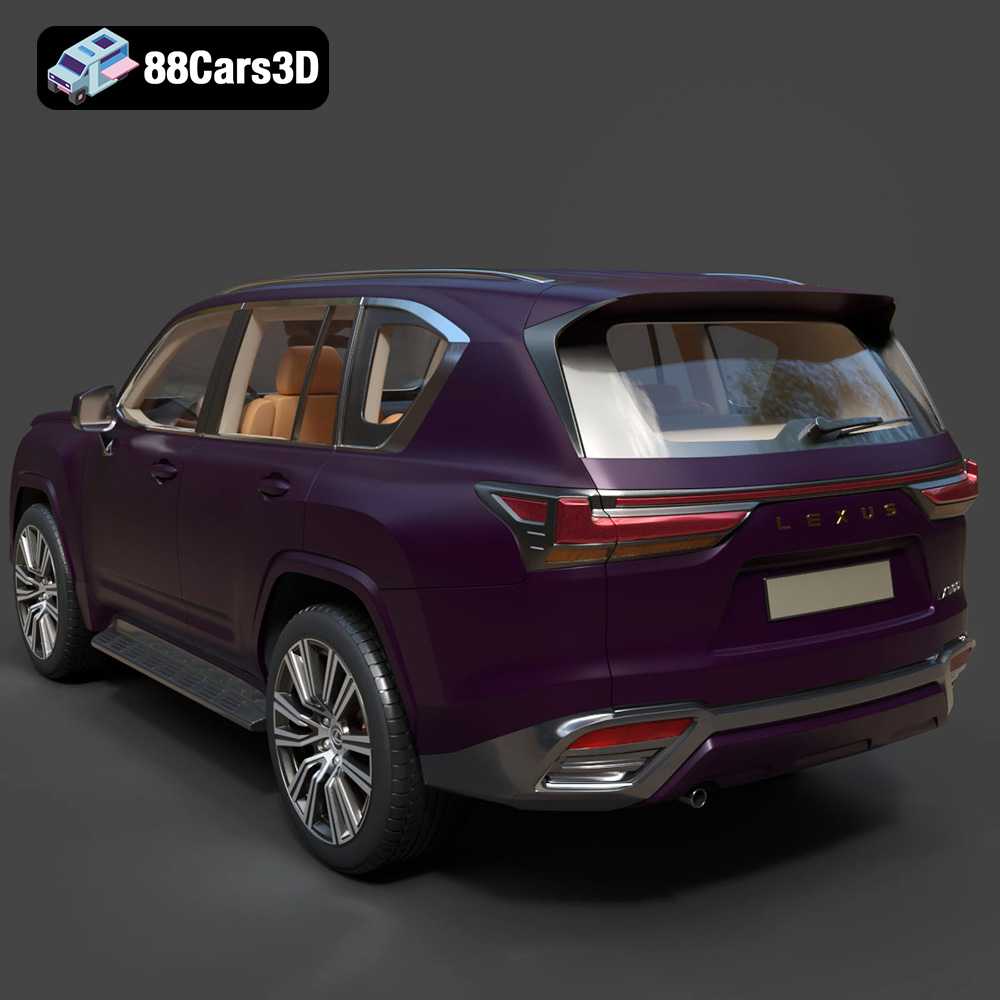
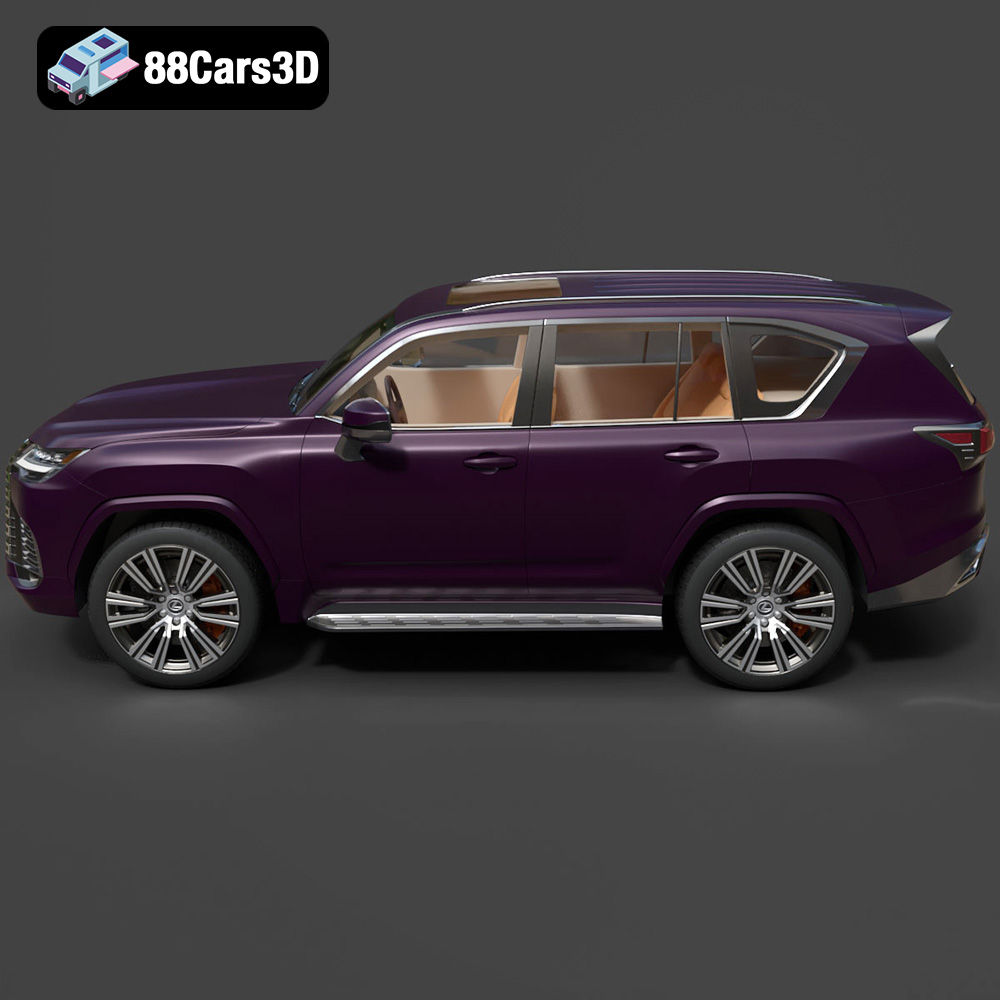
The first impression of the Lexus LX600 is its commanding exterior, and the 3D model translates this imposing presence with remarkable fidelity. From the iconic, massive spindle grille that dominates the front fascia to the muscular wheel arches that suggest rugged capability, every design element is meticulously recreated. The sophisticated bodywork, accented by the signature L-shaped LED matrix headlights and the elegant full-width rear light bar, ensures that the digital model looks authentic from every angle. This level of detail extends to the integrated dual exhaust system with premium chrome-finished tips and the high-detail large-diameter alloy wheels paired with realistic premium all-terrain tires.
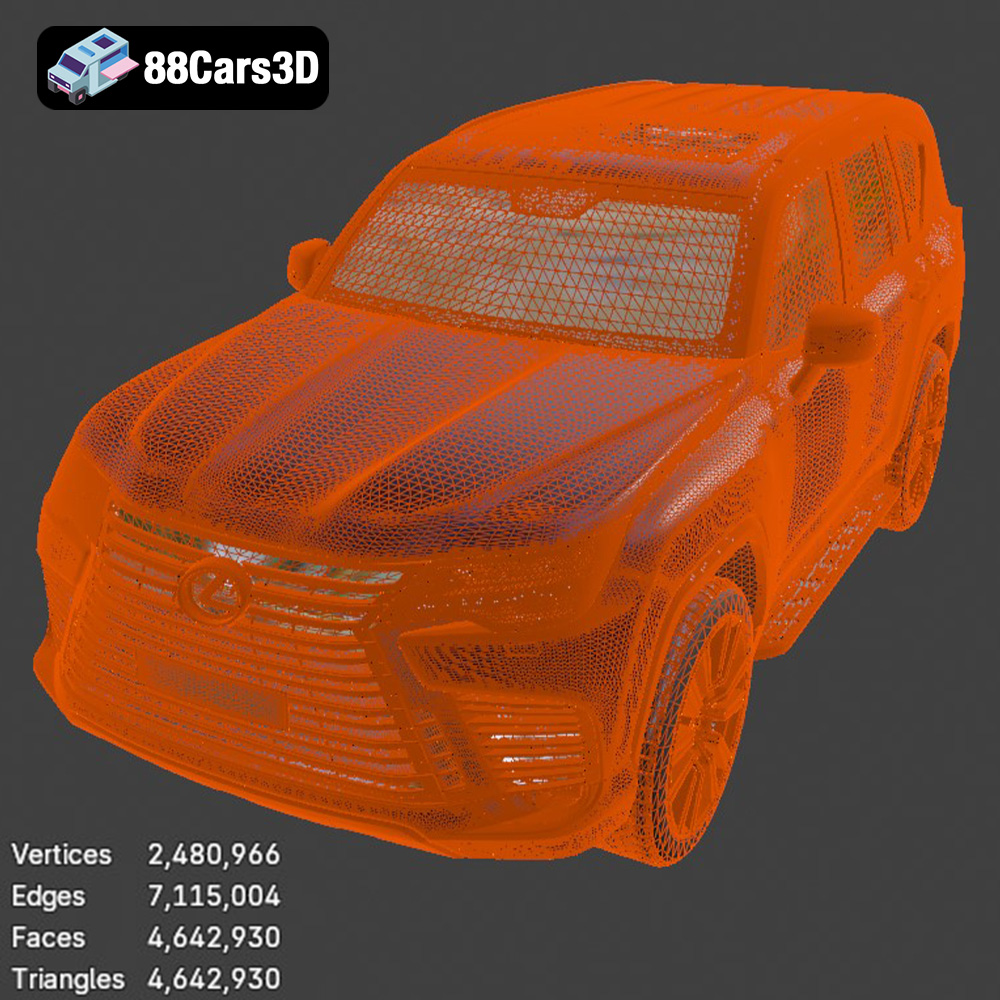
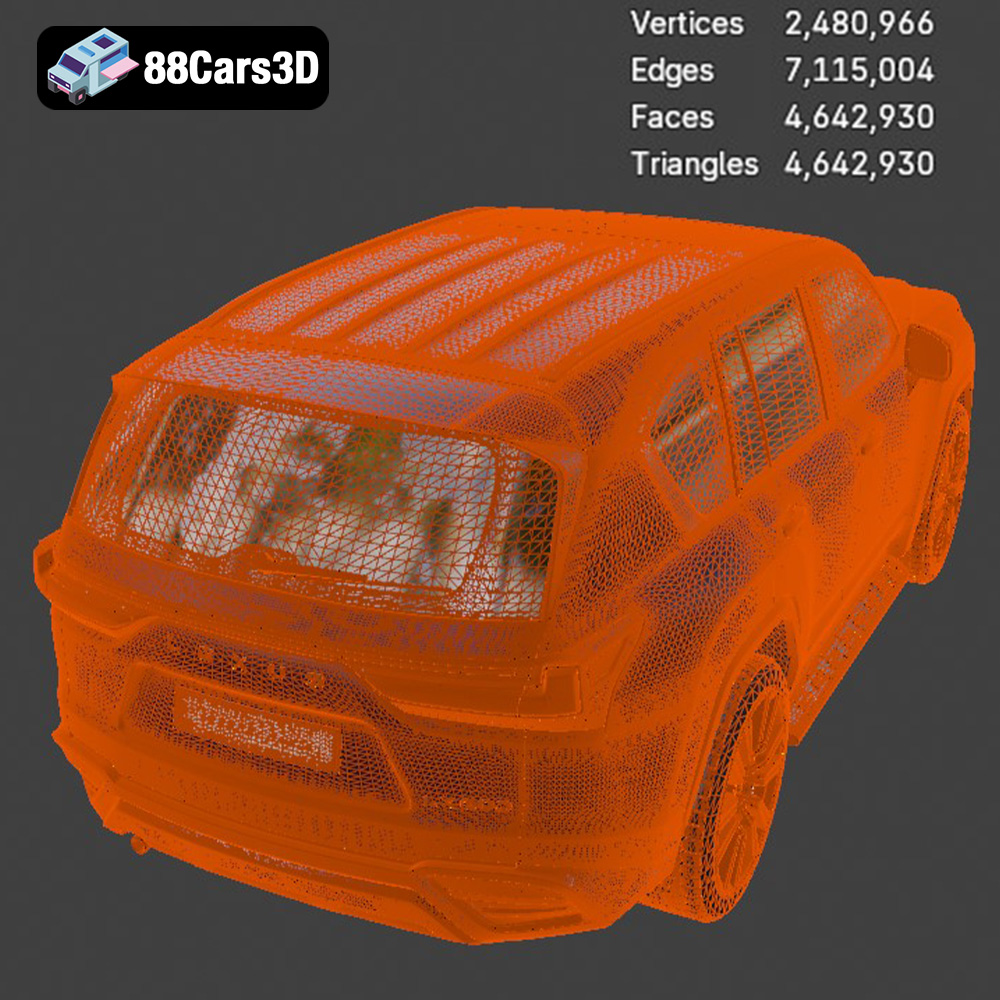
Technically, the model boasts an incredibly detailed topology of 4,642,930 triangles. This high polygon count is a deliberate choice, designed to deliver unparalleled visual fidelity for cinematic rendering and high-end automotive visualization. Despite the complexity, the geometry is structured intelligently, allowing for optimization techniques when needed, making it surprisingly versatile. Crucially, components like the wheels, suspension, and steering are separated, not just for accuracy in static renders but also for seamless animation in simulations or game environments. The representation of the twin-turbo V6 engine block compartment and adaptive variable suspension detailing further cements its authenticity, honoring the vehicle’s legendary off-road pedigree.
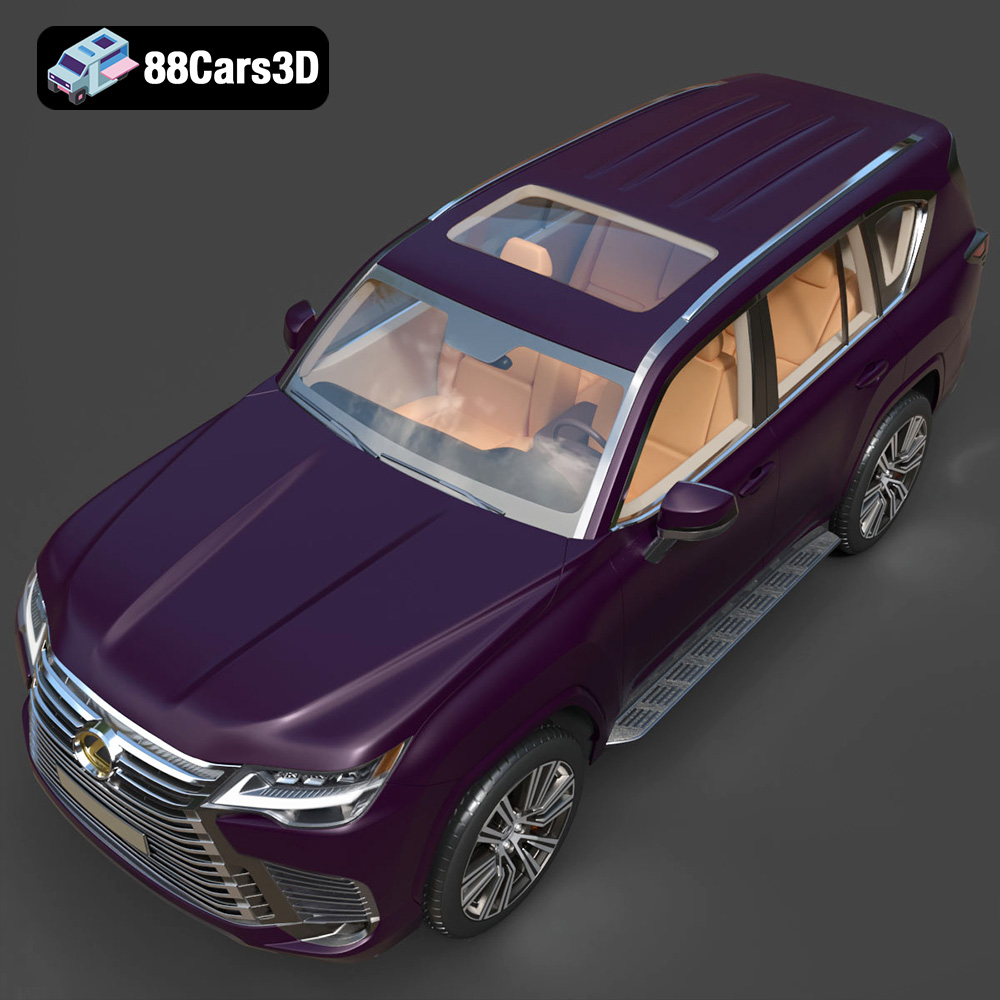
Beyond the impressive exterior, the Lexus LX600 3D Model invites users into a world of digital luxury. The cockpit and interior features are a testament to meticulous craftsmanship, designed to support close-up renders and immersive first-person experiences. Sumptuous multi-contour leather seating details, complete with precise stitching, evoke the tactile quality of the real vehicle. The heated, wood-trimmed steering wheel, dual-screen infotainment cluster, and digital driver display are all accurately represented, providing a realistic interactive environment.
Intricate control details, including pedals, the gear shifter, and drive mode selector dials, are present and correctly scaled. This level of internal detail is paramount for applications such as virtual showrooms, driving simulators, and especially for next-gen game development where players might interact with or view the interior from a first-person perspective. The optimized geometry ensures that even with high fidelity, the interior remains performant enough for real-time rendering in gaming and VR experiences, making it an invaluable game asset.
The true power of a versatile 3D asset lies in its seamless integration into various professional pipelines. The Lexus LX600 3D Model is engineered precisely for this, providing robust solutions for game developers, visualization artists, and animators alike.
For game developers, finding the right balance between visual quality and real-time performance is a perpetual challenge. The Lexus LX600 3D Model addresses this head-on with its “Game-Ready & Optimized” technical specifications. The 4,642,930 triangles, while high, are meticulously structured to allow for efficient rendering in engines like Unreal Engine and Unity. This polycount strikes a perfect balance, maintaining high-end visual realism crucial for immersive open-world games, racing titles, and vehicle simulators, while still being manageable within an engine’s budget.
The inclusion of .fbx and .unreal formats is a huge advantage here. The .fbx provides a widely compatible export that retains critical animation data and material assignments, while an .unreal package (if specifically prepared) minimizes setup time, allowing developers to drop the asset directly into their projects. Crucially, the model features a proper pivot setup for steering, wheel rotation, and suspension travel. This means animators can quickly rig the vehicle for realistic driving mechanics without complex recalibrations, making it an ideal game asset for dynamic vehicle interactions and physics simulations. The real-world scale accuracy further ensures consistent integration with existing game environments and assets.
When the goal is photorealism for advertising, film, or high-impact visualization, the Lexus LX600 3D Model truly shines. Its detailed topology and accurate material zones are perfect for advanced automotive rendering. Artists using 3ds Max or Blender can leverage the .max and .blend files respectively, gaining full access to the model’s structure, allowing for fine-tuned material adjustments and complex lighting setups.
For architectural visualization, integrating a luxury SUV like the LX600 can dramatically enhance the perceived value and lifestyle appeal of a scene. Imagine an exquisitely rendered architectural exterior with the Lexus LX600 parked in the driveway, or a lavish showroom featuring the vehicle under dramatic lighting. The model’s ability to be customized with different body colors, material finishes (matte, gloss, metallic), and adaptive lighting for various environments makes it incredibly versatile for creating compelling brand campaigns and sophisticated lifestyle scenes. Whether it’s a glossy studio render or a gritty off-road adventure, the base quality of this 3D car model from 88cars3d.com ensures professional-grade output every time.
A premium 3D model isn’t just about static accuracy; it’s about empowering creators to adapt and customize it to their unique visions. The Lexus LX600 3D Model offers extensive customization options, expanding its utility across a broad spectrum of digital and even physical applications.
The model provides a robust foundation for aesthetic customization, allowing artists to tailor its appearance to match specific project requirements. Users can easily change body colors, experimenting with authentic factory finishes or creating entirely custom hues. The ability to modify tire textures allows for switching between aggressive off-road variants and sleek street-focused designs, directly influencing the vehicle’s character within a scene. Furthermore, adjusting material finishes – from a sophisticated matte to a gleaming gloss or a luxurious metallic sheen – can dramatically alter the perception of the model. This versatility ensures that the Lexus LX600 can fit seamlessly into diverse environments, from urban settings to rugged landscapes, making it an invaluable asset for any automotive rendering project.
Beyond traditional rendering and game development, the Lexus LX600 3D Model is optimized for next-generation immersive experiences and even tangible creation. For Augmented Reality (AR) and Virtual Reality (VR), the model’s optimized geometry and the inclusion of the .glb format make it perfect for interactive virtual showrooms and configurators. Imagine potential customers exploring the LX600 in full 3D from their living room, rotating it, opening doors, and changing colors in real-time. The optimized geometry ensures a smooth, high-fidelity experience in mobile AR and VR applications, creating truly immersive virtual car configurators.
The versatility extends to the physical realm through 3D printing. With the provision of an .stl format, hobbyists and professionals can translate the digital Lexus LX600 into a tangible display model. The product description provides clear 3D print settings, recommending scales (1:12 / 1:18 / 1:24), layer heights (0.04–0.12 mm, with resin printing recommended for fine details), and even guidance on wall thickness, infill, and support requirements. Details like printing the frame angled for structural integrity and wheels separately ensure a successful print. The emphasis on post-processing—sanding, primer, and authentic factory colors with metallic finishes—highlights the potential to create a museum-quality physical replica, demonstrating the comprehensive nature of this premium 3D car model as a game asset and beyond.
In today’s fast-paced digital production environment, time is a precious commodity. Investing in a meticulously crafted 3D model like the Lexus LX600 from a reputable marketplace such as 88cars3d.com is not merely a purchase; it’s a strategic decision that offers substantial value. Developing such a detailed and optimized model from scratch would require hundreds of hours of expert artist time, making the cost prohibitive for most projects. By acquiring a pre-made, high-quality asset, studios and individual artists can significantly accelerate their workflows, allowing them to focus on creative direction, scene assembly, and final polish rather than foundational asset creation.
The Lexus LX600 3D Model exemplifies the advantages of premium assets: real-world scale accuracy ensures seamless integration into existing scenes, while its “Game-Ready & Optimized” status means it’s production-ready for both real-time engines and high-fidelity rendering. The proper pivot setup for animation drastically reduces rigging time, and the extensive range of included file formats guarantees compatibility across virtually all major 3D software and engines. This commitment to technical excellence and versatility ensures that every project, whether it’s a blockbuster game, a luxury automotive rendering campaign, or an innovative AR experience, benefits from a professional foundation. Choosing quality 3D car models from 88cars3d.com translates directly into higher quality output, faster turnaround times, and ultimately, greater creative freedom.
The digital automotive landscape is continually pushing the boundaries of realism and immersion. The Lexus LX600 3D Model stands as a shining example of what truly defines a premium 3D asset in this demanding field. Its meticulous detail, from the iconic spindle grille to the intricate interior stitching, combined with its robust technical specifications and comprehensive file format support, makes it an indispensable tool for a wide array of professional applications.
Whether your project demands cinematic photorealism, dynamic game asset integration, immersive AR/VR experiences, or even detailed 3D printed replicas, this model offers the versatility and quality required to achieve exceptional results. It serves as a testament to the power of well-crafted 3D car models in elevating digital projects. Explore the possibilities and enhance your creative endeavors with this exceptional Lexus LX600 3D Model, available now at 88cars3d.com.
The Lexus LX600 stands as the pinnacle of luxury SUVs, combining legendary off-road capability with uncompromising flagship refinement. This meticulously crafted 3D model captures the vehicle’s imposing presence, featuring its iconic massive spindle grille, muscular wheel arches, and sophisticated bodywork. Under the hood lies the representation of its formidable twin-turbo V6 engine, while the bold exterior styling is complemented by an elegant exhaust system and intricate aerodynamic details. With an incredibly detailed topology of 4,642,930 triangles, this model delivers unparalleled visual fidelity designed for cinematic rendering and high-end automotive visualization. Despite the high polygon count, the geometry is structured to allow for optimization, making it highly versatile. It stands ready for demanding use cases such as next-gen game development, immersive AR/VR configurations, high-end animation, and architectural visual integration.
$90.00
.blend
.fbx
.glb
.lexus
.luxury suv
.lx600
.max
.obj
.ply
.rendering
.stl
.unreal
car-3d-model
game asset
game-ready
high poly
optimized
SUV
VR/AR