Get 20% OFF All Premium 3D & STL Models!

In the dynamic world of digital content creation, the demand for exceptionally detailed and versatile 3D assets continues to surge. From groundbreaking video games that blur the lines of reality to immersive architectural visualizations, compelling product showcases, and cutting-edge virtual reality experiences, high-quality 3D models form the bedrock of successful projects. For automotive enthusiasts and professionals alike, creating lifelike vehicles is a cornerstone of digital artistry, requiring precision, authenticity, and a deep understanding of technical specifications. This pursuit of digital perfection is where premium 3D car models truly shine, offering an invaluable head start for designers, developers, and artists across various industries.
A prime example of such an asset that embodies both heritage and advanced digital craftsmanship is the Mack CHU613 3D model. This iconic heavy-duty trailer truck, a legend of the Pinnacle series, brings its formidable presence and classic long-nose styling into the digital realm with unparalleled fidelity. Whether you’re aiming to populate a vast open-world simulator, craft photorealistic renders for commercial advertising, or even produce a tangible scale model through 3D printing, the right foundation is crucial. This article will explore the technical nuances, workflow integrations, and creative possibilities unlocked by premium 3D car models, using the Mack CHU613 as our detailed case study, demonstrating how platforms like 88cars3d.com provide essential tools for modern digital artists.
The journey of integrating a 3D model into any project begins with understanding its native and export formats. Each file type serves a distinct purpose, offering specific advantages in terms of compatibility, data retention, and optimization for particular workflows. The Mack CHU613 model is exemplary in its provision of a comprehensive suite of formats, ensuring maximum flexibility for any digital endeavor.
The .blend format is Blender’s native file type, offering a complete snapshot of a Blender project. This includes not just the mesh geometry, but also materials, textures, lighting setups, cameras, animations, physics simulations, and even custom scripts. For artists working within the Blender ecosystem, the .blend file is ideal as it retains all the procedural data and modifiers, allowing for deep customization and iteration without loss of information. When working with the Mack CHU613, the .blend file would provide full access to the original scene, enabling users to modify its topology, adjust materials using Blender’s powerful node editor, or even extend its animation capabilities directly within the software.
FBX (Filmbox) is a proprietary file format developed by Autodesk, and it has become an industry standard for interoperability between different 3D software applications and, critically, game engines. It supports a wide array of 3D data, including mesh geometry, materials, textures, animations, skinning, and even camera and light data. The .fbx format is the go-to choice for importing complex models like the Mack CHU613 into real-time environments such as Unreal Engine and Unity, where its robust support for skeletal animations and PBR (Physically Based Rendering) materials streamlines the game development pipeline. Its efficiency and widespread adoption make it a cornerstone for creating high-performance game assets.
OBJ (Object) is one of the oldest and most widely supported 3D file formats. It is a simple, text-based format that primarily stores geometric data – vertices, faces, normals, and UV coordinates. While it can reference external material (.mtl) files for basic color and texture information, it does not support advanced features like animation, rigging, or complex material networks. Its strength lies in its universal compatibility; almost every 3D application can open and interpret an .obj file. For the Mack CHU613, the .obj format serves as a reliable fallback for cross-software transfers when more advanced formats might encounter compatibility issues, ensuring that the core geometry and UVs are preserved across platforms.
GLB (GL Transmission Format Binary) is a modern, compact, and efficient 3D file format designed for the web. It’s the binary version of glTF (GL Transmission Format), which bundles all necessary data – mesh, textures, materials, animations – into a single file. This self-contained nature and optimization for real-time rendering make .glb files perfect for augmented reality (AR), virtual reality (VR), and interactive 3D experiences directly within web browsers. For showcasing the Mack CHU613 in a virtual showroom or an AR configurator, the .glb format offers excellent performance and ease of deployment without requiring complex setups or external dependencies.
STL (Stereolithography) is specifically designed for 3D printing. This format represents the surface geometry of a 3D object using a collection of interconnected triangles, but it does not store any color, texture, or material information. The Mack CHU613’s .stl variant is directly geared towards manufacturing, allowing hobbyists and professionals to transform the digital model into a physical replica. While it strips away visual fidelity, it provides the precise, watertight mesh data necessary for slicing software to prepare the model for additive manufacturing.
PLY (Polygon File Format) is another popular format for storing 3D data, often associated with 3D scanners and CAD applications. It can store a wider range of properties than .obj or .stl, including color, transparency, surface normals, and even confidence values for scan data. While less common for general 3D asset exchange compared to .fbx, it can be valuable for applications requiring high precision or for integrating the Mack CHU613 into engineering analysis or specialized CAD environments where detailed point cloud or polygonal data is paramount.
The ‘.unreal’ designation typically refers to an asset that has been specifically prepared, imported, and optimized within Unreal Engine. While .fbx is the common import format, an ‘.unreal’ asset implies that it has gone through the engine’s pipeline, potentially including material assignments, collision setup, LOD (Level of Detail) generation, and blueprint integration. This format offers a plug-and-play experience for Unreal Engine users, saving considerable setup time. For the Mack CHU613, this means an asset ready to be dropped into a scene with pre-configured materials, physics, and potentially even interactive elements, allowing developers to immediately focus on gameplay or scene composition.
The .max format is the native file type for Autodesk 3ds Max, a leading software for 3D modeling, animation, and rendering. Similar to .blend, it encapsulates the entire 3ds Max scene, including geometry, modifiers, materials (V-Ray, Corona, Arnold), lighting, cameras, animation keyframes, and render settings. For professionals deeply embedded in the 3ds Max ecosystem, the .max file for the Mack CHU613 offers complete control over every aspect of the model, enabling sophisticated rendering setups, complex animation sequences, and integration with advanced rendering engines for photorealistic output in architectural visualization or high-end product advertising.
The inclusion of these diverse formats with the Mack CHU613 model underscores its unparalleled versatility, making it a truly future-proof asset for any creative professional.
The Mack CHU613 is more than just a truck; it’s an emblem of American heavy-haul engineering. Translating such an icon into a high-fidelity 3D model requires meticulous attention to detail, a deep appreciation for its form, and a commitment to technical excellence. The Mack CHU613 3D model available on 88cars3d.com perfectly embodies these principles, making it an indispensable asset across a spectrum of digital applications, from intense simulation to breathtaking cinematic sequences.
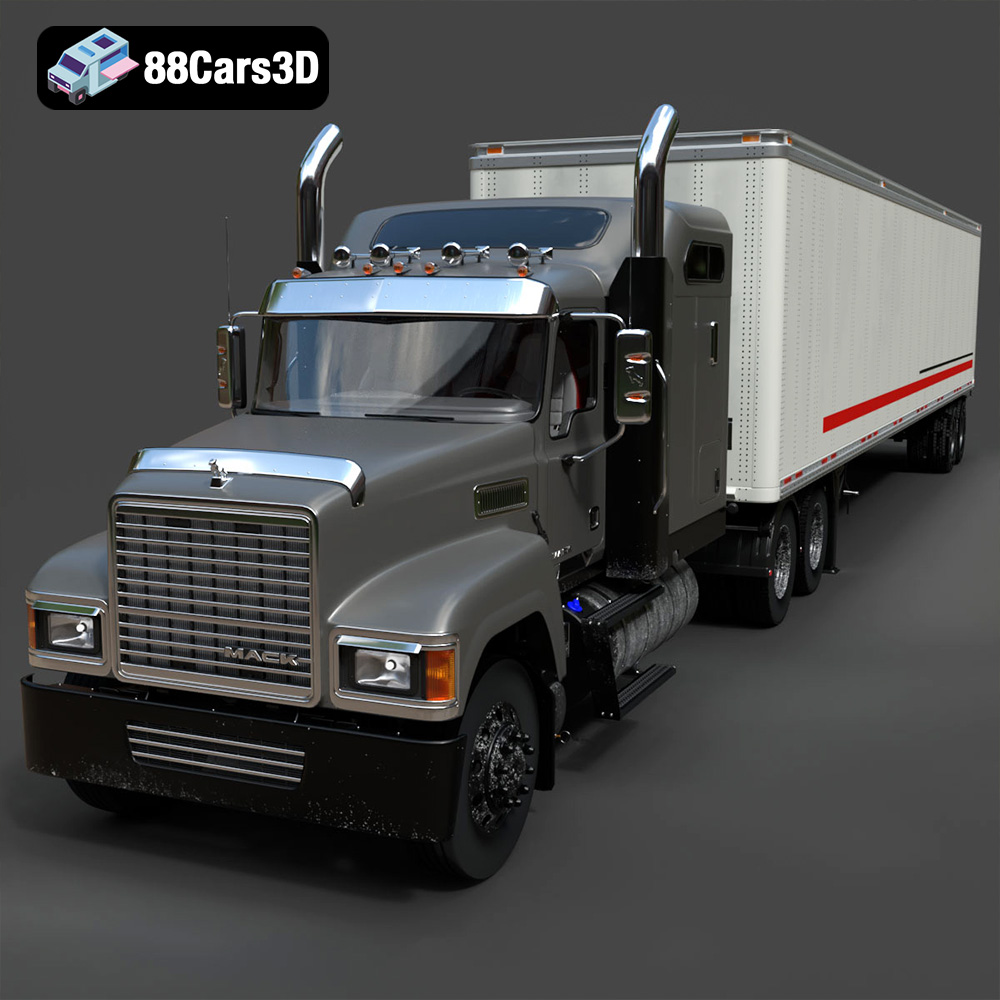
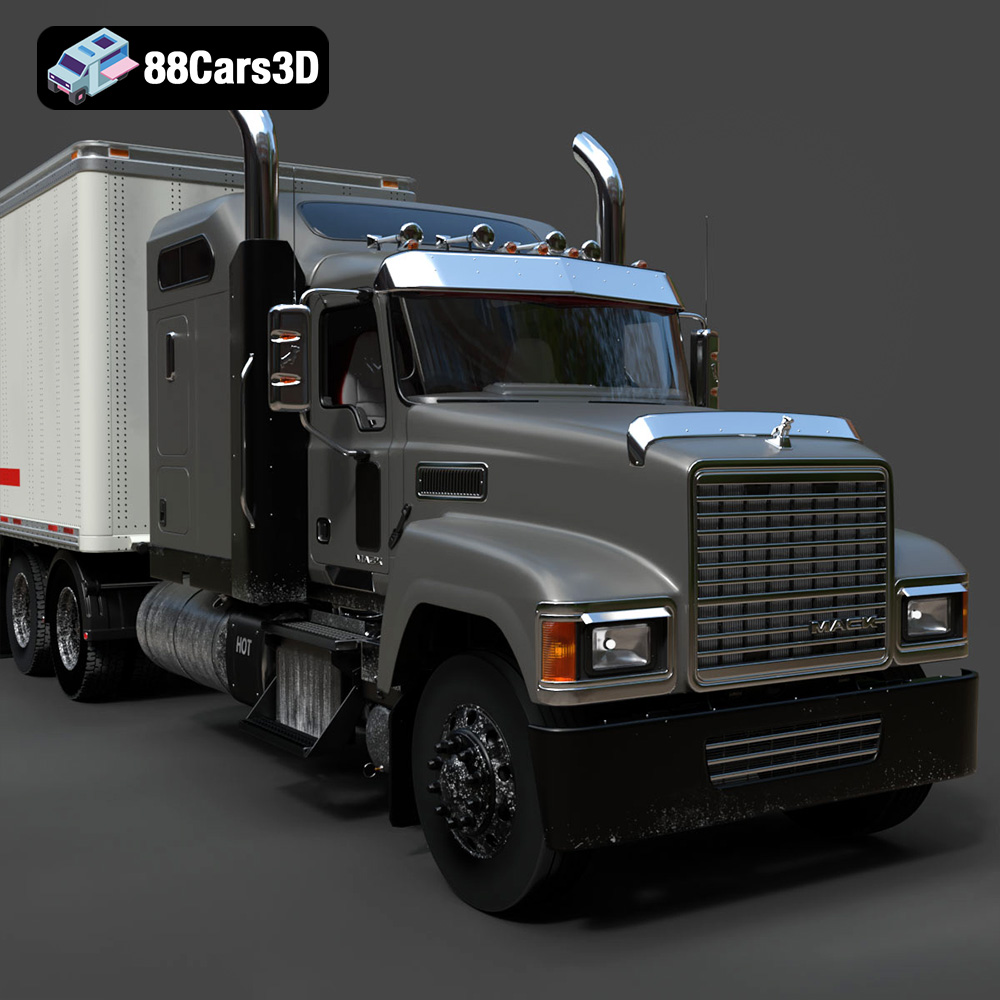
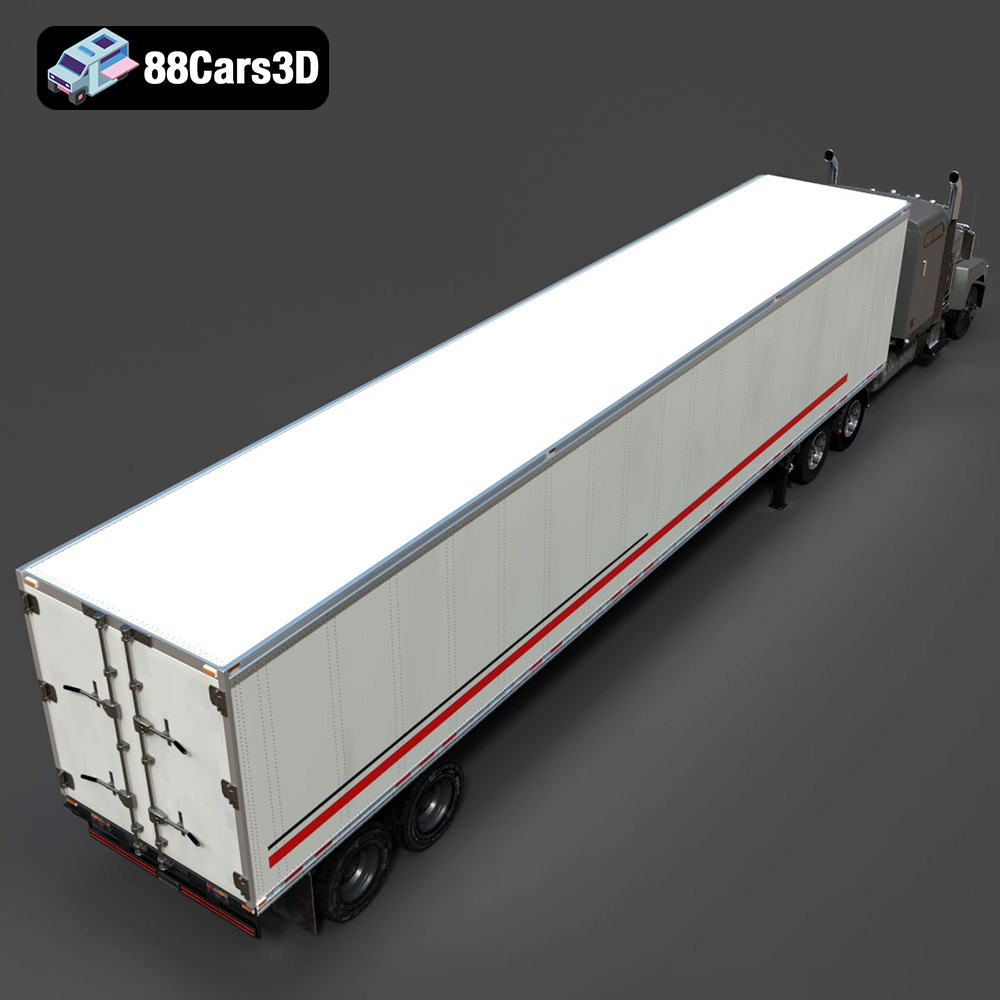
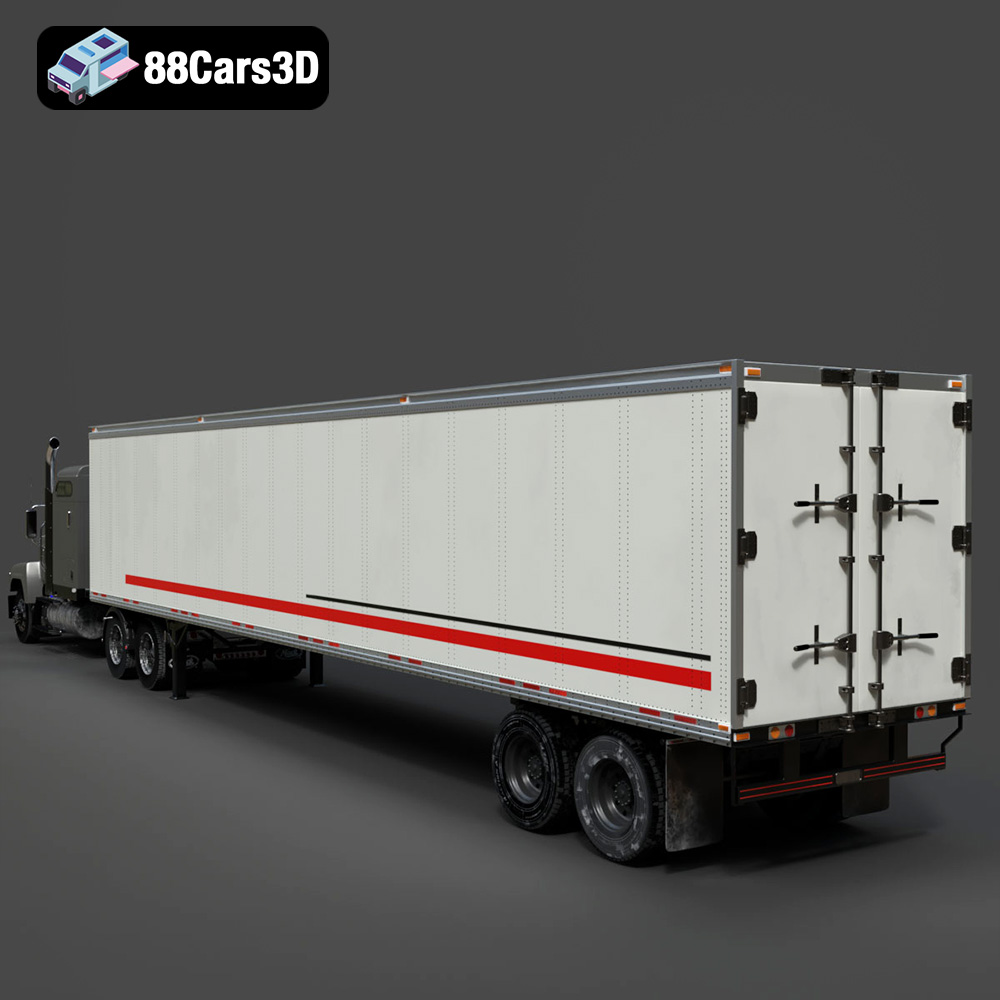
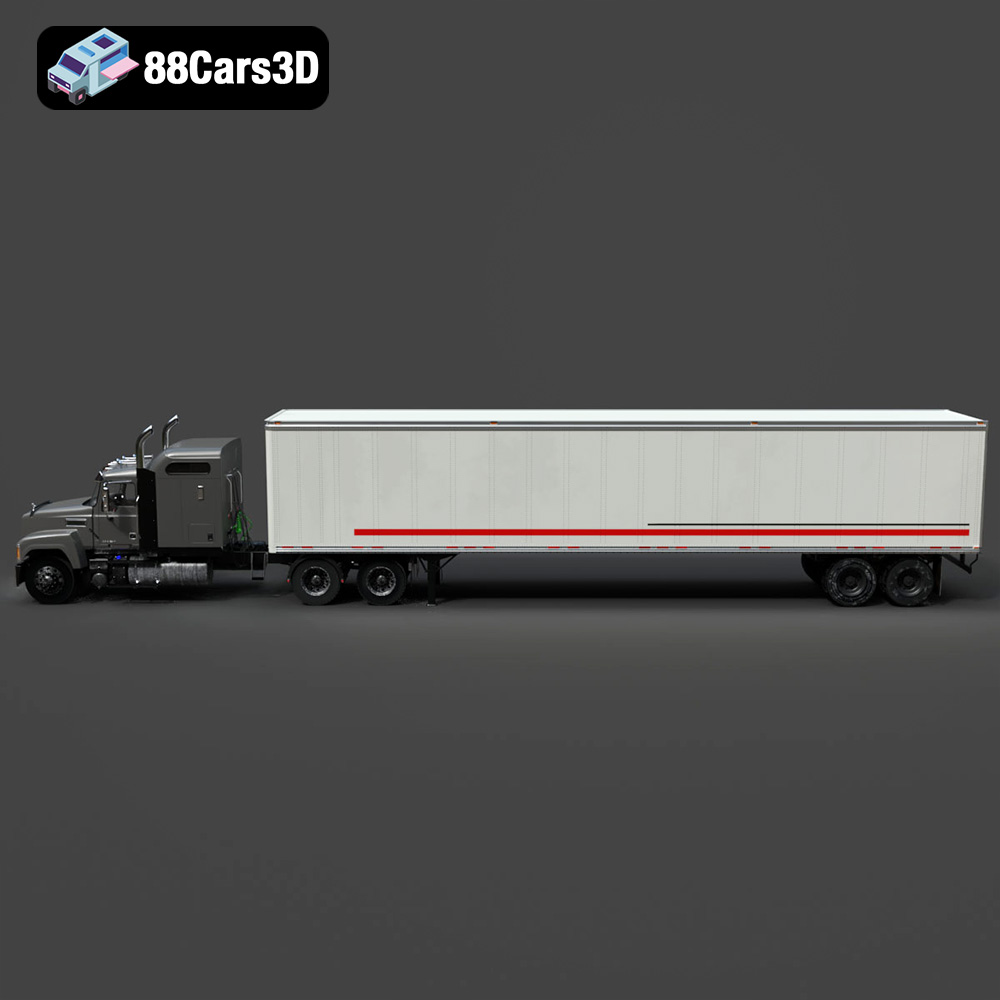
The model’s exterior is a testament to its real-world counterpart. It faithfully replicates the Mack CHU613’s traditional long-nose hood and robust frame geometry, immediately recognizable by its bold chrome grille and the proud bulldog hood ornament. Every element, from the imposing dual chrome exhaust stacks to the intricate lighting details – including classic round headlights, cab marker lights, and LED taillights – has been painstakingly recreated. The heavy-duty diesel engine block and radiator assembly are accurately modeled, suggesting the power beneath the hood, while the high-fidelity commercial dual-tires and detailed alloy/steel wheels ground the model in realism. Furthermore, complex air suspension, drivetrain components, and a fully functional fifth-wheel hitch are present, providing not just visual accuracy but also the structural basis for realistic animation.
Stepping into the cockpit (virtually speaking), the interior features are equally impressive. Authentic air-ride seats with realistic fabric and leather texturing provide comfort, while the detailed heavy-duty steering wheel and adjustable column offer a sense of operational control. An accurate wrap-around instrument cluster with individual analog gauges, complete control details including air brake valves, a massive gear shifter, and responsive pedals, ensure an immersive first-person perspective, critical for serious trucking simulators.
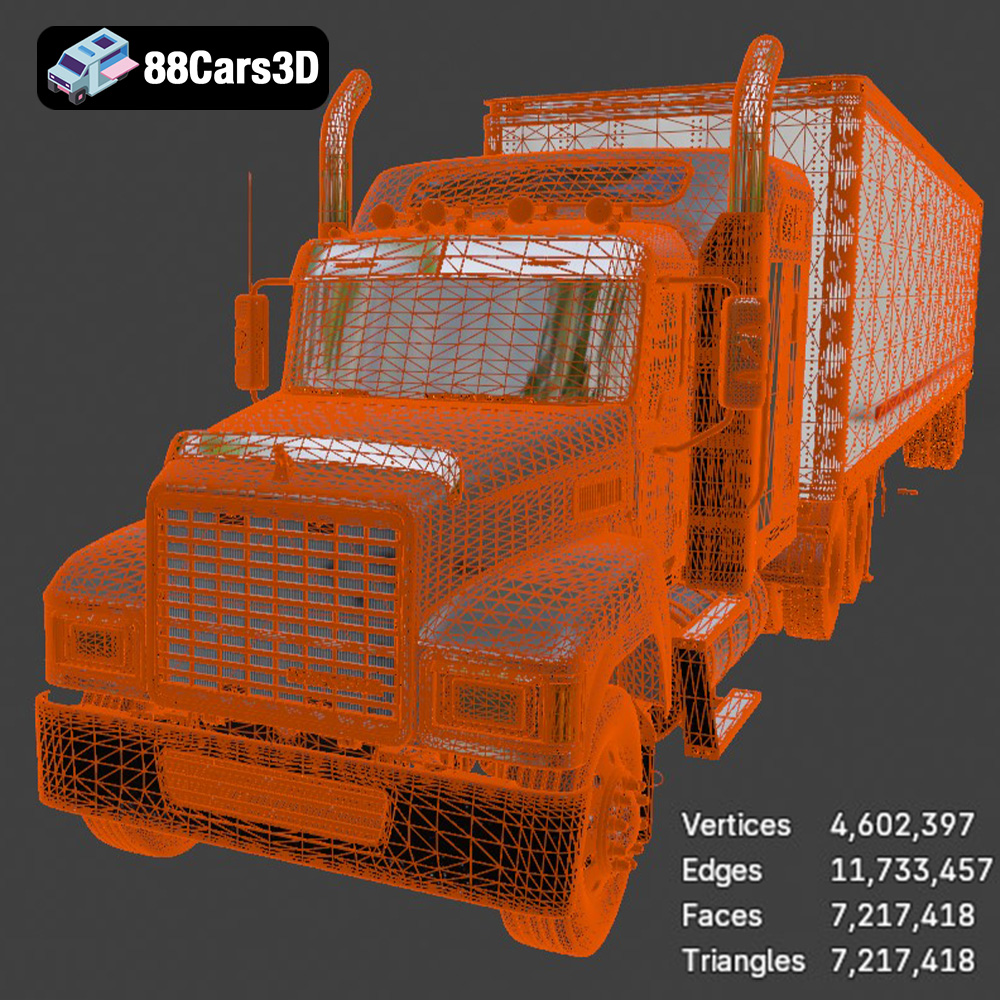
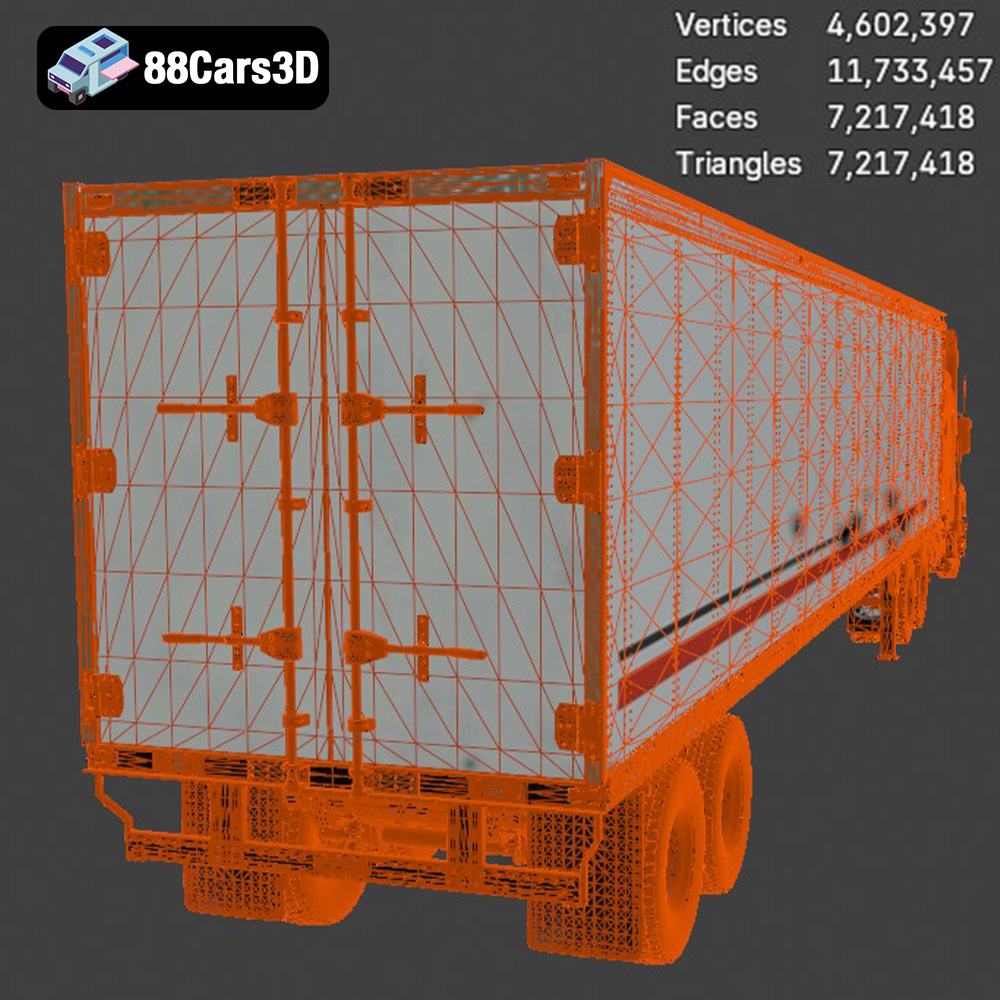
Achieving a balance between visual fidelity and performance is paramount in 3D asset creation, especially for real-time applications. The Mack CHU613 3D model strikes this balance with its highly detailed topology of 7,217,418 triangles. While this polycount delivers unparalleled visual fidelity for close-up renders and cinematic productions, modern game engines like Unreal and Unity are increasingly capable of handling such detail, often leveraging Level of Detail (LOD) systems to manage performance effectively. This thoughtful optimization makes the model ideal for demanding game development scenarios where visual realism cannot be compromised.
Beyond polygon count, the model boasts real-world scale accuracy, based on actual heavy-duty vehicle chassis dimensions. This is crucial for realistic physics simulations, environmental interactions, and maintaining correct perspectives within any scene. Furthermore, the proper pivot setup for steering, wheel rotation, trailer articulation, and suspension travel is meticulously implemented. This attention to mechanical accuracy simplifies the animation process for developers, allowing for believable motion dynamics straight out of the box, enhancing the model’s utility as a robust game asset or a dynamic element in an animated sequence.
The true power of a high-quality 3D asset lies in its seamless integration into established professional workflows. The Mack CHU613, with its meticulous detailing and diverse file formats, provides an exceptional foundation for projects ranging from photorealistic architectural visualizations to interactive virtual experiences.
For artists focused on producing stunning visuals, the Mack CHU613 model is a dream to work with in industry-standard rendering software. In Autodesk 3ds Max, the provided .max file offers a complete scene, allowing direct manipulation, material adjustments using advanced render engines like V-Ray or Corona, and sophisticated lighting setups. Artists can effortlessly adjust the polished chrome finishes, refine the fleet paint shaders, and set up dynamic camera paths to showcase the truck’s impressive form. This makes it perfect for generating high-resolution images for advertising campaigns, commercial fleet brochures, or even detailed virtual showrooms where every surface texture and reflection matters.
Blender users benefit equally from the .blend file, which grants full access to the model within a powerful open-source environment. Utilizing Blender’s Cycles render engine, artists can achieve physically accurate lighting and material interactions, creating breathtaking photorealistic renders. For quicker iterations or real-time previews, the Eevee engine can leverage the model’s optimized geometry. Node-based materials allow for complex shader creation, enabling customization of paint gloss, tire wear, or even adding environmental dust and grime for enhanced realism. Imagine the Mack CHU613, gleaming under studio lights or battling a dusty desert road – these scenarios are readily achievable, providing compelling automotive rendering solutions.
The demands of real-time environments, particularly in game development, are unique. The Mack CHU613 excels here, primarily through its .fbx and dedicated .unreal file formats. Importing the .fbx into Unreal Engine is a straightforward process, where the engine’s PBR (Physically Based Rendering) workflow can be fully utilized. Materials can be quickly assigned and refined, leveraging texture maps (albedo, normal, roughness, metallic) that define the truck’s realistic appearance. The model’s detailed geometry and proper UV unwrapping ensure that textures are displayed flawlessly.
For gameplay and interactive experiences, the model’s pre-configured pivot points are invaluable. Developers can easily set up vehicle physics, define collision meshes, and implement custom blueprints for realistic steering, suspension, and trailer articulation. The inherent detail, even with 7 million triangles, is manageable in modern Unreal projects, especially when combined with Unreal’s built-in Level of Detail (LOD) system, which automatically reduces polygon count at a distance for optimal performance. This makes the Mack CHU613 an ideal game asset for heavy-duty trucking simulators, industrial site exploration games, or even as a background prop in a large open-world environment, ensuring both visual quality and smooth frame rates.
The versatility of a well-crafted 3D model extends far beyond traditional rendering and game development. The Mack CHU613 also opens doors to exciting new frontiers in immersive experiences and physical fabrication, catering to both cutting-edge technology and tactile craftsmanship.
Augmented Reality (AR) and Virtual Reality (VR) represent powerful new mediums for engaging with digital content. The Mack CHU613 3D model is perfectly positioned for these applications, particularly with its .glb format. Optimized for web-based and mobile AR/VR platforms, the .glb file ensures efficient loading and smooth interaction. Imagine a sales configurator where potential buyers can “walk around” the Mack CHU613 in an AR app, viewing it at real-world scale in their driveway, or stepping into a VR showroom to explore its highly detailed cockpit in a fully immersive environment. These applications are not just about novelty; they provide powerful tools for virtual showrooms, safety training simulations, and interactive product demonstrations, offering an unparalleled sense of presence and detail for users. The model’s optimized geometry and realistic interior features ensure that first-person VR experiences are truly compelling and believable.
For those who appreciate the tactile experience of a physical object, the Mack CHU613 model’s inclusion of an .stl format opens up the world of 3D printing. This allows enthusiasts, educators, or even prototype designers to convert the digital blueprint into a tangible scale model. The product description provides excellent guidance for 3D print settings, recommending scales like 1:24, 1:32, or 1:48, along with specific parameters for layer height (0.04–0.12 mm) and wall thickness (1.2–2.0 mm). For intricate details like the iconic bulldog hood ornament or the delicate exhaust stacks, resin printing is recommended to capture the fine precision of the digital model.
Successful 3D printing of such a detailed model often requires careful planning, including supports for overhangs and printing components separately (e.g., frame angled for integrity, wheels and cab printed apart). Post-processing, such as sanding, priming, and painting with authentic factory fleet colors and metallic chrome finishes, can transform a raw print into a stunning display piece or a custom component for a diorama. This bridges the gap between the digital and physical, offering a unique avenue for creative expression and product realization.
While the Mack CHU613 3D model is delivered with exceptional detail, its true strength lies in its adaptability. A professional-grade asset is not just a static representation but a versatile foundation that can be tailored to meet the specific demands of any project, reflecting branding, environment, or creative vision.
One of the most common customization needs in commercial visualization is to align a vehicle with a specific brand or fleet livery. The Mack CHU613 model is structured to allow for easy modification of cab and sleeper colors, enabling artists to replicate virtually any commercial fleet’s visual identity. This means a blue Mack truck can effortlessly become a red, green, or custom-branded vehicle, maintaining visual consistency across an entire digital campaign or game environment. Beyond paint, the model offers flexibility in tire textures; users can swap out highway rib variants for more aggressive traction patterns, depending on whether the truck is depicted on a smooth interstate or a rugged industrial site. Adjusting material finishes – from a matte fleet paint to a high-gloss show truck finish or a deeply polished chrome – further enhances brand representation and environmental storytelling, ensuring the truck always fits its intended role.
The inherent quality of the Mack CHU613’s topology and UV mapping provides a robust base for advanced material and lighting adjustments, significantly impacting the realism of the final output. Artists can fine-tune PBR material properties such as roughness, metallic values, and normal map intensity to simulate different levels of wear, environmental effects, or pristine factory conditions. For example, slight variations in roughness on chrome elements can emulate subtle pitting or a duller polish, adding to the visual narrative. This level of control is crucial for creating believable scenes that react dynamically to their surroundings.
Furthermore, adapting lighting for different scenarios is vital for atmosphere and realism. The model is prepared to look stunning whether bathed in the harsh sunlight of a daytime highway environment, navigating the grittier, more directional lights of a night-time industrial site, or even appearing under cinematic studio lighting. The intricate details of the lighting assemblies, such as the headlights and marker lights, can be animated or configured to emit realistic light, further enhancing the model’s presence. These customization options ensure that the Mack CHU613 is not just an accurate model, but a truly dynamic and adaptable asset ready for any creative challenge.
The journey through the technical capabilities and creative potential of high-fidelity 3D car models, epitomized by the Mack CHU613, underscores their indispensable role in modern digital production. From the intricate exterior and interior detailing that captures the very essence of this legendary heavy-duty truck, to its game-ready optimization and real-world scale, every aspect of this model is crafted to meet the highest professional standards. We’ve explored how its comprehensive range of file formats – .blend, .fbx, .obj, .glb, .stl, .ply, .unreal, and .max – empowers artists and developers across diverse workflows, whether for breathtaking automotive rendering in 3ds Max or Blender, seamless integration into real-time environments like Unreal Engine, or groundbreaking applications in AR/VR and 3D printing.
The Mack CHU613 is more than just a digital asset; it’s a versatile tool that saves countless hours of modeling, texturing, and optimization, allowing creators to focus on innovation and artistry. Its inherent detail, combined with extensive customization options for colors, materials, and lighting, ensures that it can be adapted to virtually any project requirement, maintaining visual consistency and realism. For anyone seeking premium 3D car models that deliver on quality, compatibility, and flexibility, resources like 88cars3d.com are invaluable, providing access to meticulously crafted assets that empower digital artists to bring their most ambitious visions to life. Invest in quality assets, and elevate your digital creations to new heights.
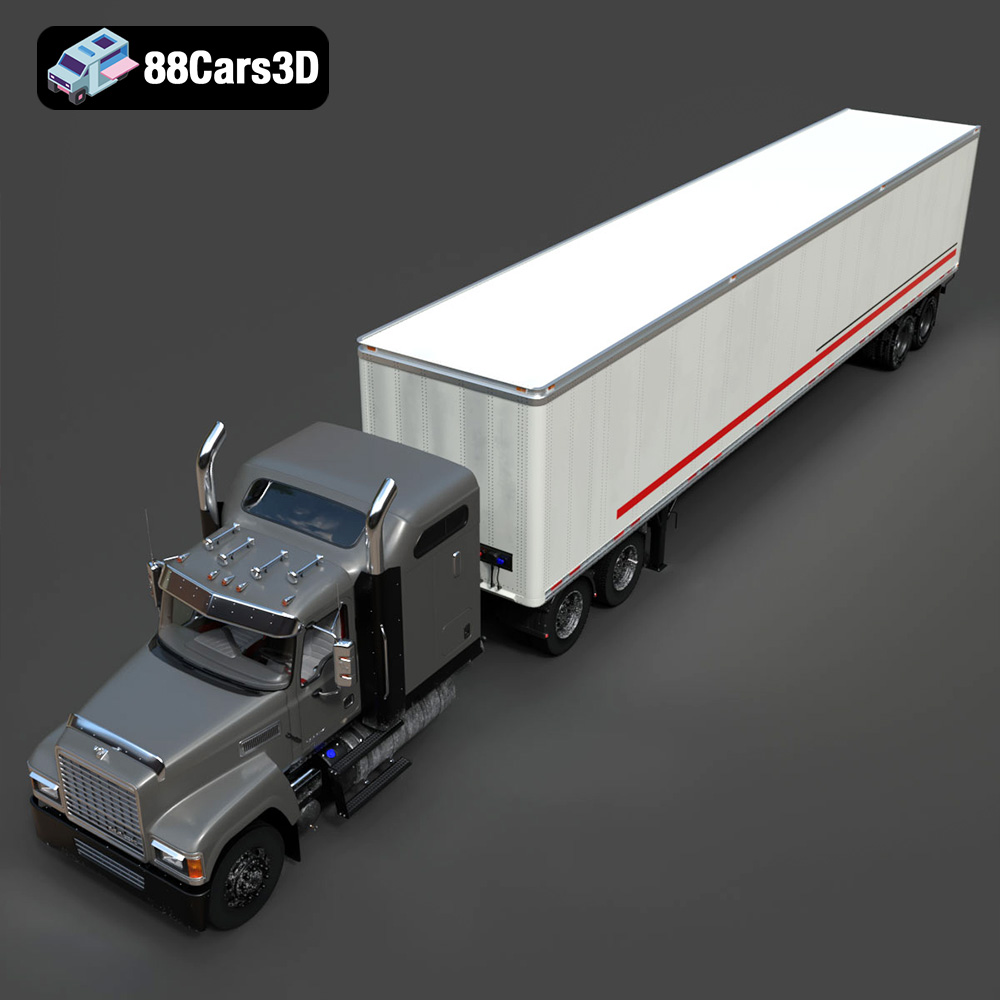
The Mack CHU613, part of the legendary Pinnacle series, is an iconic heavy-duty trailer truck known for its classic long-nose styling, unyielding durability, and highway dominance. This model perfectly captures its heritage with the unmistakable bold chrome grille, proud bulldog hood ornament, and imposing dual exhaust stacks. Engineered to replicate the powerful diesel engine housing and robust chassis, this 3D representation celebrates the ultimate combination of traditional American truck design and modern freight capability.
Boasting a highly detailed topology with 7,217,418 triangles, this 3D model delivers unparalleled visual fidelity for close-up renders and cinematic productions while maintaining excellent structural organization for advanced game development. Whether deployed in a heavy-haul driving simulator, a high-end virtual showroom, or a photorealistic industrial animation, the model ensures top-tier realism across all platforms.
Perfect for heavy-duty trucking simulators, industrial site visualizations, highway driving games, and high-resolution cinematic sequences.
.blend, .fbx, .obj, .glb, .stl, .ply, .unreal, .max
Tags:
mack, chu613, trailer-truck, semi-truck, heavy-duty-truck, commercial-vehicle, game-ready, high-poly, truck-3d-model, game-asset, rendering, vr-ar, blend, fbx, obj, glb, stl, ply, unreal, max
$90.00
.blend
.chu613
.fbx
.glb
.mack
.max
.obj
.ply
.rendering
.stl
.unreal
commercial-vehicle
game asset
game-ready
heavy-duty-truck
high poly
semi-truck
trailer-truck
truck-3d-model
VR/AR