Get 20% OFF All Premium 3D & STL Models!

In the dynamic realm of digital design and interactive experiences, the pursuit of realism and technical precision is paramount. Whether crafting a cinematic automotive advertisement, developing a cutting-edge racing simulation, or visualizing urban infrastructure, the quality of your 3D assets dictates the fidelity of your final output. High-fidelity 3D car models are no longer a luxury; they are an absolute necessity for professionals aiming to push the boundaries of visual excellence.
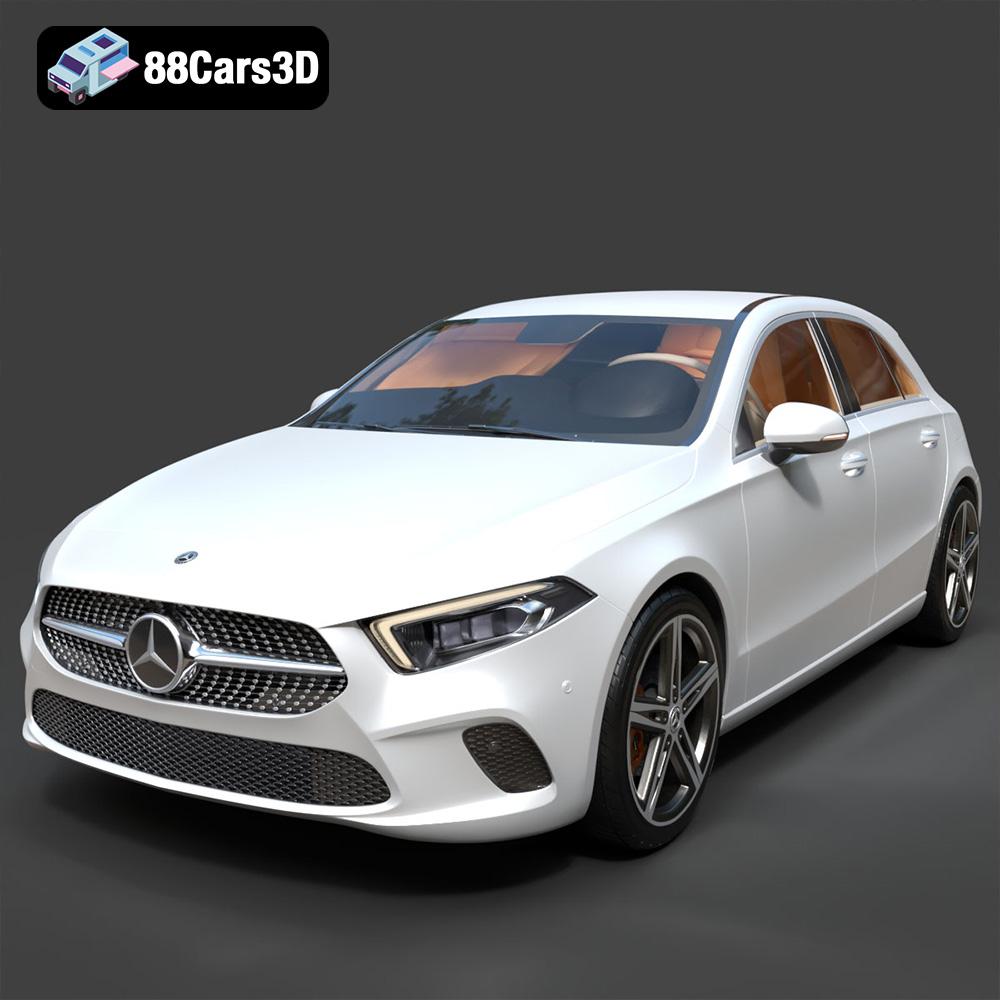
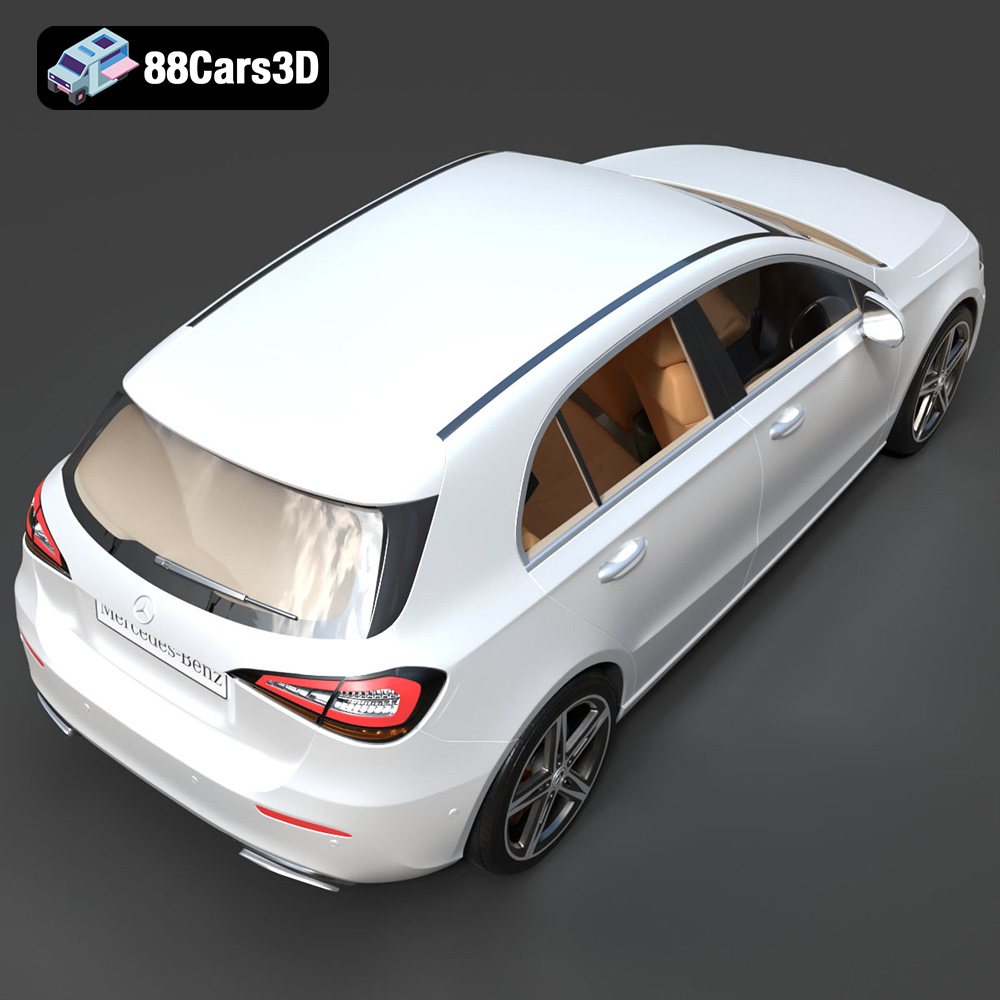
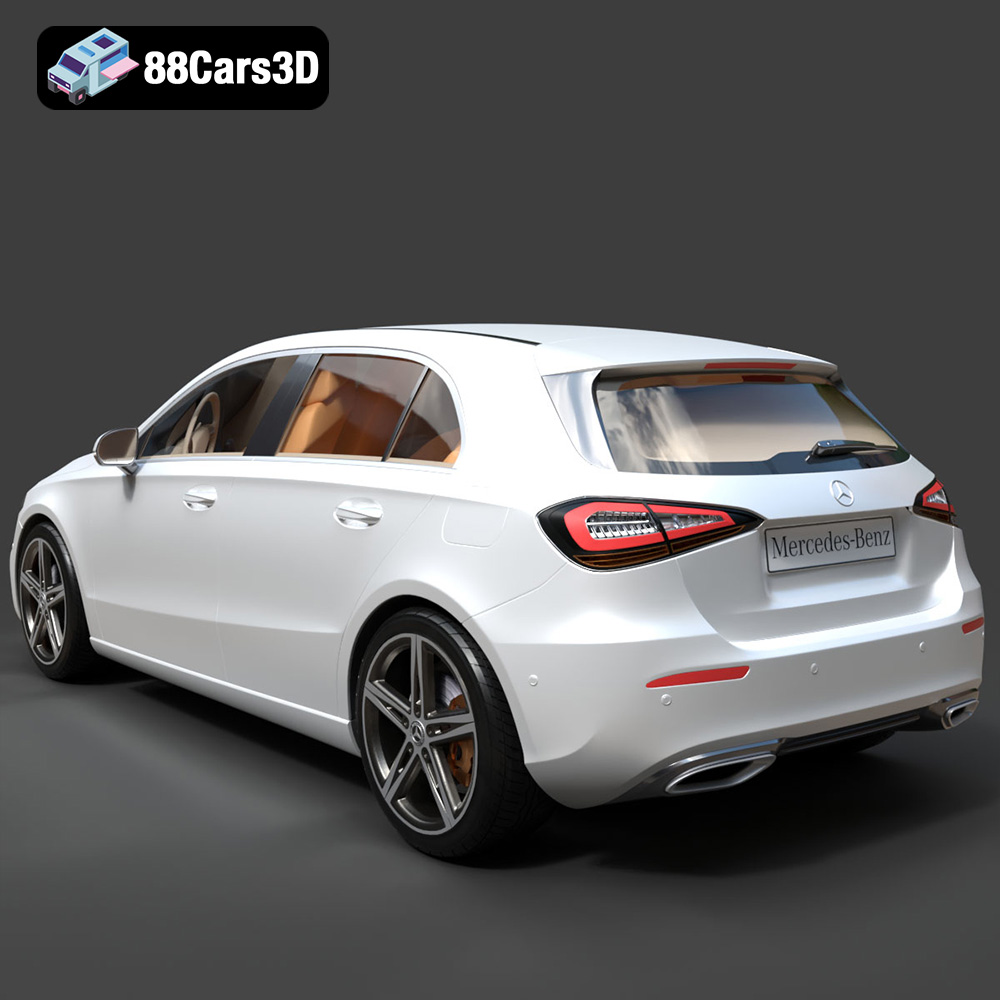
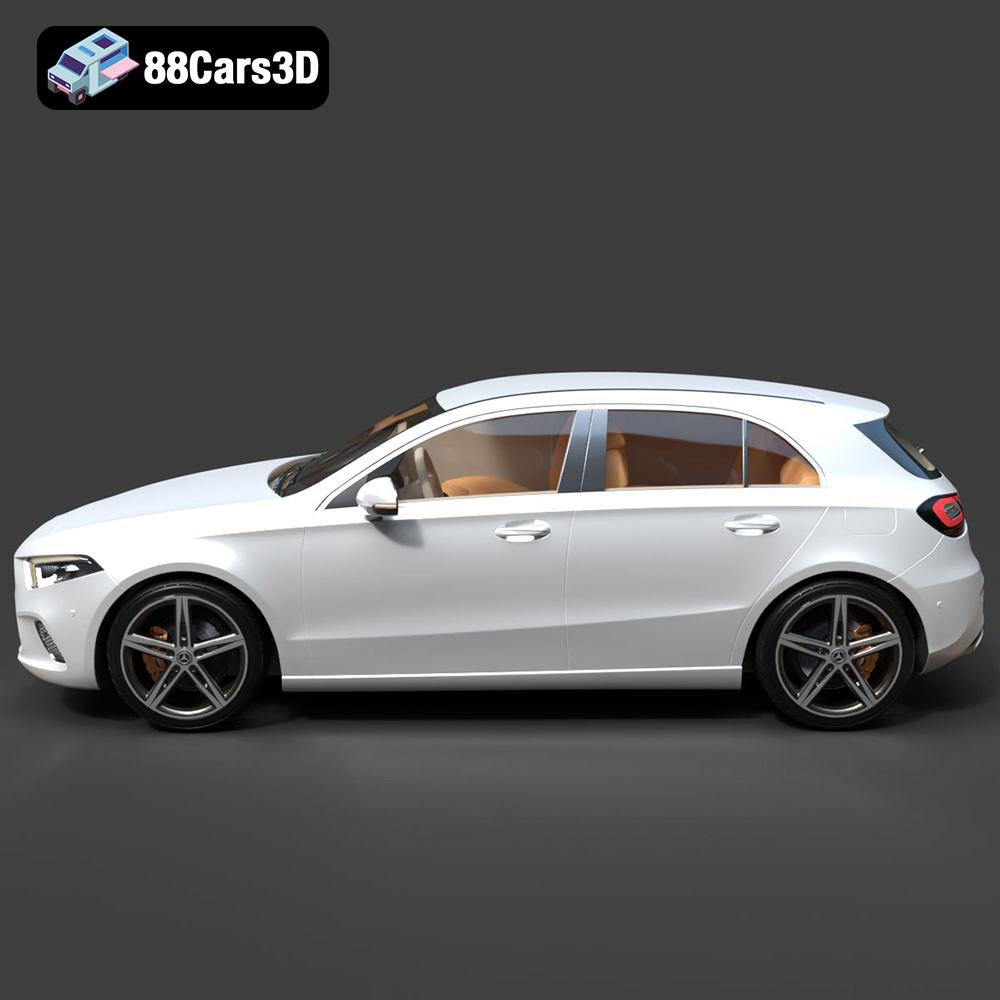
These intricate digital representations form the bedrock of countless projects, offering unparalleled flexibility for customization, animation, and integration across diverse platforms. From concept design and engineering analysis to marketing campaigns and virtual reality experiences, a meticulously crafted 3D vehicle can elevate a project from ordinary to exceptional. Today, we delve into the technical intricacies that define a superior 3D car model and explore how assets like the Mercedes Benz A H-08 3D Model found on 88cars3d.com exemplify the gold standard in automotive digitalization.
The journey of a 3D model from creation to deployment often involves navigating a diverse landscape of file formats, each optimized for specific applications and software ecosystems. Understanding these distinctions is crucial for seamless integration into your professional workflow. The Mercedes Benz A H-08 3D Model, for instance, is offered in a comprehensive suite of formats, ensuring maximum compatibility and utility across various pipelines.
The .blend format is native to Blender, the powerful open-source 3D creation suite. When you download a .blend file, you’re not just getting the model; you’re receiving a complete Blender scene. This typically includes the mesh data, all materials with their node setups, textures, lighting, cameras, and even animation data if present. For artists working primarily in Blender, this format offers the most flexibility for editing, re-texturing, rigging, and rendering within a familiar environment. It provides a non-destructive workflow where all original scene elements are preserved, allowing for deep customization and iteration without losing source data.
.fbx (Filmbox) is arguably the most widely adopted proprietary file format for 3D data exchange, especially prevalent in game development and animation pipelines. Developed by Autodesk, FBX excels at preserving complex scene information, including geometry, materials (with basic properties), textures, animations, skinning, and rigging. Its robust support for animation curves and hierarchical data makes it ideal for exporting animated characters and vehicles into game engines like Unreal Engine and Unity. For a game-ready asset such as our Mercedes Benz A H-08, an FBX file is essential for importing into these engines while retaining proper pivot points for wheels, suspension, and steering, crucial for dynamic vehicle physics.
The .obj (Wavefront OBJ) format is a venerable and widely supported open standard for 3D geometry. It’s a simple, text-based format that primarily describes the geometry of a 3D model, including vertices, normals, UV coordinates, and faces. While it can reference external material files (.mtl) for basic shading properties, it doesn’t store animation, rigging, or complex material node setups. Its strength lies in its universal compatibility, making it an excellent fallback for transferring mesh data between virtually any 3D software application. If you need a clean mesh to start a new project in an unsupported application or for basic mesh manipulation, .obj is a reliable choice.
.glb (GL Transmission Format Binary) is the binary version of glTF, a modern, royalty-free specification for the efficient transmission and loading of 3D scenes and models by engines and applications. GLB files package textures, materials, and geometry into a single, compact file, making them highly optimized for web-based 3D viewers, augmented reality (AR), virtual reality (VR), and mobile applications. Their efficiency and PBR (Physically Based Rendering) material support make them perfect for interactive product configurators or virtual showrooms where quick loading and real-time rendering are critical, such as showcasing the Mercedes Benz A H-08 in an immersive web experience.
The .stl (STereoLithography) format is the de facto standard for 3D printing. It represents a 3D model as a collection of unconnected triangular facets, defining only the surface geometry without color, texture, or other model attributes. While it lacks visual information, its simplicity makes it universally compatible with 3D printing software (slicers). For hobbyists or professionals looking to bring the Mercedes Benz A H-08 from the digital realm into a tangible display model, an optimized .stl file is indispensable, often requiring specific scaling and preparation as detailed in the product specifications.
.ply (Polygon File Format or Stanford Triangle Format) is another format for storing 3D data, particularly useful for applications involving 3D scanning, scientific visualization, and CAD. It can store a wider range of properties than .obj, including color, transparency, surface normals, and even data from 3D scanners (point clouds). While less common for general animation, it’s a robust format for precision mesh data and analysis, often used in reverse engineering or capturing detailed surface information.
The .unreal format signifies an asset specifically prepared and optimized for direct integration into Unreal Engine. While typically not a standalone file you “open,” it implies a pre-packaged asset bundle (often an .uasset) or a structure designed for Unreal’s content pipeline. This means materials are set up with PBR shaders, collision meshes may be included, and assets are likely optimized for features like Nanite. The availability of a .unreal version of the Mercedes Benz A H-08 signifies that the model is ready to be dropped into an Unreal Engine project with minimal setup, maximizing efficiency for game developers.
Similar to .blend for Blender, .max is the native file format for Autodesk 3ds Max, a leading software for 3D modeling, animation, and rendering. A .max file contains the complete scene data, including geometry, materials, textures, lights, cameras, animations, and scene setup. For professionals entrenched in the 3ds Max ecosystem, this format offers the highest level of editability and allows access to all modifiers, animation layers, and rendering settings used in the model’s creation. It’s invaluable for those who need to deeply integrate the Mercedes Benz A H-08 into existing 3ds Max projects for high-end cinematic renders or complex animations.
When evaluating a premium 3D car model, particularly one destined for professional application, its technical specifications are as crucial as its visual appeal. The Mercedes Benz A H-08 3D Model from 88cars3d.com stands out not just for its brand prestige but for its meticulously engineered digital structure, designed to meet the rigorous demands of various industries.
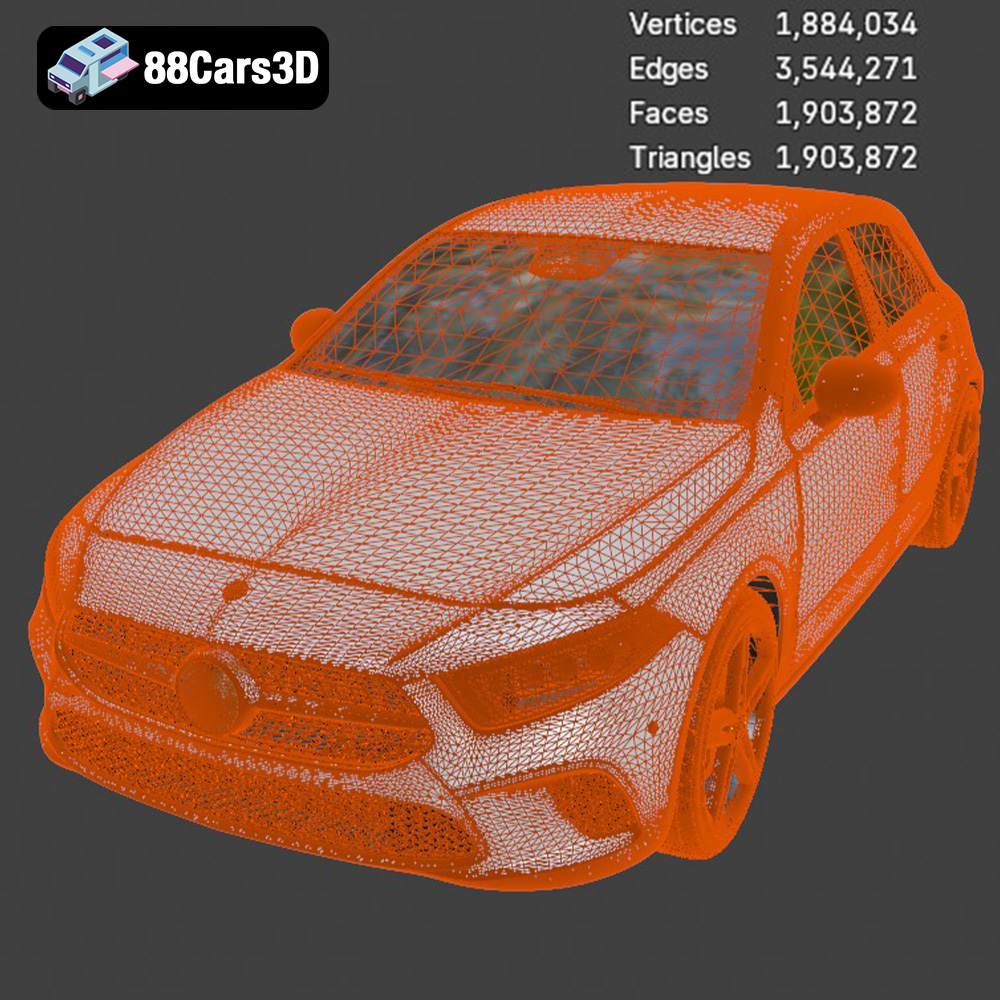
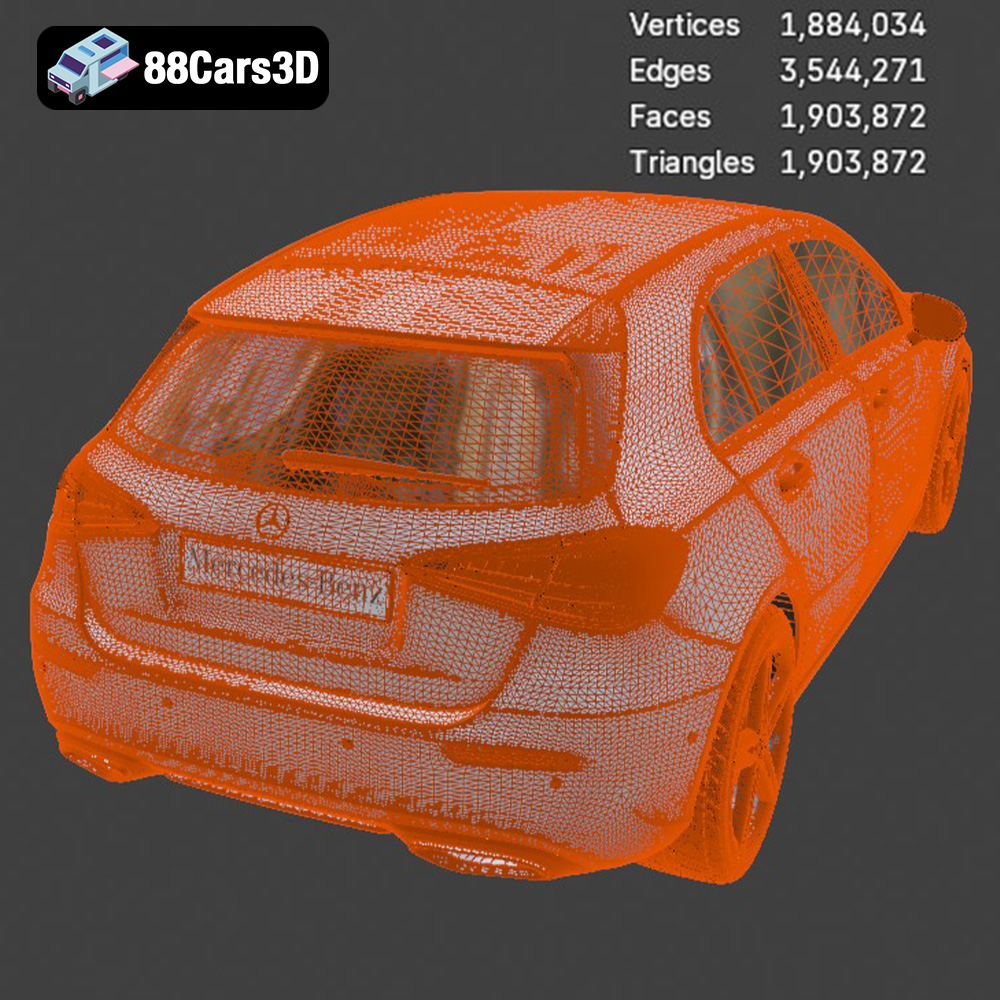
The core of any high-quality 3D model lies in its topology – how its vertices, edges, and faces are arranged. The Mercedes Benz A H-08 boasts an impressive 1,903,872 triangles. This dense topology is a deliberate choice, striking a critical balance. For high-end rendering and visualization, a higher polygon count allows for smoother curves, sharper details, and more accurate reflections, eliminating the blockiness often associated with low-poly models. This level of detail ensures that even in close-up shots or under intense studio lighting, the sleek body panels, integrated exhaust system, and distinctive LED lighting elements maintain their photorealistic integrity.
Crucially, this polycount is also optimized for modern real-time engines like Unreal Engine 5, particularly leveraging features such as Nanite. Nanite allows game developers to import high-poly assets directly, offloading much of the traditional LOD (Level of Detail) optimization process to the engine itself. This means that an asset like the Mercedes Benz A H-08 can deliver stunning visual realism in real-time without crippling performance, a game-changer for next-generation game development and immersive AR/VR experiences.
A true premium model goes beyond the surface. The Mercedes Benz A H-08 model meticulously recreates the vehicle’s authentic design language:
Beyond raw polygon count, several technical aspects enhance the model’s utility:
The true value of a high-quality 3D car model, such as the Mercedes Benz A H-08, is realized when it seamlessly integrates into various professional workflows. From high-end cinematic rendering to interactive real-time applications, understanding the integration process is key.
For studios focused on creating photorealistic imagery for marketing, advertising, or architectural visualization, the Mercedes Benz A H-08 is an exceptional asset. Using software like Autodesk 3ds Max or Blender, artists can leverage its detailed geometry and well-structured topology.
The term “game-ready” is often used, but for a model like the Mercedes Benz A H-08, it’s a technical designation. Optimized for Unreal Engine 5’s Nanite and similarly compatible with Unity, it addresses critical performance concerns.
For immersive applications, the Mercedes Benz A H-08 provides a highly detailed yet optimized foundation. Its .glb format is particularly beneficial here.
The versatility of a well-constructed 3D car model extends beyond screen-based applications. With the rise of advanced manufacturing and rapid prototyping, these digital assets can materialize into tangible objects, offering new avenues for creative and professional endeavors.
The inclusion of the .stl format for the Mercedes Benz A H-08 3D Model specifically caters to the 3D printing community. This allows designers, engineers, and hobbyists to create physical replicas, prototypes, or display models. The product description provides excellent guidance for 3D printing:
While the primary application for a model like the Mercedes Benz A H-08 is visualization and real-time, formats like .ply can be useful for integrating into CAD (Computer-Aided Design) software for certain analyses or as a reference for reverse engineering projects. Design studios might use a high-fidelity visualization model as a starting point to inform new accessory designs or to perform fitment checks in a virtual environment before committing to physical prototyping.
This allows for rapid iteration and testing of ideas, significantly reducing development cycles and costs associated with physical mock-ups. Engineers can analyze the model’s geometry for aerodynamic studies, structural integrity assessments, or to simply ensure new components align with the vehicle’s existing design language.
The convergence of advanced rendering techniques and real-time engine capabilities is reshaping the landscape of automotive visualization. Game-ready assets like the Mercedes Benz A H-08 3D Model are at the forefront of this evolution, offering unprecedented levels of interactivity and visual fidelity.
Modern game engines, particularly Unreal Engine, now support real-time ray tracing and path tracing. This means that lighting, reflections, and global illumination, traditionally the domain of offline renderers, can now be computed dynamically. A high-fidelity model like the Mercedes Benz A H-08, with its accurately sculpted surfaces and material separation, is perfectly positioned to leverage these advancements. The result is photorealism in an interactive environment, where every curve and metallic flake on the car’s body reflects its surroundings with breathtaking accuracy, blurring the lines between pre-rendered cinematics and live gameplay.
As the concept of the metaverse gains traction, high-quality 3D car models will become essential digital assets for virtual ownership, personalized avatars, and interactive experiences within persistent virtual worlds. Automakers are already exploring “digital twins” – highly accurate virtual replicas of their physical vehicles – for everything from design collaboration to predictive maintenance. A model with the detail and optimization of the Mercedes Benz A H-08 is an ideal candidate for such applications, capable of representing its real-world counterpart with stunning accuracy in any digital domain.
Design teams scattered globally can use these highly detailed 3D models in shared virtual environments for real-time collaborative review. Stakeholders can inspect every angle of the Mercedes Benz A H-08, provide feedback, and make design decisions in an immersive, shared space, significantly streamlining the design and approval process. This reduces the need for physical prototypes in early stages, saving immense time and resources.
The availability of such a diverse range of 3D car models on marketplaces like 88cars3d.com empowers creators to harness these future-forward technologies today, setting new benchmarks for visual quality and interactive experiences.
In conclusion, the demand for exceptionally detailed, technically sound 3D car models is a constant in the world of professional digital content creation. Whether your focus is on high-end rendering, immersive game development, cutting-edge AR/VR experiences, or precision 3D printing, the foundational quality of your assets determines the success and impact of your project.
The Mercedes Benz A H-08 3D Model is a testament to the meticulous craftsmanship and technical optimization required for today’s diverse digital landscapes. Its dense, game-ready topology of 1,903,872 triangles, combined with accurate detailing of both exterior and interior elements, ensures stunning visual fidelity across all applications. The comprehensive suite of file formats – including .blend, .fbx, .obj, .glb, .stl, .ply, .unreal, and .max – provides unparalleled flexibility and compatibility, making it a truly versatile asset for any professional.
By investing in premium 3D car models like this, available at 88cars3d.com, you are not just acquiring a digital asset; you are investing in a foundation of quality that will elevate your projects, captivate your audience, and streamline your workflow. Explore the extensive collection at 88cars3d.com and discover how professional-grade 3D car models can transform your creative vision into a tangible, breathtaking reality.
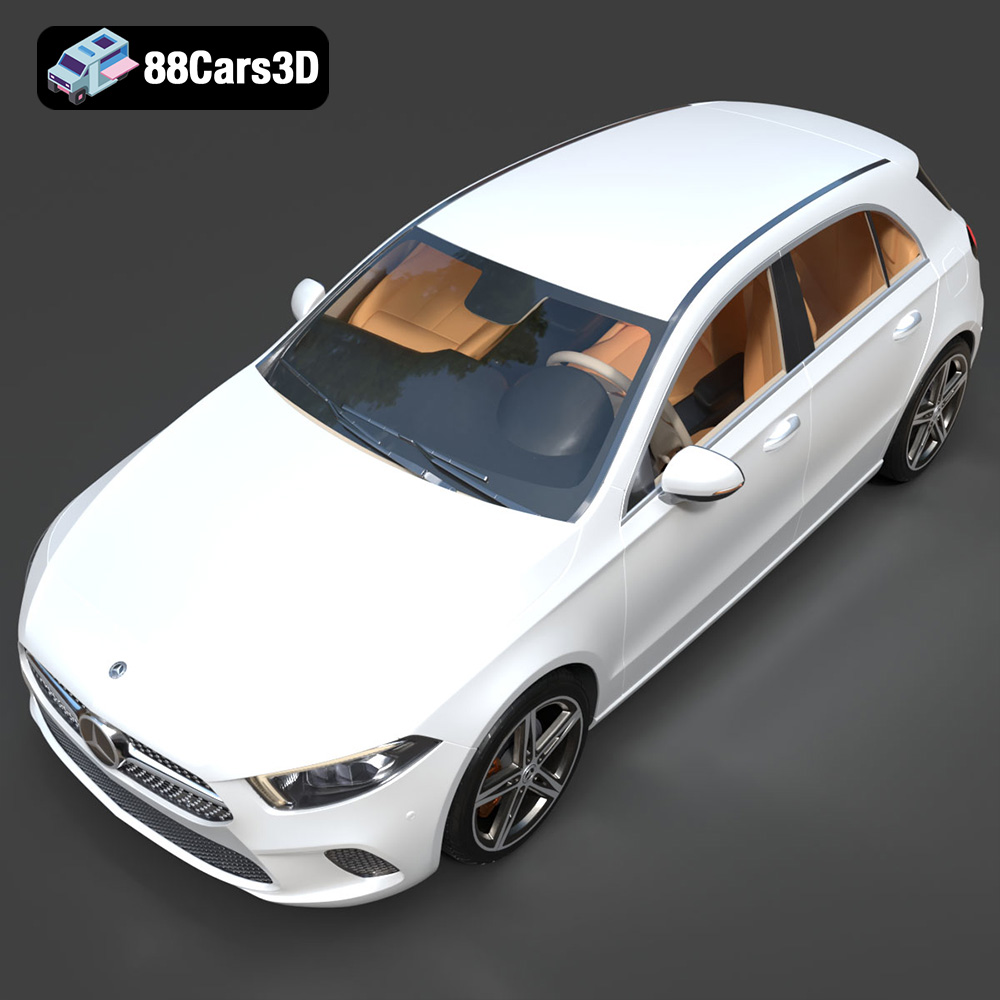
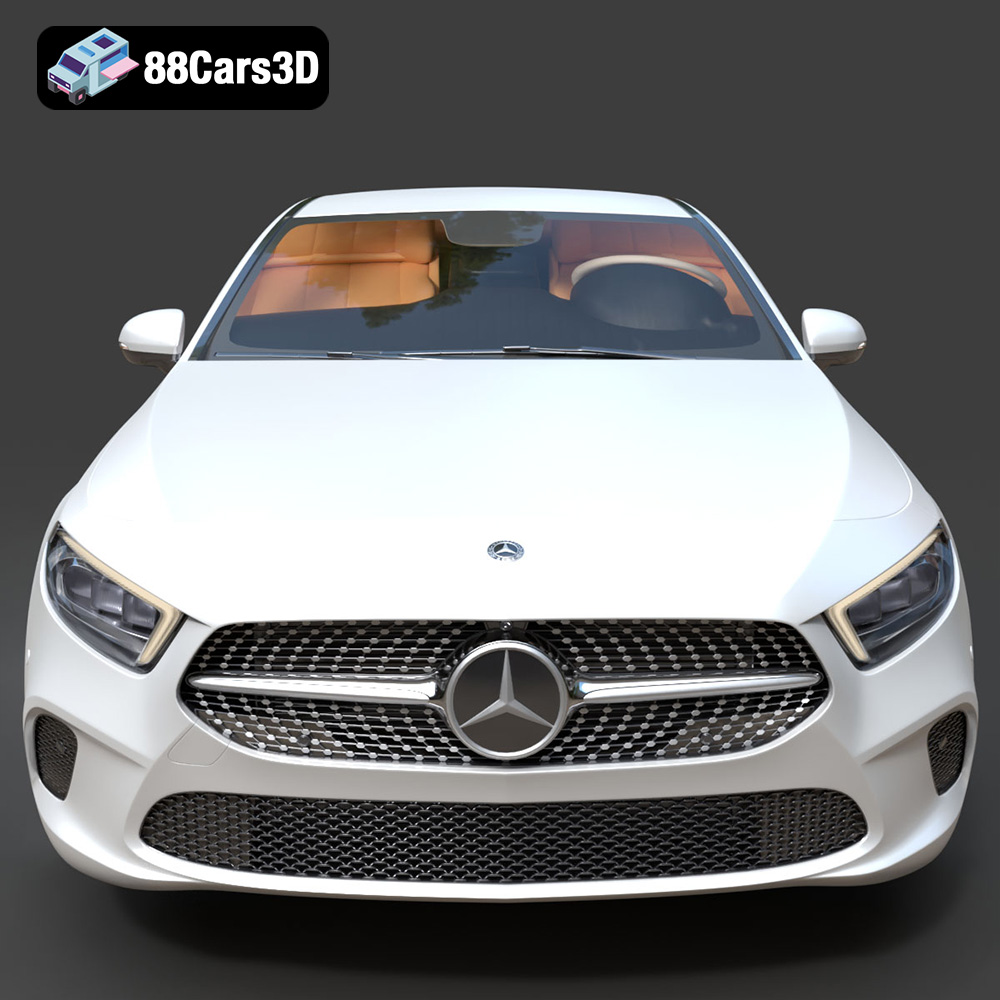
The Mercedes Benz A H-08 represents a blend of compact luxury and modern automotive design. Boasting a dense topology with 1,903,872 triangles, this high-fidelity 3D model is optimized for high-end rendering, Unreal Engine 5 Nanite, and advanced visualizations, delivering photorealistic visual fidelity for next-generation game development, AR/VR, and animation.
$83.50
.blend
.fbx
.glb
.max
.obj
.ply
.rendering
.stl
.unreal
a-h-08
car-3d-model
compact-car
game asset
game-ready
high poly
luxury car
mercedes-benz
optimized
VR/AR