Get 20% OFF All Premium 3D & STL Models!

In the dynamic world of 3D visualization, automotive design, and game development, the demand for exceptionally detailed and accurate vehicle models is unwavering. Artists, engineers, and developers constantly seek assets that can effortlessly bridge the gap between imagination and photorealistic reality or seamless interactive experiences. This isn’t just about recreating a car; it’s about capturing its essence, its engineering, and its visual presence with uncompromising fidelity.
From captivating cinematic renders to immersive virtual showrooms and high-octane racing simulations, the foundation of any successful project lies in the quality of its core assets. A premium 3D car model must not only look stunning but also be technically robust, offering flexibility for various pipelines and applications. It needs to be a digital sculpture that respects the original design while providing the adaptability required for professional workflows.
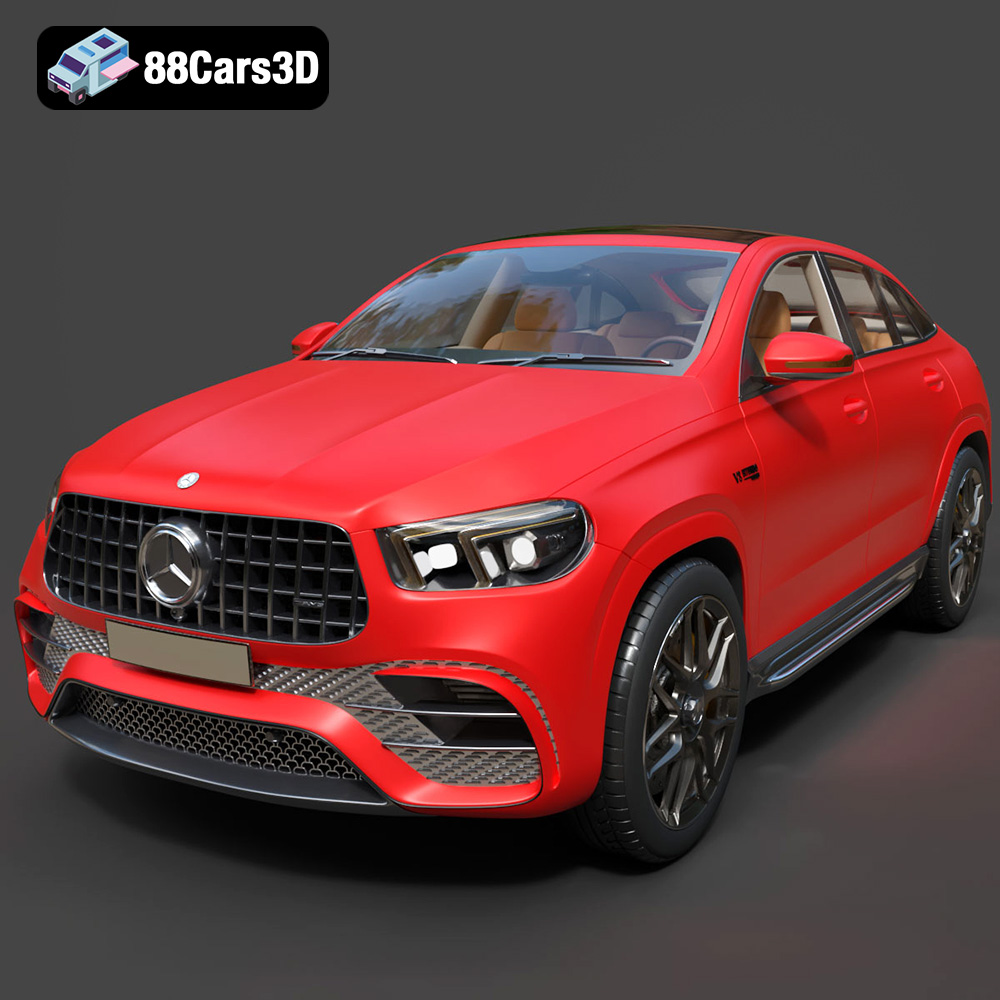
Today, we’re taking a closer look at an exemplary asset that embodies these principles: the Mercedes-Benz AMG GLE 63 Coupe 2021 3D Model. This particular model, available on 88cars3d.com, stands out as a prime example of a meticulously crafted asset designed for the most demanding professional projects, offering a balance of stunning visual detail and technical optimization across a comprehensive suite of file formats.
The versatility of a 3D model is often defined by the range and quality of the file formats it supports. Each format serves a specific purpose, optimized for different stages of a project, software compatibility, or final output. Understanding these distinctions is crucial for any professional working with 3D assets, ensuring smooth integration and maximum utility. The Mercedes-Benz AMG GLE 63 Coupe 2021 3D Model, for instance, comes equipped with a wide array of formats, catering to virtually every professional need.
The .blend file is Blender’s native format, containing the entire scene data including mesh geometry, materials, textures, lighting, cameras, animation, and even scripting. For artists primarily working within Blender, this is often the most desirable format as it allows for full, non-destructive editing and direct access to all setup parameters as they were created. It’s ideal for deep customization, adjusting materials, tweaking topology, or extending animations within the Blender ecosystem.
.fbx (Filmbox) is a proprietary file format owned by Autodesk, widely adopted as the industry standard for 3D data interchange between different software applications. Its strength lies in its ability to store not just geometry and materials, but also animations, rigs, skinning, and even camera data. This makes it an invaluable format for transferring models between DCC (Digital Content Creation) tools like 3ds Max, Maya, and Blender, and crucially, for importing into real-time engines such as Unreal Engine and Unity. The .fbx variant from 88cars3d.com ensures that all the intricate details of the GLE 63 Coupe, including its separated components for animation, are preserved during transfer.
The .obj (Wavefront OBJ) format is one of the oldest and most universally supported 3D file formats. It’s a simple, text-based format primarily used to store 3D geometry (vertices, normals, texture coordinates, and faces) and references to external material files (.mtl). While it doesn’t support animation or rigging, its widespread compatibility makes it an excellent choice for cross-software transfers where only static mesh data is required. It’s a reliable fallback for ensuring your Mercedes-Benz model can be opened and utilized in almost any 3D application.
.glb (GL Transmission Format Binary) is the binary version of glTF, a royalty-free specification for the efficient transmission and loading of 3D scenes and models by applications. It’s often referred to as the “JPEG of 3D” due to its optimization for web-based, AR (Augmented Reality), and VR (Virtual Reality) experiences. A .glb file packages all necessary assets – geometry, materials, textures, animations – into a single, self-contained binary file, making it incredibly easy to share and integrate into browser-based viewers or mobile AR/VR applications with minimal loading times. This makes the GLE 63 Coupe model’s .glb format perfect for virtual showrooms or interactive web configurators.
The .stl (Stereolithography) format is the de facto standard for 3D printing. It represents a 3D model as a series of connected triangles, defining only the surface geometry without color, texture, or other attributes. While it lacks visual fidelity beyond shape, its simplicity and ubiquitous support across all 3D printers make it indispensable for manufacturing. For hobbyists or professionals looking to bring the Mercedes-Benz AMG GLE 63 Coupe 2021 into the physical realm, the .stl file from 88cars3d.com provides the necessary data, allowing for scale model creation with recommended settings for optimal results.
.ply (Polygon File Format, or Stanford Triangle Format) is another format used to store 3D data, particularly from 3D scanners. It can store a wide range of properties for vertices, faces, and edges, including color, transparency, normals, texture coordinates, and confidence values. While less common than FBX or OBJ for general DCC work, .ply is often favored in scientific, engineering, and CAD applications for its precision and ability to carry detailed mesh attributes, making it suitable for analysis or highly specific manufacturing processes.
The .unreal format, or more accurately, assets pre-prepared and often packaged for direct import into Unreal Engine, signifies a higher level of pipeline integration. This usually implies that the model has been specifically optimized for the engine, potentially with correctly configured materials, collision meshes, LODs (Levels of Detail), and blueprint setups. While not a standalone file type in the same sense as .fbx, having an “Unreal-ready” asset for the Mercedes-Benz AMG GLE 63 Coupe means significant time savings for game developers or virtual production artists, as many of the integration hurdles have already been addressed.
Similar to .blend for Blender, the .max format is Autodesk 3ds Max’s native file type. It contains a complete 3ds Max scene, including all geometry, modifiers, materials, lights, cameras, animations, and render settings. For professionals operating within the 3ds Max ecosystem, this format offers the most control and flexibility, allowing full manipulation of the original scene data. It’s the go-to for high-end rendering, animation, and architectural visualization projects where 3ds Max is the primary tool.
The provision of such a comprehensive set of formats by 88cars3d.com for the Mercedes-Benz AMG GLE 63 Coupe 2021 3D Model underscores its commitment to professional versatility and seamless integration across diverse pipelines.
Creating a high-fidelity 3D car model is an intricate dance between artistic vision and engineering precision. It demands an understanding of vehicle aesthetics, a meticulous eye for detail, and advanced technical skills in 3D topology and material authoring. The Mercedes-Benz AMG GLE 63 Coupe 2021 3D Model exemplifies this synthesis, capturing the aggressive luxury of its real-world counterpart with stunning accuracy.
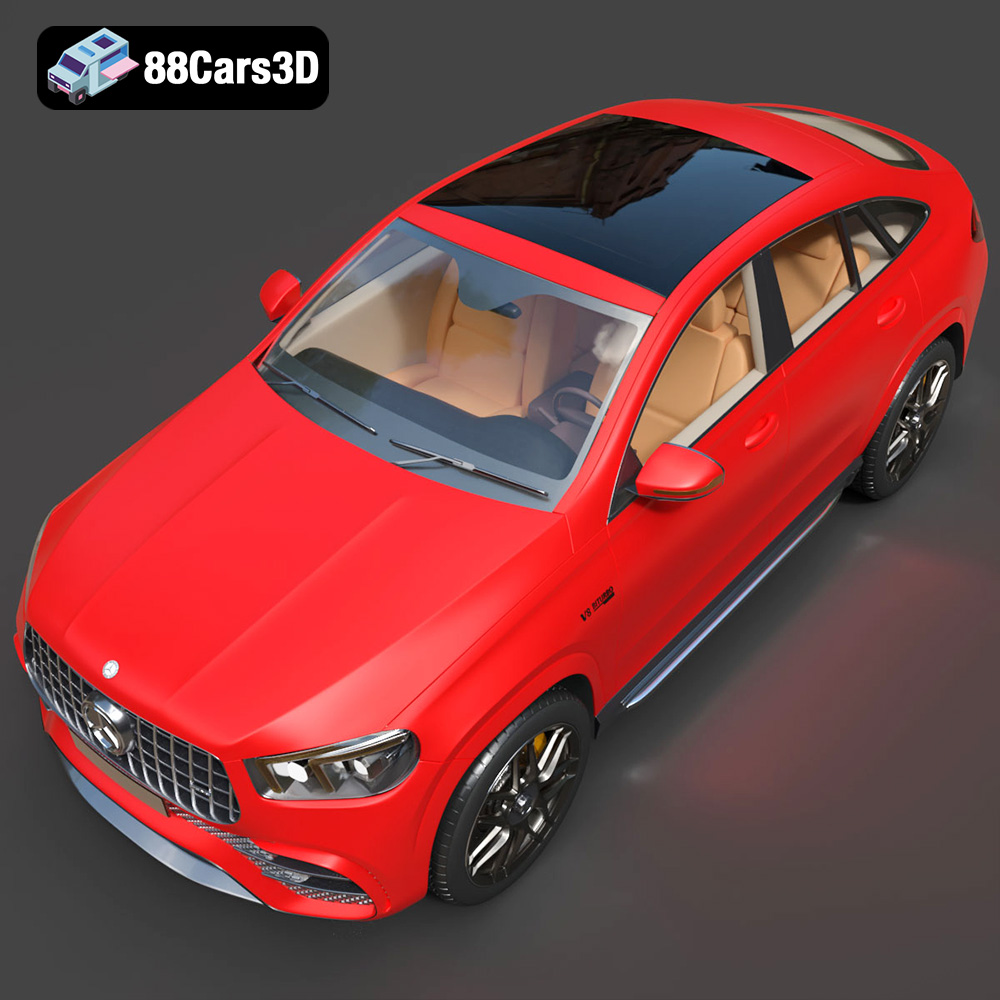
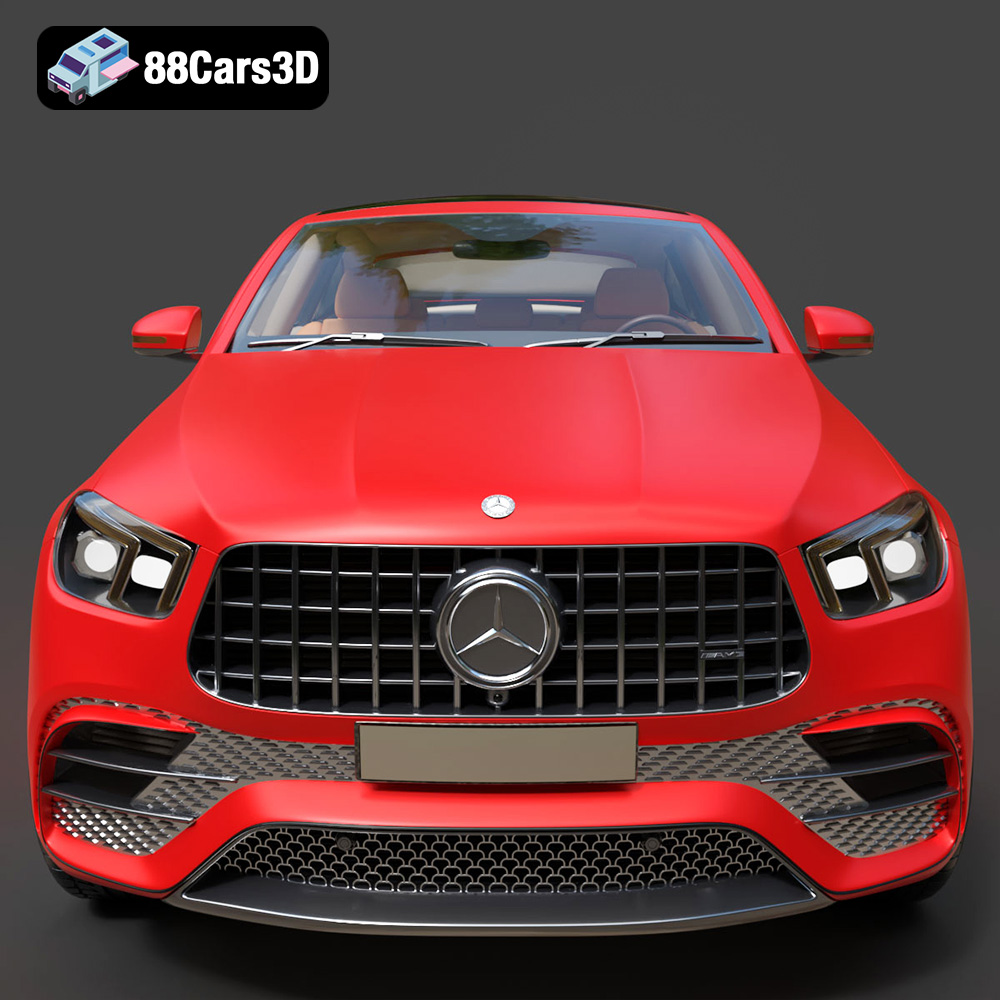
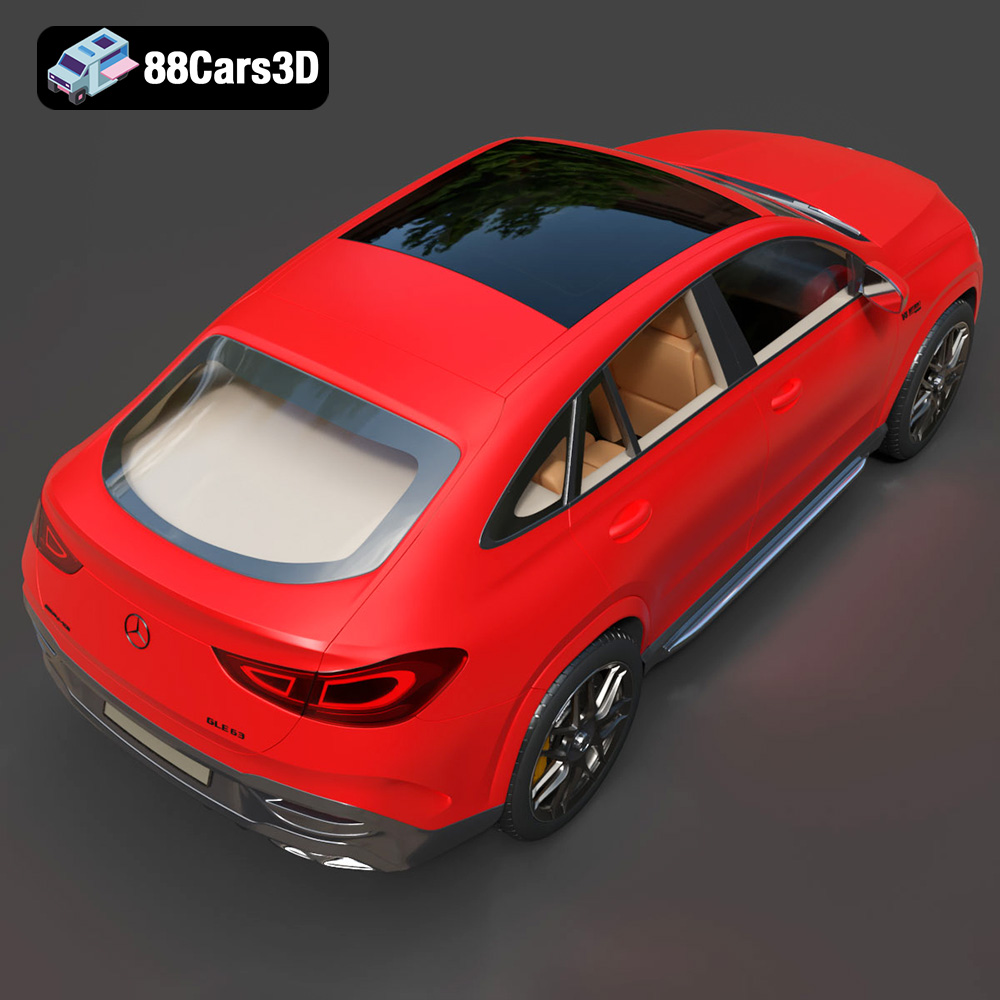
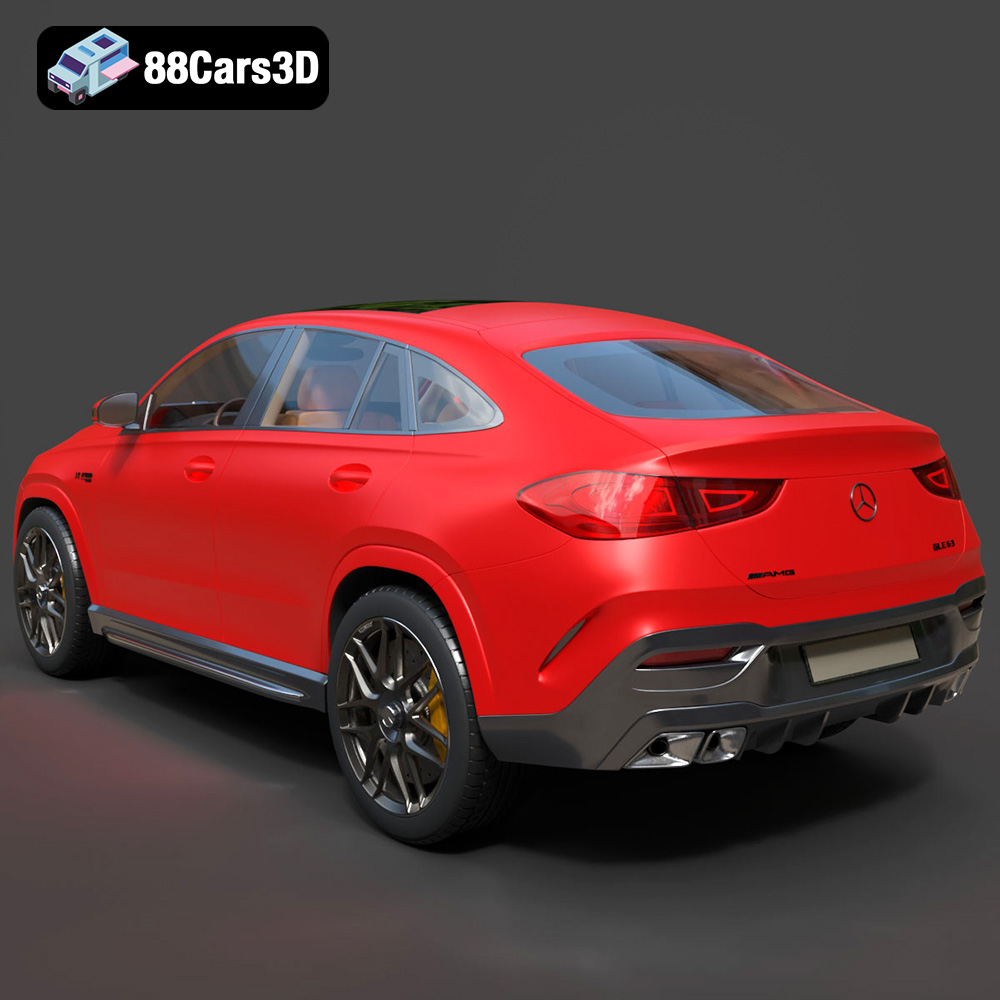
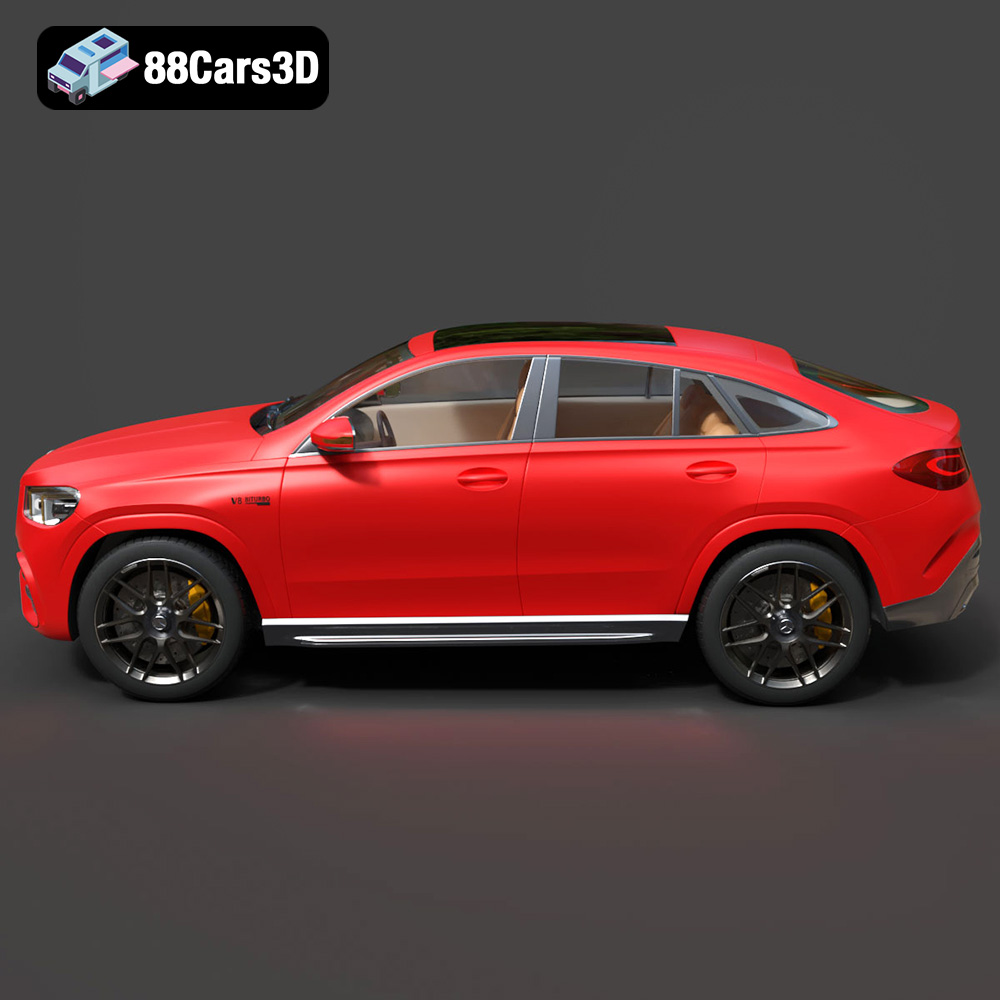
The first impression of any luxury performance SUV is its exterior. This 3D model faithfully reproduces the Mercedes-Benz AMG GLE 63 Coupe’s distinctive aerodynamic proportions and muscular stance. Details like the menacing Panamericana grille, a hallmark of AMG performance vehicles, are rendered with sharp, accurate geometry. The signature AMG quad-pipe exhaust system, complete with chrome finishes, and the high-resolution LED multibeam headlights and sleek LED taillights, are all meticulously modeled, ensuring that the digital representation holds up to the closest scrutiny. The impeccably modeled AMG light-alloy wheels, featuring detailed brake calipers and cross-drilled rotors, add another layer of realism, crucial for close-up renders and in-game camera angles.
Beyond the impressive exterior, the interior of a luxury vehicle is equally vital for creating a truly immersive experience. This model offers a premium AMG sport cockpit with intricate stitching and perforation details on the seats, conveying the tactile quality of the real car. The AMG Performance steering wheel, with its tactile grip areas and integrated buttons, is precisely crafted, as are the widescreen digital instrument cluster and the advanced MBUX infotainment screens. Every dial, button, and surface on the center console, from the touchpad to the dynamic select switch and climate controls, has optimized geometry that makes it perfect for first-person POV in gaming or detailed interior visualizations. This level of interior detail is often overlooked but is paramount for truly high-end 3D car models.
True automotive fidelity extends beyond superficial details. This model delves deeper, featuring a detailed AMG 4.0L V8 biturbo engine block and bay, adding immense value for projects requiring engine showcases or technical breakdowns. Furthermore, sophisticated air suspension detailing is present, and critically, the wheels, suspension, and steering components are modeled separately. This separation is a technical advantage, providing proper pivot setups for realistic steering, wheel rotation, and suspension travel animations. Such meticulous engineering within the 3D model greatly simplifies the animation process, saving countless hours for animators and riggers.
The true measure of a high-quality 3D asset lies in its seamless integration into various professional pipelines. Whether for film-grade rendering, interactive game environments, or cutting-edge AR/VR experiences, a well-structured model like the Mercedes-Benz AMG GLE 63 Coupe 2021 3D Model is a powerful accelerator for creative projects.
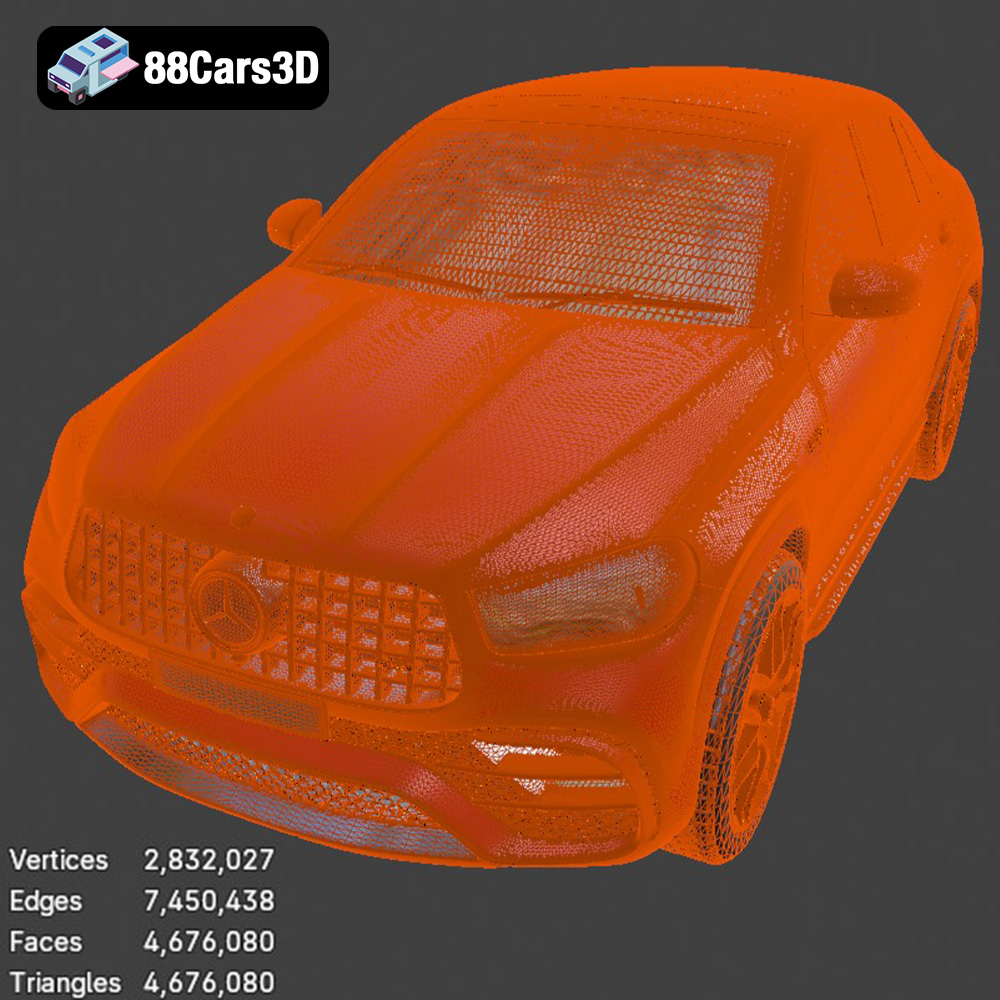
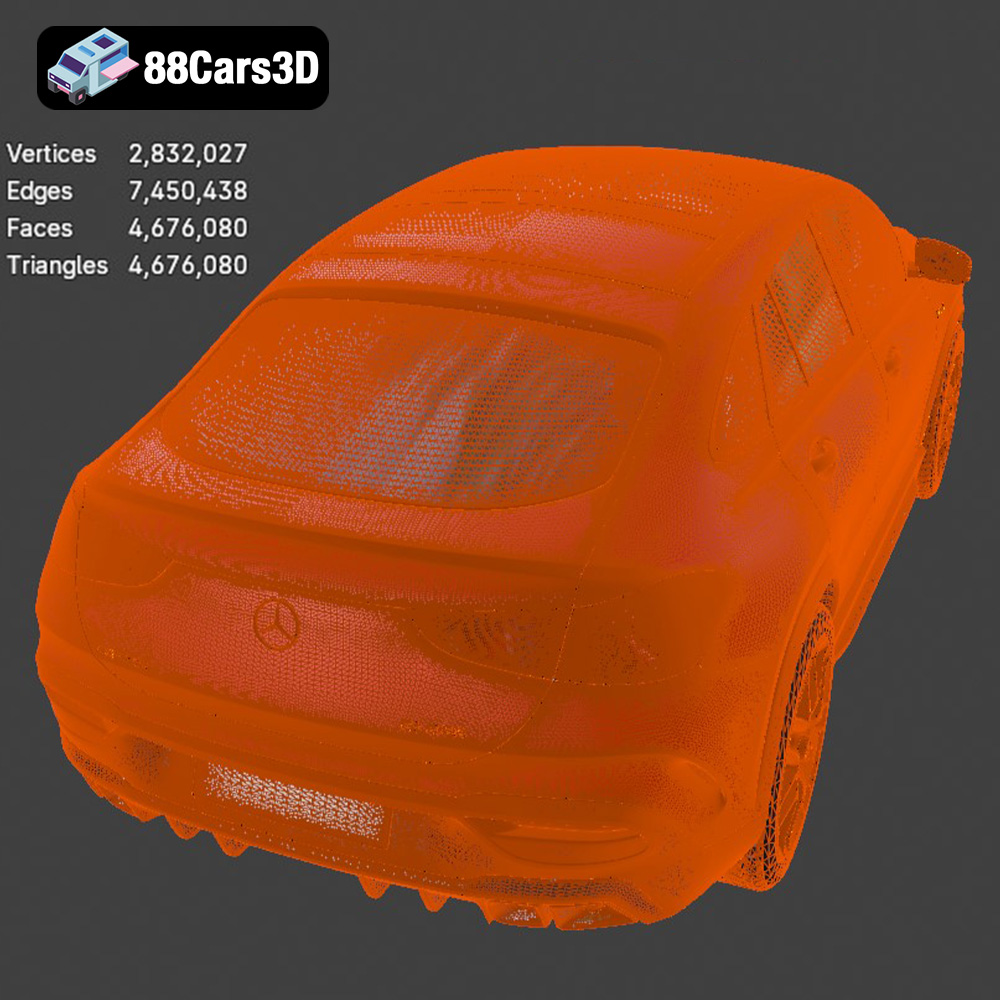
For artists focused on photorealistic rendering, a detailed 3D car model is the canvas. In software like 3ds Max or Blender, the provided .max and .blend files, or the universal .fbx/.obj, allow for immediate scene setup. The model’s ultra-detailed topology of 4,676,080 triangles translates directly into stunning visual fidelity, enabling close-up shots that would be impossible with lower-poly assets. Artists can leverage powerful renderers like V-Ray, Corona, or Cycles to achieve cinematic quality, experimenting with studio lighting setups, environmental reflections, and advanced material shaders to make the vehicle pop. The accurate real-world scale and meticulously separated components facilitate sophisticated animation, from subtle suspension compression to dynamic camera movements around the car.
Game developers, especially those creating AAA racing titles or open-world games, demand assets that are both visually rich and performant. The “Game-Ready & Optimized” nature of this Mercedes-Benz model, coupled with an ‘unreal’ file option, signifies its suitability for real-time engines like Unreal Engine and Unity. While 4.6 million triangles is a significant poly count, for current-generation high-end games and simulations, this level of detail is becoming increasingly viable, especially for hero vehicles. Proper pivot setups for steering, wheel rotation, and suspension travel are critical for realistic physics and animation in-game, reducing development overhead. High-resolution UVs allow for detailed PBR (Physically Based Rendering) textures, ensuring the car responds realistically to in-game lighting and environmental effects, pushing the boundaries of interactive realism.
The rise of AR/VR technologies has opened new avenues for showcasing products. Virtual showrooms, online configurators, and mobile AR experiences benefit immensely from high-quality 3D car models. The .glb format, optimized for web and AR/VR, makes integrating the Mercedes-Benz AMG GLE 63 Coupe 2021 into these interactive environments straightforward. Users can explore the vehicle in a 360-degree virtual space, customize colors and materials in real-time, or even place a life-sized digital twin in their own driveway via AR, offering an unparalleled level of engagement for potential customers or enthusiasts. The model’s meticulous interior detail also allows for immersive cockpit experiences in VR, making users feel as though they are truly inside the vehicle.
While the featured Mercedes-Benz AMG GLE 63 Coupe 2021 model boasts a high poly count for unparalleled detail, it’s also designed to be “game-ready.” This seemingly contradictory statement highlights the nuanced approach to optimization for today’s high-end real-time environments.
A model with 4,676,080 triangles is undoubtedly high-poly. However, for advanced real-time engines (like Unreal Engine 5 with its Nanite virtualized geometry system) and cutting-edge hardware, this level of detail is becoming acceptable for “hero” assets that are always visible and central to the experience. The optimization here isn’t necessarily about aggressively reducing poly count, but about intelligent mesh construction, efficient UV mapping, and proper material setup. The model’s meticulous crafting ensures that while it’s dense, its topology is clean, allowing engines to render it efficiently. For less demanding scenarios, developers might still apply LODs (Levels of Detail), but for cinematic close-ups and high-fidelity simulations, this model delivers raw detail directly.
Effective UV mapping is crucial for applying high-resolution textures. A well-UV’d model ensures that textures are stretched and distorted minimally, providing crisp details for body paint, tire treads, interior fabrics, and dashboard displays. The Mercedes-Benz AMG GLE 63 Coupe 2021 3D Model would utilize advanced PBR (Physically Based Rendering) workflows, where separate texture maps (albedo, normal, roughness, metallic, ambient occlusion) accurately simulate how light interacts with different material surfaces. This is vital for achieving photorealistic results in both real-time engines and offline renderers, making the car look authentic under various lighting conditions, from bright sunshine to a moody night scene.
Beyond static beauty, a truly versatile 3D car model is built for dynamic interaction. The inclusion of separate wheels, suspension, and steering components, along with proper pivot setups, is a game-changer for animators and game developers. This allows for realistic wheel rotation, independent suspension travel over uneven terrain, and accurate steering kinematics. In a racing game, this means the car doesn’t just slide; its suspension articulates, its wheels turn, and its body subtly shifts, adding layers of realism to the driving experience. For cinematic animations, these separated elements facilitate complex camera shots and dynamic action sequences without tedious rigging from scratch.
The utility of a high-quality 3D car model isn’t confined to digital screens. With the advent of accessible 3D printing technologies, these virtual assets can be transformed into tangible, physical objects, offering a unique blend of digital precision and real-world craftsmanship.
Imagine holding a perfectly scaled replica of the Mercedes-Benz AMG GLE 63 Coupe 2021 in your hand, a testament to its digital accuracy and your own printing prowess. The .stl format provided with this model makes this possible. Hobbyists, collectors, and even professional designers can leverage 3D printing to create display models, unique gifts, or physical prototypes for evaluation. This bridge between the virtual and physical realms opens up new creative avenues, allowing enthusiasts to engage with their favorite automotive designs in a tactile way.
3D printing a complex object like a car model requires careful planning. The product description provides excellent guidelines: recommended scales (1:12, 1:18, 1:24) cater to various printer sizes and desired detail levels. A layer height of 0.04–0.12 mm, particularly with resin printing, is crucial for capturing the fine details of the GLE 63 Coupe, from its grille texture to its intricate interior. Wall thickness (1.2–2.0 mm) and infill (20–30%) recommendations ensure structural integrity. Crucially, the need for supports for detailed parts like exhausts, mirrors, and the steering wheel, along with specific print orientations (frame angled, wheels separately), are invaluable tips that save time and material, ensuring a successful print. Post-processing steps like sanding, priming, and applying authentic factory colors with metallic finishes further enhance the final physical model, making it a true showpiece.
A premium 3D car model is more than just a static representation; it’s a dynamic canvas for creative expression. The Mercedes-Benz AMG GLE 63 Coupe 2021 3D Model offers extensive customization possibilities, allowing artists to tailor it precisely to their project’s unique vision.
The ability to change body colors is fundamental for any automotive visualization. Whether it’s the sleek Obsidian Black, the vibrant designo Cardinal Red, or any custom hue, artists can effortlessly adapt the model’s appearance to match specific brand guidelines or artistic preferences. Beyond color, modifying material finishes—from a high-gloss metallic to a stealthy matte or even a sporty carbon fiber—allows for endless variations, radically altering the car’s perceived personality and luxury appeal. The flexibility to adjust tire textures (e.g., performance vs. all-season variants) adds another layer of subtle realism, ensuring the vehicle fits perfectly into its intended environment.
Placing the Mercedes-Benz AMG GLE 63 Coupe 2021 3D Model into different environments is where its storytelling potential truly shines. Imagine it cruising through a bustling city skyline, dominating a high-speed racetrack, or elegantly parked in a luxurious virtual garage. The model’s high detail ensures it looks convincing in any setting, while the flexibility to adapt lighting for different environments (e.g., golden hour, overcast, studio bright) allows artists to evoke specific moods and atmospheres. By combining this exceptional 3D car model with complementary environmental assets, characters, and dynamic camera work, creators can craft compelling narratives, whether for automotive advertising, cinematic sequences, or interactive experiences.
The journey through the intricate world of high-fidelity 3D car models reveals a profound blend of artistry, technical mastery, and strategic application. From capturing the luxurious aggression of the Mercedes-Benz AMG GLE 63 Coupe 2021 to navigating the complexities of diverse file formats and optimizing for varied platforms, the demands on modern 3D assets are immense.
The Mercedes-Benz AMG GLE 63 Coupe 2021 3D Model download from 88cars3d.com stands as a testament to what’s achievable when meticulous detail meets thoughtful technical execution. With its ultra-detailed topology, accurate real-world scale, separate animatable components, and comprehensive suite of file formats (including .blend, .fbx, .obj, .glb, .stl, .ply, .unreal, and .max), it empowers professionals across automotive rendering, game development, AR/VR, and even 3D printing to realize their most ambitious visions.
For artists and developers seeking a robust, versatile, and visually stunning 3D car model that excels in every application, this AMG GLE 63 Coupe represents an unparalleled investment. It’s more than just a model; it’s a foundation for creating truly immersive and unforgettable digital experiences. Explore this and other exceptional 3D car models at 88cars3d.com to elevate your next project.
The 2021 Mercedes-Benz AMG GLE 63 Coupe represents the pinnacle of luxury performance SUVs, blending aggressive AMG styling with sleek coupe-like aerodynamics. Powered by a handcrafted 4.0L V8 biturbo engine, this iconic vehicle features signature elements like the menacing Panamericana grille, quad trapezoidal exhausts, and a muscular stance that commands attention.
This premium 3D model boasts an ultra-detailed topology of 4,676,080 triangles, delivering unparalleled visual fidelity. While highly detailed, it is meticulously crafted for smooth integration into high-end projects, making it ideal for advanced game development, automotive visualizations, cinematic animations, and cutting-edge AR/VR experiences.
Perfect for high-end automotive configurators, luxury lifestyle visualizations, AAA racing games, and hyper-realistic studio renders.
.blend, .fbx, .obj, .glb, .stl, .ply, .unreal, .max
Tags:
mercedes-benz, amg, gle-63-coupe, 2021, luxury-suv, performance-suv, coupe, game-ready, high-poly, detailed, car-3d-model, game-asset, rendering, vr-ar, blend, fbx, obj, glb, stl, ply, unreal, max
$90.00
.2021
.amg
.blend
.coupe
.fbx
.glb
.luxury suv
.max
.obj
.ply
.rendering
.stl
.unreal
car-3d-model
detailed
game asset
game-ready
gle-63-coupe
high poly
mercedes-benz
performance suv
VR/AR