Get 20% OFF All Premium 3D & STL Models!

In the dynamic world of digital design and interactive experiences, the demand for photorealistic 3D car models has never been higher. From breathtaking cinematic renders to immersive real-time game environments and cutting-edge AR/VR applications, a meticulously crafted vehicle asset forms the backbone of countless projects. It’s about more than just aesthetics; it’s about engineering precision, material accuracy, and seamless integration into diverse technical pipelines.
Today, we’ll delve into the intricate world of professional 3D automotive modeling, exploring the technical considerations, workflow advantages, and the sheer artistic potential that these assets unlock. We’ll use a prime example of digital craftsmanship, the Mercedes Benz AMG GT63 2019 3D Model from 88cars3d.com, to illustrate how a high-quality asset can elevate any project, whether it’s for an intense racing simulator, a luxury brand configurator, or a stunning architectural visualization.
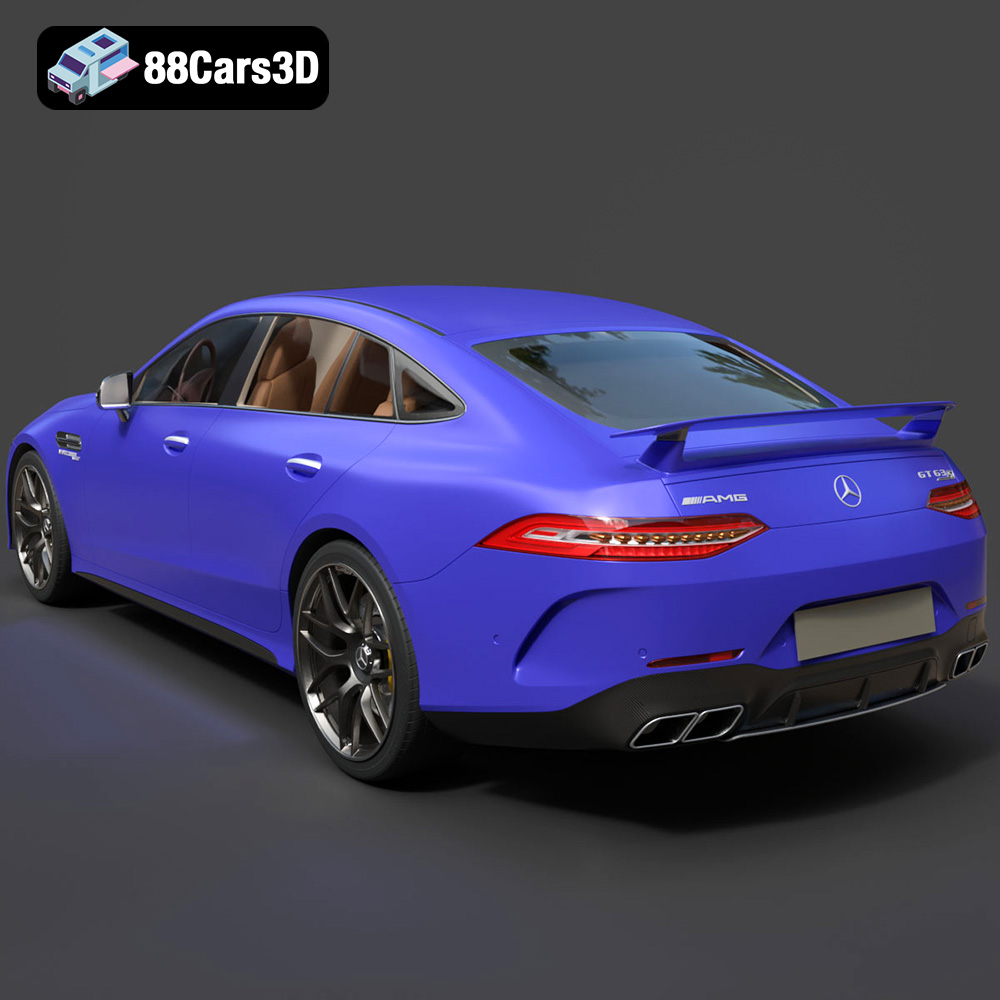
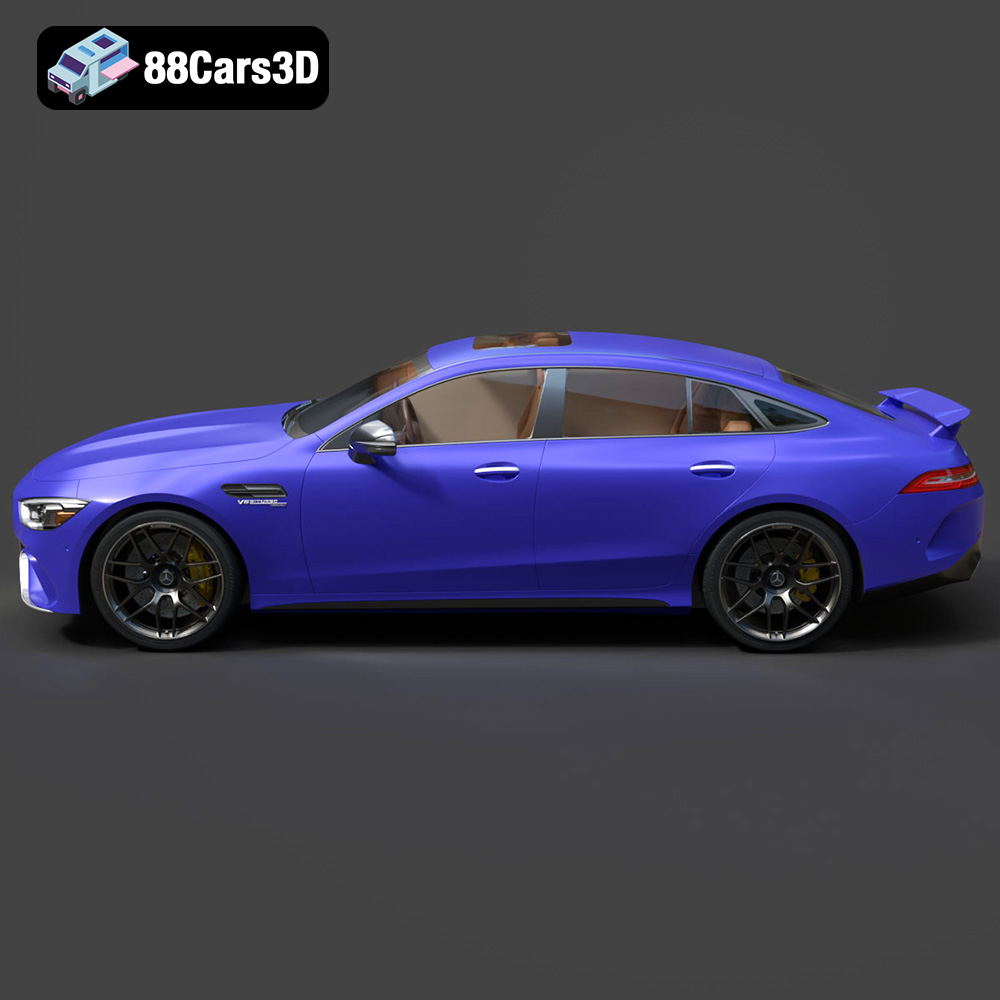
The 2019 Mercedes Benz AMG GT63, a fusion of track-bred performance and executive luxury, is a complex vehicle to translate into the digital realm. Its aggressive Panamericana grille, sweeping coupe-like roofline, powerful Biturbo V8 engine, and intricate aerodynamics present significant challenges for 3D artists. Yet, when executed flawlessly, as seen in the 88cars3d.com offering, it becomes an indispensable tool for designers, game developers, and visualization specialists worldwide.
The utility of any 3D car model is intrinsically linked to the file formats it supports. Each format serves a specific purpose, catering to different software environments, project requirements, and delivery platforms. Understanding these formats is crucial for ensuring compatibility, optimizing performance, and achieving the desired visual fidelity.
The .blend format is native to Blender, a powerful open-source 3D creation suite. When a 3D car model, such as the Mercedes Benz AMG GT63 2019, is provided in .blend, it signifies a fully editable Blender scene. This typically includes the mesh data, materials, textures, lighting setups, camera positions, and even animation data if present. Artists who primarily work in Blender will find this format invaluable as it allows for direct manipulation, fine-tuning of shaders, re-rigging, and further optimization without loss of fidelity. It offers the most flexibility for those within the Blender workflow, ensuring all original scene configurations are preserved.
.fbx (Filmbox) is arguably the most widely adopted proprietary file format for 3D asset exchange, particularly in game development and animation. Developed by Autodesk, it excels at storing not just geometry, but also animation, cameras, lights, and skeleton/rigging information. This makes it ideal for exporting 3D car models like the AMG GT63 into real-time engines such as Unreal Engine and Unity, or between DCC (Digital Content Creation) applications like 3ds Max and Maya. Its robust support for complex scene data ensures that an animated car rig, complete with working suspension and steering, transfers smoothly across different software pipelines, minimizing setup time and potential errors.
The .obj (Wavefront OBJ) format is a simple, universal geometry definition file. It’s highly compatible across almost all 3D software due to its text-based nature, making it an excellent choice for basic mesh transfer. An .obj file typically stores vertices, faces, normals, and UV coordinates, often accompanied by a separate .mtl (material library) file for basic material properties. While it doesn’t support animation or rigging, it’s perfect for scenarios where only the raw geometric data of a 3D car model is needed for import and re-texturing in a different program. It serves as a reliable fallback for cross-software compatibility.
.glb (GL Transmission Format Binary) is the binary version of glTF, a royalty-free specification for the efficient transmission and loading of 3D scenes and models by applications. It’s rapidly becoming the “JPEG of 3D” due to its optimization for web-based applications, AR (Augmented Reality), and VR (Virtual Reality). A .glb file packages all necessary data – geometry, materials, textures, and even animations – into a single, compact file, making it ideal for fast loading and rendering in browsers or mobile AR/VR experiences. For showcasing the Mercedes Benz AMG GT63 2019 in an interactive virtual showroom or a mobile AR app, .glb is the format of choice.
.stl (STereoLithography) is the standard file format for additive manufacturing. It represents a 3D model as a series of connected triangles, defining only the surface geometry without color, texture, or material information. For designers looking to 3D print a physical replica of the AMG GT63, the .stl format is essential. It provides the necessary data for slicing software to prepare the model for printing. While the Mercedes Benz AMG GT63 3D model from 88cars3d.com is designed for high-fidelity rendering, its convertibility to .stl enables hobbyists and professionals alike to produce tangible prototypes or display models at various scales.
The .ply (Polygon File Format, or Stanford Triangle Format) is designed to store polygonal models, often with additional properties like color, transparency, texture coordinates, and normal vectors associated with vertices and faces. While less common for general artistic exchange than .fbx or .obj, .ply is frequently used in scientific applications, CAD, and 3D scanning, where precise data representation is critical. For complex analytical tasks or integrating a car model into engineering simulations, .ply can be a robust choice.
A dedicated .unreal file (or specific asset structure designed for Unreal Engine) indicates an asset that is pre-packaged and optimized for direct import and use within Unreal Engine. This often means textures are properly packed, materials are set up using Unreal’s physically based rendering (PBR) system, and skeletal meshes are correctly rigged and scaled. For game developers or architectural visualizers working with Unreal, an “engine-ready” asset like the AMG GT63 means significant time savings, allowing them to drop the car model directly into their scene with minimal adjustments to lighting and materials.
Similar to .blend for Blender, the .max format is the native file type for Autodesk 3ds Max. It stores the entire 3ds Max scene, including geometry, materials, textures, lights, cameras, animations, modifiers, and plugins. For professionals whose pipelines are centered around 3ds Max, having the AMG GT63 model in .max format offers maximum flexibility. It allows for advanced rendering with V-Ray or Corona, complex animation setups, and detailed environment integration, leveraging all the features and proprietary tools of the software.
Creating a 3D car model that truly captures the essence of an iconic vehicle like the Mercedes Benz AMG GT63 is a delicate balance of artistic vision and technical prowess. It’s not just about replicating the shape; it’s about conveying the vehicle’s presence, its engineering, and its luxurious appeal.
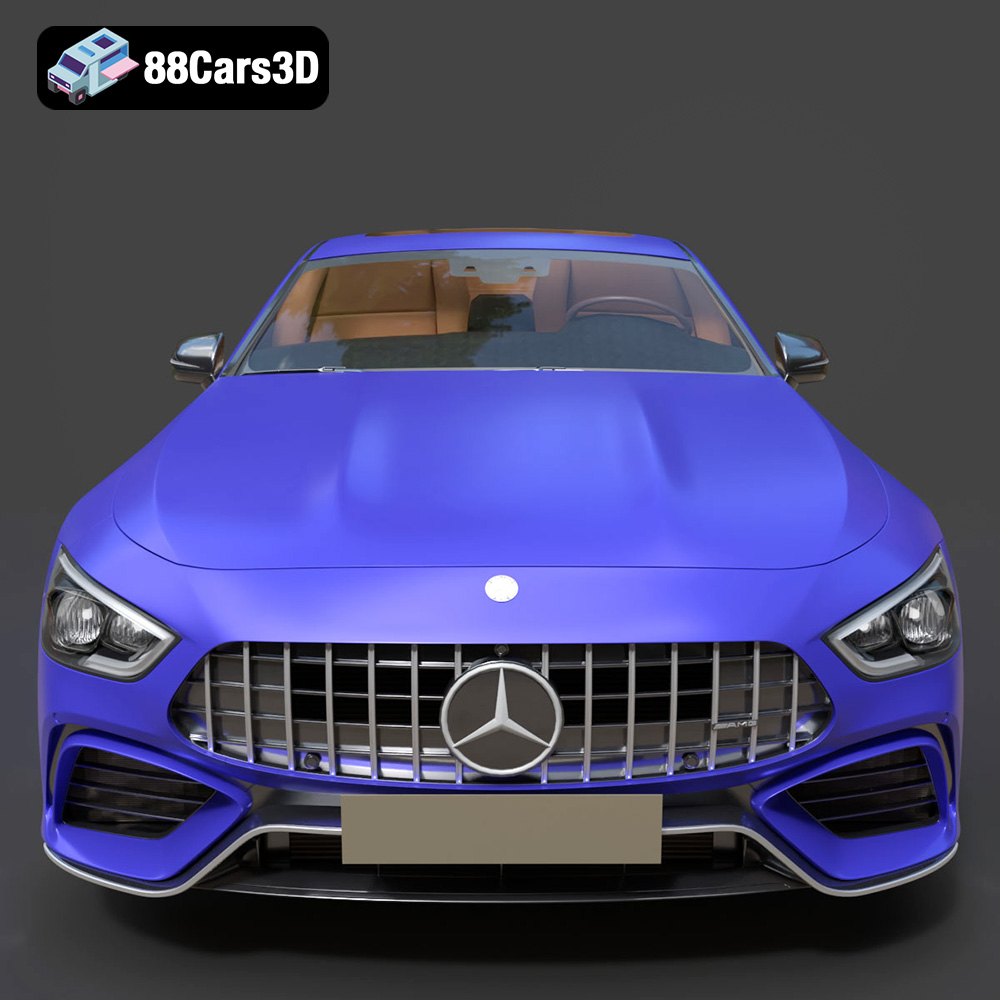
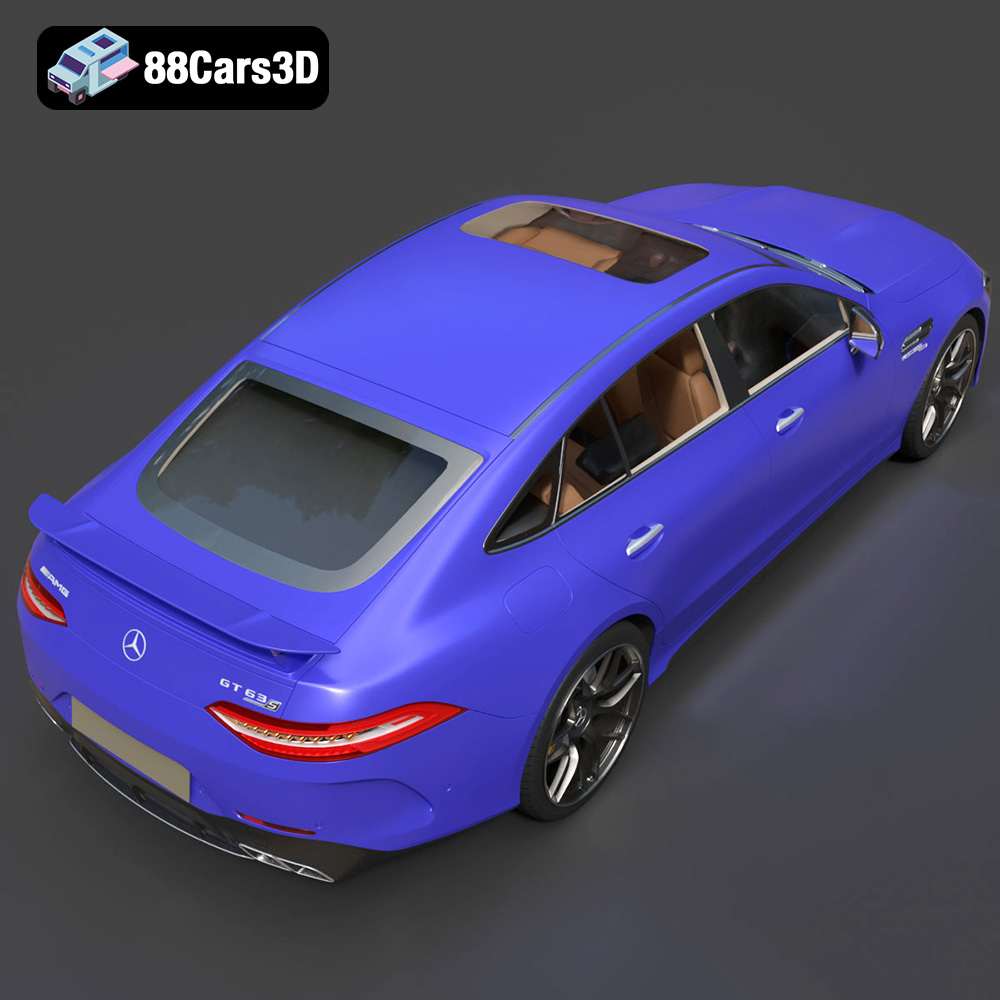
The foundation of any exceptional 3D car model lies in its accuracy. For the AMG GT63, this means meticulous attention to its distinct frame geometry and proportions. Every curve, every subtle crease in the bodywork, from the aggressive Panamericana grille to the sweeping roofline, must be precise. This level of detail extends to smaller, yet crucial, elements such as the intricate multi-beam LED headlights, slim taillight clusters, and the aggressive quad-tailpipe AMG exhaust system with its active aero diffuser. These elements are what distinguish a generic model from a truly authentic digital representation.
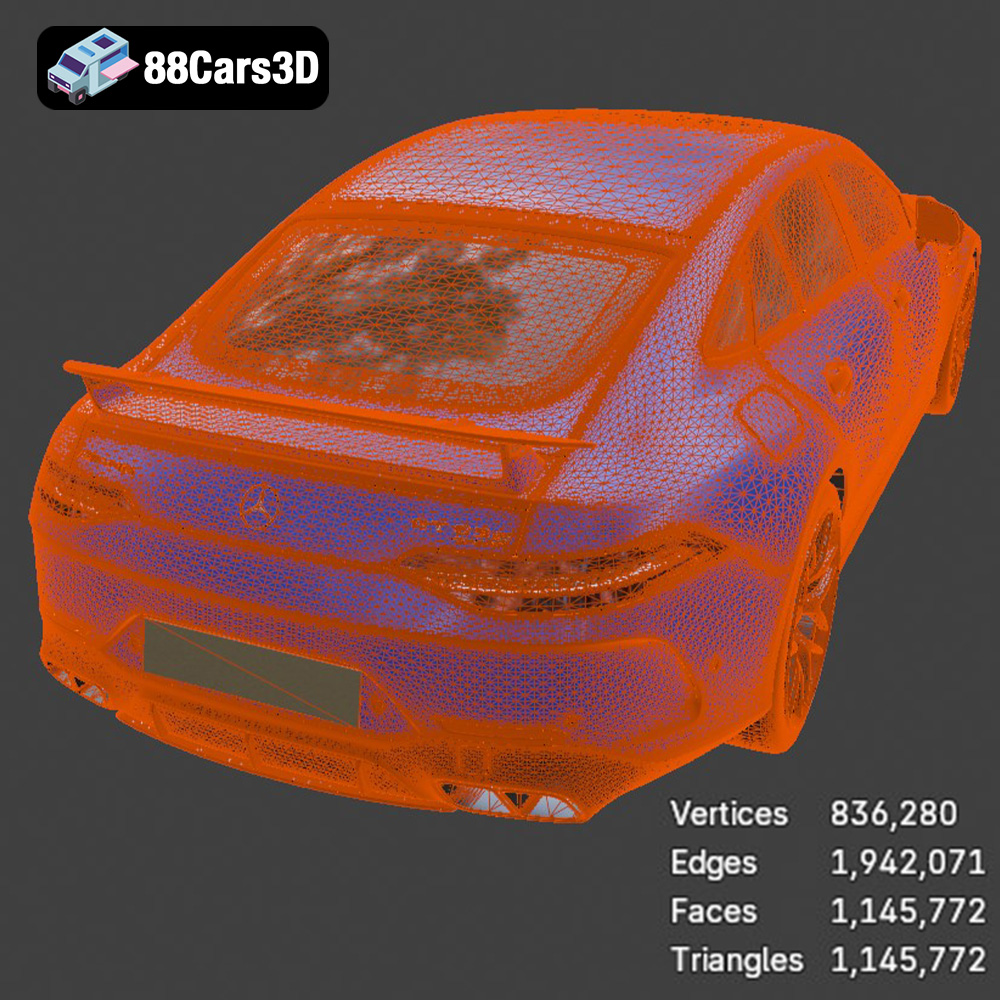
Beyond raw polygon count, the quality of a 3D model’s topology is paramount, especially for highly reflective surfaces like car paint. The 88cars3d.com AMG GT63 model boasts “refined topology” to ensure “smooth reflections and accurate shading.” This means the polygonal mesh is constructed cleanly, with evenly distributed quads and minimal triangles where possible, allowing for perfect subsurface scattering and specular highlights. Poor topology can lead to visible artifacts, pinching, or unnatural light distortions, which are unacceptable in high-end automotive rendering. Clean topology also aids in UV mapping, rigging, and subdivision surface workflows, making the model versatile for various applications.
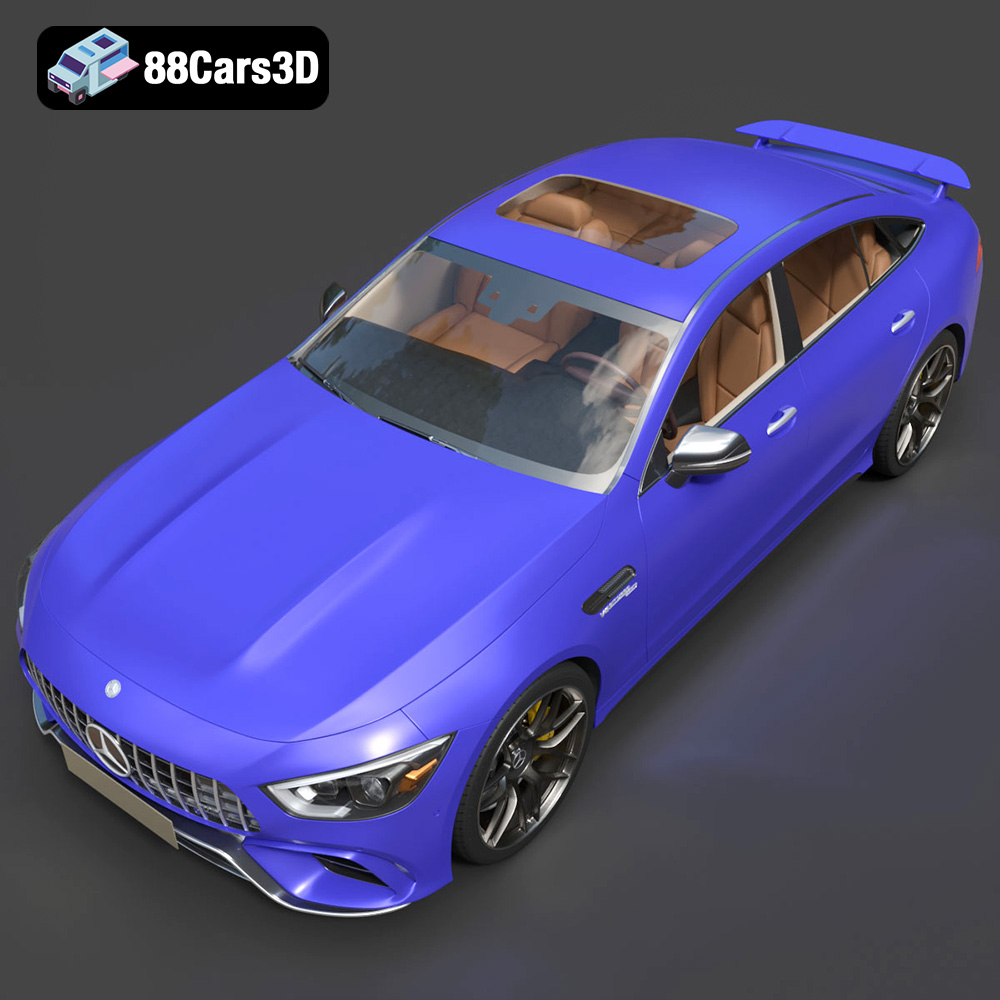
A truly comprehensive 3D car model extends its fidelity to the interior and under the hood. The AMG GT63 model includes luxurious AMG sport seats with intricate stitching details, a performance flat-bottom steering wheel with paddle shifters, and a high-resolution dual-screen digital instrument cluster. These interior details are critical for first-person perspectives in games or immersive VR experiences. Furthermore, the model includes a detailed engine block and bay components, authentic forged alloy wheels, low-profile performance tires, and a high-performance braking system. Crucially, separate components for wheels, suspension, and steering are included, enabling realistic animation and dynamic simulations.
The journey of a 3D car model from concept to a final render or interactive experience involves a sophisticated blend of software and specialized techniques. Professional pipelines leverage industry-standard tools to extract maximum value from high-quality assets.
For high-end automotive rendering and architectural visualization (arch-viz), 3ds Max combined with renderers like V-Ray or Corona is a dominant force. Artists can import the Mercedes Benz AMG GT63 2019 model (ideally in .max or .fbx format) and integrate it into complex scene environments. This involves setting up studio-quality lighting, crafting realistic PBR materials for paint, glass, rubber, and chrome, and fine-tuning camera angles for dramatic effect. The detailed geometry of the AMG GT63 allows for extreme close-up shots, showcasing every facet of its design, from brake calipers to headlight intricacies. For a marketing campaign, a model like this can be dropped into a photorealistic urban street scene or a luxurious garage render, providing unparalleled visual impact.
Blender’s growing popularity makes the .blend file format for the AMG GT63 model particularly valuable. Artists using Blender can take advantage of its powerful modeling tools, Eevee for real-time rendering, or Cycles for photorealistic ray tracing. Workflows in Blender often involve importing the model, customizing materials using its node-based shader editor, and setting up lighting to match specific moods – perhaps a moody, rain-swept street or a sun-drenched coastal road. Its robust animation tools also allow for intricate camera movements and vehicle dynamics, making it suitable for indie game development, personal projects, or professional animation studios seeking a cost-effective, powerful solution.
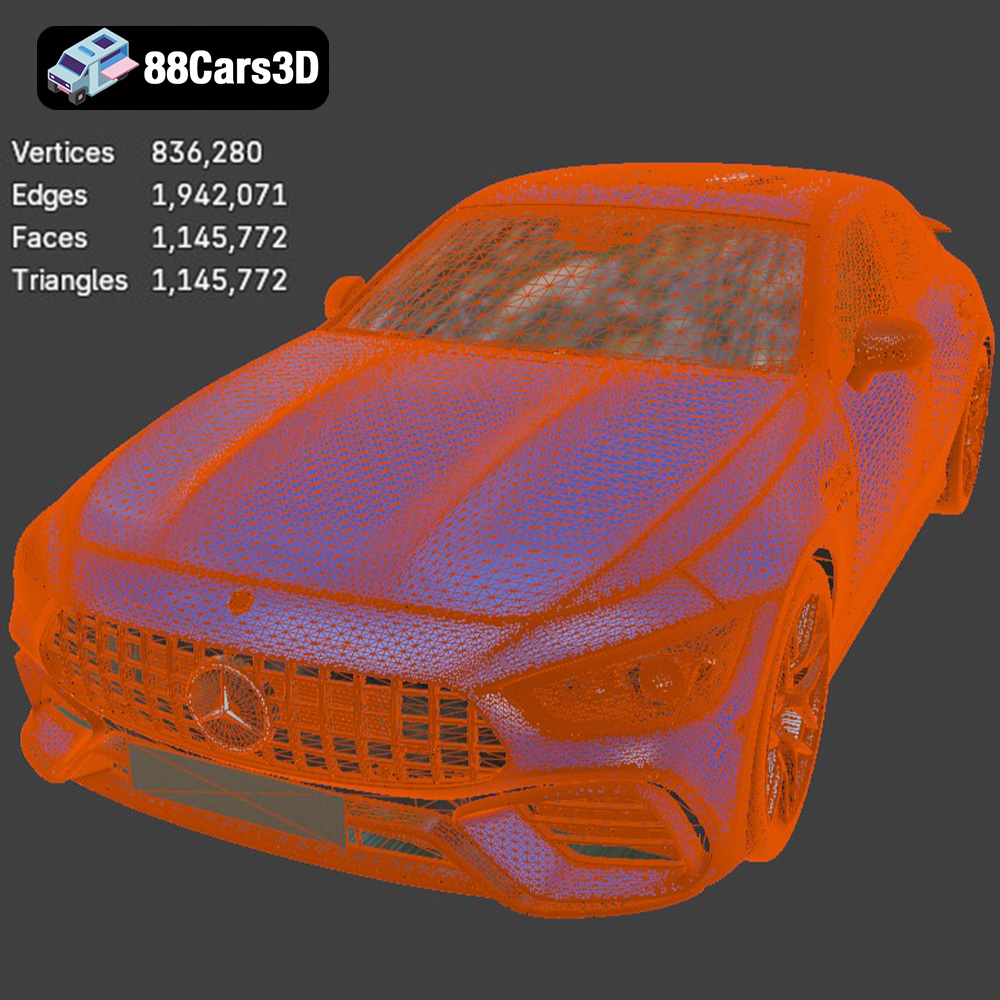
For game development and real-time visualization, Unreal Engine stands out. Importing the Mercedes Benz AMG GT63 2019 model as an .fbx or, ideally, an .unreal engine-ready asset, streamlines the process significantly. Developers can take advantage of Unreal’s advanced PBR material system to create realistic car paint shaders, reflective surfaces, and dynamic lighting. The “game-ready & optimized” nature of the model, with its 1,145,772 triangles, strikes a perfect balance, offering high visual fidelity without crippling real-time performance. This poly count is suitable for hero cars in racing games, detailed vehicles in open-world titles, or interactive virtual showrooms where users can explore the car in a fully immersive environment. The proper pivot setup for steering, wheel rotation, and suspension travel is crucial here, allowing for realistic physics simulation and animation directly within the engine.
The utility of a high-quality 3D car model like the Mercedes Benz AMG GT63 extends far beyond traditional rendering. Its versatility makes it a cornerstone asset for a wide array of modern digital applications.
The backbone of any compelling racing game or open-world simulator is its vehicle roster. The Mercedes Benz AMG GT63 2019 3D model, optimized with 1,145,772 triangles, is perfectly suited for this demanding environment. Its balanced polycount means it can be used as a primary player vehicle without excessively taxing game performance, while still delivering stunning visual realism. Developers can leverage the accurate chassis geometry, detailed interior (optimized for first-person POV), and pre-set pivots to quickly integrate the model, apply physics, and animate its moving parts. From high-speed track simulations to casual city cruising, a well-optimized 3D car model is indispensable for creating believable and engaging virtual driving experiences.
Augmented Reality (AR) and Virtual Reality (VR) are revolutionizing how consumers interact with products. For the automotive industry, this means virtual showrooms, interactive configurators, and mobile AR apps where potential buyers can “place” a car in their driveway. The AMG GT63 model, especially in the compact and optimized .glb format, is ideal for these applications. Imagine a user exploring the luxurious interior in VR, or seeing the car appear realistically scaled in their real-world environment through an AR app. These immersive experiences reduce the barrier to interaction, allowing for detailed exploration of exterior features, customization options like changing body colors or material finishes (matte, gloss, metallic), and even inspecting the detailed engine bay in a virtual context.
While often associated with digital display, high-fidelity 3D car models also bridge the gap to the physical realm through 3D printing. The ability to convert the Mercedes Benz AMG GT63 2019 model to the .stl format opens up possibilities for hobbyists and professionals to create tangible replicas. Whether for display, prototyping, or scale model collections, the detailed geometry of the digital model translates into a physical object. Recommended print settings, such as resin printing for fine details and specific layer heights, ensure that the intricate features of the AMG GT63 – from its quad-exhaust system to its multi-beam headlights – are faithfully reproduced, ready for post-processing and custom painting to match factory colors.
The true power of a professional 3D car model lies in its underlying technical specifications, which dictate its performance, visual quality, and adaptability across various platforms.
The stated 1,145,772 triangles for the Mercedes Benz AMG GT63 2019 model represents a carefully chosen balance. This poly count is considered “high-poly” for most game assets but “optimized” for modern real-time engines and perfectly acceptable for offline rendering. For game development, this typically means it would serve as a “hero” asset, often accompanied by lower-polygon versions (Levels of Detail, or LODs) that are dynamically swapped in as the vehicle moves further from the camera. This strategy ensures that performance remains smooth in a game engine while the car maintains its stunning detail when viewed up close. For offline rendering, this poly count provides ample detail for smooth surfaces and intricate details, minimizing the need for heavy subdivision modifiers.
Proper UV mapping is as crucial as topology. It dictates how 2D textures are applied to the 3D model’s surfaces without stretching or distortion. A high-quality 3D car model like the AMG GT63 will feature clean, unwrapped UVs, allowing for the application of high-resolution PBR (Physically Based Rendering) textures. These textures, encompassing albedo (color), roughness, metallic, normal, and ambient occlusion maps, are essential for achieving photorealistic materials such as metallic paint with subtle clear coat reflections, nuanced rubber textures on tires, and intricate fabric details in the interior. The cleanliness of the UVs ensures that texture changes (e.g., modifying tire textures from track to street variants, or adapting material finishes) can be done efficiently and effectively.
Accuracy extends to scale. The “real-world scale accuracy” of the AMG GT63 model ensures that when imported into any 3D environment or game engine, it will instantly match the dimensions of its real-life counterpart. This is vital for realistic physics simulations, environmental interaction, and consistent visual integration within a scene. Equally important is the “proper pivot setup for steering, wheel rotation, and suspension travel.” Without correctly placed pivots, animating the car becomes a laborious and often inaccurate process. With these pivots in place, animators can easily simulate realistic driving dynamics, whether it’s a tight turn, a bumpy ride over uneven terrain, or a perfectly executed drift, adding immense value for game developers and animation studios.
The world of 3D design is constantly evolving, and at its core lies the demand for high-quality, versatile assets that can seamlessly integrate into diverse pipelines. Whether you’re an automotive designer visualizing a new concept, a game developer crafting the next big racing title, or a marketer creating an immersive AR experience, the quality of your 3D car models dictates the success of your project.
The Mercedes Benz AMG GT63 2019 3D Model from 88cars3d.com stands as a testament to this commitment to excellence. Its stunning visual fidelity, optimized topology, comprehensive interior and exterior details, and extensive file format compatibility (including .blend, .fbx, .obj, .glb, .stl, .ply, .unreal, and .max) make it an indispensable asset. It provides the technical foundation for anything from extreme close-up renders in 3ds Max to real-time performance in Unreal Engine, or even a tangible 3D print. Investing in such a meticulously crafted asset saves countless hours of development time and ensures that your projects achieve the highest levels of realism and immersion.
As digital creation continues to push boundaries, having access to premium 3D car models like the AMG GT63 is not just a luxury—it’s a necessity for driving innovation and delivering captivating visual experiences. Explore the possibilities and elevate your next project with a professional-grade automotive asset from 88cars3d.com.
The 2019 Mercedes Benz AMG GT63 represents the pinnacle of German engineering, blending track-ready performance with four-door luxury. Known for its thunderous Biturbo V8 engine, striking Panamericana grille, and sweeping coupe-like roofline, this high-performance sedan commands attention. The vehicle features aggressive aerodynamics, a quad-exhaust system, and a muscular stance that highlights its undeniable racing heritage.
This 3D model boasts an impressive 1,145,772 triangles, delivering stunning visual fidelity suitable for extreme close-up shots while remaining highly optimized. Its refined topology ensures smooth reflections and accurate shading, making it perfect for game development, AR/VR experiences, animation, and high-end automotive visualization.
$65.00
.2019
.blend
.fbx
.glb
.max
.obj
.ply
.rendering
.stl
.unreal
amg-gt63
car-3d-model
game asset
game-ready
low-poly
luxury car
mercedes-benz
optimized
sports-sedan
VR/AR