Get 20% OFF All Premium 3D & STL Models!

The world of 3D modeling for automotive design is a dynamic intersection of artistry and precision engineering. From crafting lifelike visualizations for luxury brands to populating the sprawling open worlds of video games, the demand for high-fidelity, meticulously detailed 3D car models has never been greater. Professional artists and developers understand that the quality of their base assets can make or break a project, dictating not just visual appeal but also performance, pipeline efficiency, and ultimately, the immersive experience for the end-user.
At the heart of many ambitious projects lies the need for an iconic vehicle, one that exudes presence and communicates a story. Today, we delve into the technical intricacies and creative potential unlocked by a truly exceptional asset: the Mercedes-Benz Maybach 2013 3D model. This isn’t just a digital representation; it’s a meticulously engineered asset designed to integrate seamlessly into diverse professional workflows, offering unparalleled detail, robust optimization, and broad compatibility. Whether your goal is a hyper-realistic render, an interactive showroom experience, or a high-performance game asset, this model provides the ultimate foundation, available through curated marketplaces like 88cars3d.com.
Navigating the landscape of 3D asset creation and deployment requires a solid understanding of file formats. Each format serves a specific purpose, offering unique advantages in terms of compatibility, data retention, and optimization for particular applications. For a premium asset like the Mercedes-Benz Maybach 2013 3D model, understanding which format to use is crucial for maximizing its potential in your workflow.
The .blend file format is Blender’s native project file. It encapsulates an entire Blender scene, including the 3D model geometry, materials, textures, lighting, camera setups, animation data, and even custom scripts. This format is ideal for artists working within the Blender ecosystem who require full editability. It allows for direct manipulation of the model’s topology, shaders, rigging, and any modifiers applied. For the Maybach model, the .blend file provides the most comprehensive starting point for customizations, allowing users to dive deep into its structure, tweak materials, or prepare it for complex animations within Blender’s powerful environment.
The .fbx (Filmbox) format, originally developed by Kaydara and now owned by Autodesk, is arguably the most widely adopted interchange format in the 3D industry. It’s renowned for its ability to store not only model geometry but also animation, rigging, materials, and sometimes textures. FBX is the go-to format for transferring assets between different 3D software packages (e.g., 3ds Max to Maya) and, crucially, for importing into real-time game engines like Unreal Engine and Unity. For the Mercedes-Benz Maybach 2013, an FBX file means you can expect robust import into most professional pipelines, retaining essential animation-ready components like separate wheels and a properly established pivot system, critical for vehicle dynamics.
The .obj (Wavefront OBJ) format is a universal standard for 3D geometry data. It primarily stores vertex positions, normals, texture coordinates (UVs), and faces, making it highly compatible across virtually all 3D software. While it doesn’t typically embed animation or advanced material data directly (materials are usually defined in a separate .mtl file), its simplicity and widespread support make it excellent for mesh interchange. When you need a clean geometric base for the Maybach model to sculpt, retopologize, or apply your own material systems in a new environment, .obj is an excellent choice for its raw compatibility.
The .glb (GLB Transmission Format) is the binary version of glTF (GL Transmission Format). It’s designed for efficient transmission and loading of 3D scenes and models, particularly optimized for web-based, AR (Augmented Reality), and VR (Virtual Reality) applications. A .glb file packages geometry, materials, textures, and even animation into a single, self-contained file, minimizing HTTP requests and speeding up load times. This format is perfect for showcasing the Maybach in an interactive online configurator, an AR experience on a mobile device, or within a metaverse environment where performance and rapid deployment are paramount.
The .stl (Stereolithography) format is the de facto standard for 3D printing. It represents a 3D model as a series of connected triangles, defining only the surface geometry of an object without color, texture, or other CAD attributes. While it lacks visual fidelity information, its simplicity makes it universally readable by 3D printers and slicing software. The Maybach model provided as an .stl allows hobbyists and professionals to physically materialize the luxury sedan, making it ideal for creating scale models, prototypes, or display pieces, with recommendations for optimal print settings like scale, layer height, and support structures.
The .ply (Polygon File Format, or Stanford Triangle Format) is a versatile format often used for storing 3D data from 3D scanners, CAD systems, and scientific applications. It can store various properties for each vertex and face, including color, transparency, normals, and even confidence values. While less common for general animation or game development compared to FBX, PLY offers a robust, precise mesh representation, making it suitable for detailed analysis, scientific visualization, or as an intermediate format in complex CAD or reverse engineering workflows for the Maybach model.
While not a direct file format in the traditional sense, a “.unreal” asset implies a pre-configured and optimized package specifically prepared for Unreal Engine. This could refer to an Unreal project file, a compiled asset package, or a fully set up import ready to drag and drop into your Unreal scene. For the Maybach, this means the model has likely undergone specific optimization for Unreal’s rendering pipeline, including material setup, collision geometry, and perhaps even basic physics assets, significantly accelerating integration into a real-time environment. This is a game-changer for game developers and real-time visualization artists.
The .max file format is the native project file for Autodesk 3ds Max. Similar to Blender’s .blend, it contains the complete scene data, including geometry, materials, textures, lighting, cameras, animation, and scene setup specific to 3ds Max. For artists and studios heavily invested in the Autodesk ecosystem, the .max file provides the highest level of editability and flexibility. It allows full access to the Maybach model’s original construction, enabling detailed modifications, complex animation rigging, or integration into existing 3ds Max-centric visualization pipelines.
The true value of a premium 3D asset lies in its meticulous attention to detail and its technical integrity. The Mercedes-Benz Maybach 2013 3D model from 88cars3d.com embodies this principle, offering a level of fidelity that transcends mere visual representation to deliver a truly versatile and robust creative tool. Let’s break down what makes this model stand out.
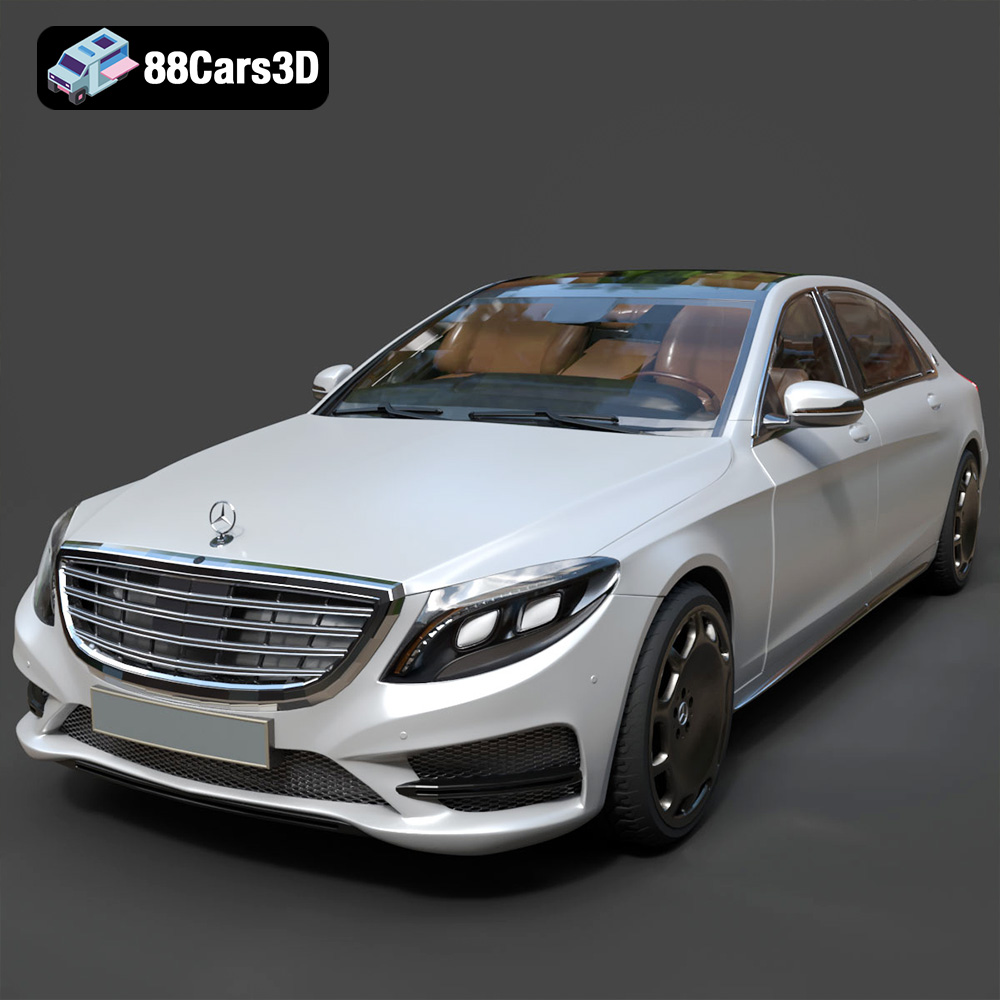
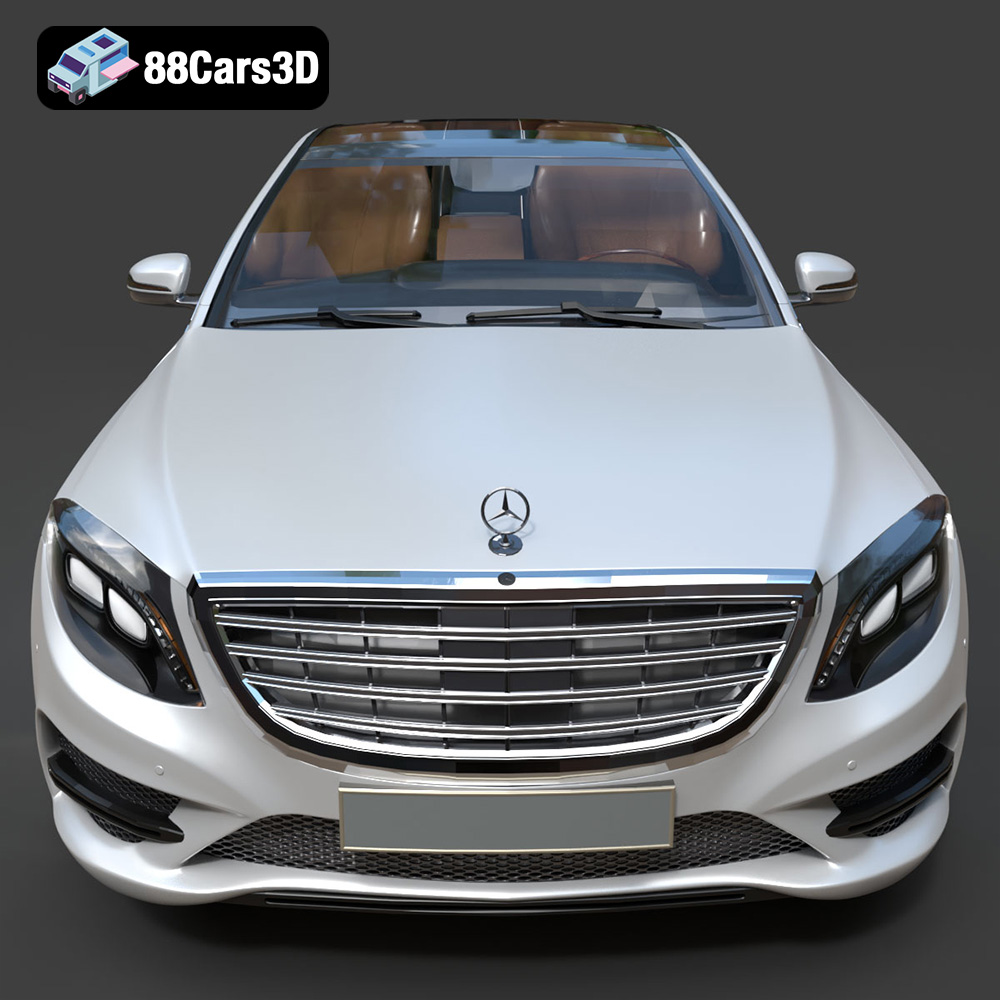
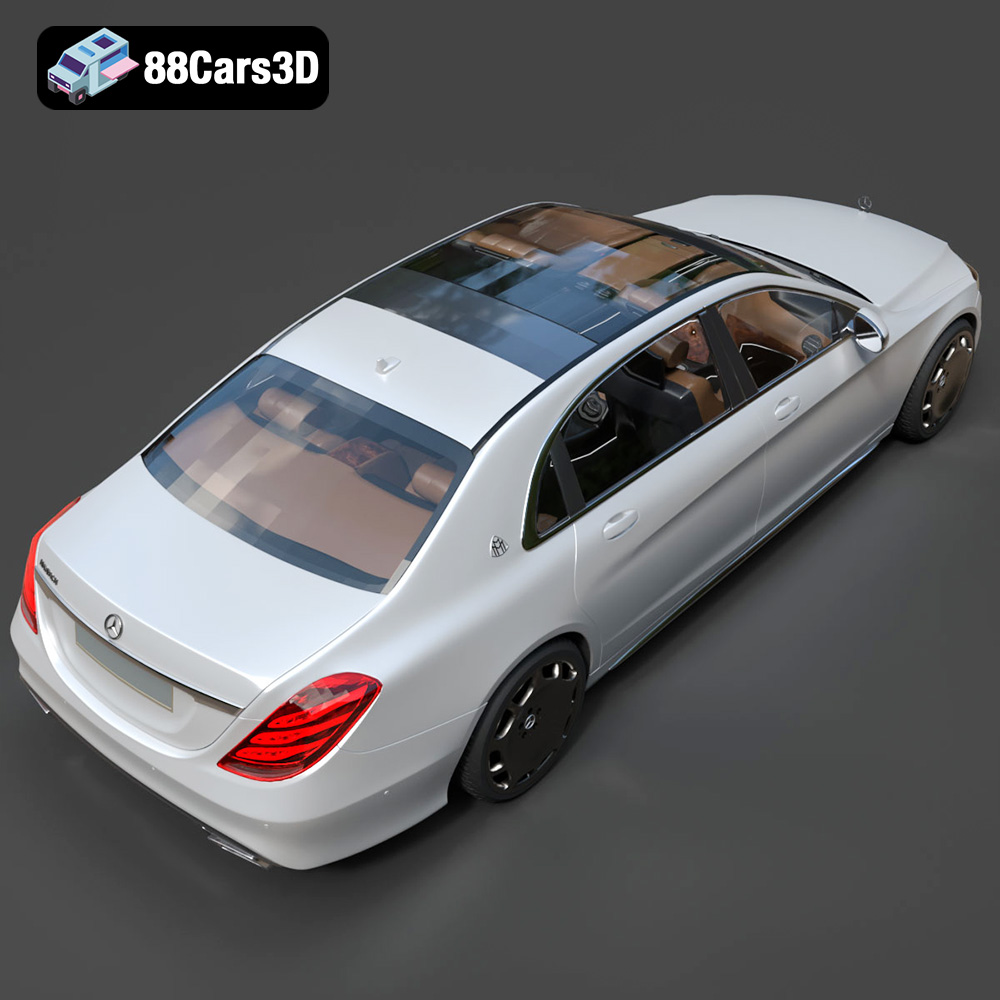
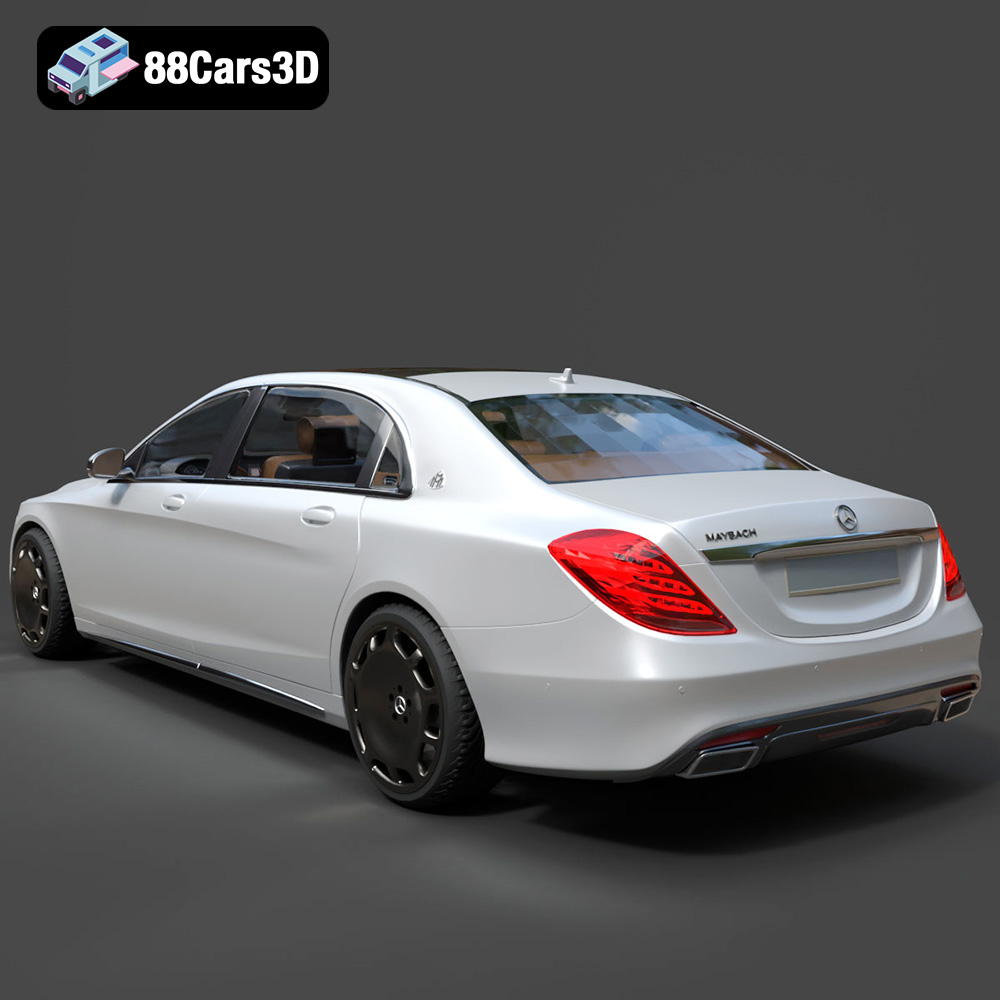
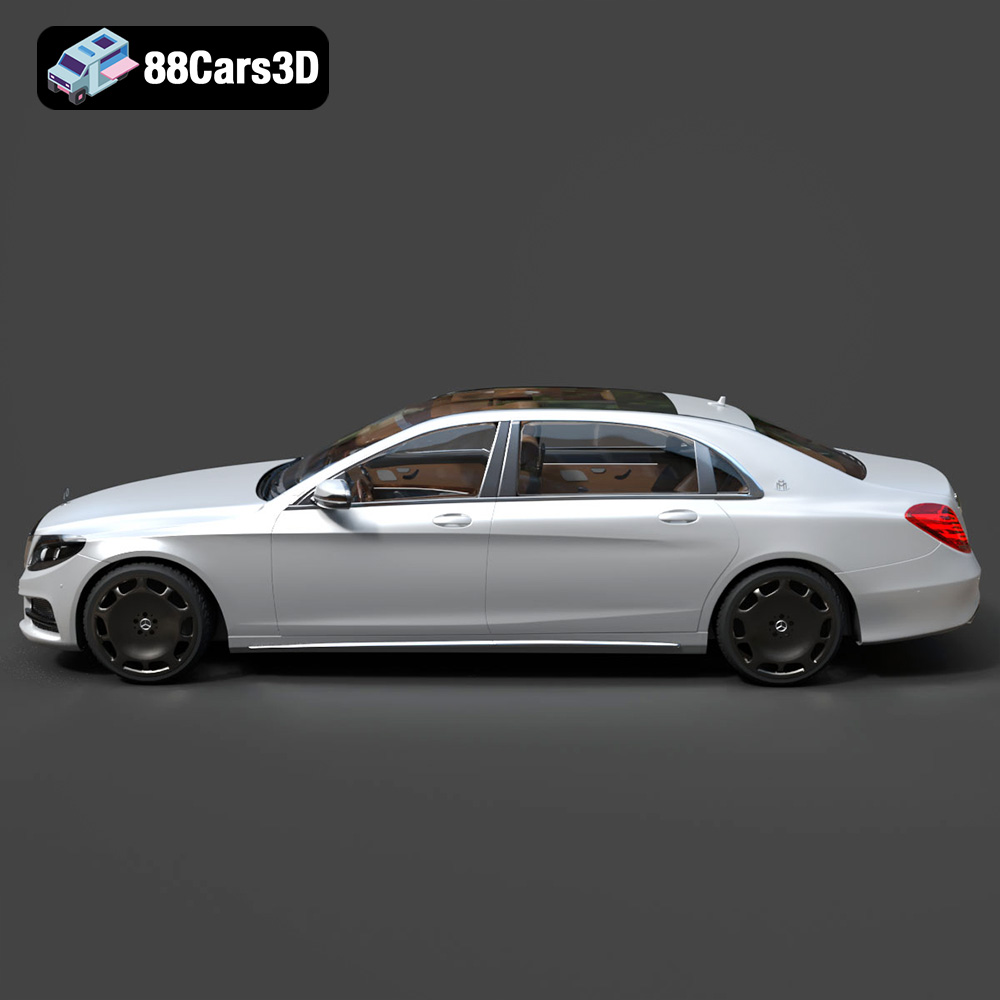
From the first glance, the model accurately captures the majestic presence of the Maybach 2013. Its frame geometry and proportions are based on the actual vehicle chassis, ensuring an authentic representation. The iconic chrome front grille, a hallmark of Mercedes-Benz luxury, is rendered with precision, reflecting light dynamically in any rendering environment. Signature LED headlights and sweeping taillights are not just textures but carefully modeled components, ready for intricate lighting setups. Even the dual chrome-tipped exhaust system and the multi-spoke alloy wheels with low-profile tires demonstrate an uncompromising commitment to visual accuracy. A critical technical detail for animators is the inclusion of separate wheels, suspension, and steering components, complete with proper pivot setups. This isn’t just aesthetic; it’s functional, enabling realistic animation for racing simulations, cinematic sequences, or interactive configurators.
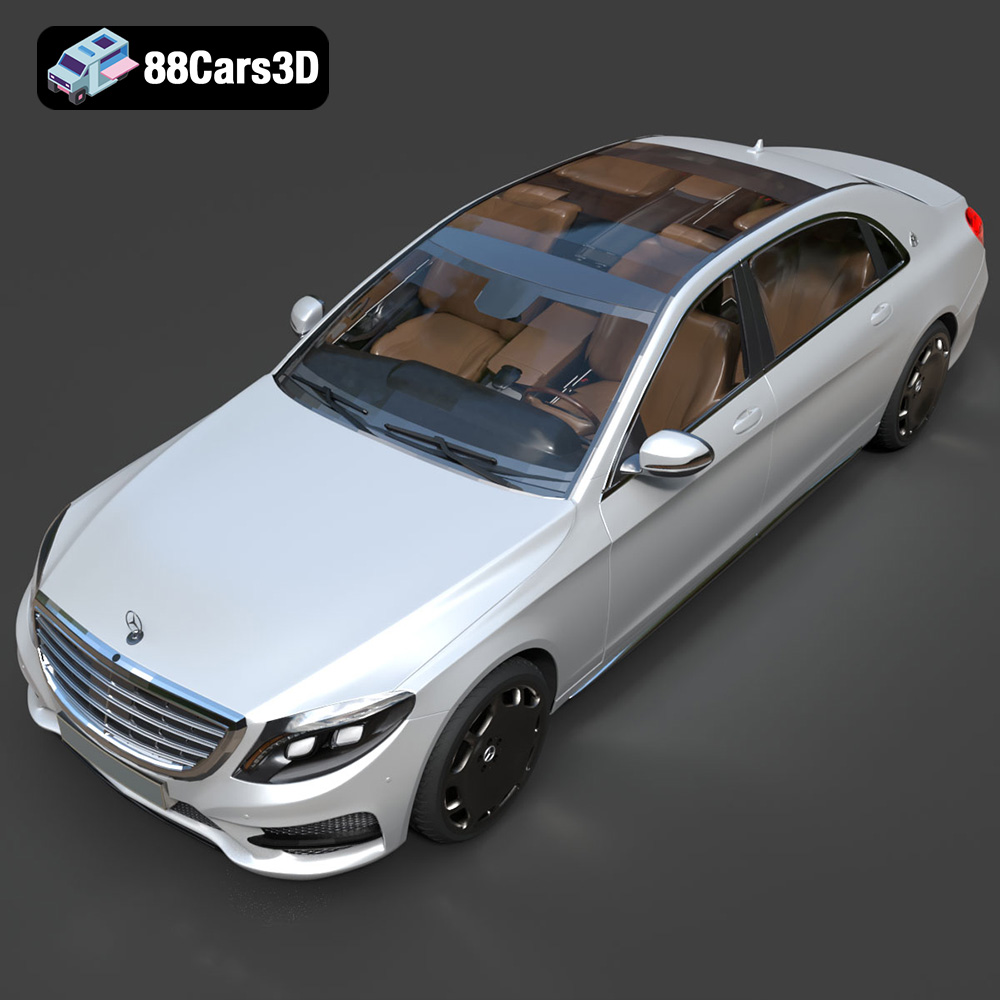
The luxury of a Maybach extends far beyond its exterior, and this 3D model faithfully recreates the vehicle’s opulent interior. The quilted leather executive seats, a signature element of high-end Mercedes-Benz vehicles, are meticulously detailed, inviting virtual passengers into unparalleled comfort. The wood-trimmed steering wheel and dashboard elements add to the executive feel, while the digital and analog instrument cluster is precisely modeled for realism. Even smaller details like precision climate controls, pedals, and rear entertainment screens are present. This interior fidelity is not just for beauty shots; its optimized geometry makes it perfect for first-person POV in gaming or virtual reality experiences, allowing users to genuinely step inside and interact with the luxurious cabin.
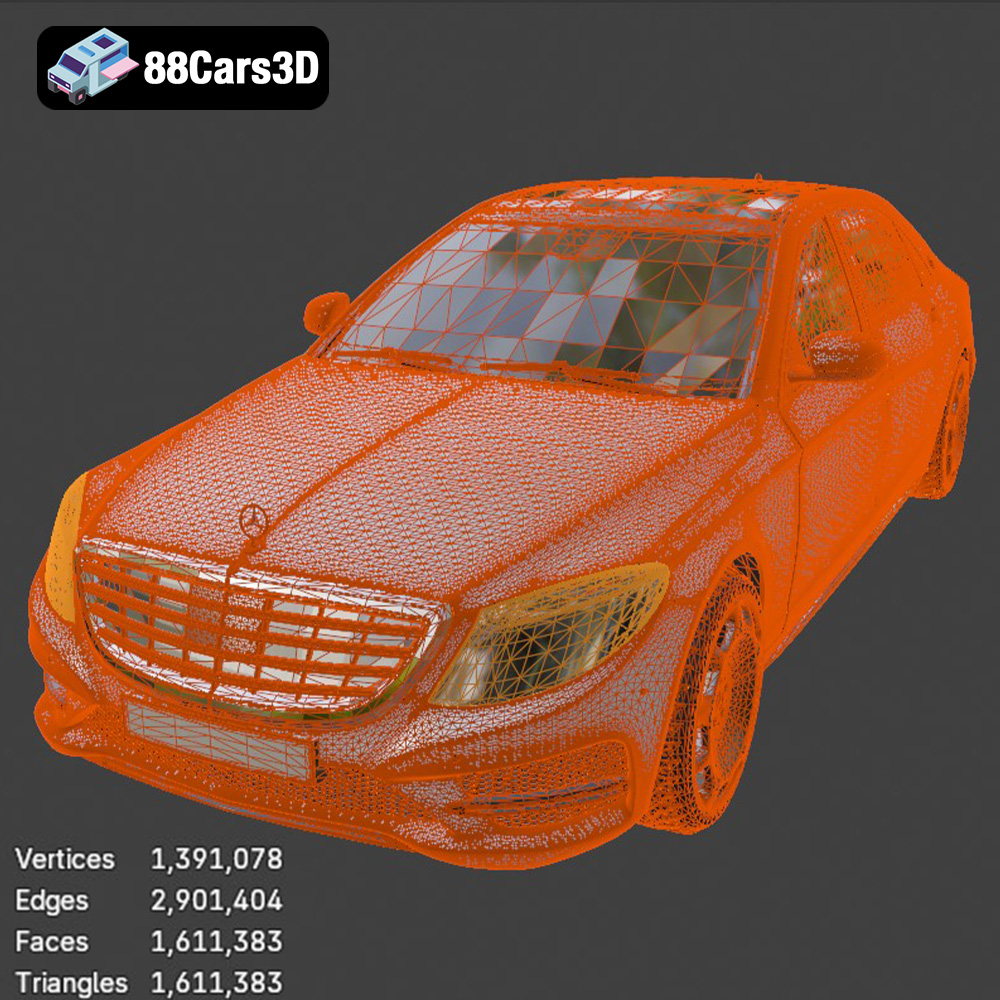
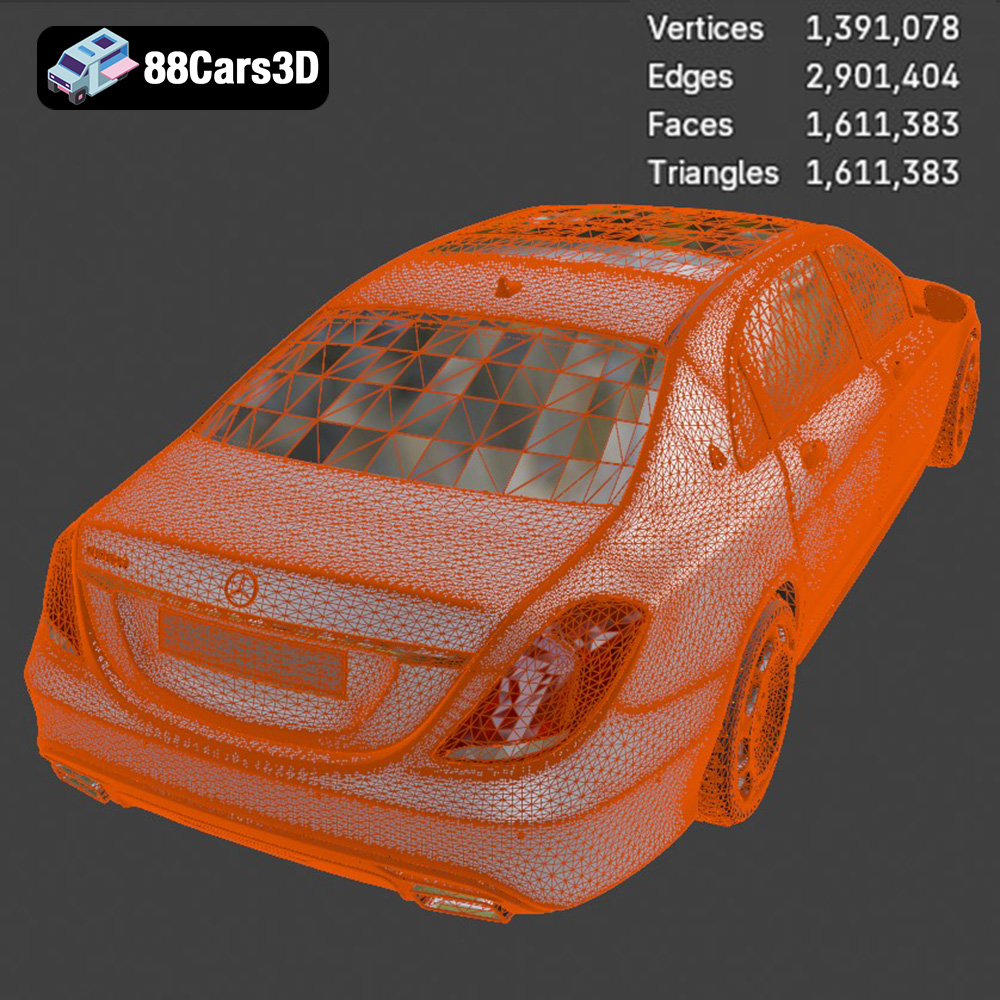
The model’s technical specifications highlight a masterful balance between high visual realism and real-time performance. With 1,611,383 triangles, the geometry is rich enough to convey intricate details without becoming overly cumbersome for game engines. This polycount strikes a perfect balance, allowing for stunning close-ups in cinematic renders while remaining optimized enough for interactive applications in Unreal Engine or Unity. Real-world scale accuracy is maintained, which is essential for consistent scene composition and realistic physics simulations. Furthermore, the model comes with proper pivot setups for crucial components like steering, wheel rotation, and suspension travel, significantly streamlining the animation pipeline. This thoughtful engineering ensures compatibility with major 3D software platforms and real-time rendering engines, providing a truly game-ready and optimized asset.
A high-quality 3D model like the Mercedes-Benz Maybach 2013 is only as valuable as its ability to seamlessly integrate into various professional workflows. This model’s robust design and diverse file format support ensure it can be a cornerstone asset for different creative pipelines.
For architectural visualization studios, advertising agencies, or film production houses, photorealistic rendering is paramount. Using the .max or .blend files, artists can import the Maybach model into powerful rendering engines like V-Ray, Corona Renderer, Arnold (with 3ds Max), or Cycles (with Blender). The model’s detailed geometry, especially the engine block and interior, provides an excellent base for advanced material creation. Imagine crafting custom paint shaders with realistic metallic flakes, setting up complex studio lighting, and rendering stunning lifestyle shots or cinematic sequences for a luxury brand campaign. The separate animated components (wheels, suspension) allow for dynamic scene creation, from a car driving through an urban landscape to a suspension system reacting realistically to terrain in an animated short. The level of detail ensures that even extreme close-ups maintain visual integrity, crucial for high-resolution advertising.
Game developers constantly seek assets that are both visually compelling and performant. The Maybach model, with its 1,611,383 triangles, is specifically described as “game-ready & optimized.” The .fbx and .unreal formats are tailor-made for integration into Unreal Engine or Unity. Developers can import the FBX, set up PBR (Physically Based Rendering) materials, and configure collision meshes. The pre-set pivots for wheels and steering drastically reduce setup time for vehicle physics and animation blueprints. This makes it ideal for racing titles, open-world adventures where luxury cars populate the environment, or even detailed car configurator experiences within a game engine. The optimized geometry ensures smooth framerates, even on demanding platforms, providing a premium asset that doesn’t compromise on performance.
The burgeoning fields of Augmented Reality and Virtual Reality demand highly optimized assets that can be rendered in real-time on a variety of devices, often with stringent performance budgets. The .glb file format, specifically designed for AR/VR and web-based applications, makes the Maybach an ideal candidate for immersive virtual showrooms or mobile AR experiences. A potential workflow might involve importing the .glb into a web-based AR platform like Google Scene Viewer or Apple AR Quick Look, allowing customers to view the Maybach in their driveway using their smartphone. For more elaborate VR experiences, the optimized .fbx can be brought into game engines to create fully interactive virtual tours, where users can open doors, explore the detailed interior in first-person, and even customize body colors or material finishes in real-time, leveraging the model’s customization options.
The versatility of a well-crafted 3D model extends far beyond its primary use case. The Mercedes-Benz Maybach 2013 3D model is a testament to this, proving valuable across a spectrum of industries and creative endeavors.
In the luxury automotive sector, virtual showrooms and online configurators are becoming indispensable tools. Brands leverage high-quality 3D car models to allow prospective buyers to explore vehicles in intricate detail from the comfort of their homes. This Maybach model is perfectly suited for such applications. Its ability to support customization options like changing body colors (including factory dual-tone finishes), modifying tire textures, and adjusting material finishes (matte, gloss, metallic, chrome) means an interactive configurator can offer a rich, personalized experience. Customers can rotate the vehicle 360 degrees, zoom into the detailed interior, and visualize their desired specifications, all powered by this meticulously crafted 3D asset, potentially delivered via .glb for web-based applications or .fbx for more advanced standalone executables.
For architectural visualization artists, populating exterior and interior scenes with realistic vehicles adds a crucial layer of authenticity and scale. A luxury sedan like the Maybach 2013 is often required to convey a certain lifestyle or demographic for high-end residential or commercial projects. The model’s real-world scale accuracy and detailed aesthetic make it an excellent choice for these scenes. Whether parked elegantly outside a modern villa, waiting at a corporate entrance, or being driven down a digitally created street, its presence elevates the realism and narrative of the architectural render. The .max or .blend files offer complete flexibility for lighting integration and material adjustments to match the scene’s overall mood and environment.
Beyond entertainment and marketing, highly accurate 3D car models are invaluable for various training and simulation purposes. Driving simulators for professional training, autonomous vehicle research, or even forensic reconstruction can benefit from a realistic vehicle model. The Maybach’s accurate geometry, separate animated components (suspension, steering), and proper pivot setups provide a solid foundation for physics-based simulations. Researchers can use such models to study vehicle dynamics, test sensor placements in virtual environments, or even simulate crash scenarios, providing critical data without the need for expensive physical prototypes. The .ply format might be particularly useful here for precision analysis, while .fbx would facilitate integration into simulation software.
The metaverse, AR, and VR are pushing the boundaries of interactive 3D experiences, demanding assets that are both visually rich and incredibly performant. The Mercedes-Benz Maybach 2013 3D model is designed with these challenging environments in mind, offering inherent advantages for real-time deployment.
The product description highlights its “Game-Ready & Optimized” nature, with 1,611,383 triangles. This polycount represents a thoughtful balance for a hero vehicle, providing enough detail for close-up shots while remaining manageable for real-time engines. However, for truly vast open-world games or scenarios with multiple vehicles, the concept of Levels of Detail (LODs) becomes crucial. While not explicitly stated as included, a professional workflow for this model would involve generating multiple LODs (e.g., 500k, 200k, 50k, 10k triangles) that swap out automatically based on the camera’s distance. This ensures optimal performance without sacrificing visual quality when the vehicle is central to the scene, leveraging the robust base mesh to create these optimized versions. The .fbx format is ideal for exporting these LOD groups.
Modern real-time rendering relies heavily on Physically Based Rendering (PBR) workflows. The Maybach model, being a premium asset, would naturally be designed to work seamlessly with PBR materials. This involves creating textures for Albedo (color), Normal (surface detail), Metallic (reflectivity), Roughness (micro-surface detail), and Ambient Occlusion. These maps allow the vehicle’s surfaces—from the glossy paintwork to the matte plastic trims and metallic accents—to react realistically to light in any environment, whether it’s a sunny outdoor scene or a dimly lit garage. The .fbx or .unreal formats typically carry these material assignments and texture references, allowing for a swift setup within game engines.
For any interactive experience, especially in games or simulators, robust collision and physics are non-negotiable. The model’s “proper pivot setup for steering, wheel rotation, and suspension travel” is a direct enabler for this. Developers would typically create simplified collision meshes (often called “convex hulls”) around the vehicle’s body and wheels, distinct from the high-resolution render mesh. These collision meshes are then used by the engine’s physics system to handle impacts, ground interaction, and driving dynamics. The well-defined components of the Maybach model facilitate the creation of these essential physics assets, enabling realistic handling, damage models, and overall believable interaction within the virtual world. This attention to functional detail separates a mere static render model from a truly game-ready asset.
While digital realms are expansive, there’s a unique satisfaction in holding a physical representation of a digital creation. The Mercedes-Benz Maybach 2013 3D model is not just for screens; its inclusion of the .stl format opens the door to the tangible world of 3D printing, allowing enthusiasts and professionals to bring this luxury vehicle to life as a physical model.
The provided 3D print settings are crucial for a successful outcome. Recommending scales like 1:12, 1:18, or 1:24 ensures that the model’s intricate details remain visible and printable. These scales are common for collectible car models, providing a good balance between size and detail. The recommendation for resin printing and a fine layer height (0.04–0.12 mm) is critical for capturing the Maybach’s elegant body lines, fine grille details, and subtle interior features, as FDM (Fused Deposition Modeling) printers often struggle with such precision at smaller scales. Wall thickness guidelines (1.2–2.0 mm) are essential for structural integrity, preventing parts from being too fragile during printing and post-processing.
The mention of requiring supports for detailed parts like the exhaust, mirrors, and handlebars is a standard practice in 3D printing. These delicate overhangs would otherwise fail without temporary support structures. Printing the frame angled for structural integrity and wheels separately is a smart strategy; it minimizes support material on crucial exterior surfaces and allows for cleaner prints, especially for circular components like wheels. Post-processing, including sanding, priming, and applying authentic factory colors with metallic finishes, transforms a raw 3D print into a display-quality collectible. This involves a meticulous workflow of surface preparation, airbrushing, and detailing, mimicking the real-world automotive painting process to achieve a truly luxurious finish on your physical Maybach model.
The Mercedes-Benz Maybach 2013 3D model stands as a prime example of a premium digital asset meticulously engineered for diverse professional applications. From its unparalleled exterior and interior detailing to its optimized geometry and broad file format compatibility, this model provides an exceptional foundation for any project requiring a touch of automotive luxury and technical excellence. Whether you’re crafting photorealistic visualizations in 3ds Max or Blender, developing immersive game environments in Unreal Engine, building cutting-edge AR/VR experiences with GLB, or even bringing the design into the physical world through 3D printing with STL, this asset is designed to elevate your work.
The thoughtful inclusion of multiple file formats—from editable native project files like .blend and .max to industry-standard interchange formats like .fbx and highly specialized options like .glb and .stl—underscores its versatility. This ensures that artists and developers can integrate the Maybach seamlessly into their chosen pipelines, saving invaluable time and resources while achieving superior results. For those seeking high-quality 3D car models that blend artistic precision with robust technical specifications, the Mercedes-Benz Maybach 2013 3D model available at 88cars3d.com offers an invaluable addition to any creative toolkit.
Experience the pinnacle of automotive luxury with this highly detailed 3D model of the Mercedes-Benz Maybach 2013. Renowned for its opulent heritage, commanding presence, and unparalleled executive comfort, this ultra-luxury sedan stands as a true icon of high-end motoring. The model captures the vehicle’s signature visual elements, including the prominent chrome front grille, elegant elongated bodylines, a detailed twin-turbo V12 engine block, and the sophisticated dual exhaust system.
Boasting a meticulously crafted topology with 1,611,383 triangles, this 3D model delivers breathtaking visual fidelity. Despite its rich details, the optimized geometry ensures smooth integration into various real-time applications and rendering pipelines. Whether you are developing interactive experiences or creating cinematic visuals, this model provides the ultimate foundation.
Perfect for luxury virtual showrooms, architectural visualizations, high-end cinematic animations, and open-world video games.
.blend, .fbx, .obj, .glb, .stl, .ply, .unreal, .max
Tags:
mercedes-benz, maybach-2013, luxury-sedan, luxury-car, game-ready, low-poly, optimized, car-3d-model, game-asset, rendering, vr-ar, blend, fbx, obj, glb, stl, ply, unreal, max
$80.00
.blend
.fbx
.glb
.max
.obj
.ply
.rendering
.stl
.unreal
car-3d-model
game asset
game-ready
low-poly
luxury car
luxury-sedan
maybach-2013
mercedes-benz
optimized
VR/AR