Get 20% OFF All Premium 3D & STL Models!

In the dynamic world of 3D visualization, the demand for hyper-realistic and meticulously detailed assets has never been higher. From blockbuster video games to cutting-edge architectural presentations and immersive virtual reality experiences, high-fidelity 3D models are the cornerstone of compelling digital content. For automotive enthusiasts and professionals alike, bringing iconic vehicles to life in the digital realm requires a blend of artistic skill, technical precision, and an understanding of diverse software ecosystems. It’s a field where performance meets practicality, mirroring the very vehicles we admire.
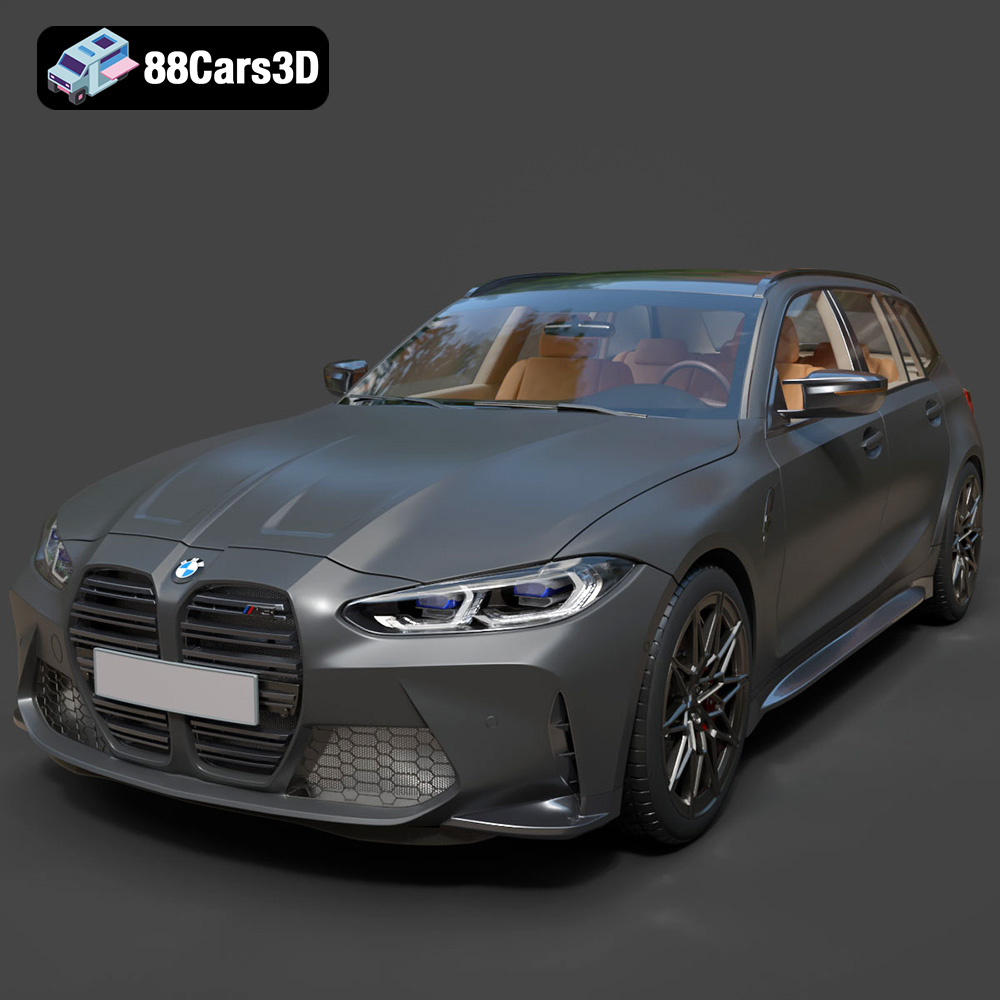
Few vehicles embody this fusion better than the BMW M3 Touring. A marvel of engineering that marries the raw power of BMW’s M division with the versatility of a station wagon, it represents a sweet spot for many. Translating such a complex and revered machine into a robust 3D model is no small feat. This is precisely where expertly crafted 3D car models come into play, offering unparalleled quality and flexibility for a myriad of applications. We’ll delve into the intricacies of integrating such a sophisticated asset into various professional workflows, focusing on the exemplary BMW M3 Touring 3D model, available at 88cars3d.com, and explore how it empowers artists and developers to achieve stunning results.
Creating believable 3D automotive models is an art form that demands an obsessive eye for detail and a deep technical understanding. It’s not merely about replicating shapes; it’s about capturing the essence of a vehicle, its engineering integrity, and its aesthetic appeal. This process is critical for anyone involved in automotive rendering, game development, or any form of visualization where vehicles play a central role.
In today’s visually-driven market, realism is paramount. Consumers, gamers, and clients expect nothing less than photorealistic representations that blur the line between the digital and the real. For marketing campaigns, vehicle configurators, or high-end racing simulators, a 3D car model must stand up to intense scrutiny, from the reflections on its paintwork to the intricate details of its interior. This level of fidelity translates directly into engagement and belief, making the investment in high-quality assets like the BMW M3 Touring 3D model indispensable. The accuracy of proportions, the subtle curves of the body panels, and the texture of materials all contribute to an immersive experience that can elevate a project from good to exceptional.
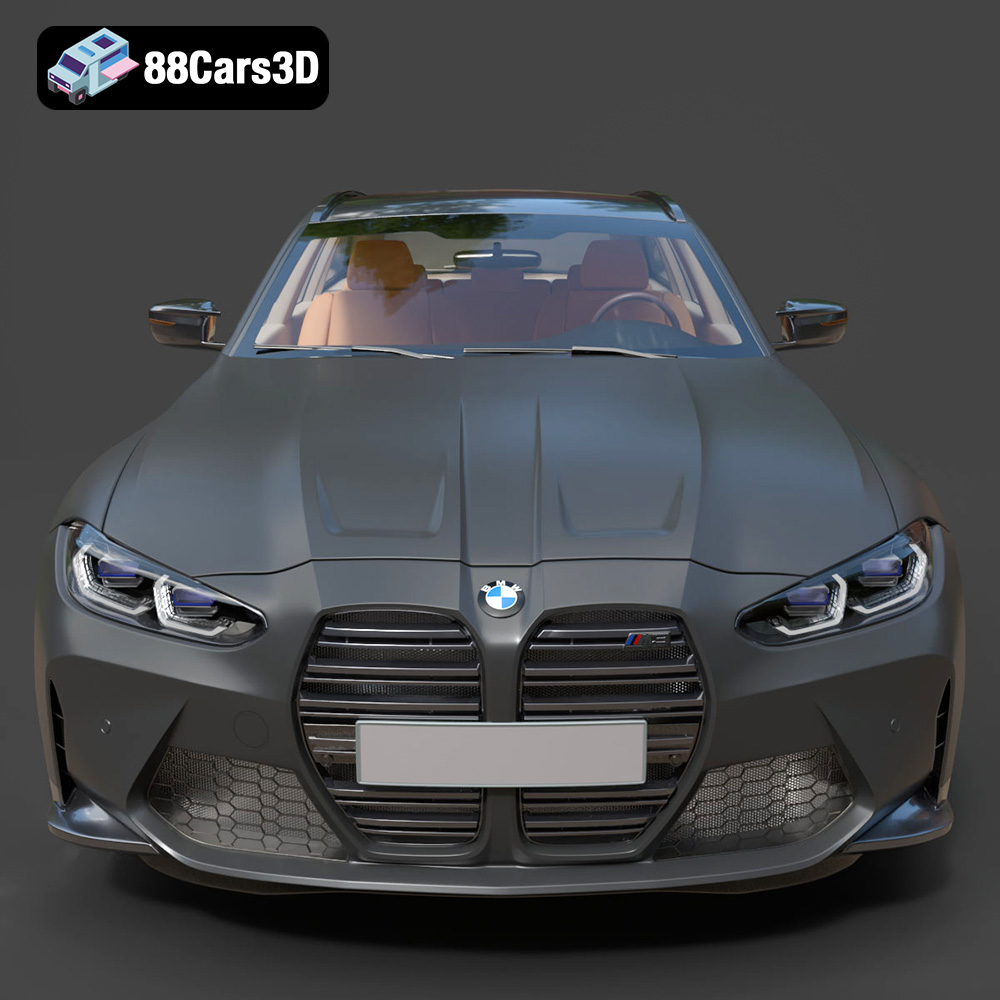
A great 3D car model isn’t just visually appealing; it’s also structurally sound in its digital representation. Artists must meticulously translate real-world engineering data, design sketches, and photographic references into a cohesive 3D mesh. This involves understanding manufacturing processes, material properties, and aerodynamic principles to ensure the digital model not only looks right but also feels authentic. For a performance vehicle like the M3 Touring, capturing elements such as the aggressive M styling cues, the frameless kidney grille, and the flared wheel arches requires a high degree of precision, ensuring that the finished product resonates with automotive enthusiasts and design professionals alike.
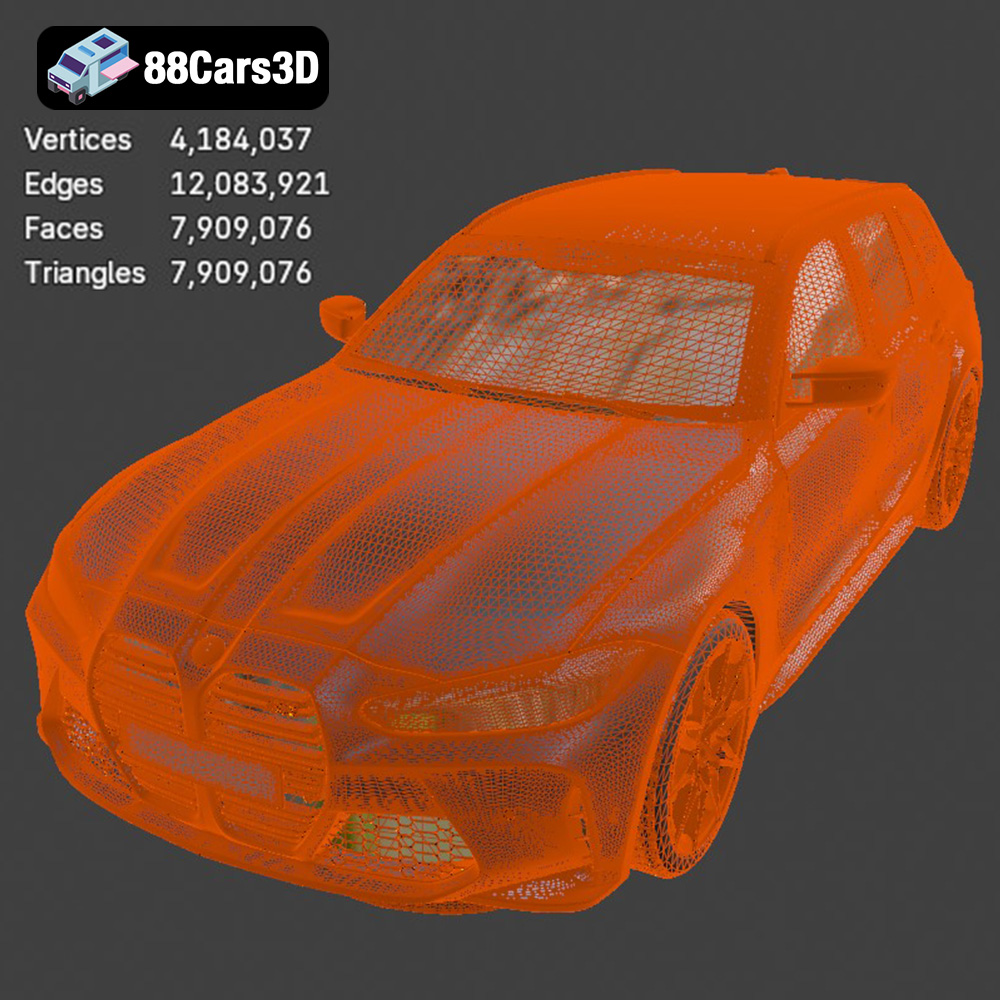
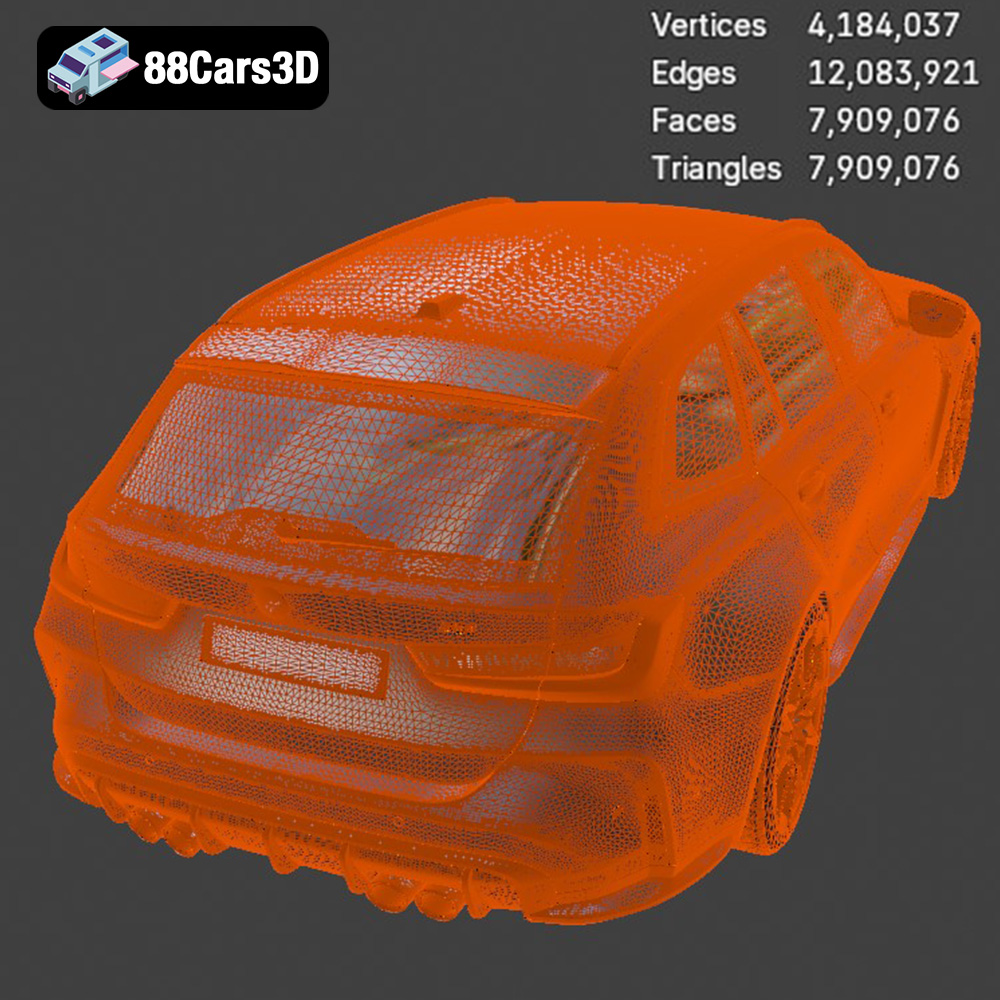
While game development often prioritizes optimized, lower-poly models, the advent of advanced rendering technologies and real-time engines like Unreal Engine 5 with Nanite has redefined what’s possible. High-polygon models, once exclusive to offline rendering, are now increasingly viable for real-time applications. The BMW M3 Touring 3D model, with its impressive 7,909,076 triangles, strikes an ideal balance. This “high-poly” count allows for unparalleled visual fidelity, capturing every nuanced curve and detail without relying solely on normal maps. Yet, its structured topology and compatibility with modern engines mean it remains a “game-ready” asset, capable of delivering uncompromising realism across high-end rendering, virtual production, and next-generation interactive experiences.
Navigating the world of 3D modeling requires a solid understanding of the various file formats available. Each format serves specific purposes, catering to different software, pipelines, and end-use applications. When acquiring a premium asset like the BMW M3 Touring 3D model from 88cars3d.com, you’ll often encounter a comprehensive package of formats, ensuring maximum compatibility and utility. Knowing which format to use for a particular task is crucial for efficient workflow and optimal results.
The .blend file is the native format for Blender, a powerful and increasingly popular open-source 3D creation suite. When you receive a .blend file, you’re getting a fully editable Blender scene. This typically includes the mesh geometry, PBR (Physically Based Rendering) materials, textures, lighting setups, cameras, and sometimes even animations or rigging. For artists primarily working in Blender, this format offers the most flexibility. You can easily modify the model, adjust shaders, add custom elements, or integrate it seamlessly into existing Blender projects without any loss of data during import/export. It’s ideal for deep customization and leveraging Blender’s robust toolset for rendering with Cycles or Eevee.
.fbx (Filmbox) is a proprietary file format developed by Autodesk, widely recognized as an industry-standard for exchanging 3D data between different software applications. Its strength lies in its ability to store a wide range of 3D data, including geometry (meshes), materials, textures, cameras, lights, skeletal animations, and blend shapes. This makes it an incredibly versatile format for game development, particularly for Unreal Engine and Unity, and for transferring models between DCC (Digital Content Creation) tools like 3ds Max, Maya, and Blender. While it sometimes requires careful attention to scale and material conversion during import, its broad support makes it indispensable for any real-time pipeline or collaborative project.
The .obj (Wavefront OBJ) format is one of the oldest and most widely supported 3D file formats. It’s a universal choice for transferring pure geometry data between virtually any 3D software. An .obj file primarily stores vertex positions, UV coordinates, normals, and face information. It often comes accompanied by an .mtl (Material Template Library) file, which defines basic material properties and texture references. While .obj doesn’t support complex data like rigging or animation, its simplicity and ubiquitous compatibility make it a reliable choice for exporting clean mesh data for sculpting, retopology, or rendering in software where .fbx might cause issues. It’s a foundational format that ensures cross-software compatibility.
.glb (GL Transmission Format Binary) is the binary version of glTF, a royalty-free specification for the efficient transmission and loading of 3D scenes and models by applications. Developed by the Khronos Group, .glb is designed to be a compact, self-contained file format, embedding all texture and material data directly within the file. This makes it exceptionally optimized for AR (Augmented Reality), VR (Virtual Reality), and browser-based display, such as on Sketchfab or in interactive web experiences. Its focus on efficient loading and runtime performance makes it perfect for interactive configurators or mobile AR applications where file size and quick rendering are critical.
.stl (Stereolithography) is almost exclusively used for 3D printing. This format represents a 3D model as a series of connected triangles (a triangulated surface mesh), defining only the surface geometry of an object without color, texture, or other CAD attributes. While simple, it’s universally accepted by 3D printers and slicing software. When preparing a complex model like the BMW M3 Touring for physical fabrication, converting it to .stl is the standard procedure. It’s essential to ensure the model is “watertight” (no holes in the mesh) for a successful print, a consideration often handled by the creator of a quality asset.
.ply (Polygon File Format, or Stanford Triangle Format) is another format for storing 3D data, often used for scanned 3D objects, CAD applications, and scientific visualization. Like .obj, it defines geometry, but it can also store a wider range of properties, including color per vertex, transparency, surface normals, and even confidence values for scanned data. While less common for general DCC workflows than .fbx or .obj, its precision and ability to carry additional data make it valuable for specific engineering, reverse engineering, or analytical tasks where accurate mesh data with attributes is needed.
The .unreal designation implies an asset that is specifically packaged or configured for direct import and optimal performance within Unreal Engine. This might be a highly optimized .fbx with specific naming conventions, pre-configured material instances, or even a self-contained Unreal Engine asset file. Such assets are designed to be “engine-ready,” meaning they require minimal setup once imported. This includes proper scaling, collision geometry, LODs (Levels of Detail), and potentially even pre-built vehicle blueprints, significantly accelerating the workflow for game developers and virtual production artists by providing a plug-and-play solution for their real-time environments.
Similar to .blend for Blender, the .max file is the native format for Autodesk 3ds Max. This format preserves the entire scene information from a 3ds Max project, including geometry, modifiers, materials, textures, lights, cameras, animations, rigging, and render settings. For professionals working within the 3ds Max ecosystem, the .max file offers the highest level of editability and integration. It allows for advanced animation, complex scene setups, and high-quality rendering with engines like V-Ray or Corona. For maximum control and customization within 3ds Max, this is the preferred format.
The inclusion of such a comprehensive array of formats with the BMW M3 Touring 3D model from 88cars3d.com underscores its versatility, ensuring that artists, developers, and engineers from various disciplines can seamlessly integrate this high-quality asset into their preferred pipelines.
The BMW M3 Touring 3D model isn’t just a generic car model; it’s a meticulously crafted digital twin of a highly specific, performance-oriented vehicle. Its design showcases an extraordinary commitment to accuracy, making it an invaluable asset for any project demanding authenticity.
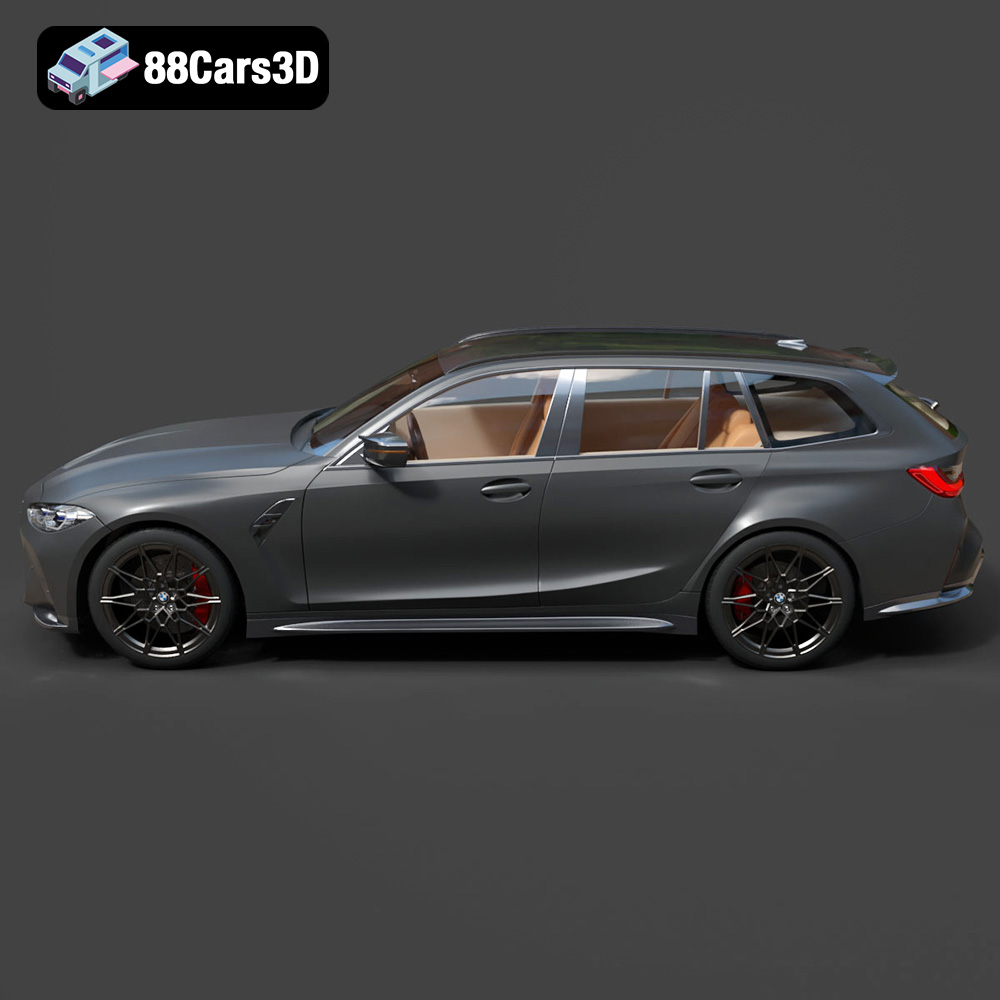
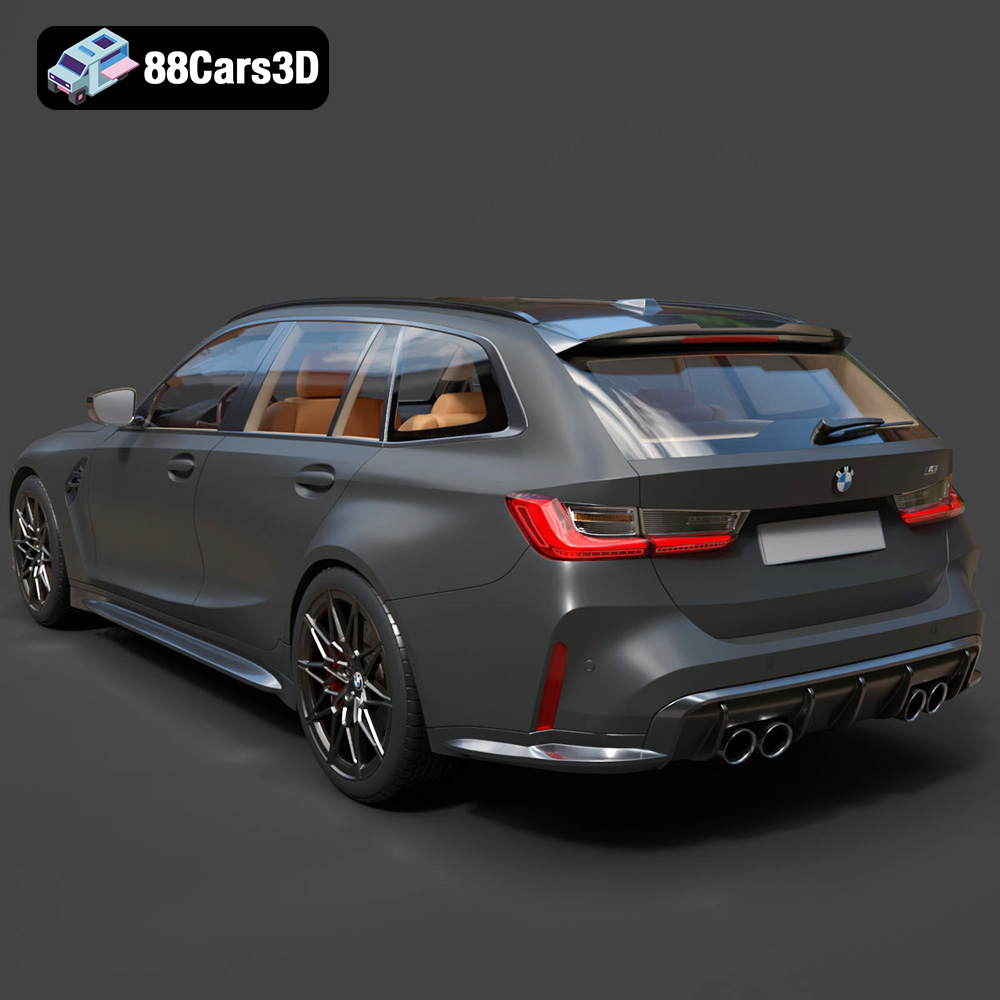
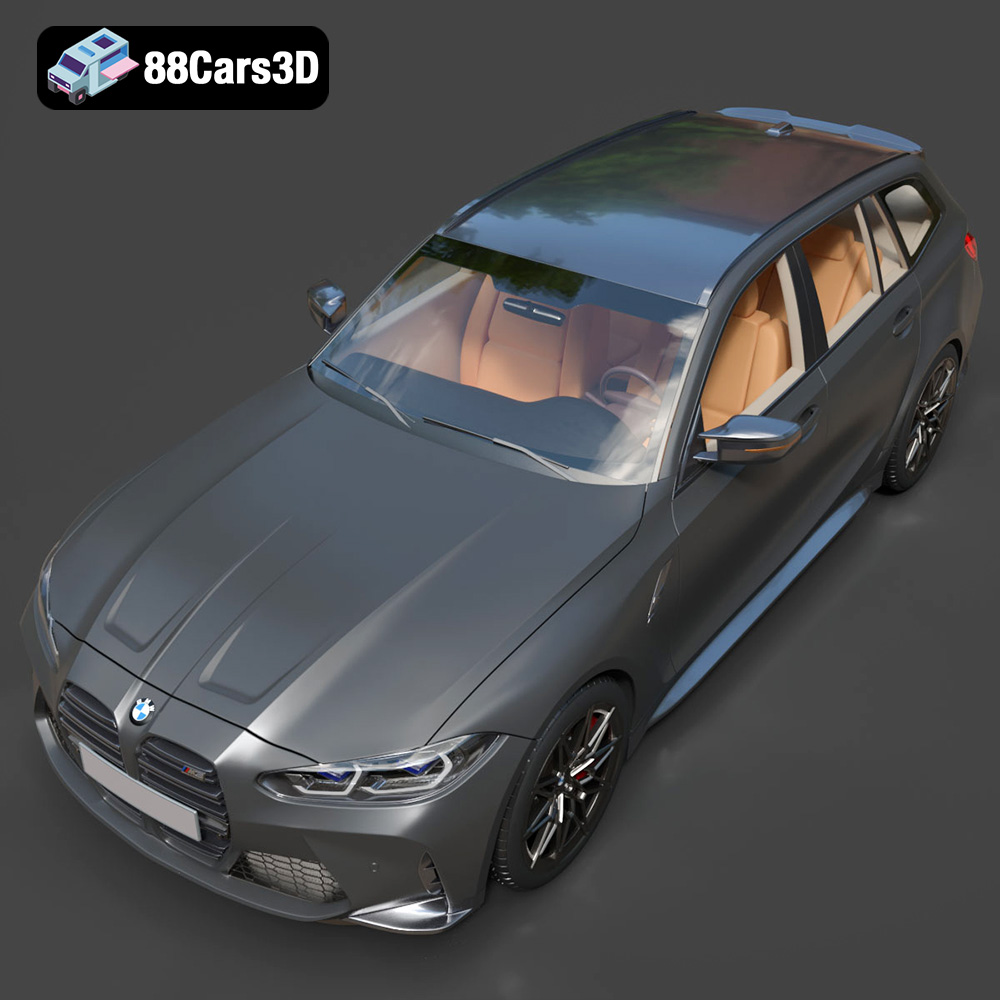
The exterior of this 3D model is a testament to precision modeling. It captures the accurate BMW M3 Touring frame geometry and its muscular estate proportions, immediately recognizable to any car enthusiast. Key design elements are faithfully recreated: the iconic frameless kidney grille, the aggressively flared wheel arches, and the dynamic aerodynamic lines that define the M3’s athletic stance. Crucially, the model includes a detailed simulated twin-turbo S58 straight-six engine setup, allowing for engine bay renders or cutaway views – a rare level of detail in many 3D car models. The signature M quad exhaust system with its aggressive rear diffuser is rendered with precision, alongside the sophisticated Laserlight headlights and L-shaped LED taillights, ensuring a striking presence in any scene. Even the high-resolution M forged alloy wheels and performance tires, complete with intricate Adaptive M suspension detailing, are individually modeled. Separate components for wheels, suspension, and steering ensure full animation potential, crucial for realistic driving simulations or cinematic sequences.
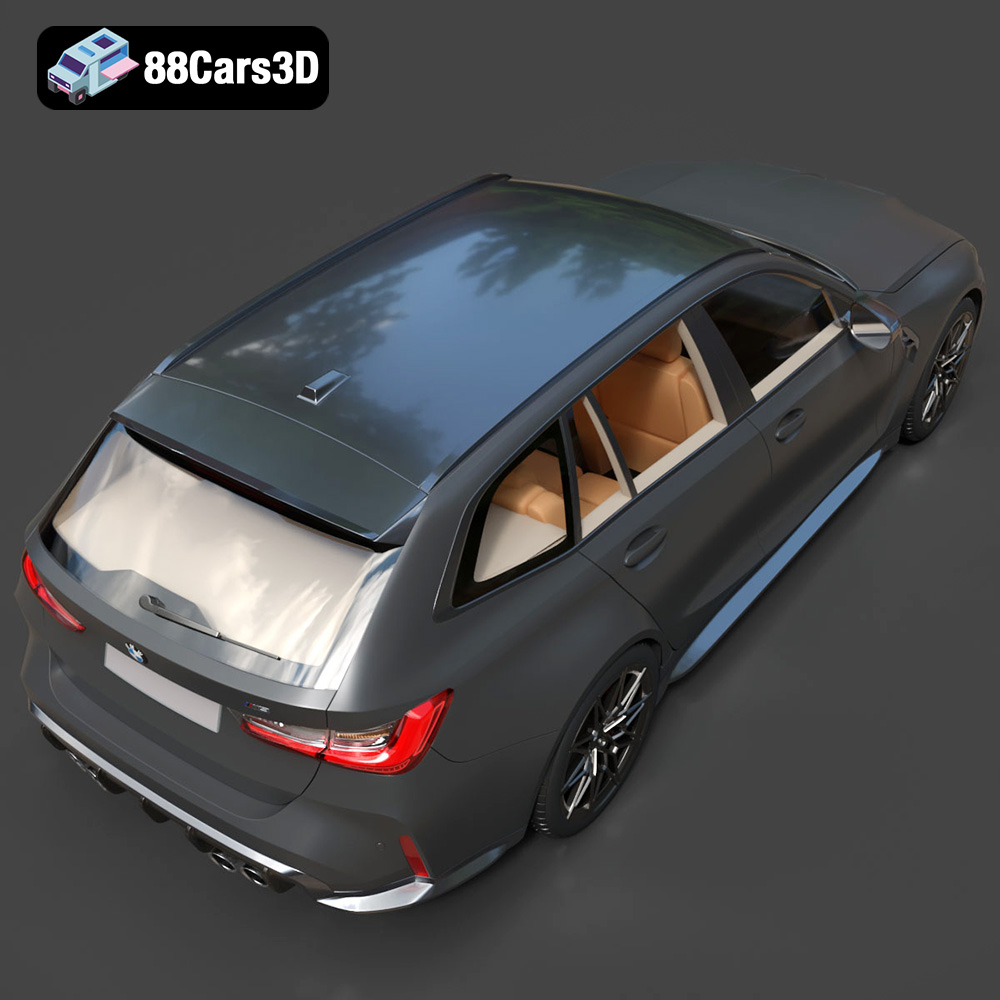
Stepping into the digital cockpit of the M3 Touring reveals an equally impressive level of detail. The aggressively bolstered M Carbon bucket seats are rendered with realistic contours and textures, hinting at their performance pedigree. The M Sport steering wheel, with its precise stitching and functional M buttons, provides an authentic interface. The high-fidelity Curved Display instrument cluster and infotainment screen are accurately represented, complete with subtle bevels and screen details, making it ideal for close-up shots or first-person perspectives in virtual reality. The accurate center console with its gear selector and iDrive controller further enhances the sense of immersion, demonstrating that no detail was overlooked. This meticulous interior design makes the model perfect for virtual showrooms or interactive experiences where the user can “sit” inside the car.
Beyond visual fidelity, the technical specifications of this BMW M3 Touring 3D model underscore its professional-grade quality. With 7,909,076 triangles, it achieves ultra-detailed visual richness while maintaining a structured topology suitable for modern real-time engines. This high polygon count, combined with excellent topology, makes it suitable for advanced geometry systems like Unreal Engine 5’s Nanite, allowing for incredible detail without traditional performance limitations. The model boasts real-world scale accuracy, based on actual vehicle chassis dimensions, which is vital for seamless integration into architectural visualization (arch-viz) projects or accurate simulations. Furthermore, proper pivot setup for steering, wheel rotation, and suspension travel is included, simplifying the animation process for driving sequences or interactive configurators. This combination of visual detail and technical robustness ensures compatibility with major 3D software platforms and real-time rendering engines, making it a versatile asset for diverse professional applications.
The versatility of a well-crafted 3D car model like the BMW M3 Touring extends across numerous industries. Its high fidelity and optimized structure make it a premium asset for a wide range of professional applications, from interactive experiences to cinematic renders.
For game developers, finding the right game assets is critical. The BMW M3 Touring 3D model is ideal for open-world games, racing titles, and simulators. Its optimized polycount, despite being high-detail, strikes a perfect balance for real-time engines like Unreal Engine and Unity. For cutting-edge titles, the model’s robust geometry is perfectly suited for Unreal Engine 5’s Nanite virtualized geometry system, allowing millions of polygons to be rendered in real-time with unprecedented detail and performance. This capability ensures that racing game enthusiasts can experience the M3 Touring with photorealistic accuracy, or open-world adventurers can find a believable, driveable asset for their digital environments. The included pivot setups also simplify the implementation of vehicle physics and animation, significantly reducing development time.
In the realm of automotive rendering and visualization, this 3D model excels. It’s an excellent choice for brand campaigns, lifestyle scenes, and studio lighting setups where photorealism is non-negotiable. Marketing agencies can leverage its detail for captivating advertisements, while design studios can use it for advanced automotive configurators, allowing potential buyers to customize their dream M3 Touring in a virtual environment. Architectural visualization studios can seamlessly integrate the model into exterior scenes, adding a touch of realism and aspiration to their renders. The model’s capacity for ultra-detailed close-up shots makes it perfect for showcasing design nuances and material finishes, crucial for high-end client presentations.
The demand for immersive experiences is rapidly growing, and the BMW M3 Touring 3D model is perfectly positioned for AR (Augmented Reality) and VR (Virtual Reality) applications. Its optimized geometry and inclusion of the .glb format make it ideal for virtual showrooms, allowing customers to explore the car in a fully interactive 3D space. Imagine walking around the M3 Touring in AR, parked in your driveway, or sitting inside it in VR, examining every stitch and button. This model can also be used for advanced training simulations, where engineers or sales personnel can familiarize themselves with the vehicle’s features in a risk-free virtual environment. The precision-modeled interior, optimized for first-person POV, is particularly beneficial for creating truly believable and engaging interactive experiences.
Having a high-quality 3D car model is one thing; knowing how to integrate it effectively into various software workflows is another. The BMW M3 Touring 3D model’s comprehensive file format support streamlines this process for diverse professional pipelines.
For artists and studios primarily using Blender, the included .blend file is a goldmine. It allows for immediate integration into an existing Blender scene, with materials likely pre-configured for Cycles or Eevee. Artists can easily customize textures, adjust lighting, add animations (thanks to the separate components and pivot points), or even conduct advanced physics simulations. For instance, a Blender artist might use the M3 Touring model to create a stunning cinematic sequence, leveraging Blender’s powerful animation tools and realistic rendering capabilities. Similarly, for users of 3ds Max, the .max file offers complete control. A visualization specialist could import the M3 Touring directly into a 3ds Max scene, apply V-Ray or Corona Renderer materials, and composite it into an architectural render. The highly structured geometry means easy material ID assignment, allowing for quick color changes or material swaps, reflecting the customization options described for the model.
The BMW M3 Touring 3D model truly shines in real-time environments, especially Unreal Engine. With the inclusion of .fbx and specifically the .unreal file, developers get an asset ready for the engine’s advanced capabilities. The workflow typically involves importing the .fbx or .unreal asset into the engine, setting up a vehicle blueprint (leveraging the pre-set pivots for wheels, steering, and suspension), and configuring physics. For maximum visual fidelity, especially with its 7 million triangles, developers can enable Nanite on the mesh. This allows the engine to handle the high polygon count efficiently, delivering cinematic quality in real-time. Artists can then set up dynamic lighting, reflective materials, and even implement ray tracing to achieve truly photorealistic results for next-generation racing games, virtual production sets, or interactive training modules.
While specific UVs are not detailed in the product description, any high-quality 3D car model for professional use comes with clean, well-organized UV maps. This is crucial for applying detailed textures, such as paint reflections, tire treads, interior fabric patterns, and metallic finishes. Artists can leverage PBR (Physically Based Rendering) workflows, creating physically accurate materials that respond correctly to light. This involves setting up base color, metallic, roughness, normal, and ambient occlusion maps. For example, a professional might use software like Substance Painter to further customize and weather the BMW M3 Touring, adding subtle dirt, scratches, or unique decals, enhancing its realism for a specific scene or game environment. The ability to modify tire textures and adjust material finishes (matte, gloss, metallic) provided with the model further empowers artists to create bespoke versions for different scenarios.
The utility of a comprehensive 3D model extends beyond digital screens into the physical world through 3D printing. The inclusion of the .stl format with the BMW M3 Touring 3D model opens up exciting possibilities for hobbyists, collectors, and prototyping specialists to bring the digital design into tangible form.
For transforming the high-fidelity digital asset into a physical object, the .stl format is indispensable. This triangulated mesh format is the universal language of 3D printers, defining the surface geometry that a printer will extrude layer by layer. The BMW M3 Touring 3D model is provided in this format, ready for direct slicing and printing. For more specialized applications, the .ply format might also be used, offering a bit more flexibility in storing attributes, though .stl remains the dominant standard for most consumer and professional 3D printing. This capability allows enthusiasts to create highly detailed scale models for display or custom projects, adding another dimension to how the digital asset can be utilized.
Achieving a high-quality 3D print of a detailed automotive model requires careful attention to several factors. The recommended print settings for the BMW M3 Touring model are crucial for success:
These guidelines ensure that the digital fidelity of the BMW M3 Touring 3D model translates effectively into a stunning physical replica, offering a unique blend of digital and tangible appreciation for this iconic vehicle.
The journey from a blank canvas to a fully realized digital masterpiece is paved with exceptional assets and robust technical understanding. As industries from game development to architectural visualization continue to evolve, the demand for high-quality, versatile 3D car models remains unwavering. The BMW M3 Touring 3D model stands as a prime example of what meticulous craftsmanship and comprehensive technical design can achieve.
With its impressive detail, game-ready optimization, and support for a multitude of file formats (.blend, .fbx, .obj, .glb, .stl, .ply, .unreal, .max), this model empowers professionals across various domains. Whether you are aiming for photorealistic automotive rendering, creating immersive AR/VR experiences, developing next-generation game assets, or even producing physical prototypes through 3D printing, this model offers a solid foundation. It simplifies complex workflows, saves invaluable development time, and most importantly, provides the fidelity needed to create truly impactful visual content.
Investing in premium 3D models like the BMW M3 Touring is not just about acquiring an asset; it’s about investing in efficiency, quality, and the limitless potential for creative expression. For those seeking to elevate their projects with industry-leading 3D car models, exploring the curated selection at 88cars3d.com is an excellent starting point. Unlock the full potential of your digital creations and bring your automotive visions to life with unparalleled realism and technical prowess.
Experience the perfect blend of high-performance engineering and everyday practicality with the BMW M3 Touring. This iconic performance estate combines the aggressive M styling cues, such as the frameless kidney grille and flared wheel arches, with the versatile proportions of a station wagon. Featuring a meticulously detailed simulated twin-turbo S58 straight-six engine setup, signature quad exhaust pipes, and dynamic aerodynamic exterior lines, this 3D model captures the true spirit of BMW’s legendary M division. Crafted with an impressive 7,909,076 triangles, this ultra-detailed 3D model offers unparalleled visual fidelity. Despite the high polygon count, its topology is highly structured, making it suitable for high-end rendering, virtual production, and next-generation game engines utilizing advanced geometry systems like Unreal Engine 5’s Nanite. Whether for close-up studio shots, automotive visualization, or immersive interactive experiences, this model delivers uncompromising realism.
$90.00
.blend
.bmw
.estate
.fbx
.glb
.max
.obj
.ply
.rendering
.sports car
.stl
.unreal
bmw-m3
car-3d-model
game asset
game-ready
high poly
m3-touring
optimized
station-wagon
VR/AR