Get 20% OFF All Premium 3D & STL Models!

In the rapidly evolving world of 3D design, the demand for high-fidelity automotive assets continues to surge across diverse industries. From breathtaking cinematic renders to immersive real-time gaming experiences, the quality of a 3D car model can make or break a project. Crafting a vehicle that embodies historical accuracy, technical precision, and aesthetic appeal is a monumental task, often requiring hundreds of hours of expert artistry.
This is where carefully curated, production-ready 3D car models become indispensable tools for professionals. Imagine bringing the elegance of a bygone era to life with unparalleled detail, such as the Hispano Suiza H6B, an undisputed masterpiece of automotive engineering from the roaring 1920s. Known for its aviation-inspired 6.6-liter inline-six engine and exceptional build quality, the H6B was the vehicle of choice for European royalty and elites. Capturing this level of historical significance and luxurious detail in a 3D model is a testament to meticulous craftsmanship, providing a foundation for stunning visualizations and interactive experiences.
Today, we’ll explore the critical aspects of leveraging premium 3D car models like the Hispano Suiza H6B to elevate your projects, diving into technical specifications, professional workflows, and the various file formats that dictate their versatility across different platforms. Whether you’re a seasoned visualization artist, a game developer, or an AR/VR enthusiast, understanding these nuances is key to achieving photorealistic results and efficient production pipelines. Resources like 88cars3d.com specialize in providing such high-quality assets, ensuring creators have access to the best tools for their visions.
Classic cars hold a unique place in history, embodying a blend of engineering innovation, artistic design, and cultural significance. Translating this heritage into the digital realm presents both challenges and immense opportunities. A high-quality 3D model of a classic vehicle isn’t just a digital replica; it’s a meticulously crafted piece of digital art that preserves history and inspires new creations.
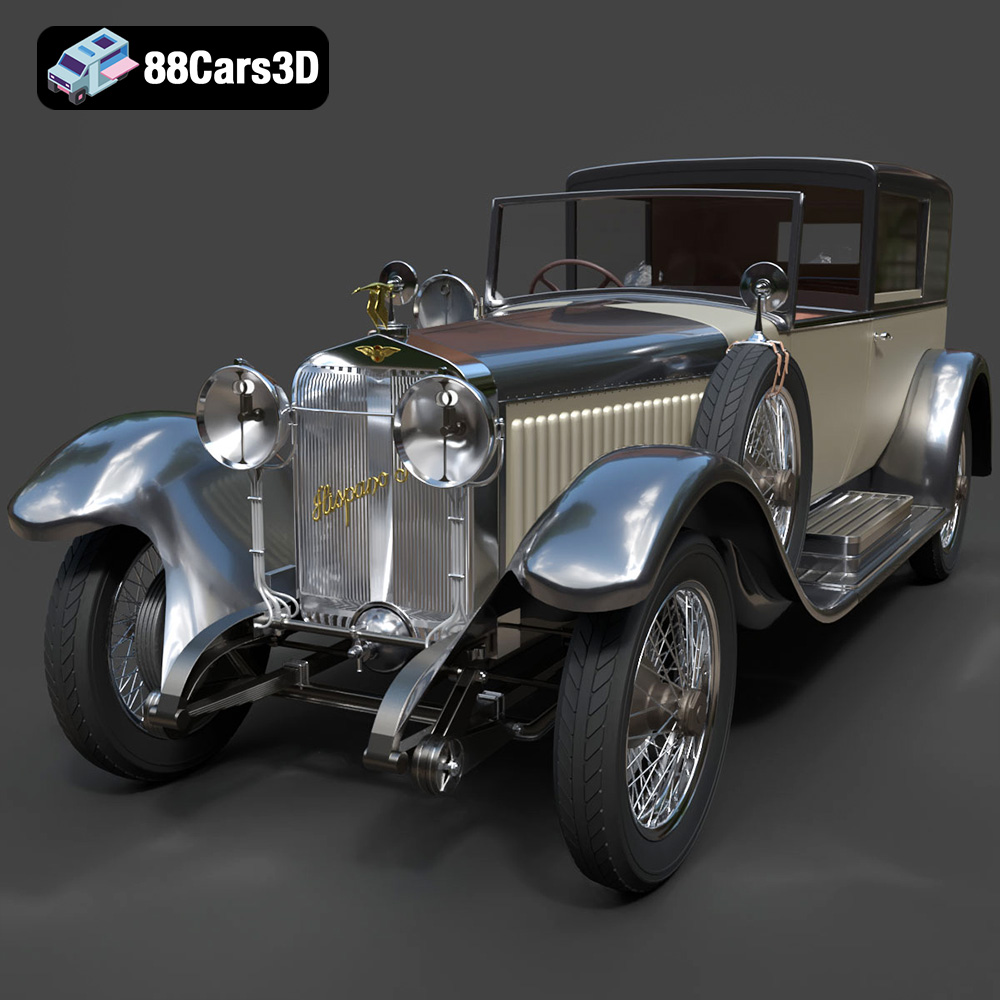
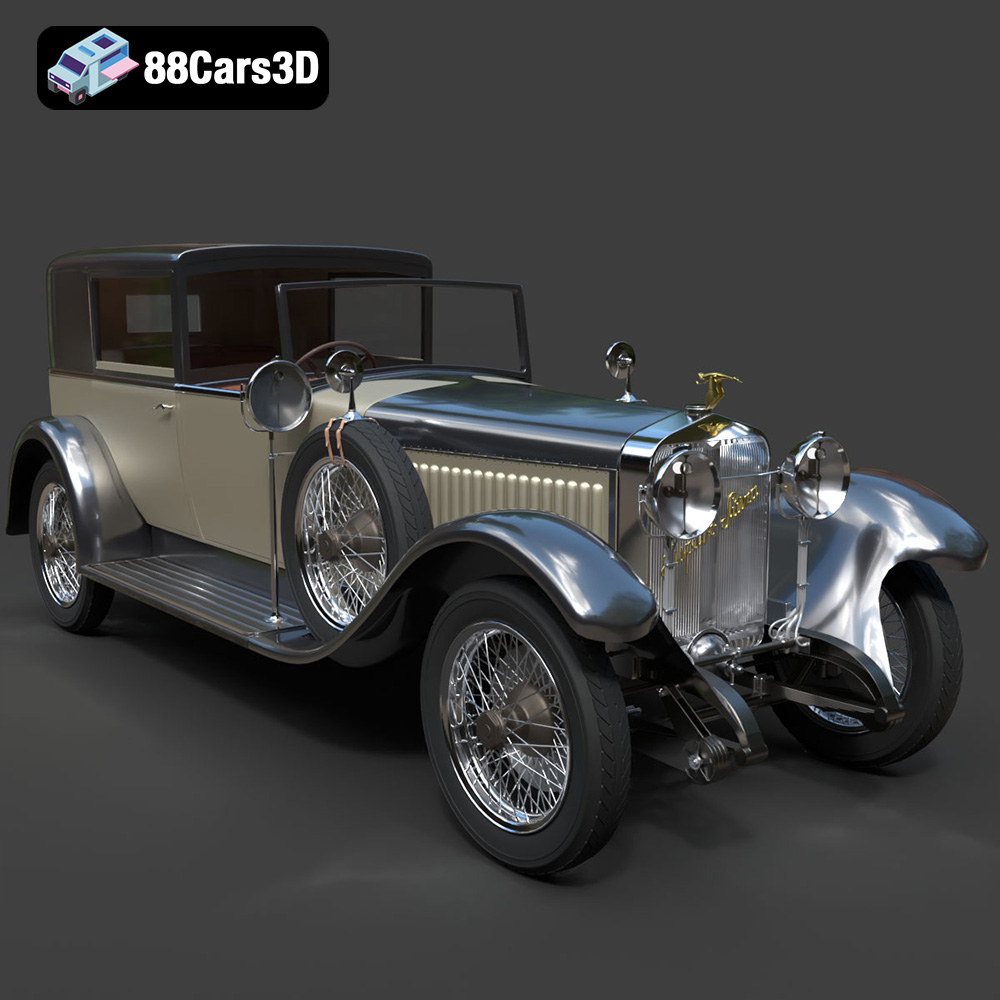
The pursuit of historical accuracy in 3D automotive models is paramount, especially for iconic vehicles like the Hispano Suiza H6B. This involves painstaking research into original blueprints, archival photographs, and even surviving physical examples. Every curve of the sweeping fenders, the intricate design of the signature radiator grille adorned with the iconic flying stork mascot, and the magnificent classic coachwork styling must be faithfully recreated. Such attention to detail ensures that the model resonates with enthusiasts and historians alike, providing a genuine representation of its real-world counterpart.
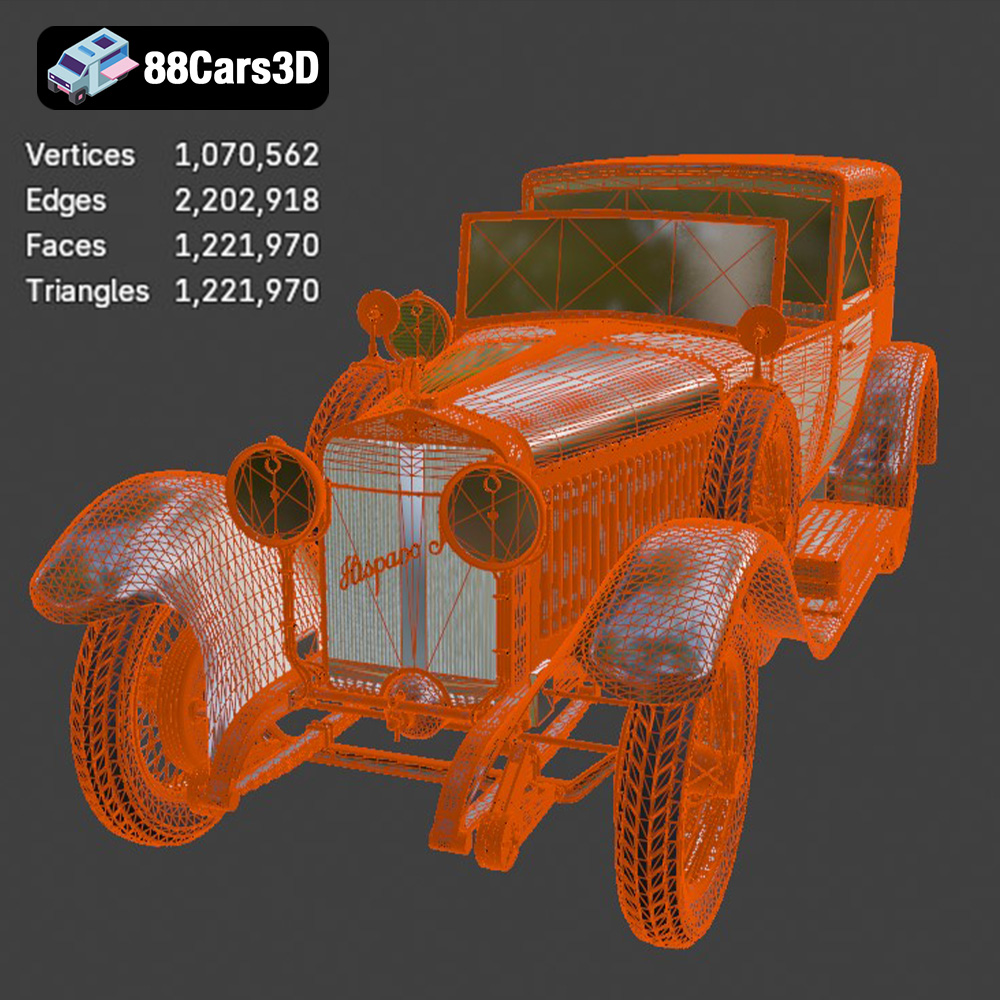
Beyond entertainment, 3D modeling plays a crucial role in the digital preservation of cultural artifacts. Historic vehicles, often fragile and rare, can be extensively documented and digitally archived, allowing for virtual exploration and study that might be impossible with physical objects. A detailed 3D model of the Hispano Suiza H6B, boasting a meticulously modeled 1,221,970 triangle count, acts as a digital time capsule, offering future generations a chance to interact with and learn about these automotive marvels without risk to the originals. This process ensures the legacy of these machines endures far beyond their physical lifespan.
The beauty of a classic car model like the Hispano Suiza H6B is its ability to bridge historical elegance with contemporary technological applications. This single asset can be the centerpiece of a period-accurate game, a historical VR experience, or stunning modern automotive visualizations. By providing a base of uncompromising detail and historical accuracy, creators are empowered to weave compelling narratives and deliver immersive experiences that transcend traditional media, appealing to both vintage car aficionados and modern tech enthusiasts.
The choice of file format for a 3D model is not merely a technicality; it’s a strategic decision that dictates compatibility, performance, and workflow efficiency across different software and platforms. When acquiring a premium 3D car model, such as the Hispano Suiza H6B from 88cars3d.com, understanding the purpose and capabilities of each included format is crucial for maximizing its utility.
The .blend format is Blender’s native file type, storing an entire Blender scene with all its components: meshes, materials, textures, animations, lights, cameras, and even physics simulations. For artists working primarily within Blender, this is the most flexible and editable format, offering full control over every aspect of the model. It’s ideal for in-depth customization, rigging, animation, or tweaking materials to achieve specific rendering styles. The Hispano Suiza H6B in .blend format allows artists to dive deep into its structure and adapt it for unique projects.
FBX (Filmbox) is a proprietary format developed by Autodesk, widely adopted as an interchange format between various 3D applications and game engines like Unreal Engine and Unity. It supports geometry, materials, textures (often embedded or referenced), bones, skinning, and animation. Its strength lies in its ability to transfer complex scene data while maintaining structural integrity. For game developers or animators, the .fbx version of the Hispano Suiza H6B is often the starting point for importing into their chosen engine or software, facilitating efficient real-time pipelines.
The OBJ (Wavefront Object) format is one of the oldest and most widely supported 3D formats. It’s excellent for exchanging purely geometrical data (vertices, normals, texture coordinates, and faces) between almost any 3D software. Materials are typically defined in a separate .mtl (Material Template Library) file. While it doesn’t support animation or rigging, its universality makes the .obj version of the Hispano Suiza H6B invaluable for cross-software compatibility, ensuring the core mesh data is accessible to virtually any artist, regardless of their primary tool.
GLB (GL Transmission Format Binary) is the binary version of glTF, a royalty-free specification for the efficient transmission and loading of 3D scenes and models by applications. It’s highly optimized for web-based 3D, AR, and VR experiences, embedding all assets (geometry, textures, animations) into a single file. This efficiency makes the .glb format of the Hispano Suiza H6B perfect for interactive virtual showrooms, mobile AR experiences, or browser-based configurators where performance and quick loading are critical.
STL (Stereolithography) is the most common file format for 3D printing. It represents a 3D model as a series of connected triangles, defining only the surface geometry without color, texture, or other CAD attributes. While simple, its ubiquity in the 3D printing world is unmatched. The .stl version of the Hispano Suiza H6B allows hobbyists and professionals to bring this digital masterpiece into the physical world, creating display-scale models after careful slicing and support generation.
PLY (Polygon File Format) is often used for storing 3D data from 3D scanners, providing a precise mesh format capable of storing color, transparency, normals, texture coordinates, and other data for each vertex or face. While less common for direct rendering, it’s a robust format for scientific visualization, CAD applications, or situations requiring highly accurate geometric representation and analysis. For specialized applications, the .ply variant of the Hispano Suiza H6B offers this level of precision.
When a product like the Hispano Suiza H6B is listed with an .unreal format, it typically means the asset has been specifically pre-packaged and optimized for direct import into Unreal Engine projects. This often includes proper material setups, collision meshes, LODs (Levels of Detail), and blueprint configurations, saving developers significant time on integration. It’s an engine-ready asset designed for seamless inclusion into real-time environments, ensuring optimal performance and visual fidelity within Unreal’s powerful rendering pipeline.
The .max file is Autodesk 3ds Max’s native project file format. Like Blender’s .blend, it contains all scene data, including geometry, materials, textures, lights, cameras, modifiers, and animation data specific to 3ds Max. For professional studios and artists using 3ds Max as their primary rendering and animation package, the .max version of the Hispano Suiza H6B provides the fullest editable version, allowing for complex scene setups, advanced lighting, and high-quality final rendering.
A premium 3D model like the Hispano Suiza H6B is more than just a static mesh; it’s a versatile tool capable of driving diverse professional projects. Its meticulous detail and optimized structure make it suitable for a range of applications, from photorealistic renders to interactive experiences.
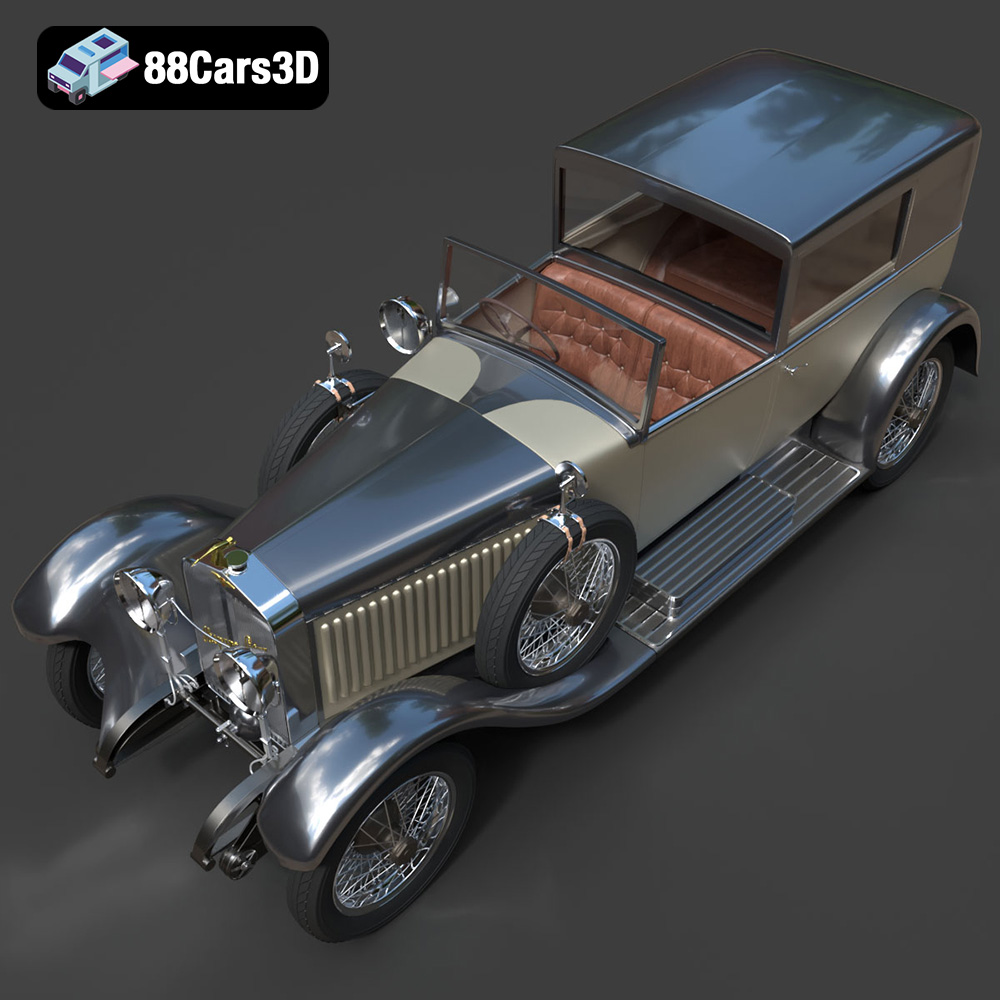
For artists focused on stunning visual fidelity, the Hispano Suiza H6B model provides an exceptional foundation. In 3ds Max, leveraging renderers like V-Ray or Corona, artists can create breathtaking studio shots or integrate the car into realistic environments. The .max file offers full editability, allowing for fine-tuning of materials, advanced lighting setups, and complex animation sequences. Similarly, Blender users can harness the power of Cycles or Eevee with the native .blend file, adjusting the luxurious vintage leather-style seat upholstery, detailing the wooden steering wheel, and perfecting the gleam of the classic coachwork. The model’s 1,221,970 triangle count ensures exceptional visual fidelity, ideal for high-end rendering and close-up shots that demand uncompromising realism.
The “game-ready & optimized” nature of the Hispano Suiza H6B 3D model, evident in its balanced triangle count, makes it perfect for integration into modern game engines like Unreal Engine and Unity. With included formats like .fbx and a dedicated .unreal package, developers can quickly import the asset, confident in its real-world scale accuracy and proper pivot setup for steering, wheel rotation, and suspension travel. This allows for the creation of immersive period-accurate games, racing titles, or historical driving simulations where performance is as crucial as visual quality. The optimized geometry ensures smooth frame rates even in complex scenes, while the detailed cockpit and interior features are perfect for first-person POV in gaming and VR.
The burgeoning fields of Augmented Reality (AR) and Virtual Reality (VR) offer new avenues for experiencing classic automotive masterpieces. The Hispano Suiza H6B 3D model, especially in its .glb format, is ideally suited for creating immersive virtual showrooms, interactive configurators, and mobile AR experiences. Imagine a user exploring the detailed 6.6-liter inline-six aviation-inspired engine block or examining the intricate spoked wheels up close in a virtual space, or even placing the virtual car in their driveway via AR. The model’s optimized geometry and detailed textures ensure that these experiences are both visually rich and performant across a range of devices.
The true value of a premium 3D model lies in its technical underpinnings. The Hispano Suiza H6B model from 88cars3d.com exemplifies the careful balance between detail and optimization, making it a highly versatile asset for professionals.
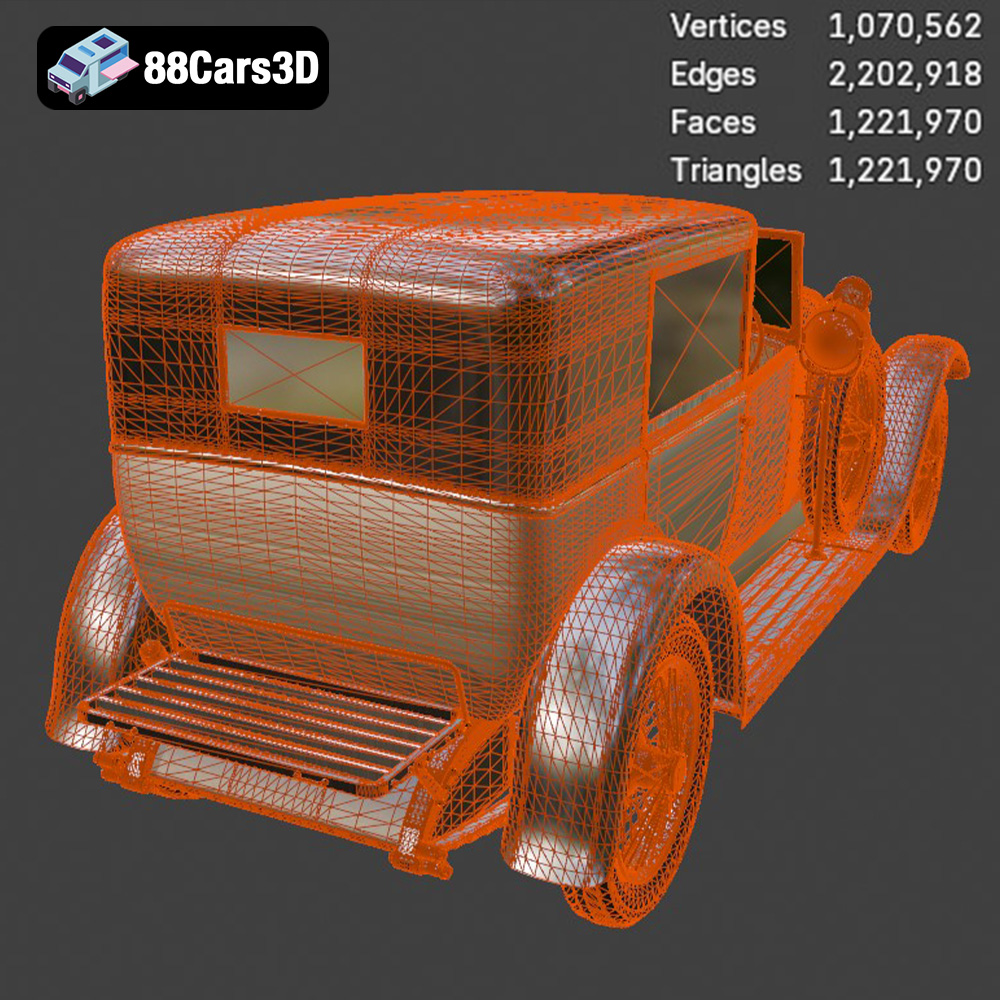
At the heart of any high-quality 3D model is its geometry. The Hispano Suiza H6B boasts a 1,221,970 triangle count, which strikes a perfect balance. It’s substantial enough to deliver exceptional visual fidelity for close-up shots and high-end rendering, capturing the subtle curves and intricate details of the H6B’s coachwork. Yet, it remains optimized for modern high-performance engines, ensuring that it doesn’t bog down real-time applications. The clean topology further ensures smooth deformations during animation and efficient UV unwrapping, which is critical for realistic texture application without stretching or distortion.
The product description highlights a wealth of meticulously modeled details, setting this asset apart. The exterior features include accurate chassis geometry, authentic dual exhaust piping, period-correct undercarriage, vintage headlamps and prominent taillights, and intricate spoked wheels with era-appropriate pneumatic tires. The leaf spring suspension and rigid axle setup are also accurately rendered. Crucially, components like wheels, doors, suspension, and steering are separated, enabling dynamic animation. The interior is equally impressive, featuring luxurious vintage leather-style seat upholstery, a highly detailed wooden steering wheel, an exposed steering column, and an era-accurate instrument cluster with detailed dashboard gauges. Authentic control details, including brass-accented pedals, a long-throw gear shifter, and a handbrake, enhance the realism, making it suitable for first-person perspectives in games and VR.
A static model can only go so far. For many professional applications, animation is key. The Hispano Suiza H6B model is designed with animation in mind, featuring separate components and a proper pivot setup for steering, wheel rotation, and suspension travel. This allows animators to quickly rig and animate the car for realistic driving sequences, opening doors for automotive advertisements, historical documentaries, or interactive simulations. Furthermore, its real-world scale accuracy, based on actual classic vehicle chassis dimensions, ensures that it integrates seamlessly into existing scenes and environments without needing constant adjustments, maintaining proportions and interaction physics.
The flexibility of the Hispano Suiza H6B 3D model extends far beyond its initial construction, offering extensive customization options to fit a myriad of creative requirements.
For advertising agencies, film production studios, and architectural visualization firms, the Hispano Suiza H6B is an ideal candidate for cinematic automotive visualization. Its high detail allows for stunning close-ups and dramatic camera angles, showcasing the luxury and craftsmanship of the vehicle. Artists can leverage customization options to change body and coachwork colors, perhaps opting for factory dual-tone schemes or custom finishes. Material finishes can be adapted from matte leather to gloss paint or polished brass/chrome, precisely matching project needs. This level of control allows for the creation of evocative brand campaigns and lifestyle scenes that stand out.
In industries requiring realistic training or interactive experiences, such as automotive museums or educational platforms, the Hispano Suiza H6B model shines. Its game-ready optimization and detailed interior are perfect for high-fidelity driving simulations, allowing users to experience the mechanics and feel of a 1920s luxury automobile. Developers can integrate the model into interactive displays, where users can virtually disassemble parts of the car or learn about its engine design. The ability to modify tire textures, perhaps from vintage whitewall to standard variants, adds another layer of historical accuracy or creative freedom.
Beyond digital screens, the Hispano Suiza H6B 3D model provides a pathway to tangible replicas through 3D printing. The included .stl format is specifically for this purpose, enabling hobbyists and professionals to produce physical display models. The product description offers practical print settings: recommended scales (1:12, 1:18, 1:24), layer height (0.04–0.12 mm, with resin printing recommended for fine details), wall thickness (1.2–2.0 mm), and infill (20–30%). Crucially, it advises on support structures for detailed parts like the exhaust, mascot, and spoked wheels, and suggests print orientation (frame angled, wheels separately) for structural integrity. Post-processing, including sanding, primer, and authentic factory colors with metallic finishes, can transform a raw print into a museum-quality miniature. This capability extends the model’s utility beyond purely digital mediums, bringing it into the realm of physical craftsmanship.
In the competitive landscape of 3D production, the choice between creating an asset from scratch or acquiring a professional-grade model can significantly impact a project’s timeline, budget, and ultimate quality. Investing in high-quality 3D car models is a strategic decision that yields substantial returns.
Modeling a highly detailed vehicle like the Hispano Suiza H6B from the ground up can take weeks, if not months, for even experienced artists. This includes extensive research, meticulous modeling of every component, careful UV mapping, texture creation, and optimization for various platforms. By purchasing a ready-made, professionally crafted model, studios and individual artists save an enormous amount of time and resources. This allows teams to focus their creative energy on other critical aspects of a project, such as scene composition, animation, lighting, and interactivity, rather than getting bogged down in foundational asset creation.
Premium 3D car models are typically created by specialists with an acute understanding of automotive design and technical precision. This expertise is reflected in the accuracy of proportions, the fidelity of details (like the Hispano Suiza’s signature flying stork mascot or its intricate engine block), and the optimization of topology. Such models ensure that the visual quality of your project is immediately elevated, meeting the high standards expected in professional film, advertising, and game development. The quality of a core asset often sets the benchmark for the entire project, and a stellar 3D car model provides an undeniable advantage.
Marketplaces like 88cars3d.com serve as invaluable resources for professionals seeking top-tier 3D assets. They aggregate a wide selection of high-quality 3D car models, ensuring that creators can find exactly what they need, from classic luxury cars to modern sports vehicles. The availability of multiple file formats, comprehensive technical specifications, and detailed descriptions, as seen with the Hispano Suiza H6B 3D model, provides transparency and confidence in the purchase. Choosing a reputable source for 3D assets guarantees that you’re acquiring optimized, game-ready, and render-ready models that seamlessly integrate into diverse professional workflows, providing immediate value and accelerating project completion.
The journey through the intricacies of premium 3D car models, exemplified by the magnificent Hispano Suiza H6B, underscores their pivotal role in modern digital production. From preserving historical automotive masterpieces to powering the next generation of games, AR/VR experiences, and cinematic visualizations, the demand for technically robust and aesthetically impeccable assets is constant.
Understanding the nuances of file formats, the balance of polycount for different applications, and the scope for customization empowers creators to make informed decisions that drive project success. Leveraging a professionally developed model like the Hispano Suiza H6B not only ensures historical accuracy and visual fidelity but also delivers significant time and cost efficiencies, allowing artists and developers to focus on innovation and creativity.
For those seeking to elevate their automotive projects with unparalleled detail and technical excellence, exploring the range of high-quality 3D car models available at 88cars3d.com is a crucial step. Invest in assets that truly perform and bring your most ambitious visions to stunning digital life.
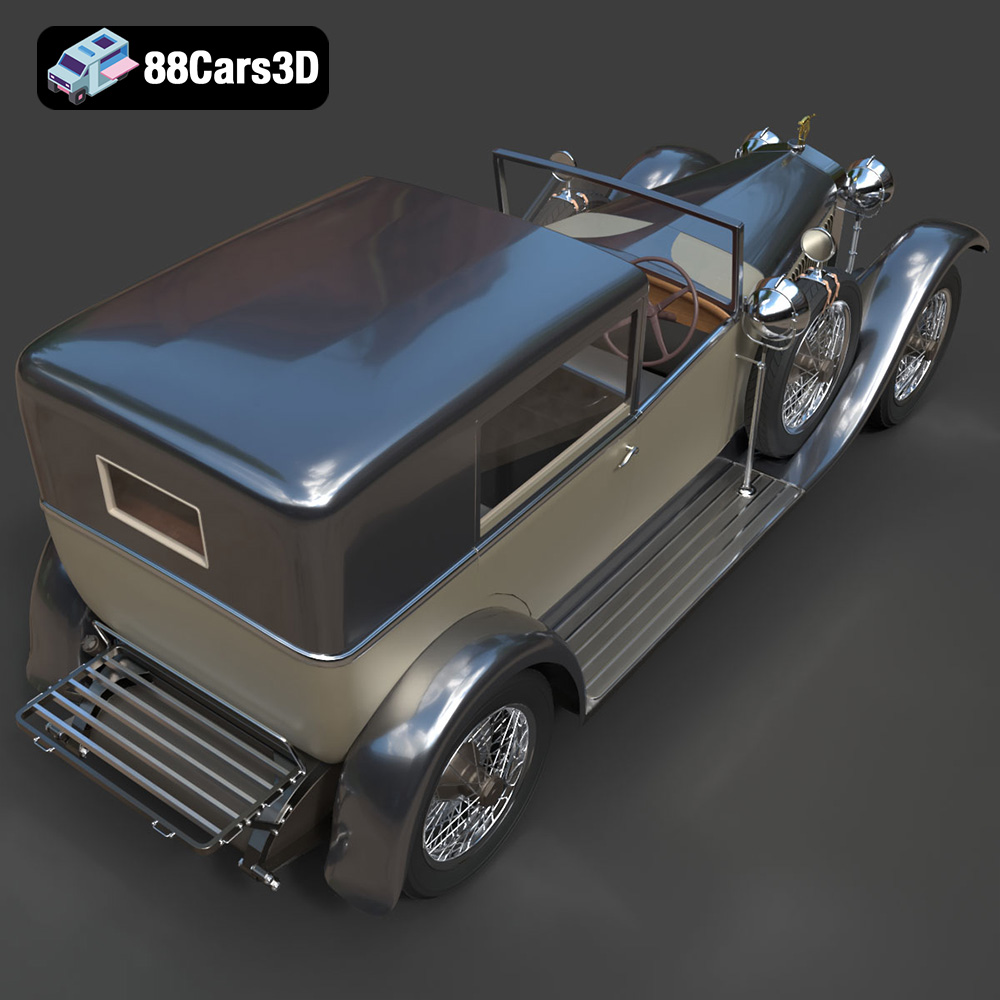
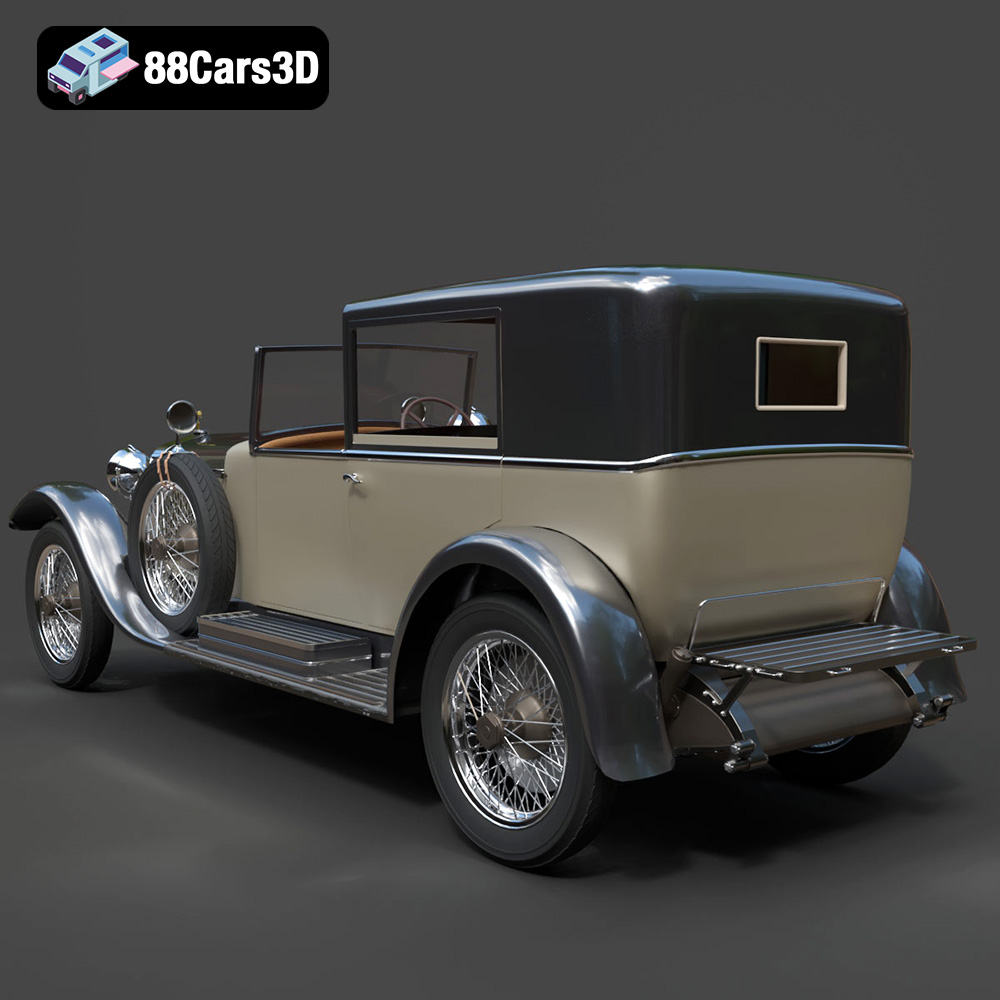
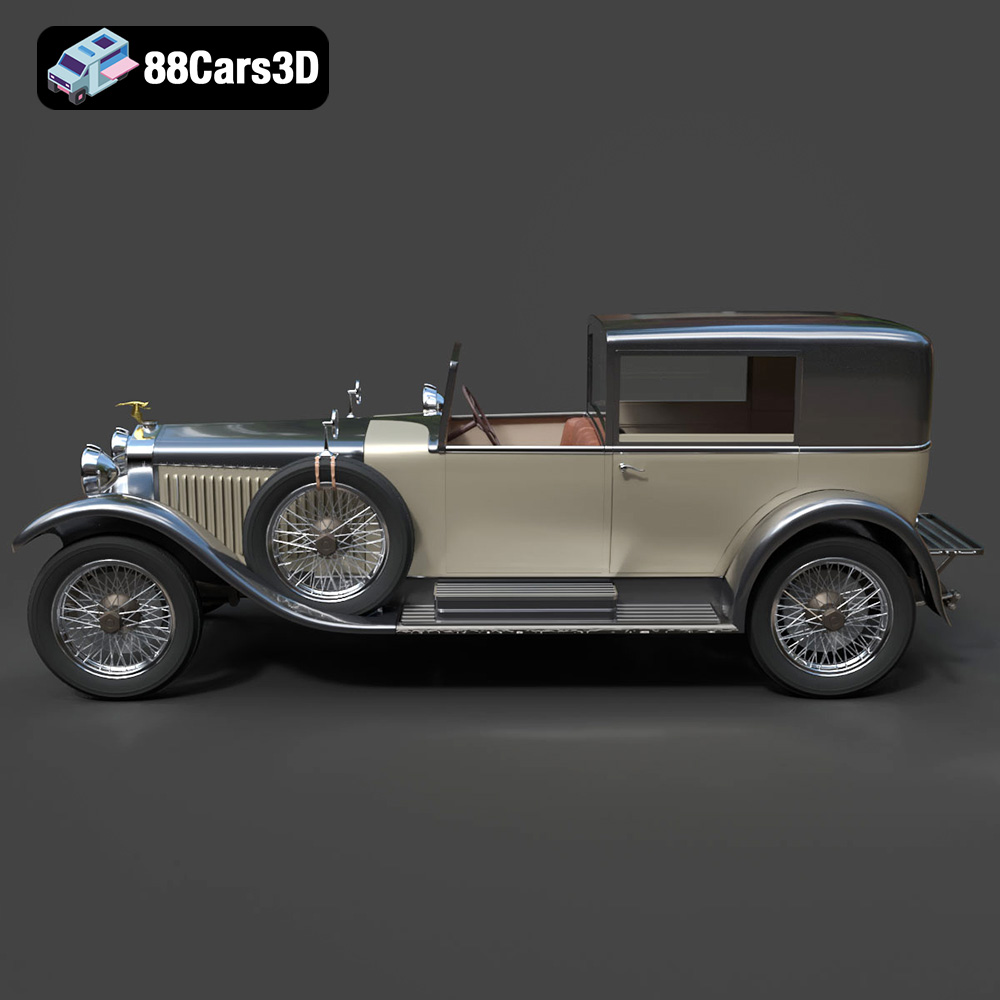
The Hispano Suiza H6B is an undisputed masterpiece of automotive engineering and luxury from the roaring 1920s. Known for its aviation-inspired 6.6-liter inline-six engine and exceptional build quality, the H6B was the vehicle of choice for European royalty and elites. This highly detailed 3D model captures the elegance of its sweeping fenders, signature radiator grille adorned with the iconic flying stork mascot, and magnificent classic coachwork styling. Boasting a meticulously modeled 1,221,970 triangle count, this 3D asset delivers exceptional visual fidelity suited for high-end rendering and close-up shots while remaining optimized for modern high-performance engines. Whether you are developing an immersive period-accurate game, creating historical VR experiences, or rendering stunning automotive visualizations, this model provides uncompromising detail and historical accuracy. Perfect for classic car showcases, historical film animations, luxury virtual showrooms, and high-fidelity driving simulations.
$67.00
.blend
.fbx
.glb
.max
.obj
.ply
.rendering
.stl
.unreal
car-3d-model
classic-car
game asset
game-ready
h6b
high poly
hispano-suiza
luxury car
optimized
vintage-car
VR/AR