Get 20% OFF All Premium 3D & STL Models!

The automotive industry has long been at the forefront of technological innovation, not just in engineering but also in design visualization and marketing. From concept cars showcased in virtual reality to vehicles integrated seamlessly into video games and architectural renders, the demand for high-quality, accurate 3D car models is higher than ever. Compact crossover SUVs, like the Honda HR-V, represent a significant segment of the global automotive market, blending urban utility with stylish aesthetics. Capturing the essence of such a popular vehicle in a digital format requires precision, technical expertise, and an understanding of diverse application needs.
This is where meticulously crafted 3D models become indispensable. Imagine bringing a photorealistic Honda HR-V to life in an immersive VR experience, dropping it into a sprawling open-world game, or featuring it in a compelling marketing animation. Achieving this level of fidelity and versatility relies on a foundational asset that is both technically robust and visually stunning. The Honda HR-V 3D Model available at 88cars3d.com exemplifies this standard, offering an unparalleled level of detail and optimization for a wide array of professional uses, from high-end rendering to real-time interactive applications.
Navigating the world of 3D assets requires a solid grasp of the various file formats available, each tailored for specific workflows and software ecosystems. The Honda HR-V 3D Model is provided in an extensive range of formats, ensuring maximum compatibility and utility across different professional pipelines. Understanding their individual strengths is crucial for any designer, developer, or artist looking to integrate these sophisticated 3D car models effectively.
The .blend format is the native file type for Blender, the powerful open-source 3D creation suite. When you download a .blend file, you’re getting a fully editable Blender scene. This means all the model’s geometry, materials, textures, lighting, cameras, animations, and even physics simulations are contained within. For artists who primarily work in Blender, this format offers the most flexibility for modifications, rigging, and rendering. It allows direct access to the model’s underlying structure, enabling advanced customization of materials (using Principled BSDF shaders), scene composition, and animation sequences tailored to specific project requirements.
.fbx (Filmbox) is arguably the most widely adopted proprietary file format for 3D content exchange, particularly between different 3D software applications and game engines. It’s renowned for its ability to store not just mesh data but also animation, rigging, materials, lights, and cameras. The Honda HR-V 3D Model in .fbx format is ideal for integration into real-time pipelines like Unreal Engine and Unity, as well as for transfer between DCC (Digital Content Creation) tools such as 3ds Max, Maya, and Cinema 4D. Its robust nature makes it the go-to choice for complex animated scenes and interactive experiences where maintaining data integrity across platforms is paramount.
The .obj (Wavefront OBJ) format is a venerable and universally supported file type that primarily stores 3D geometry data – vertices, normals, UV coordinates, and faces. While it doesn’t typically store advanced scene information like animations or rigging, it’s an excellent choice for cross-software compatibility when you primarily need the mesh itself. Many rendering engines and 3D applications can import .obj files seamlessly. When downloading the Honda HR-V as an .obj, you get a clean, lightweight mesh that can be easily textured and shaded in almost any 3D environment, making it perfect for static renders or integration into scenes where materials will be recreated natively.
.glb (GLB format, often referred to as binary glTF) is a relatively newer, open-standard 3D format optimized for the efficient transmission and loading of 3D scenes and models in web, augmented reality (AR), and virtual reality (VR) applications. It encapsulates all necessary data—geometry, materials, textures, and animations—into a single binary file. The .glb version of the Honda HR-V 3D Model is specifically designed for rapid deployment in browser-based configurators, mobile AR experiences, and light VR showrooms, offering a balance of visual quality and performance. Its compact size and ease of use make it a powerful tool for modern interactive media.
.stl (STereoLithography) is the most common file format for 3D printing. It represents a 3D model as a series of connected triangles, defining only the surface geometry of an object without color, texture, or other CAD attributes. For hobbyists or professionals looking to physically manifest the Honda HR-V, the .stl version is essential. It provides the raw mesh data required by slicing software to generate toolpaths for 3D printers. The HR-V model, with its specified print settings, makes creating a tangible replica straightforward, whether for display, prototyping, or scale modeling.
The .ply (Polygon File Format, also known as Stanford Triangle Format) is another format for storing 3D data, particularly suited for scanner data and applications requiring high precision. It can store not only geometry but also color, transparency, and sometimes normals and texture coordinates per vertex. While less common for everyday artistic exchange than FBX or OBJ, .ply is valuable in fields like reverse engineering, scientific visualization, and CAD/CAM, where accurate geometric representation for analysis or manufacturing is critical. The HR-V in .ply could be used for advanced simulation or integration into specialized CAD pipelines.
The .unreal format signifies an asset specifically optimized and packaged for direct import and use within Unreal Engine. This often means pre-configured materials, collision meshes, LODs (Levels of Detail), and sometimes even basic blueprints. The Honda HR-V 3D Model delivered in .unreal format dramatically accelerates development time for Unreal Engine projects, as much of the tedious import and setup work is already complete. It’s a true plug-and-play solution for game developers and architectural visualization artists working within the Unreal ecosystem, ensuring optimal performance and visual quality from the outset.
Finally, the .max format is the native file type for Autodesk 3ds Max, one of the industry’s leading 3D modeling, animation, and rendering software packages. A .max file contains the entire scene, including geometry, materials, textures, lighting, cameras, modifiers, and animation data, exactly as it appears in 3ds Max. For users whose primary DCC tool is 3ds Max, this format offers the highest level of editability and ensures that all scene elements are preserved and accessible for advanced rendering with V-Ray or Corona, complex animations, or extensive model modifications. This provides the ultimate flexibility for creating custom scenes and animations with the Honda HR-V.
The availability of the Honda HR-V 3D Model in such a comprehensive range of formats underscores its versatility and the commitment of 88cars3d.com to supporting diverse professional needs. This careful curation of file types ensures that whether you are a game developer, an architect, a VR experience creator, or a 3D printing enthusiast, you have the right tool for the job.
Creating a truly exceptional 3D car model goes far beyond simply replicating shapes. It involves a meticulous blend of artistic skill and technical precision to ensure that every curve, every reflection, and every interior detail aligns with the real-world vehicle. The Honda HR-V 3D Model is a testament to this rigorous process, engineered to meet the highest standards of visual fidelity and functional performance.
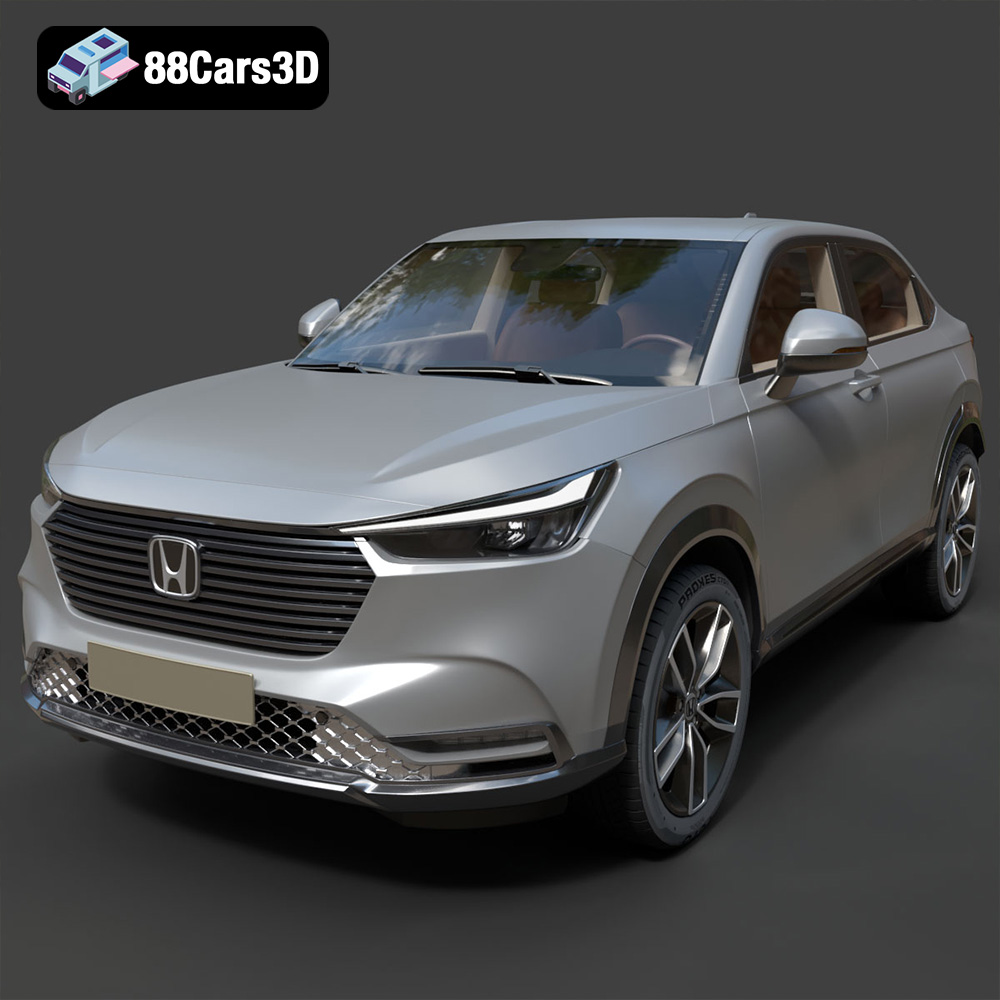
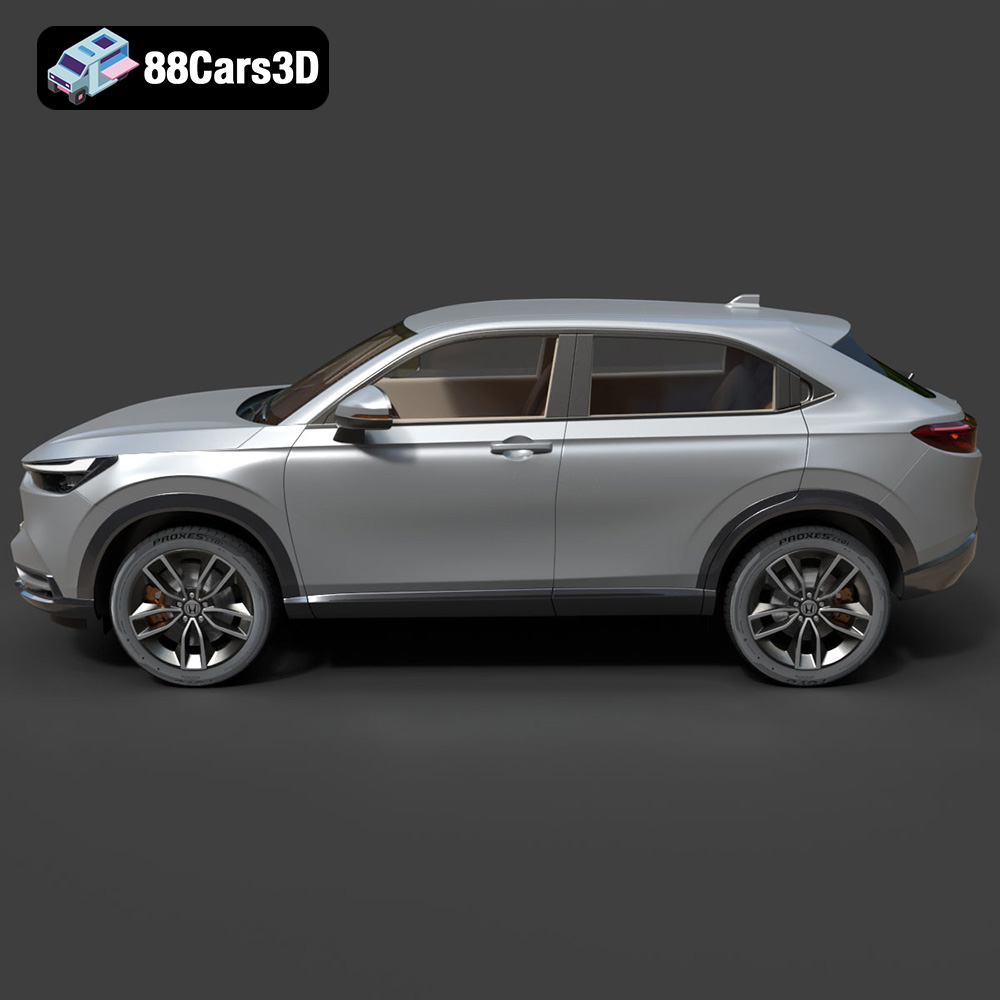
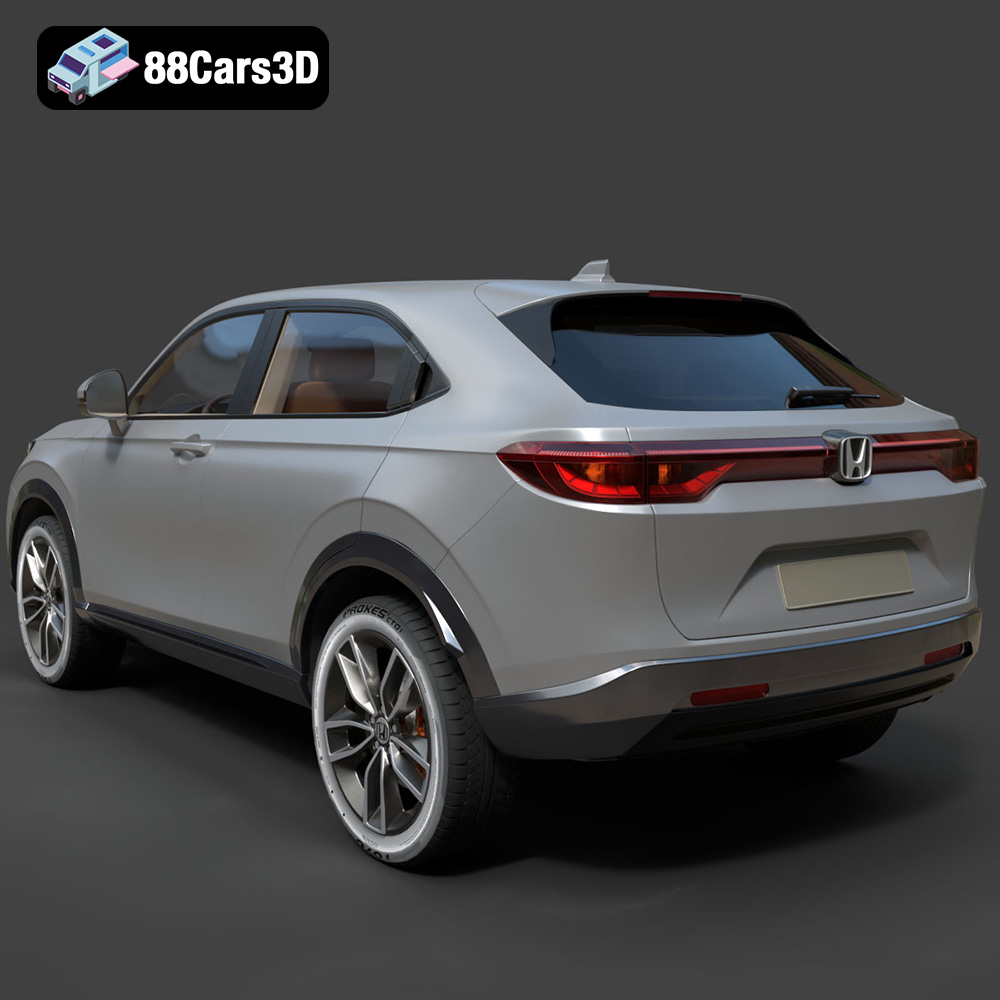
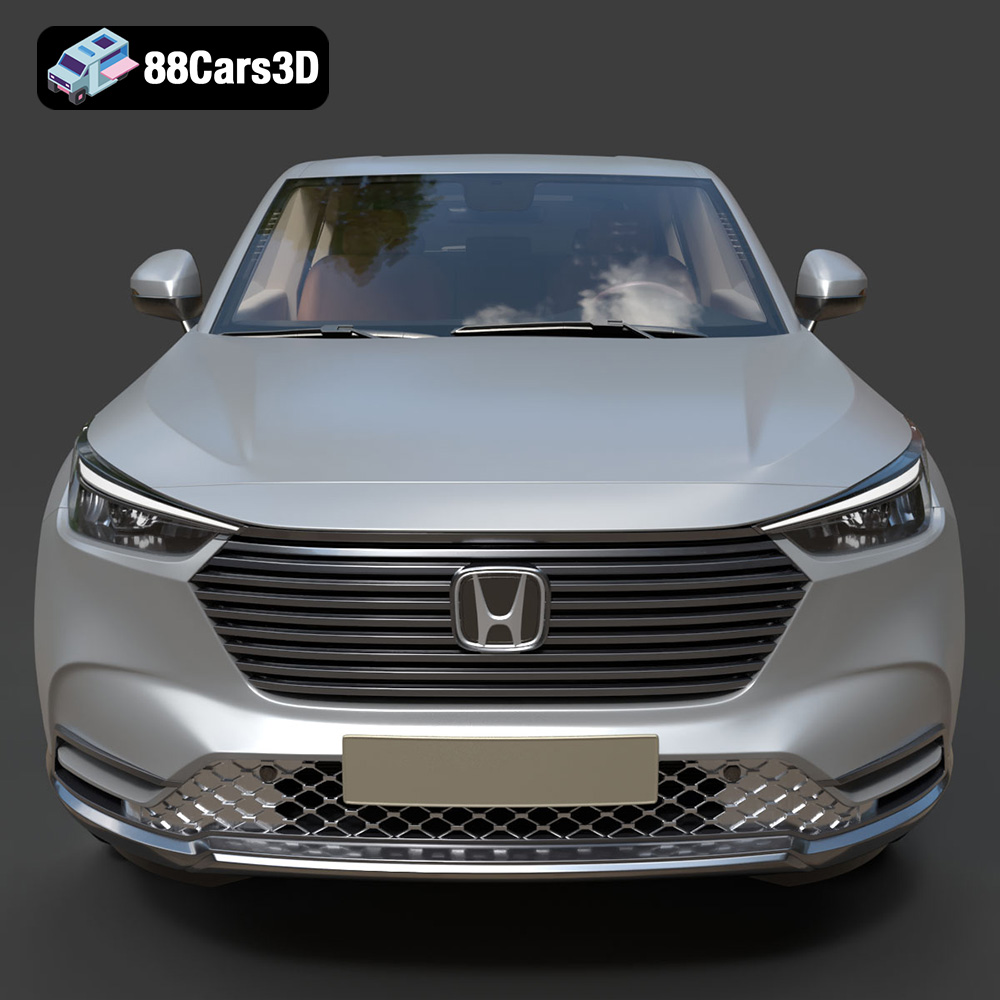
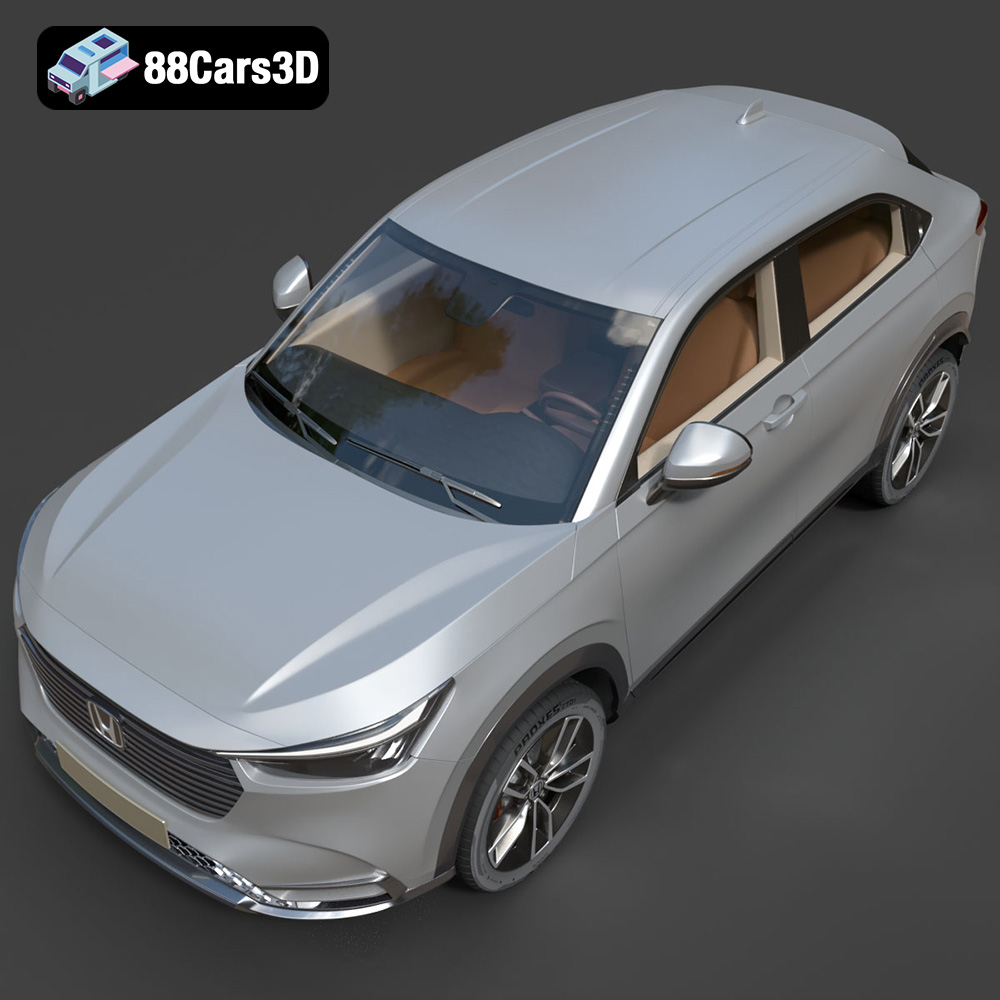
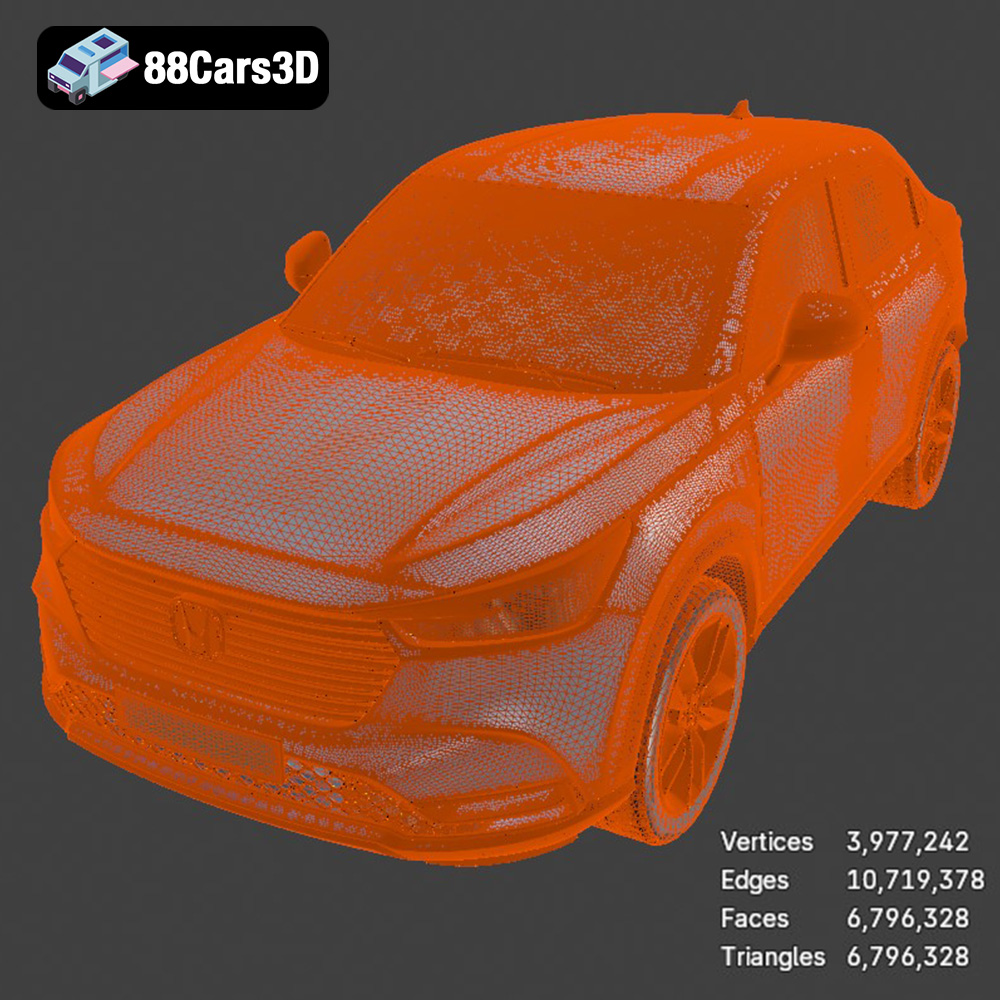
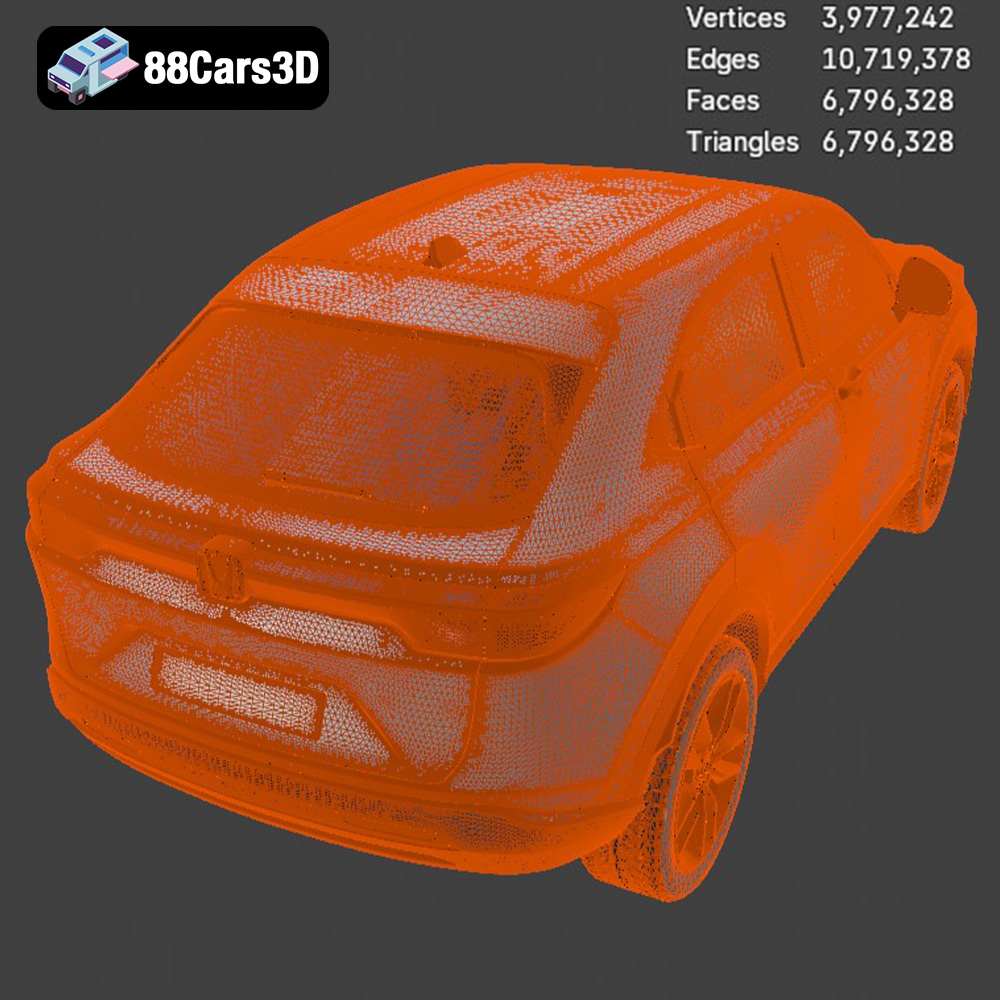
The exterior of any car model is its immediate identity. For the Honda HR-V, this means accurately translating its distinctive bold front grille, sweeping roofline, and sleek LED headlight assemblies into a digital canvas. The model boasts an impressive 6,796,328 triangles, a poly count that strikes a critical balance. It’s high enough to eliminate any noticeable faceting, even in extreme close-up shots or high-resolution renders, ensuring buttery-smooth curves and sharp edges. Yet, it’s structured for optimal use in real-time environments, allowing for smooth performance without excessive resource drain. This high-resolution topology extends to every part of the vehicle, from the precision-modeled exhaust system integrated into the lower fascia to the accurate alloy wheels with realistic tire tread patterns and sidewall details. Even suspension components, including struts and control arms, are meticulously modeled, providing an authentic foundation for physics and animation.
While the exterior captures attention, the interior defines immersion, particularly for applications like virtual showrooms or first-person gaming perspectives. The Honda HR-V 3D Model’s cockpit and interior features are crafted with the same level of precision. Accurately contoured front bucket seats and the rear bench provide realistic forms, while the detailed multi-function steering wheel with integrated controls offers a tactile visual experience. High-resolution digital instrument clusters and central infotainment screens are not just flat textures but carefully modeled components, ready for custom UI integration or realistic lighting. Precision control details, including pedals, levers, and the center console shifter, ensure that whether a user is viewing from a distance or stepping virtually inside, the environment feels genuine and interactive. This level of internal detail is crucial for creating truly engaging AR/VR experiences and driving simulations.
Beyond raw polygon counts, the true mark of a professional 3D car model lies in its technical specifications that facilitate seamless integration into diverse projects. The Honda HR-V 3D Model is designed with game-readiness and optimization in mind. It maintains real-world scale accuracy, based on actual vehicle chassis dimensions, which is vital for consistency in mixed-asset scenes and for accurate physics simulations. Furthermore, proper pivot setups for steering, wheel rotation, and suspension travel are pre-configured. This seemingly small detail saves countless hours in animation and rigging workflows, allowing developers to quickly animate complex vehicle movements without needing to manually adjust pivot points. Compatibility with major 3D software platforms and real-time rendering engines is guaranteed through the wide range of included file formats, making it a truly versatile asset.
The versatility of the Honda HR-V 3D Model truly shines when integrated into specific professional workflows. Its meticulous design and optimization make it a powerful asset across various industries, from interactive entertainment to cutting-edge visualization.
For game developers, the Honda HR-V 3D Model is a game-changer. Its optimized geometry, balanced at 6,796,328 triangles, provides enough detail for stunning visuals in current-generation games without crippling performance. In engines like Unreal Engine, the `.unreal` or `.fbx` formats allow for quick import and setup. Developers can leverage the pre-configured pivot points for wheels and suspension to rapidly implement driving mechanics, physics, and animation. Imagine populating an open-world urban environment with realistic traffic or creating a challenging racing simulator where the HR-V is a playable vehicle. The detailed interior, with its optimized geometry for first-person POV, even supports immersive driving experiences. Materials can be tweaked using physically based rendering (PBR) workflows to achieve realistic reflections and surface properties under various lighting conditions, making the HR-V a visually compelling addition to any virtual landscape.
The burgeoning fields of Augmented Reality (AR) and Virtual Reality (VR) demand highly optimized yet visually rich 3D assets. The Honda HR-V 3D Model is perfectly suited for these environments. Using the `.glb` format, it can be deployed rapidly in web-based AR experiences, allowing potential customers to view the vehicle in their driveway via a smartphone or tablet. In VR, the high-fidelity model can form the centerpiece of an immersive virtual showroom, enabling users to walk around, inspect the exterior from all angles, and even step inside to explore the meticulously detailed cockpit. Automotive brands can utilize this model to create interactive configurators, allowing customers to customize body colors, wheel types, and interior trims in real-time before making a purchase decision. The model’s real-world scale accuracy is paramount here, ensuring a convincing and believable presence in mixed-reality spaces.
In the realm of automotive rendering and visualization, photorealism is king. The Honda HR-V 3D Model, particularly when used in powerful rendering software like 3ds Max (with the included `.max` file) or Blender (with `.blend`), allows artists to create breathtaking marketing visuals. Imagine an automotive commercial where the HR-V glides through a stylized cityscape, its metallic paint reflecting the environment with exquisite detail. Artists can adjust studio lighting setups, experiment with different material finishes (matte, gloss, metallic), and integrate the vehicle into lifestyle scenes or architectural visualizations. The model’s detailed engine compartment block and exhaust system, even if not fully visible, contribute to the overall authenticity and can be highlighted for specific product features. The flexibility to change body colors and modify tire textures (street vs. all-weather) provides endless creative possibilities for advertising agencies and design studios.
The true value of a professional 3D car model lies not just in its initial fidelity but also in its adaptability. The Honda HR-V 3D Model from 88cars3d.com offers extensive customization options, enabling artists and developers to tailor it precisely to their project’s unique requirements, further expanding its real-world utility.
One of the immediate customization benefits is the ability to easily change body colors. Beyond standard factory colors, artists can apply custom finishes, metallics, or even unique livery designs to align with specific brand campaigns or artistic visions. This is particularly valuable for advertising agencies that need to present the HR-V in a multitude of aesthetic contexts without commissioning new models. Similarly, modifying tire textures from standard street variants to all-weather or performance options allows for adaptation to different environmental scenes, whether it’s a gritty urban chase or a serene countryside drive. These material adjustments can profoundly impact the visual narrative, ensuring the vehicle always looks its best and fits perfectly within its digital environment.
The technical robustness of the HR-V model supports more than just aesthetic changes; it facilitates performance optimization and stylistic adaptations. For high-end cinematic renders, artists might push material finishes to extreme levels of gloss or metallic flake using advanced PBR shaders, taking full advantage of the model’s detailed topology. Conversely, for mobile AR experiences, developers might simplify materials or utilize baked lighting to ensure smooth performance on less powerful hardware. The separate components, such as wheels, suspension, and steering, are not just for visual fidelity but are crucial for custom rigging and animation. This modularity allows for the creation of intricate suspension physics, realistic steering responses, or complex damage systems in game environments. The model’s detailed engine compartment block, while not always visible, can be used for close-up shots highlighting specific engineering aspects in technical demonstrations or interactive cutscenes.
Consider a large automotive manufacturer launching a new HR-V trim. They could use this 3D model to create a stunning virtual showroom, accessible online, where customers explore the vehicle in 360 degrees, configure options, and experience its features through interactive hotspots. For architectural visualization firms, integrating the HR-V model into exterior renders of a new residential development adds a touch of realism and aspiration, helping potential buyers envision their lifestyle. Game studios could integrate it as a hero car in a city-driving simulation or as a background asset in an open-world environment, enhancing the believability of their virtual worlds. The ability to modify lighting for different environments further enhances these applications, allowing the HR-V to seamlessly transition from a brightly lit showroom to a moody night scene, always maintaining its visual integrity and impact.
The journey of a 3D model doesn’t always end on a screen. For enthusiasts, designers, and engineers, bringing a digital model into the physical world through 3D printing offers a unique form of engagement. The Honda HR-V 3D Model is designed with this possibility in mind, providing specific guidance to ensure a successful physical rendition.
For optimal results, the Honda HR-V model is recommended for printing at scales such as 1:12, 1:18, or 1:24. These scales strike a balance between capturing fine details and managing print time and material usage. A 1:18 scale, for instance, provides a substantial model suitable for display, allowing for the appreciation of intricate elements. Layer height is another critical factor, particularly for resin (SLA/DLP) printing, which is highly recommended for this model’s fine details. A layer height of 0.04–0.12 mm will ensure that subtle curves, small grilles, and interior elements are reproduced with impressive accuracy, minimizing visible layer lines common with FDM printers. For FDM printing, slightly higher layer heights might be acceptable for larger features, but resin printing will always yield superior aesthetic results for automotive models.
Successful 3D printing also hinges on proper structural integrity and the strategic use of supports. The recommended wall thickness of 1.2–2.0 mm ensures that printed parts are robust enough to withstand handling and post-processing without being overly thick. Infill of 20–30% provides a good balance of material economy and strength. Supports are undeniably required for intricate parts like the detailed mirrors, the precision-modeled exhaust system, and the delicate suspension components. Without proper support, these elements would either deform or fail during printing. Furthermore, print orientation is crucial. Printing the main frame angled can improve structural integrity and reduce visible layer lines on critical surfaces, while printing wheels separately allows for higher detail resolution and simplifies post-processing and assembly. This thoughtful approach to print preparation ensures the final physical model is as impressive as its digital counterpart.
The transformation from a raw 3D print to a display-worthy replica often involves meticulous post-processing. After printing, careful sanding is typically required to smooth out any remaining layer lines or imperfections. Applying a primer prepares the surface for painting, ensuring better adhesion and a more even finish. The exciting part is painting with authentic factory colors, often requiring metallic finishes to mimic the real HR-V’s automotive paint. Weathering techniques can be applied for a more lived-in look, or a pristine, high-gloss clear coat can be added for a showroom-ready appearance. Customization doesn’t end with the digital file; it extends into the physical realm, allowing hobbyists and model makers to personalize their HR-V models with bespoke paint jobs, custom wheels, or even intricate dioramas. This dual utility – digital and physical – makes the Honda HR-V 3D Model an even more valuable asset for a diverse user base.
In the fast-paced world of 3D content creation, efficiency and quality are paramount. Investing in a high-quality 3D asset like the Honda HR-V 3D Model from 88cars3d.com isn’t just about acquiring a digital file; it’s about optimizing workflows, enhancing project fidelity, and future-proofing your creative endeavors.
Developing a complex 3D car model from scratch can be an incredibly time-consuming and expensive undertaking, requiring skilled modelers, texture artists, and technical artists. The Honda HR-V 3D Model eliminates this upfront investment by providing a pre-optimized, game-ready asset. The meticulous detailing and robust topology, boasting 6,796,328 triangles, mean that countless hours of modeling, UV unwrapping, and initial texturing have already been completed by experts. For studios on tight deadlines or independent developers with limited resources, this translates directly into significant time and cost savings. Instead of building the foundation, you can immediately focus on integration, animation, rendering, and scene composition, accelerating your project’s development cycle and allowing for more iterations and refinements in other areas.
The visual fidelity of your project directly impacts its perceived quality and professionalism. Low-quality or poorly optimized 3D car models can break immersion, especially in high-resolution renders or interactive applications. The Honda HR-V 3D Model ensures that your projects adhere to the highest visual standards. Its accurate Honda HR-V frame geometry, high-resolution front LED headlights, and detailed cockpit features mean that every shot, whether a wide angle or a close-up, will hold up to scrutiny. This level of detail is crucial for captivating audiences in cinematic animations, convincing clients in architectural visualizations, or providing an immersive experience in AR/VR showrooms. By leveraging such a high-caliber asset, you elevate the overall quality of your output, making a stronger impact on your target audience.
The comprehensive suite of included file formats (.blend, .fbx, .obj, .glb, .stl, .ply, .unreal, .max) ensures unparalleled versatility. This means the Honda HR-V 3D Model isn’t limited to a single software or application; it’s ready for game development in Unreal or Unity, rendering in 3ds Max or Blender, AR/VR experiences, and even physical 3D printing. This multi-format availability future-proofs your investment, as you can repurpose the asset across different projects and evolving technological landscapes. As new platforms emerge or existing ones are updated, having a foundational asset in widely compatible formats ensures it remains a valuable tool in your creative arsenal. Investing in such a flexible and high-quality 3D car model is a strategic decision that pays dividends across a multitude of applications and keeps your projects at the cutting edge.
The digital frontier of automotive visualization and interactive experiences is constantly expanding, driven by the demand for realism, efficiency, and versatility. The Honda HR-V stands as a benchmark in the compact crossover SUV segment, and its 3D model, available at 88cars3d.com, is an equally impressive benchmark in the world of digital assets. From its meticulously crafted exterior to its detailed interior, and from its precise technical specifications to its wide array of file formats, this model is engineered to empower professionals across diverse industries.
Whether you’re developing the next big open-world game, creating an immersive virtual showroom, producing a high-impact automotive commercial, or even bringing a miniature replica to life through 3D printing, the Honda HR-V 3D Model provides the foundational quality and flexibility you need. Its optimization for game engines, its comprehensive format support, and its detailed design ensure that it integrates seamlessly into your workflow, saving valuable time and delivering stunning results. By choosing high-quality 3D car models like this one, you’re not just buying an asset; you’re investing in the excellence and efficiency of your creative projects. Explore the possibilities and elevate your visual content with the Honda HR-V 3D Model from 88cars3d.com.
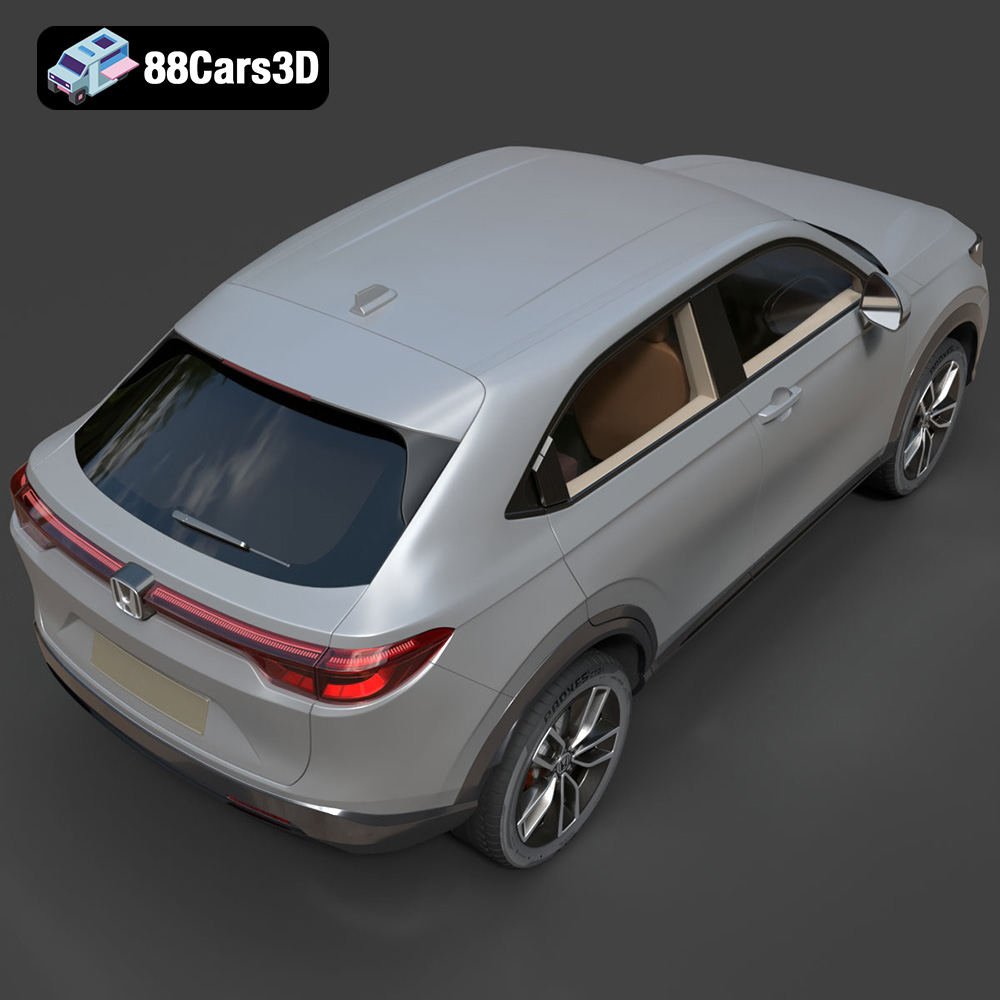
The Honda HR-V stands as a benchmark in the compact crossover SUV segment, combining sporty styling, remarkable versatility, and efficient performance. This highly detailed 3D model captures its modern aesthetic, featuring the distinctive bold front grille, sweeping roofline, and sleek LED headlight assemblies that define its contemporary urban appeal. Boasting a highly detailed topology of 6,796,328 triangles, this model delivers unparalleled visual fidelity while remaining structured for optimal use in high-end game development, virtual reality showrooms, and cinematic animation. Its meticulous detailing ensures it holds up perfectly under close-up shots and high-resolution rendering. Perfect for urban street scenes, automotive commercials, virtual showrooms, and architectural visualization.
$90.00
.blend
.crossover
.fbx
.glb
.honda
.max
.obj
.ply
.rendering
.stl
.unreal
car-3d-model
compact-suv
game asset
game-ready
hr-v
optimized
SUV
VR/AR