Get 20% OFF All Premium 3D & STL Models!

In the dynamic world of digital content creation, the demand for high-fidelity 3D assets is insatiable. From photorealistic architectural visualizations to immersive game environments and cutting-edge AR/VR experiences, the quality of your 3D models directly impacts the final product’s impact and believability. Automotive rendering, in particular, stands as a pinnacle of technical artistry, requiring meticulous attention to detail, accurate proportions, and sophisticated material definitions. It’s not just about creating a car; it’s about capturing the essence, the engineering, and the emotional appeal of a real-world vehicle.
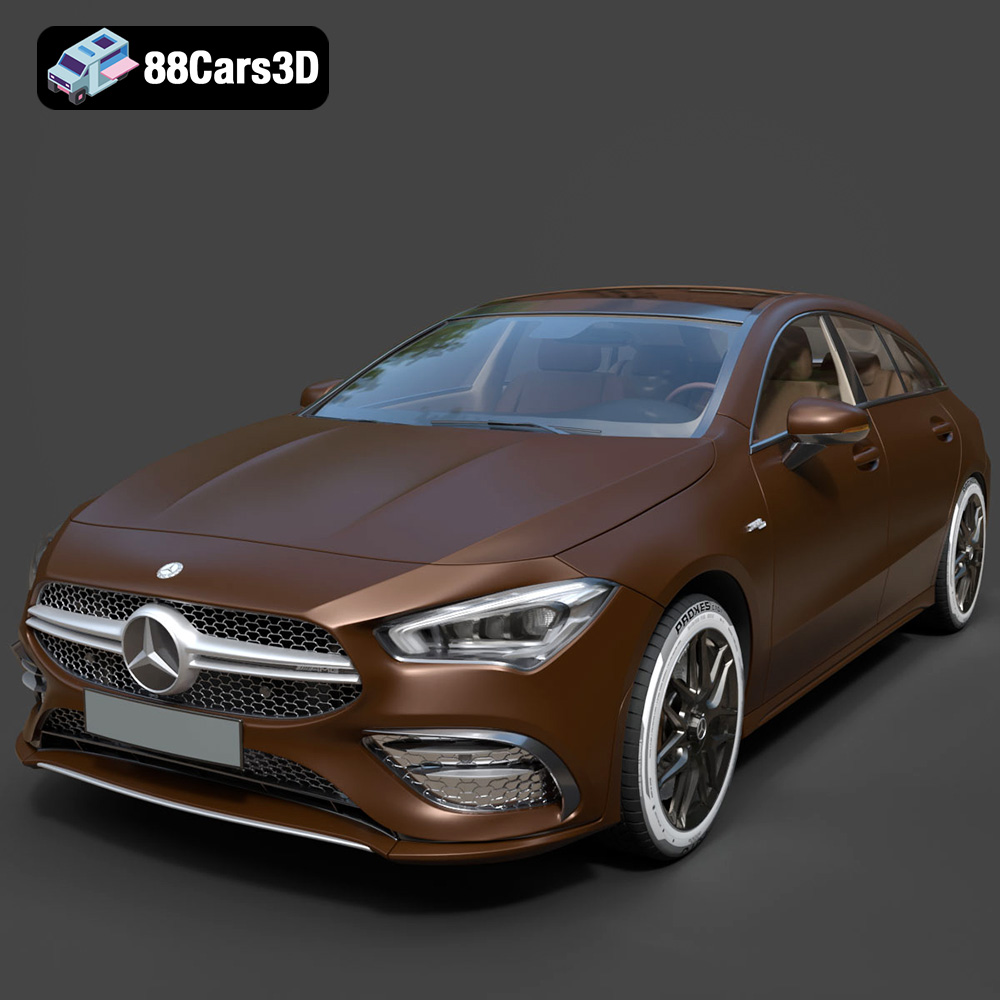
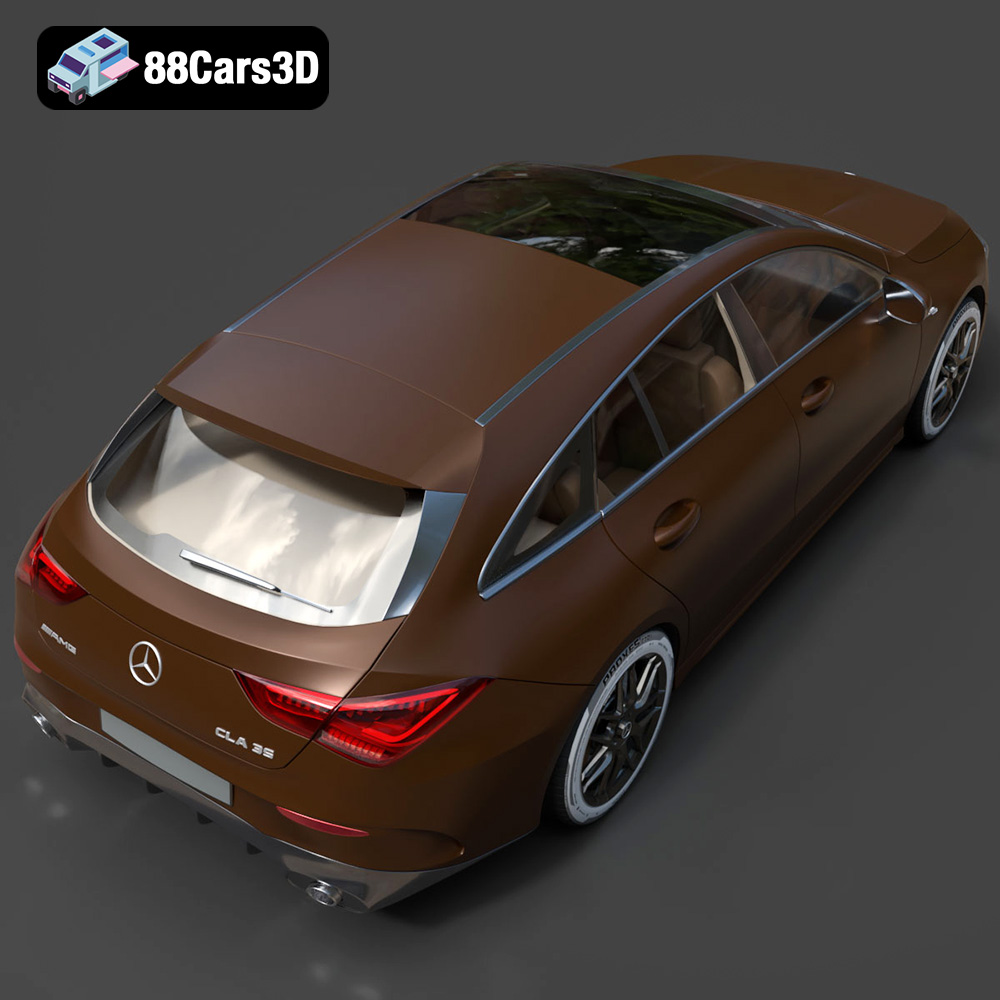
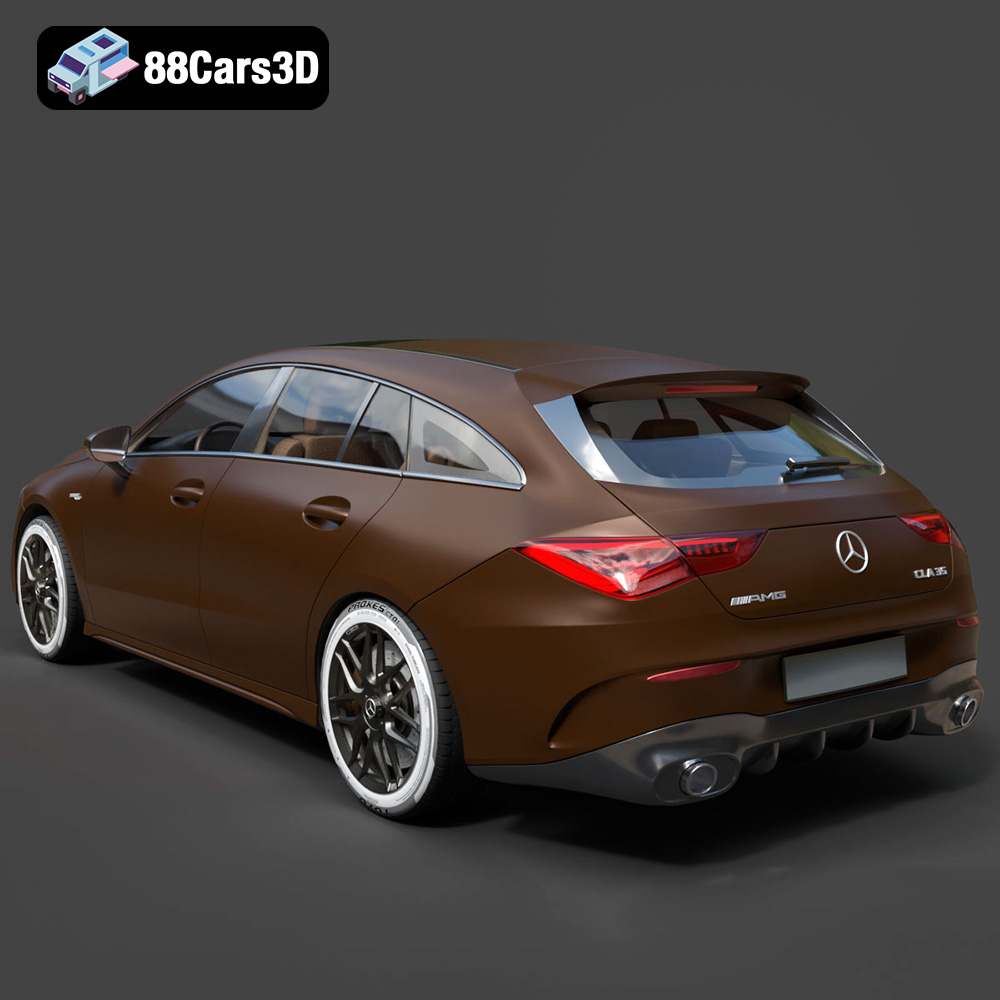
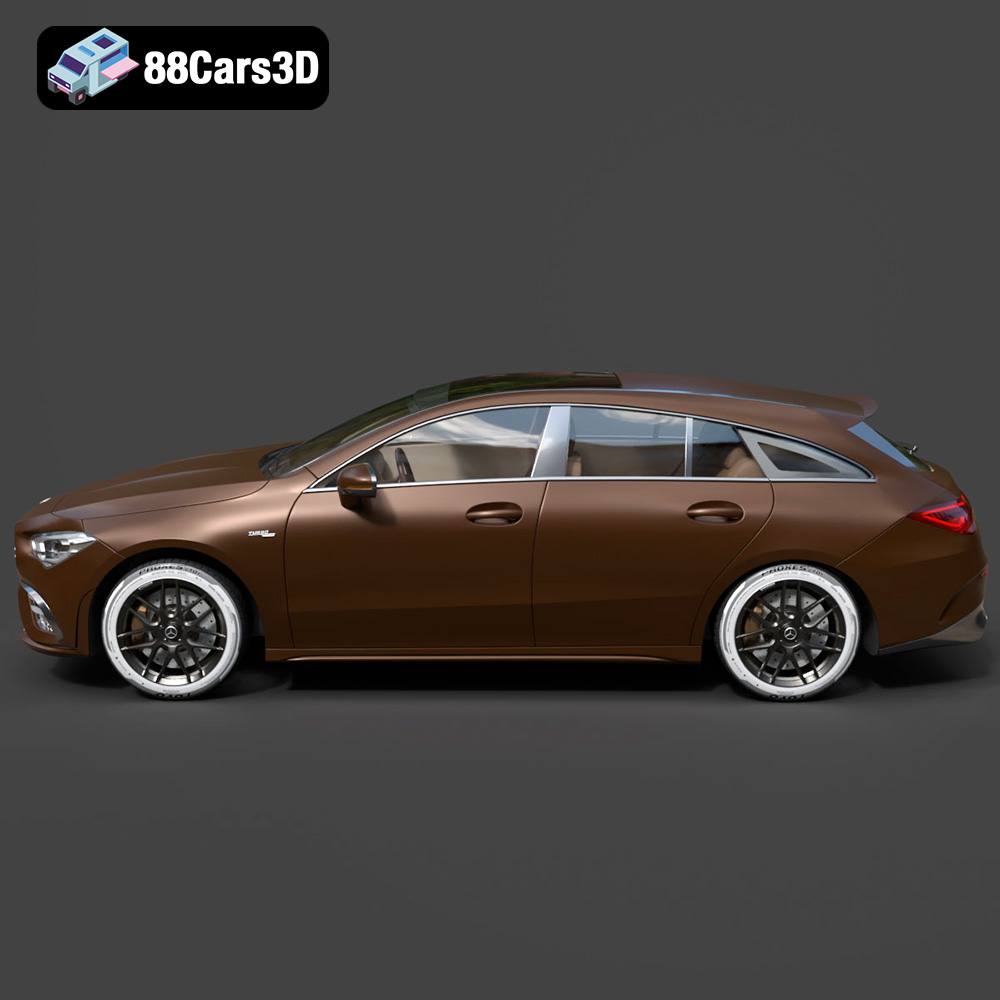
The Mercedes-Benz AMG CLA 35 Shooting Brake epitomizes modern European automotive design, blending aggressive sports performance with elegant estate versatility. Its distinctive lines, powerful stance, and signature AMG details make it a challenging yet rewarding subject for any 3D artist. When a project demands this level of automotive excellence, turning to expertly crafted 3D car models is not merely a convenience—it’s a strategic advantage. A premium asset, like the Mercedes-Benz AMG CLA 35 Shooting Brake 3D model available on 88cars3d.com, provides an unparalleled foundation, saving countless hours of modeling and texturing while ensuring an authentic representation right from the start. Such models are designed to integrate seamlessly into diverse professional pipelines, empowering artists and developers to focus on creativity and innovation, rather than getting bogged down in intricate technicalities.
The automotive industry has long been at the forefront of leveraging 3D technology. From concept design and engineering validation to marketing campaigns and virtual showrooms, 3D models are indispensable. Today, this extends beyond traditional static renders to real-time configurators, virtual test drives, and even cinematic sequences that blur the line between digital and reality. The increasing sophistication of rendering engines and real-time platforms means that the fidelity expectations for 3D car models have never been higher.
Creating a highly detailed, topologically clean 3D car model from scratch can take hundreds of hours, even for experienced artists. This includes meticulous blueprint matching, surface modeling, UV unwrapping, material creation, and rigging for animation. For projects with tight deadlines or limited budgets, acquiring a professionally made asset like the Mercedes-Benz AMG CLA 35 Shooting Brake 3D model becomes a cost-effective and time-efficient solution. These models often come “game-ready” or “render-ready,” meaning they are optimized for performance and visual quality across various applications, accelerating your project’s development cycle significantly.
Navigating the world of 3D asset creation and deployment requires a solid grasp of file formats. Each format serves specific purposes, excelling in different stages of the 3D pipeline and catering to distinct software ecosystems or end-use applications. Choosing the correct format can drastically impact workflow efficiency, compatibility, and the final output quality. The Mercedes-Benz AMG CLA 35 Shooting Brake 3D model, for instance, comes with a comprehensive suite of formats, ensuring maximum versatility for any project.
The .blend format is the native file type for Blender, the popular open-source 3D creation suite. A .blend file typically contains a complete Blender scene, including the mesh geometry, materials (often using Blender’s Principled BSDF shader for PBR workflows), textures, lighting, cameras, animations, and even modifiers or physics simulations. For artists primarily working in Blender, this format offers the most flexibility, allowing for full editability, re-rigging, and direct rendering within Blender’s Cycles or Eevee engines. It’s the go-to for deep customization and leveraging Blender’s powerful toolset.
.fbx (Filmbox) is a proprietary file format developed by Autodesk, widely recognized as a universal standard for 3D data exchange between various software applications. It’s particularly ideal for game development pipelines using engines like Unreal and Unity. FBX supports not only mesh data but also materials, textures, animations (including skeletal animation and blend shapes), cameras, and lights. Its robust support for animation and scene hierarchy makes it invaluable for transferring complex animated assets efficiently. When importing an FBX, it often translates materials into a generic format, requiring re-creation of PBR materials in the target software, but the core geometry and UVs remain intact.
The .obj (Wavefront OBJ) format is one of the oldest and most widely supported 3D file formats. It’s a universal choice for cross-software compatibility, primarily storing geometry data (vertices, normals, UVs, and faces). While OBJ files can reference external material libraries (.mtl files) that define basic colors and texture paths, they don’t typically store complex PBR material definitions, animation data, or rigging information. Its strength lies in its simplicity and widespread support, making it an excellent choice for static mesh exchange, especially when high fidelity and topology preservation are critical.
.glb (GL Transmission Format Binary) is the binary version of glTF (GL Transmission Format), an open-standard 3D file format developed by the Khronos Group. GLB is highly optimized for efficient transmission and loading of 3D scenes and models, making it perfect for web-based AR/VR applications, interactive 3D viewers, and social media filters. It encapsulates all necessary data—geometry, PBR materials, textures, animations, and scene graph—into a single, self-contained binary file. This makes deployment straightforward and ensures fast rendering in browsers and mobile devices, providing a seamless user experience for models like the Mercedes-Benz AMG CLA 35 Shooting Brake in virtual showrooms.
.stl (Stereolithography) is almost exclusively used for 3D printing and rapid prototyping. It represents a 3D model as a series of connected triangles, describing only the surface geometry of an object without color, texture, or other CAD attributes. While simple, its ubiquity in the 3D printing world means it’s the standard for sending models to slicer software. For complex models like a car, proper scaling and manifold geometry are crucial for a successful print. The Mercedes-Benz AMG CLA 35 Shooting Brake 3D model, convertible to STL, allows hobbyists and professionals to bring the digital design into the physical world.
.ply (Polygon File Format or Stanford Triangle Format) is a file format for storing three-dimensional data from 3D scanners. It supports various properties such as color, transparency, surface normals, texture coordinates, and data confidence values, typically for point clouds and polygonal meshes. While less common in general 3D art workflows, it’s a precision mesh format often used in CAD, reverse engineering, scientific visualization, and analysis where detailed surface data and additional per-vertex information are paramount.
While not a standalone file extension in the same way as FBX or OBJ, an “.unreal” file typically refers to a pre-packaged asset optimized specifically for Unreal Engine. This often implies an FBX or similar format that has been imported into Unreal, had its materials set up with Unreal’s PBR shader system, collisions generated, LODs configured, and potentially even blueprint functionality added. It signifies an asset that is ready to be dropped directly into an Unreal project with minimal further setup, making it invaluable for game developers and real-time visualization specialists. The Mercedes-Benz AMG CLA 35 Shooting Brake model, when delivered in this “engine-ready” state, drastically reduces development time.
The .max format is the native file type for Autodesk 3ds Max, a powerful 3D modeling, animation, and rendering software. Similar to .blend files, a .max file contains the complete scene data, including geometry, materials (with all their specific parameters and maps), lights, cameras, modifiers, animations, and render settings. It offers full editability within 3ds Max, making it the preferred format for users who wish to customize, animate, or render the model using V-Ray, Corona, or other renderers integrated with 3ds Max. For the Mercedes-Benz AMG CLA 35 Shooting Brake, having the .max file provides direct access to the original project’s setup and potential animation rigs.
The allure of a high-performance vehicle like the Mercedes-Benz AMG CLA 35 Shooting Brake extends far beyond its physical presence; it resides in its meticulously engineered details and dynamic design. Translating this complexity into a 3D model requires both artistic skill and technical precision. The premium 3D model of this vehicle delivers exactly that, providing an asset ready for the most demanding applications.
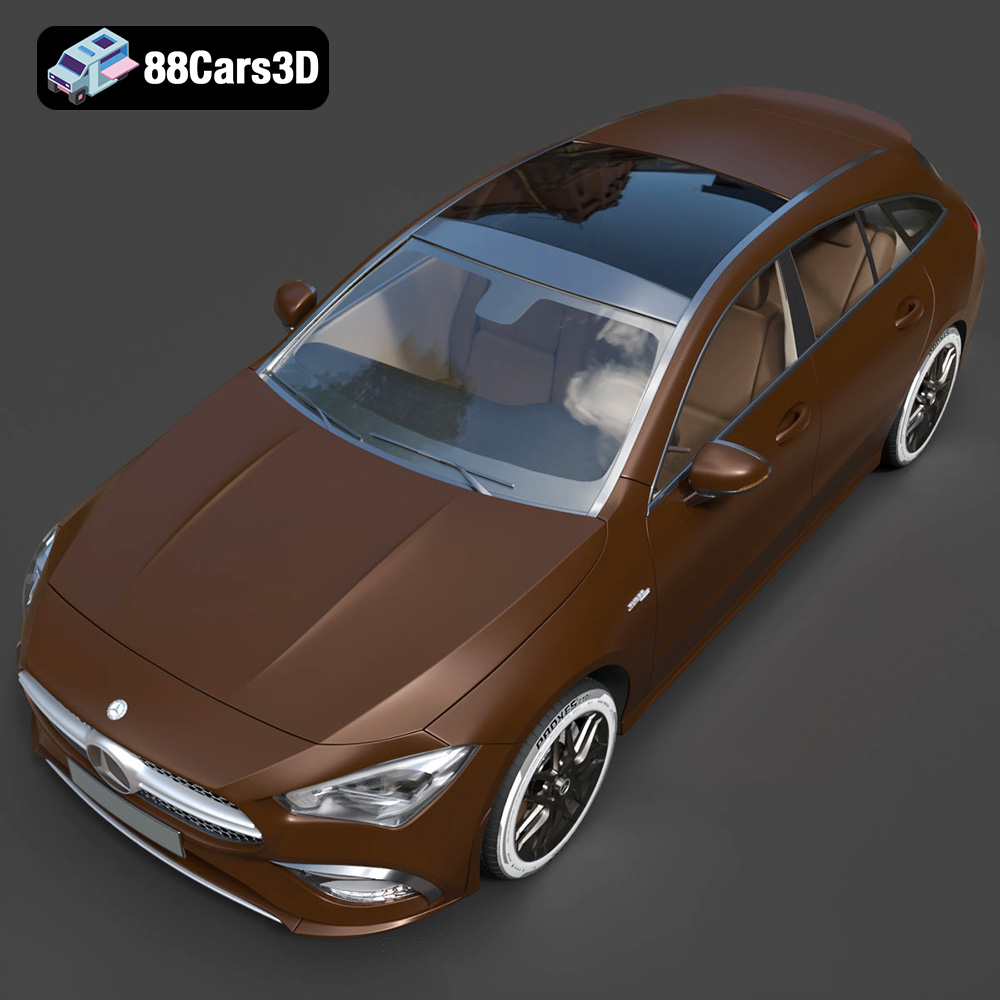
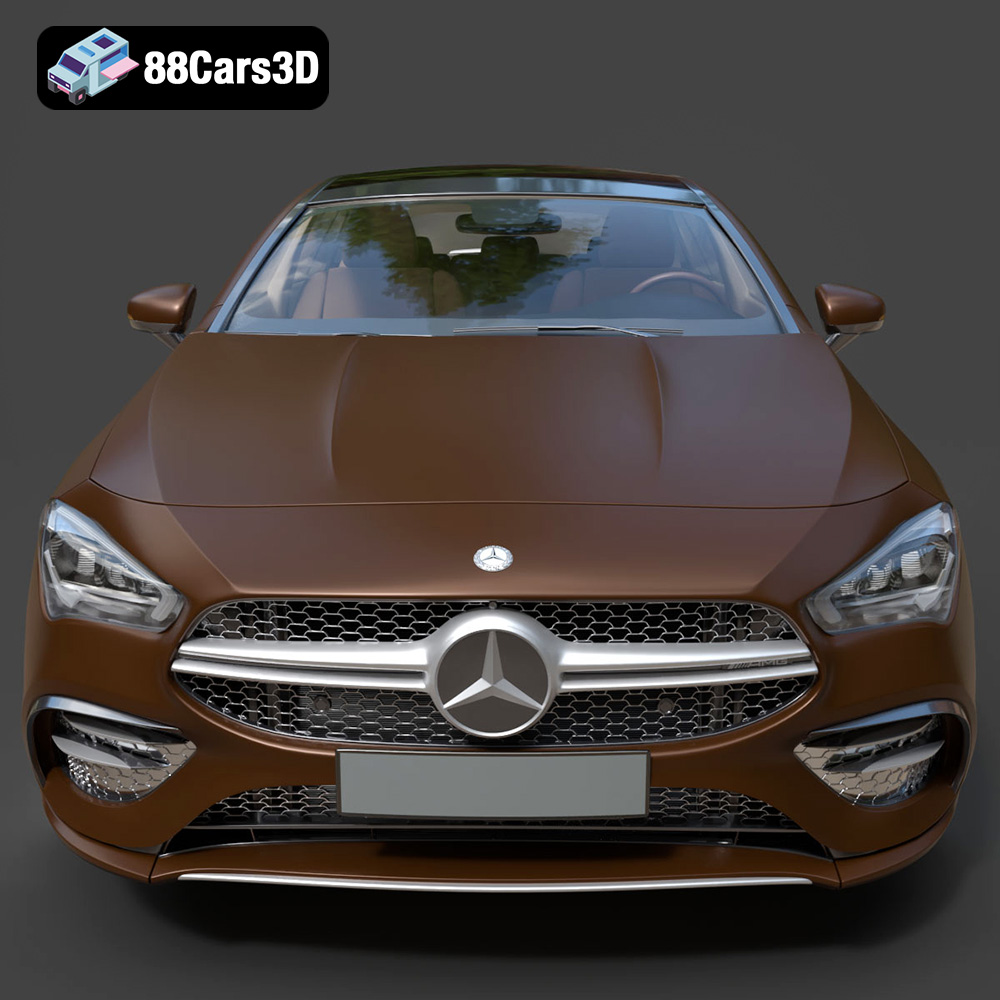
The model’s exterior geometry faithfully recreates the aggressive AMG styling of the CLA 35 Shooting Brake. From the signature Panamericana-style grille that defines its front fascia to the sculpted side skirts and muscular rear diffuser, every curve and crease is accurately represented. The details extend to the multi-spoke AMG light-alloy wheels, complete with realistic low-profile tires and detailed AMG-branded brake calipers—crucial elements for photorealistic renders. Furthermore, the model includes high-fidelity LED High Performance headlamps and distinct taillight signatures, ensuring that lighting interactions are visually convincing. For animation purposes, separate components for wheels, suspension, and steering are included, enabling dynamic vehicle simulations with accurate pivot setups.
The interior of the Mercedes-Benz AMG CLA 35 Shooting Brake is a testament to luxury and performance, and the 3D model meticulously captures this. Sport-contoured AMG Performance seats feature intricate stitching details, while the flat-bottomed Nappa leather AMG steering wheel provides a focal point for driver interaction. Perhaps most impressive is the highly detailed MBUX dual-screen digital instrument cluster and infotainment system, complete with accurate button layouts and touchpads. This level of interior detail is critical for first-person POV shots in game development, immersive VR simulations, and close-up cinematic renders where the viewer can truly experience the cabin. The optimized geometry ensures that even with such high detail, the model can perform efficiently in various environments.
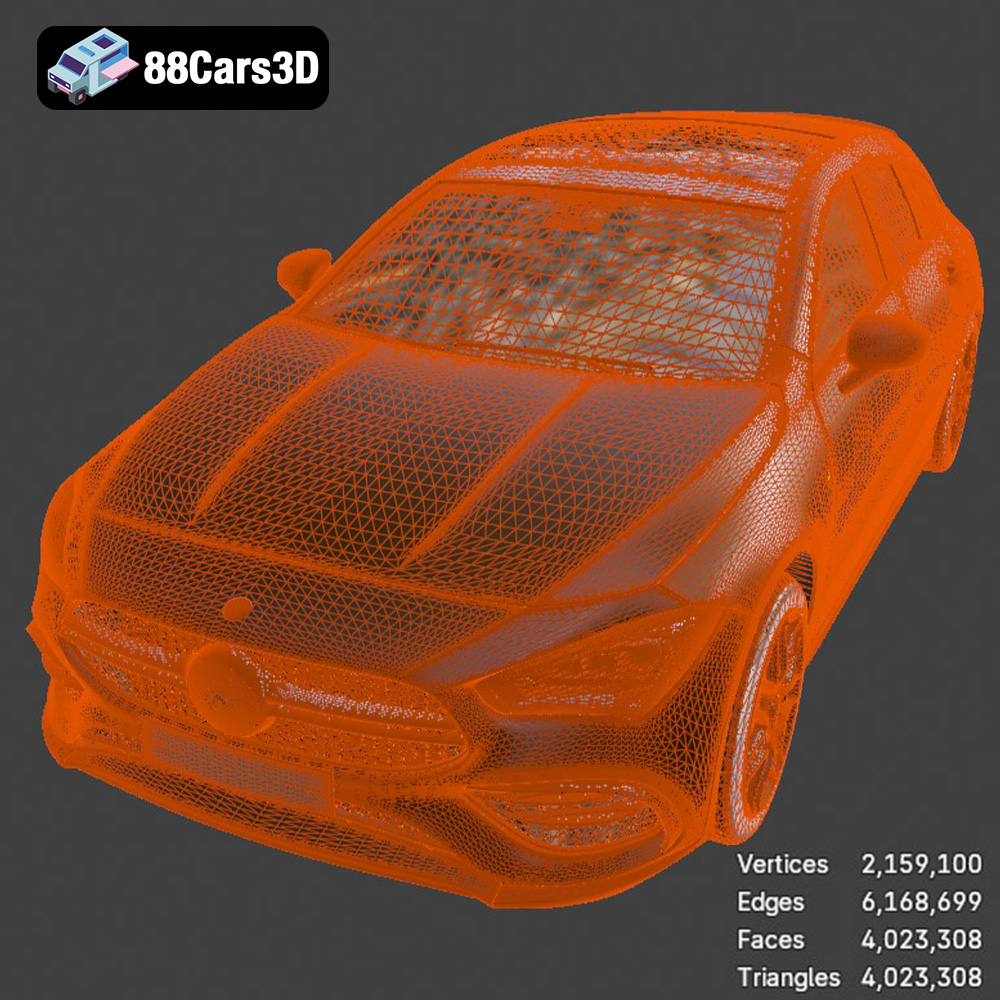
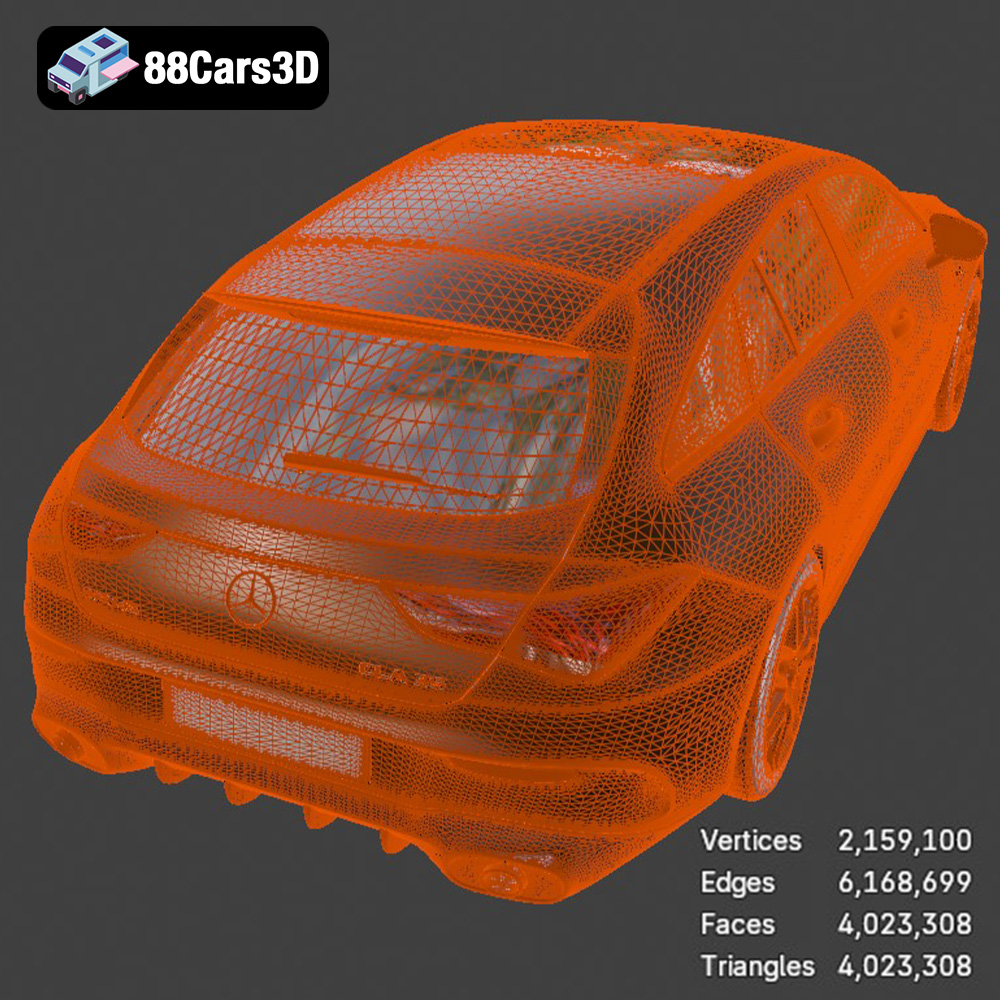
This Mercedes-Benz AMG CLA 35 Shooting Brake 3D model is built with an exceptional topology of 4,023,308 triangles. This count strikes a crucial balance: it’s high enough to ensure unprecedented visual realism for high-end cinematic renders, capturing the nuances of the vehicle’s surfaces and intricate components. Yet, it is also optimized and structured in a way that allows for scalability when integrating into modern real-time engines like Unreal or Unity. The model boasts real-world scale accuracy, a non-negotiable for architectural visualization and realistic simulations. Crucially, proper pivot setups for steering, wheel rotation, and suspension travel are already configured, significantly streamlining the animation process for driving sequences or interactive configurators. This meticulous attention to both visual fidelity and technical optimization makes this model from 88cars3d.com a truly versatile asset.
The true power of a high-quality 3D car model, such as the Mercedes-Benz AMG CLA 35 Shooting Brake, lies in its seamless integration into diverse professional workflows. Whether you’re a seasoned artist in 3ds Max, a game developer in Unreal Engine, or an animator using Blender, these assets are designed to accelerate your creative process.
For Blender users, the included .blend file provides a native starting point. Upon opening, you’ll find the complete scene with materials and textures already linked. The separate geometry for wheels, suspension, and steering is invaluable for animation. To create a driving animation, you would typically parent the wheels to their respective axles and then to a control rig for the vehicle body. Keyframing the rotation of the wheels and the movement of the car along a path, combined with minor suspension compression, brings the vehicle to life. For rendering, Blender’s Cycles engine, with its physically based rendering capabilities, can produce stunning photorealistic results. Setting up an HDRI environment map for realistic reflections and a few area lights for highlights will dramatically enhance the visual appeal of the Mercedes-Benz AMG CLA 35 Shooting Brake model. The optimized geometry ensures efficient viewport performance even with high detail.
The .max file offers 3ds Max users full access to the original project setup. Importing the model into a scene for architectural visualization (ArchViz) involves placing the car within a designed environment. You might adjust materials to suit specific lighting conditions—for instance, enhancing metallic flakes in the paint or adding subtle dust to the tires for realism. Using renderers like V-Ray or Corona, you can achieve cinematic quality. Setting up complex studio lighting, creating reflective ground planes, and applying depth of field will give your renders a high-end, commercial look. The detailed interior is perfect for close-up shots through the windows, adding depth and narrative to your scene. For film projects, the animation-ready components allow for complex camera movements and dynamic car interactions within a larger sequence, making the Mercedes-Benz AMG CLA 35 Shooting Brake a versatile cinematic asset.
For Unreal Engine developers, the .fbx or “.unreal” optimized assets are critical. Importing the FBX is straightforward: simply drag and drop it into your Content Browser. Unreal’s material editor is powerful for setting up physically based materials. You would typically create a master car material with parameters for paint color, roughness, metallic, and normal maps, then instance it for various parts of the car. The 4 million+ triangle count, while high, is manageable for modern engines, especially when implementing Level of Detail (LOD) systems. For open-world games or racing titles, generating proper collision meshes and setting up a vehicle physics rig (using Unreal’s Chaos Vehicle system) are essential steps. The pivot points already set up on the model significantly simplify the rigging process for interactive controls and animations, ensuring the Mercedes-Benz AMG CLA 35 Shooting Brake performs realistically in your real-time application.
While photorealistic rendering is a primary application, the versatility of a premium 3D car model extends into diverse and rapidly evolving fields. The Mercedes-Benz AMG CLA 35 Shooting Brake 3D model is specifically designed to excel in game development, immersive AR/VR experiences, and even physical 3D printing.
In modern game development, realism is paramount. This 3D model, with its optimized polycount and meticulous detail, is perfectly suited for open-world games, racing simulations, and even cinematic cutscenes. The robust topology of 4,023,308 triangles allows for incredible visual fidelity without overwhelming game engines if managed correctly with LODs. The separate, animatable components for wheels, suspension, and steering provide the necessary hooks for creating realistic vehicle physics and handling. Game developers can leverage this model to populate vast urban environments, design intense racing challenges, or create interactive vehicle showrooms. Its “game-ready” nature reduces the overhead of asset optimization, allowing teams to focus on gameplay mechanics and world-building.
Augmented Reality (AR) and Virtual Reality (VR) are transforming how we interact with products. For the automotive industry, this means virtual showrooms, interactive configurators, and immersive test drives. The .glb format included with the Mercedes-Benz AMG CLA 35 Shooting Brake 3D model is specifically optimized for these applications, ensuring lightweight, efficient loading and rendering on mobile devices and VR headsets. Imagine a customer exploring the intricate details of the AMG CLA 35’s interior in a VR showroom, changing paint colors, or viewing it scaled down on their driveway through an AR app. The highly detailed MBUX system and sport-contoured seats become interactive elements, providing an unparalleled user experience that brings the car directly to the consumer, regardless of their physical location.
The ability to convert a highly detailed digital asset into a physical object via 3D printing offers unique opportunities for collectors, hobbyists, and professionals alike. The .stl format is the standard for 3D printing, and the Mercedes-Benz AMG CLA 35 Shooting Brake model can be readily prepared for this process. While the digital model boasts millions of triangles for visual fidelity, for 3D printing, it’s about structural integrity and printability. Recommended scales (1:12, 1:18, 1:24) ensure a manageable size, and advice on layer height (0.04–0.12 mm, with resin printing recommended for fine details) guarantees accuracy. Proper print orientation, separate printing of detailed parts like exhausts and mirrors, and the necessity for supports are crucial considerations. Post-processing steps—sanding, priming, and applying authentic factory colors with metallic finishes—can transform a raw print into a stunning display model, a tangible representation of this digital asset.
Adopting premium 3D car models like the Mercedes-Benz AMG CLA 35 Shooting Brake from 88cars3d.com isn’t just about obtaining a beautiful asset; it’s about fundamentally optimizing your entire production pipeline. This optimization manifests in several key areas, impacting project timelines, quality, and resource allocation.
The most immediate benefit is the significant reduction in production time. Hand-crafting a vehicle model with the level of detail seen in the Mercedes-Benz AMG CLA 35 Shooting Brake takes hundreds of hours. By purchasing a ready-made, high-fidelity asset, these hours are instantly saved, allowing artists to reallocate their time to other critical aspects of a project, such as scene composition, lighting refinement, or developing interactive elements. This directly translates to lower labor costs and faster project delivery, giving your studio a competitive edge. The upfront investment in a quality model pales in comparison to the expenses incurred in internal development.
Premium 3D models are typically created by experienced artists who adhere to strict industry standards for topology, UV mapping, and material setup. This ensures a consistent level of quality across all assets used in a project. For instance, the real-world scale accuracy and proper pivot setups of the Mercedes-Benz AMG CLA 35 Shooting Brake model guarantee that it will integrate flawlessly with other elements in your scene without scaling issues or animation glitches. This consistency is vital for large-scale projects, game environments, or corporate branding initiatives where visual uniformity and excellence are paramount.
While the model comes ready to use, its clean geometry and well-defined components allow for extensive customization. Users can easily change body colors, adjust material finishes (matte, gloss, metallic), modify tire textures, and adapt lighting for different environments. This flexibility is crucial for automotive configurators, marketing campaigns requiring brand-specific color palettes, or game levels with varying themes. The ability to iterate quickly on design choices without rebuilding the core asset streamlines the creative process and allows for more experimentation, leading to superior final results.
Selecting the ideal 3D car model is a critical decision that impacts the success of any project, be it for automotive rendering, game assets, or architectural visualization. It goes beyond aesthetics and delves into technical specifications, compatibility, and versatility. When considering an asset like the Mercedes-Benz AMG CLA 35 Shooting Brake 3D model, several factors come into play.
The “4,023,308 triangle count” of this model is a key indicator. For high-end cinematic rendering or static visualizations, a high polycount ensures maximum visual fidelity, capturing every subtle curve and detail. However, for real-time applications like games or AR/VR, optimization becomes crucial. While this model is described as “optimized” and “scalable,” understanding how to implement Level of Detail (LOD) systems and efficient material setups in your engine is important to manage performance effectively. Always balance visual ambition with technical limitations of your target platform.
The inclusion of multiple file formats (.blend, .fbx, .obj, .glb, .stl, .ply, .unreal, .max) is a huge advantage. This guarantees compatibility with virtually any 3D software or engine you might be using. For example, if your primary workflow is in 3ds Max, the .max file provides native access to all scene data. If you’re targeting web-based AR, the .glb format is essential. For game development, .fbx or the “.unreal” package will be your go-to. This flexibility minimizes conversion issues and streamlines your pipeline, ensuring that the Mercedes-Benz AMG CLA 35 Shooting Brake can be integrated without a hitch.
Consider the required level of detail for your project. If you need close-up interior shots or intricate engine bay renders, the detailed cockpit features and accurate engine bay representation of this model are indispensable. For a background car in a distant shot, such extreme detail might be overkill, but for hero assets, it’s a necessity. The animatable components for steering and suspension are crucial for driving simulations or cinematic animations, providing realism that simpler models lack. Matching the model’s inherent detail to your project’s specific needs ensures both visual quality and efficient resource usage.
In the competitive realm of digital content creation, the difference between good and great often lies in the details. For automotive projects, leveraging high-quality 3D car models is a strategic imperative that saves time, enhances realism, and expands creative possibilities. The Mercedes-Benz AMG CLA 35 Shooting Brake 3D model stands as an exemplary asset, meticulously crafted to meet the rigorous demands of professional workflows across rendering, game development, AR/VR, and even 3D printing.
Its comprehensive technical specifications, including a robust 4,023,308 triangle topology, real-world scale accuracy, and pre-configured animation pivots, ensure unparalleled fidelity and versatility. Furthermore, the availability in a wide array of industry-standard file formats—from .blend and .max for native software users to .fbx for game engines and .glb for web-based experiences—guarantees seamless integration into any pipeline. This thoughtful packaging allows artists and developers to sidestep the laborious process of creating complex vehicles from scratch, enabling them to focus their energy on innovative storytelling and immersive experiences.
Whether you are designing the next generation of racing games, producing photorealistic automotive marketing campaigns, crafting interactive virtual showrooms, or bringing a favorite car to life through 3D printing, a premium asset like this Mercedes-Benz AMG CLA 35 Shooting Brake 3D model empowers you to achieve superior results with greater efficiency. Explore this exceptional model and more high-quality 3D car models at 88cars3d.com, and elevate your digital creations to the next level.
The Mercedes-Benz AMG CLA 35 Shooting Brake is a striking blend of sports car performance and practical estate versatility. With its aggressive AMG styling, sweeping roofline, and dynamic stance, this vehicle stands out in the compact luxury segment. Key visual elements include the signature AMG Panamericana-style grille, a sporty front splitter, dual round exhaust tailpipes, and a muscular rear diffuser. Under the hood lies the spirit of a 2.0-liter turbocharged inline-4 engine, making it a masterclass in modern European automotive design.
This 3D model boasts an exceptional level of detail with a topology of 4,023,308 triangles, ensuring maximum visual fidelity for high-end rendering while maintaining an optimized structure that can be scaled for real-time engines. It is meticulously crafted to deliver photorealistic results, making it highly versatile for various professional applications including AAA game development, immersive AR/VR experiences, cinematic animation, and high-resolution automotive visualization.
Perfect for architectural visualization, urban racing games, high-end automotive configurators, and lifestyle rendering scenes.
.blend, .fbx, .obj, .glb, .stl, .ply, .unreal, .max
Tags:
mercedes-benz, amg-cla-35, shooting-brake, estate-car, station-wagon, sports-car, luxury-car, game-ready, highly-detailed, optimized, car-3d-model, game-asset, rendering, vr-ar, blend, fbx, obj, glb, stl, ply, unreal, max
$90.00
.blend
.fbx
.glb
.max
.obj
.ply
.rendering
.sports car
.stl
.unreal
amg-cla-35
car-3d-model
estate-car
game asset
game-ready
highly-detailed
luxury car
mercedes-benz
optimized
shooting-brake
station-wagon
VR/AR