Get 20% OFF All Premium 3D & STL Models!

In the vibrant world of digital creation, where imagination meets engineering, the demand for high-quality 3D assets is ever-growing. From the exhilarating virtual tracks of racing simulators to the sophisticated visual showcases of luxury brands, meticulously crafted 3D car models are the bedrock of immersive experiences. These assets transform concepts into compelling realities, allowing artists, designers, and developers to bring the elegance and power of automotive design to life in unprecedented ways. It’s not merely about replicating a vehicle; it’s about capturing its essence, its lines, its very soul, in a format that can be manipulated, rendered, and experienced.
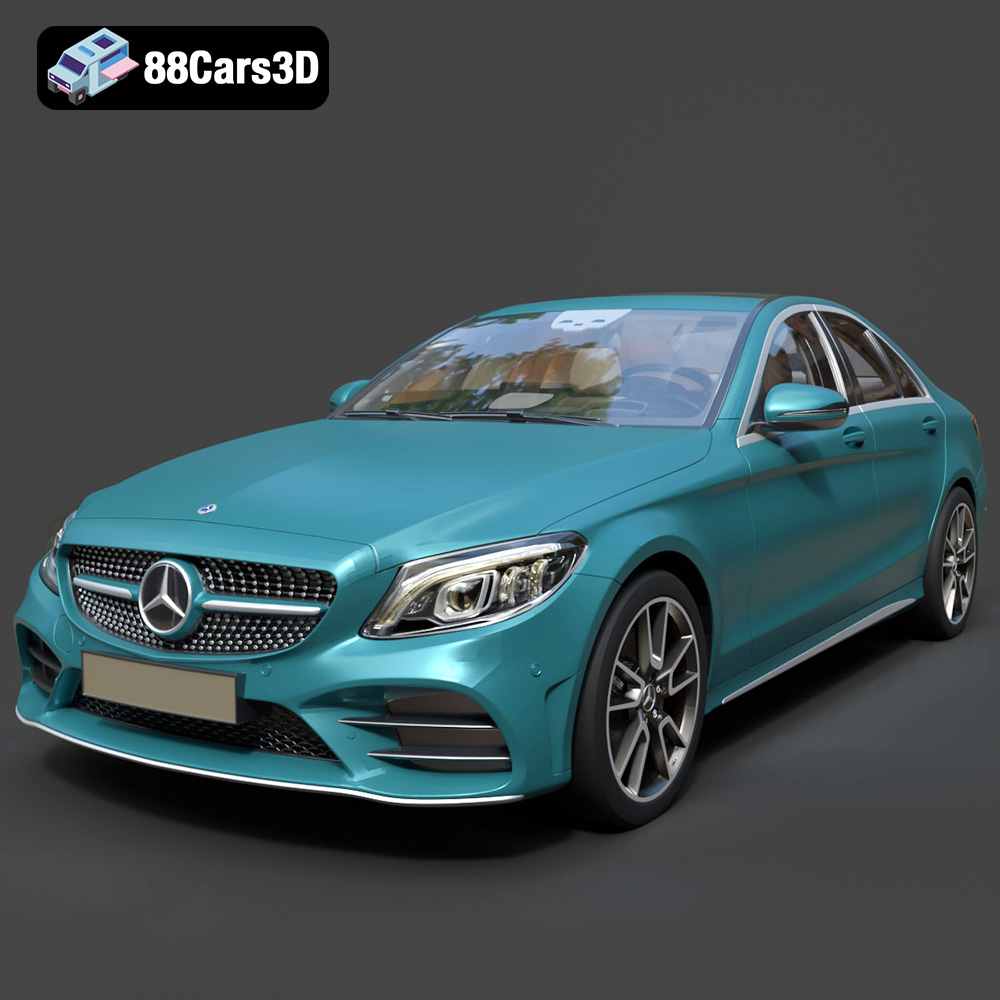
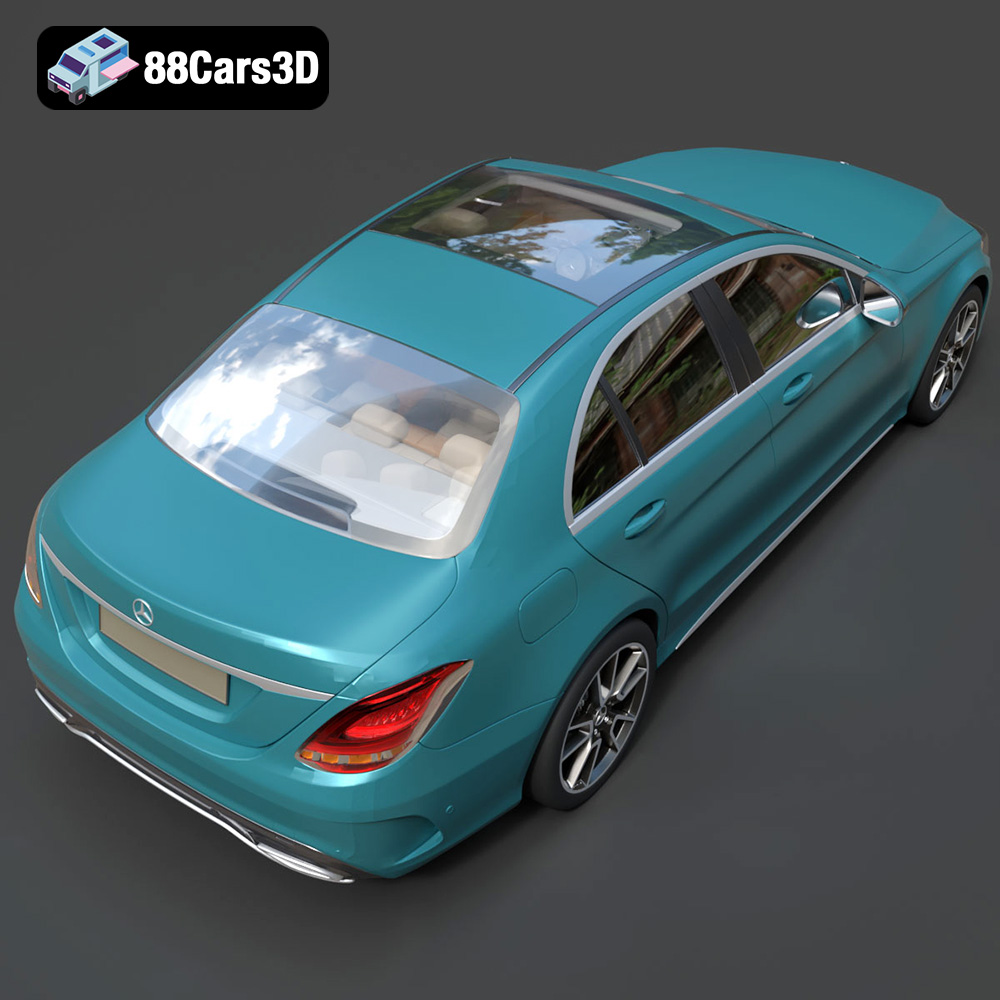
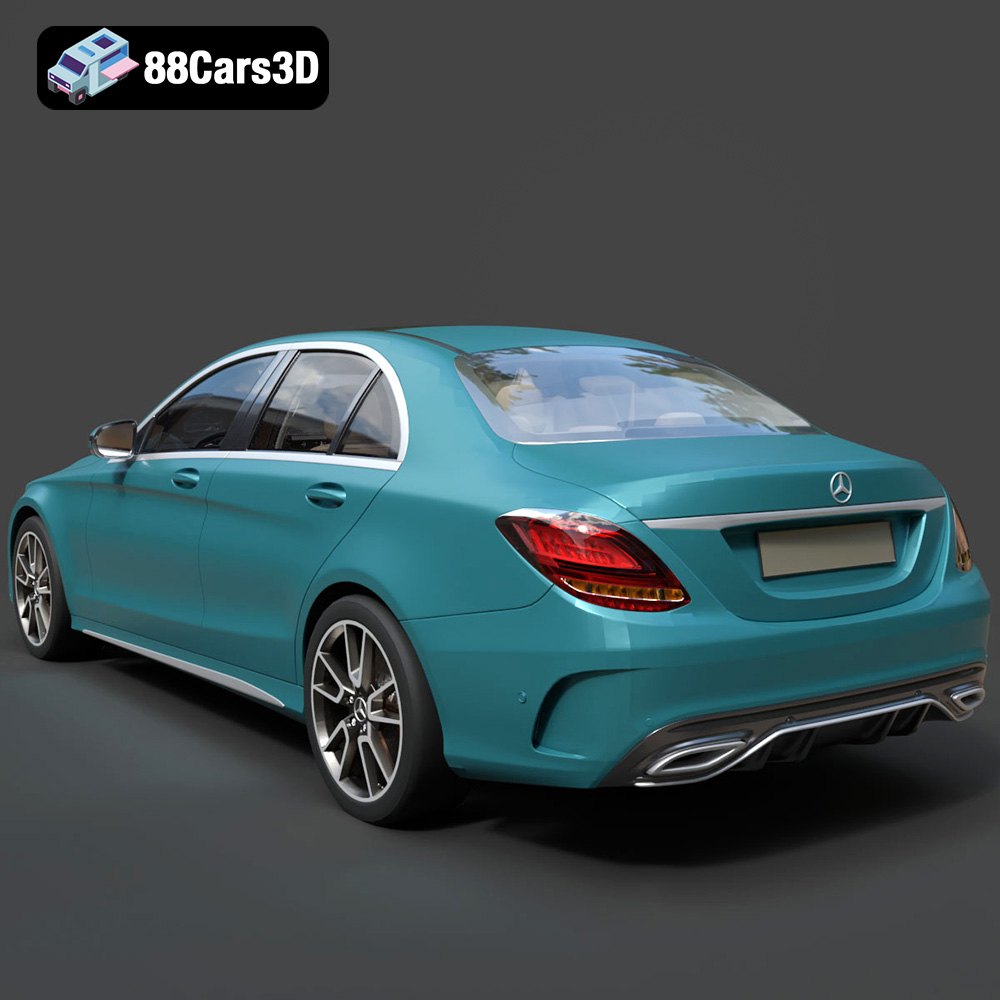
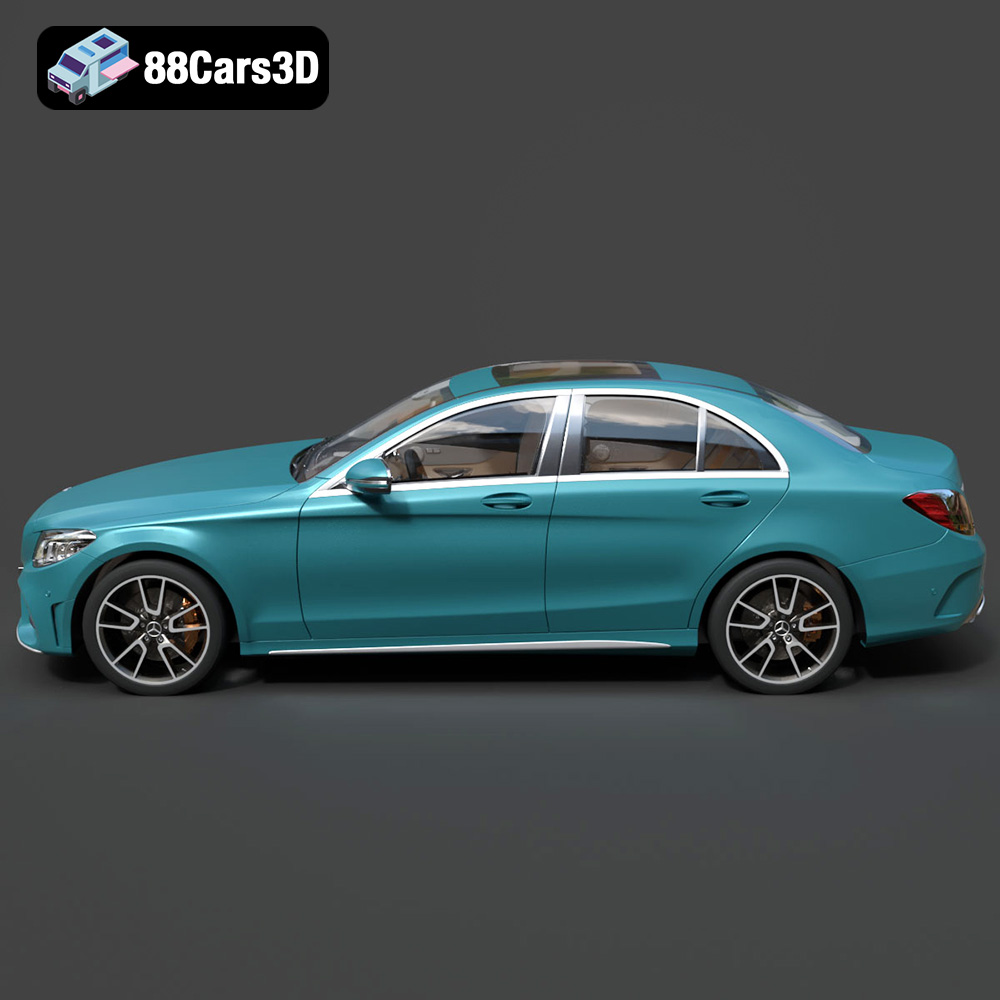
Today, we’re going to explore the intricate journey of creating and utilizing such premium assets, focusing on how a high-fidelity model like the Mercedes-Benz C-Class 2019 3D model stands as a testament to the blend of artistic vision and technical prowess. This particular model, available at 88cars3d.com, exemplifies what it means to be a versatile, game-ready, and render-optimized asset, perfectly suited for a multitude of professional applications.
The world of 3D modeling is rich with various file formats, each designed with specific purposes, compatibilities, and technical advantages in mind. Choosing the right format is crucial for workflow efficiency and achieving desired outcomes, whether you’re aiming for photorealistic renders, real-time game integration, or even physical 3D prints. Understanding these distinctions is fundamental for any professional working with 3D car models.
The .blend file format is the native format for Blender, the popular open-source 3D creation suite. When you download a .blend file, you’re getting a complete Blender scene, often including the model, materials, textures, lighting, camera setups, and even animations. This format offers maximum editability and flexibility within Blender, allowing artists to delve deep into the model’s structure, modify its topology, adjust shaders, or completely re-rig it. For the Mercedes-Benz C-Class 2019 3D model, the .blend file provides a fully editable environment for Blender users, making it ideal for custom projects or further development within the Blender ecosystem.
FBX (Filmbox) is a proprietary file format developed by Autodesk, widely recognized as an industry standard for interoperability between different 3D software applications and game engines. It’s particularly ideal for Unreal Engine, Unity, and other real-time pipelines because it efficiently stores 3D models, animation data, cameras, and lights. FBX files are known for preserving hierarchical relationships, materials (often as basic parameters), and animation curves, making them excellent for transferring rigged characters or complex animated objects. The .fbx version of the Mercedes-Benz C-Class 2019 is crucial for seamless integration into real-time environments, ensuring that pivot points for wheels, steering, and suspension are accurately maintained.
OBJ (Object) is one of the oldest and most universally supported 3D file formats, making it a reliable choice for cross-software compatibility. It primarily stores geometry data, including vertices, normals, UV coordinates, and faces, often accompanied by a separate .mtl (Material Template Library) file for basic material definitions. While .obj doesn’t typically support animation or rigging, its widespread compatibility ensures that almost any 3D software can import and work with the model. For the Mercedes-Benz C-Class 2019, the .obj format serves as a robust option for artists needing to import the raw geometry into less common software or for simple static renders.
GLB is the binary version of glTF (GL Transmission Format), an open standard for 3D scenes and models. It’s specifically optimized for efficient transmission and loading of 3D content in web browsers, AR (Augmented Reality), and VR (Virtual Reality) applications. A single .glb file can encapsulate all necessary data—geometry, materials, textures, animations—making it incredibly convenient for quick deployment in interactive experiences. Its compact size and PBR (Physically Based Rendering) material support make it a go-to format for virtual showrooms and mobile AR, perfectly suiting the immersive virtual showroom potential of the C-Class model.
STL (Standard Tessellation Language or Stereolithography) is the de facto standard file format for 3D printing. It represents a 3D model as a series of connected triangles (a tessellation) without color, texture, or other CAD attributes. Its simplicity makes it universally compatible with 3D printers and slicing software. While it’s excellent for creating physical prototypes, it’s not ideal for rendering or animation due to the lack of material information. The .stl version of the Mercedes-Benz C-Class 2019 is specifically provided for those looking to bring the digital model into the physical realm, enabling enthusiasts and professionals to 3D print scaled replicas.
PLY (Polygon File Format or Stanford Triangle Format) is another format used to store 3D data, particularly from 3D scanners. It can store a wider range of properties than .obj or .stl, including color, transparency, normals, texture coordinates, and even reliability information for each polygon. It’s often used in scientific, engineering, and CAD applications where precise mesh data and additional attributes are important for analysis or complex manufacturing processes. For detailed inspections or specific engineering visualizations of the C-Class, the .ply format can be beneficial.
The .unreal format refers to assets specifically packaged or configured for seamless use within Unreal Engine. This often implies not just the raw model but also engine-specific materials, collision meshes, LODs (Levels of Detail), and blueprint configurations. An .unreal asset, like that provided for the C-Class, is often a pre-setup package designed to drop directly into an Unreal Engine project, saving significant time in asset preparation and optimization, allowing developers to immediately focus on gameplay or cinematic sequences.
The .max file format is the native file type for Autodesk 3ds Max. Similar to .blend, it saves an entire 3ds Max scene, including all 3D models, lights, cameras, materials, textures, animations, and scene settings. This provides complete access to the model’s construction, modifiers, and rendering setup within 3ds Max, which is a powerhouse for architectural visualization, product design, and cinematic rendering. The .max file for the Mercedes-Benz C-Class 2019 allows for comprehensive animation and high-end rendering projects, leveraging 3ds Max’s robust toolset.
Understanding these formats empowers artists and developers to select the optimal version of a 3D car model for their specific project needs, ensuring efficiency and high-quality results across diverse applications.
Creating a truly exceptional 3D car model is a delicate balance between artistic interpretation and rigorous technical accuracy. It demands an understanding of real-world physics, material science, and the nuances of light interaction, all translated into a digital medium. The Mercedes-Benz C-Class 2019 3D model exemplifies this fusion, offering a product that is both visually stunning and technically sound.
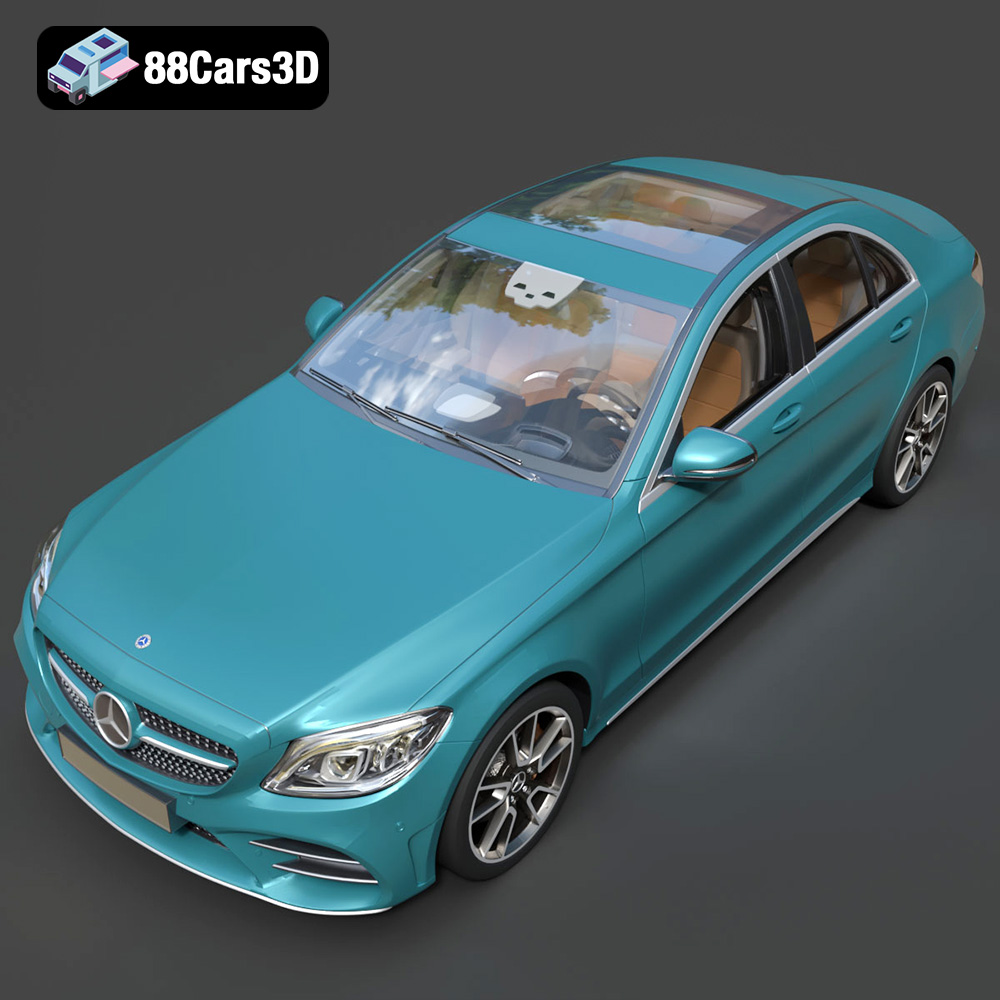
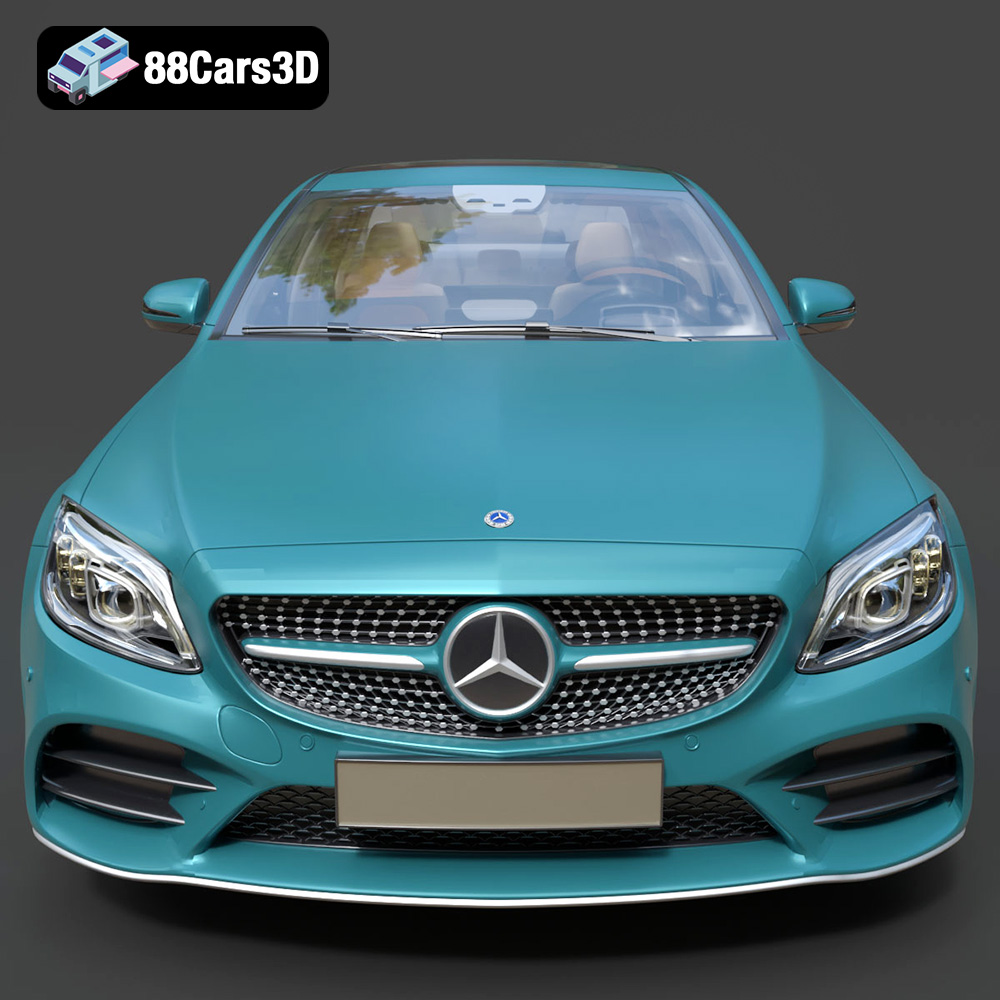
The journey begins with capturing the authentic details of the physical vehicle. This involves meticulous study of blueprints, CAD data, and photographic references to ensure every curve, every panel gap, and every design element is accurately represented. For a luxury sedan like the C-Class, this means replicating its sophisticated diamond-block grille, sleek LED High-Performance headlamps, and refined body contours with unwavering precision. The interior features are equally critical: luxurious leather-stitched seat detailing, an authentic multi-function steering wheel, and a detailed digital instrument cluster all contribute to a truly immersive experience, whether for a close-up render or a first-person in-game view. This level of detail isn’t just about aesthetics; it ensures that the digital model behaves and appears as its real-world counterpart would under various lighting conditions and camera angles.
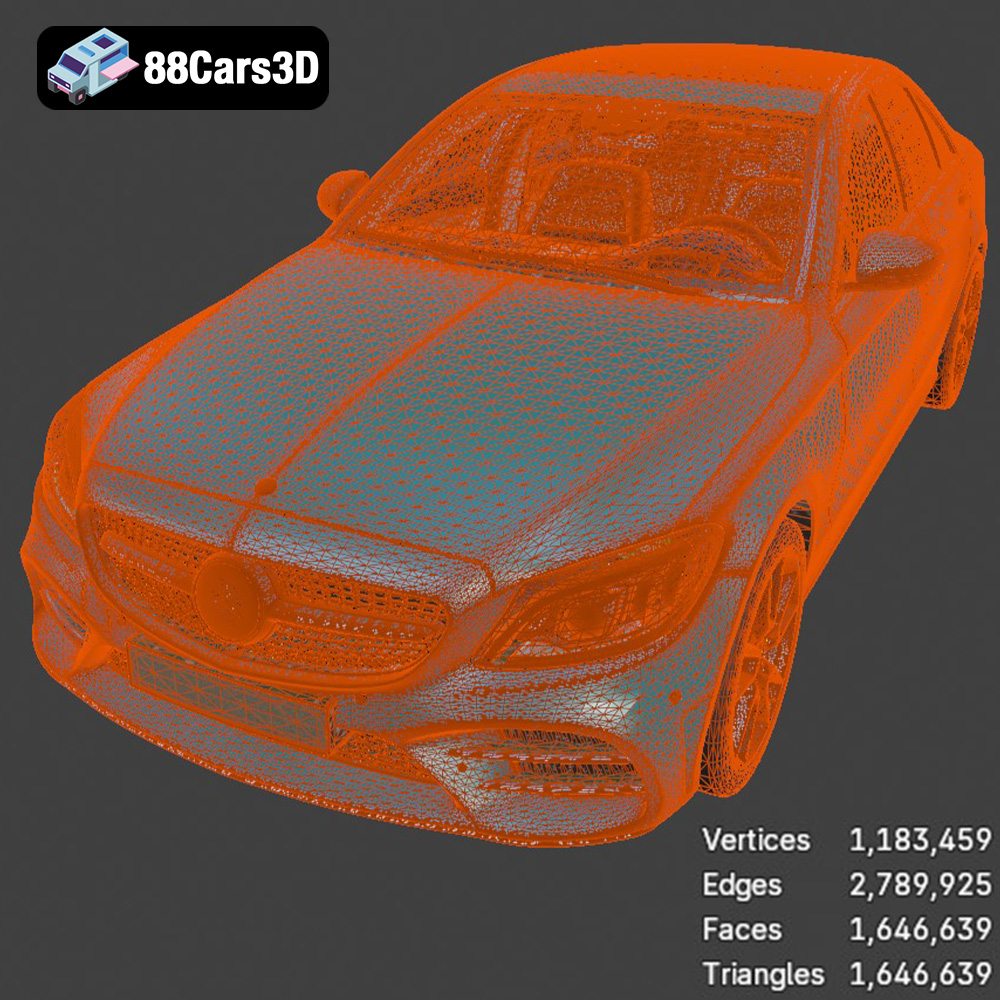
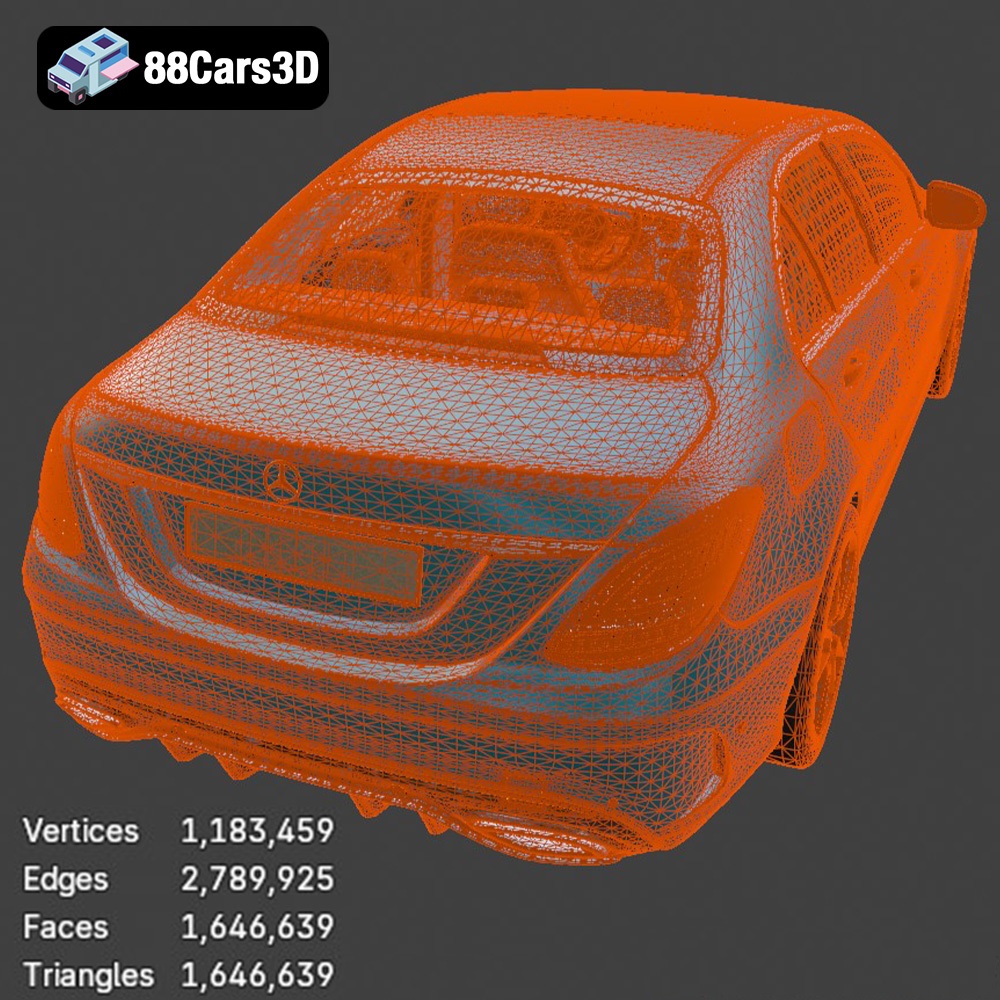
One of the most significant challenges in 3D modeling, especially for game development and real-time applications, is balancing visual fidelity with performance. A model that is too dense in polygons will cause performance bottlenecks, while one that is too sparse will lack detail. The Mercedes-Benz C-Class 2019 3D model expertly navigates this “polycount paradox” with a triangle count of 1,646,639. This figure is a testament to clever optimization techniques, where detail is preserved where it matters most (like the exterior panels, wheels, and interior cockpit) while ensuring efficient rendering. This optimization makes the model “game-ready,” meaning it can be seamlessly integrated into engines like Unreal and Unity without requiring extensive rework, making it a valuable asset for developers.
Beyond the raw geometry, the realism of a 3D model heavily relies on its materials, textures, and UV mapping. High-quality 3D car models utilize Physically Based Rendering (PBR) workflows, where materials are designed to react to light in a way that mimics real-world physics. This involves creating precise maps for albedo (base color), roughness (surface smoothness), metallic (reflectivity), normal (surface detail), and ambient occlusion. Efficient UV mapping is crucial here, as it dictates how these 2D texture maps are applied to the 3D surface without distortion. While specific UV details for the C-Class aren’t listed, a high-quality model like this would certainly feature clean, organized UVs, allowing for realistic paint finishes, chrome accents, and detailed tire tread patterns that capture the luxurious feel of the vehicle.
The versatility of a well-designed 3D car model becomes evident in the diverse professional workflows it supports. From high-end studio renders to interactive virtual reality experiences, premium assets like the Mercedes-Benz C-Class 2019 streamline production and elevate final output quality across various industries.
For many automotive artists and visualization studios, 3ds Max and Blender are the powerhouses for creating stunning photorealistic renders. With the .max and .blend file formats available for the Mercedes-Benz C-Class 2019, professionals gain immediate access to a fully editable scene.
In 3ds Max, artists can leverage industry-standard renderers like V-Ray or Corona to achieve breathtaking realism. This involves setting up complex studio lighting environments, utilizing HDRI (High Dynamic Range Image) maps for realistic reflections, and meticulously composing camera angles to highlight the car’s design. The C-Class model’s accurate body panels and material definitions allow for realistic paint shaders, intricate reflections on chrome elements, and detailed light scattering through its LED headlights. Similarly, Blender artists can utilize Cycles or Eevee, refining materials, adding environmental effects, and orchestrating cinematic camera movements to showcase the vehicle’s elegance. The availability of such high-quality 3D car models on platforms like 88cars3d.com significantly reduces production time, allowing studios to focus on creative direction rather than fundamental asset creation.
The real-time demands of game development require assets that are not only visually impressive but also highly optimized for performance. The Mercedes-Benz C-Class 2019 3D model is specifically designed to be “game-ready,” making it an invaluable asset for racing titles, open-world games, and simulators. The provided .fbx and .unreal formats are crucial here.
For Unreal Engine, the .unreal file often includes pre-configured materials, LODs (Levels of Detail), and collision meshes, ready for drag-and-drop implementation. The model’s optimized 1,646,639 triangle count ensures it runs smoothly even in complex game environments. Proper pivot setups for steering, wheel rotation, and suspension travel are critical for realistic vehicle physics and animation in both Unreal and Unity. Developers can quickly integrate the C-Class into their projects, apply engine-specific shaders, and begin designing gameplay around a high-fidelity asset, knowing that the foundation is technically sound. This allows for rapid prototyping and deployment of vehicles that feel authentic and look incredible in real-time.
The immersive nature of Augmented Reality (AR) and Virtual Reality (VR) demands highly optimized 3D car models that can render seamlessly on diverse hardware, from high-end VR headsets to mobile AR applications. The .glb format for the C-Class 3D model is perfectly suited for this. Its compact, self-contained nature, combined with PBR material support, makes it ideal for virtual showrooms, interactive configurators, and mobile AR experiences where users can place the car in their real-world environment. Imagine prospective buyers exploring the C-Class interior virtually, changing body colors, or inspecting wheel designs in a fully interactive 3D space. This brings a new dimension to automotive marketing and sales, offering unparalleled engagement and customization options directly to the consumer.
While digital visualization is a primary use case, the advent of sophisticated 3D printing technology has opened new avenues for bringing 3D car models into the physical world. Enthusiasts, collectors, and automotive designers can now hold tangible replicas of their favorite vehicles.
For physical production, the .stl (Stereolithography) format is the undisputed champion. It represents a 3D model’s surface geometry using a tessellated mesh of triangles, which is exactly what 3D printers and slicing software understand. The availability of the C-Class 2019 3D model in .stl format means it’s prepped for this process. The .ply format, offering more granular data including color or surface properties, can also be useful for industrial-grade printing or for transferring precise CAD data to specialized manufacturing equipment. These formats strip away the rendering-specific data like advanced shaders and animations, focusing purely on the geometric integrity required for fabrication.
Successful 3D printing of a detailed car model requires careful consideration of print settings and subsequent post-processing. For the Mercedes-Benz C-Class 2019, specific recommendations are provided to ensure optimal results. Recommended scales like 1:12, 1:18, or 1:24 offer a good balance between detail and manageable print size. Using a resin printer is often suggested for fine details, coupled with a layer height between 0.04–0.12 mm to capture intricate curves and sharp edges. Structural integrity is addressed by recommending a wall thickness of 1.2–2.0 mm and an infill of 20–30%. Crucially, supporting structures are required for delicate parts like exhaust systems, mirrors, and the steering wheel, and print orientation (e.g., printing the frame angled, wheels separately) is key to minimizing defects and maximizing strength. After printing, post-processing steps like sanding, priming, and applying authentic factory colors with metallic finishes elevate the raw print into a museum-quality display piece.
A truly professional 3D car model isn’t a static asset; it’s a dynamic canvas for creative expression and adaptation. The inherent flexibility of the Mercedes-Benz C-Class 2019 3D model empowers artists and designers to tailor it to specific project requirements, branding guidelines, or artistic visions.
The ability to customize a 3D model significantly enhances its value. For the C-Class, this means effortlessly changing body colors to match factory options, custom finishes, or even specific brand palettes. Imagine a sleek matte black finish for a stealthy advertisement, or a vibrant metallic blue for a playful game environment. Modifying tire textures, perhaps switching between high-performance track variants and street-oriented treads, adds another layer of realism and storytelling. Adjusting material finishes—from a high-gloss showroom shine to a more understated satin look—can dramatically alter the mood and context of a scene. These customization options are not just about aesthetics; they are powerful tools for communicating a specific message or fitting the vehicle seamlessly into a broader digital environment.
The technical construction of the Mercedes-Benz C-Class 2019 3D model supports extensive animation and dynamic interaction. With separate components for wheels, suspension, and steering, animators can simulate realistic driving physics, intricate camera movements, and dynamic environmental interactions. This is crucial for cinematic sequences, advertising campaigns, and interactive simulators. Furthermore, adapting the lighting for different environments—whether it’s the stark contrast of a night city scene, the golden hour glow of a sunset, or the controlled brilliance of a studio shoot—allows the model to shine in any setting. This level of control ensures that the digital C-Class isn’t just a static image, but a living, breathing element within any creative project.
The journey from a real-world automotive masterpiece to a versatile, high-fidelity 3D car model is complex, requiring a deep understanding of artistic principles, technical optimization, and diverse digital workflows. The Mercedes-Benz C-Class 2019 3D model stands as a prime example of excellence in this domain, offering unparalleled detail, game-ready optimization, and compatibility across a spectrum of professional applications – from stunning automotive rendering and immersive game development to interactive AR/VR experiences and detailed 3D printing.
Its comprehensive package of file formats, including .blend, .fbx, .obj, .glb, .stl, .ply, .unreal, and .max, ensures that designers, artists, and developers have the right tool for every job. Whether you’re crafting a cinematic visual, building the next-generation racing game, or bringing a physical replica to life, this model provides a robust and flexible foundation. Investing in premium 3D car models like the Mercedes-Benz C-Class 2019 from trusted sources such as 88cars3d.com not only elevates the quality of your projects but also significantly enhances creative potential and production efficiency. Explore the possibilities and drive your digital creations to new horizons with truly exceptional assets.
The Mercedes-Benz C-Class 2019 represents the pinnacle of compact executive luxury, blending elegant design heritage with modern aerodynamic styling. Known for its sophisticated diamond-block grille, sleek LED High-Performance headlamps, and refined body contours, this vehicle embodies premium automotive engineering and class-leading aesthetics.
This premium 3D model boasts an exceptional topology with a triangle count of 1,646,639, ensuring breathtaking visual fidelity. It is perfectly optimized for both high-end real-time game engines and photorealistic studio rendering, making it a versatile asset for game development, AR/VR experiences, animation, and high-end automotive visualization.
Perfect for architectural visualizations, next-gen racing games, virtual showrooms, and high-end cinematic animations.
.blend, .fbx, .obj, .glb, .stl, .ply, .unreal, .max
Tags:
mercedes-benz, c-class, 2019, sedan, luxury-car, game-ready, optimized, car-3d-model, game-asset, rendering, vr-ar, blend, fbx, obj, glb, stl, ply, unreal, max
$80.50
.2019
.blend
.fbx
.glb
.max
.obj
.ply
.rendering
.sedan
.stl
.unreal
c-class
car-3d-model
game asset
game-ready
luxury car
mercedes-benz
optimized
VR/AR