Get 20% OFF All Premium 3D & STL Models!

In the rapidly evolving landscape of automotive design, electric vehicles stand as beacons of innovation, pushing the boundaries of aesthetics, performance, and sustainability. Among these pioneers, the Mercedes-Benz EQC holds a distinct position, seamlessly blending luxury with cutting-edge electric mobility. For artists, designers, game developers, and visualization specialists, having access to high-fidelity 3D car models of such iconic vehicles is not just an advantage—it’s a necessity. It allows for the exploration of intricate designs, the creation of photorealistic renders, and the development of immersive interactive experiences.
Imagine harnessing the sleek lines, the signature electro-aesthetic, and the sophisticated interior of the Mercedes-Benz EQC, ready to integrate into your next project. This is precisely what the Mercedes-Benz EQC 3D Model offers: an exceptionally detailed, game-ready asset designed to elevate your work across various platforms. Whether you’re crafting a cinematic commercial, building an interactive showroom, or populating a virtual world, this model provides the technical foundation for unparalleled realism and flexibility. Let’s delve into what makes a premium 3D vehicle asset truly indispensable and how this particular EQC model exemplifies excellence in digital automotive design.
The success of any 3D project often hinges on the compatibility and utility of its assets. A truly professional 3D car model offers a comprehensive suite of file formats, ensuring seamless integration into diverse pipelines and software environments. The Mercedes-Benz EQC 3D Model from 88cars3d.com exemplifies this by providing a robust collection of formats, each serving specific purposes for different stages of production and final output. Understanding these formats is crucial for maximizing your workflow efficiency and achieving your project goals.
The .blend format is the native file type for Blender, an increasingly popular open-source 3D creation suite. When you receive a .blend file, you gain access to a fully editable Blender scene, complete with materials, textures, lighting setups, and any associated modifiers or animations. For artists deeply integrated into the Blender ecosystem, this means immediate access to a project that can be tweaked, animated, or rendered using Cycles or Eevee, leveraging Blender’s powerful toolset without any conversion overhead. It’s ideal for those who prefer to stay within a single software environment for maximum creative control and efficiency.
.fbx (Filmbox) is arguably the most widely used proprietary file format for 3D content interchange. Developed by Autodesk, it’s designed to carry a vast array of 3D data, including geometry, materials, textures, animations, rigging, and even light and camera information, across different software applications. This makes it ideal for pipelines involving multiple software packages, particularly for game development with engines like Unreal Engine and Unity, and real-time visualization. Its robust support for animation and skeletal data makes it perfect for dynamic scenes where the EQC might need to be driven or showcased in motion.
The .obj (Wavefront Object) format is a universal standard for storing 3D geometry. It’s a simple, text-based format that defines polygon mesh data, UV coordinates, and vertex normals. While it doesn’t typically store advanced material properties, lighting, or animation, its widespread compatibility ensures that virtually any 3D software can import and interpret the model’s core geometry and basic texture mapping. It’s an excellent fallback format for cross-software compatibility, offering a clean mesh that can then be textured and shaded in your preferred application.
.glb (GL Transmission Format Binary) is a binary version of the glTF format, specifically designed for efficient transmission and loading of 3D scenes and models by engines and applications. It’s become the go-to format for Augmented Reality (AR), Virtual Reality (VR), and browser-based 3D displays due to its compact size and ability to embed all assets (like textures and animations) into a single file. For interactive product configurators or mobile AR experiences featuring the EQC, .glb offers optimal performance and visual fidelity on the web and mobile platforms.
The .stl (Stereolithography) format is the standard for 3D printing. It represents a 3D model as a collection of unconnected triangles, defining only the surface geometry of an object without color, texture, or other CAD attributes. While simple, its ubiquity in the 3D printing world makes it indispensable for bringing digital models into the physical realm. For hobbyists or designers looking to create a physical miniature of the Mercedes-Benz EQC, an .stl file is the essential starting point, ensuring the model’s complex surfaces are accurately translated for additive manufacturing.
The .ply (Polygon File Format) is another popular format for storing 3D data, often used for data from 3D scanners, CAD, and scientific analysis. Unlike .stl, .ply can store a wider range of properties, including color, transparency, surface normals, and even confidence values per vertex or face. It’s a precision mesh format valuable for applications requiring highly accurate geometric representation and potentially rich attribute data, making it useful in contexts where detailed measurement or analysis of the EQC’s form is required.
While not a standalone file type in the same way .fbx or .obj are, the inclusion of .unreal typically signifies an asset that has been specifically prepared and optimized for direct import and use within Unreal Engine. This often means an .fbx file that adheres to Unreal’s specific import settings, naming conventions, and possibly includes pre-configured material instances or blueprints. It suggests a streamlined workflow, saving developers significant time on asset preparation and ensuring the Mercedes-Benz EQC is engine-ready for high-performance, real-time environments.
The .max format is the native file type for Autodesk 3ds Max, a leading software for 3D modeling, animation, rendering, and visualization. Similar to .blend, a .max file offers a complete 3ds Max project, allowing full editability, access to complex modifiers, animation timelines, and specific render setups (e.g., V-Ray, Corona Renderer). For professionals deeply ingrained in the 3ds Max ecosystem, this format provides the highest level of control and flexibility for advanced automotive rendering and intricate scene composition.
By offering this comprehensive range of formats, the Mercedes-Benz EQC 3D Model ensures that irrespective of your chosen software or end-use application, you have the right tool for the job. This versatility underscores the quality and foresight of the asset providers at 88cars3d.com, making it a truly future-proof investment.
The true value of a premium 3D car model lies not just in its superficial appearance, but in the meticulous technical craftsmanship beneath the surface. The Mercedes-Benz EQC 3D Model is a testament to this philosophy, engineered for exceptional visual realism and practical application across diverse professional scenarios.
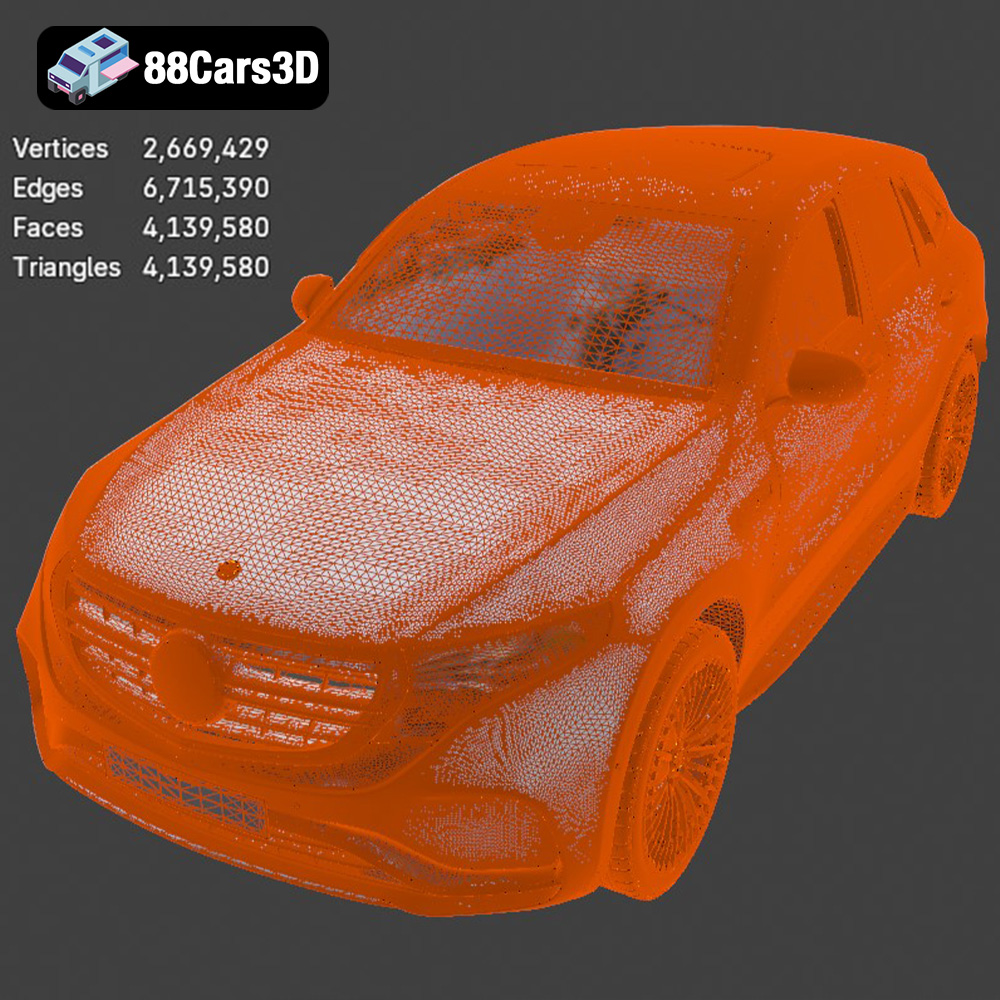
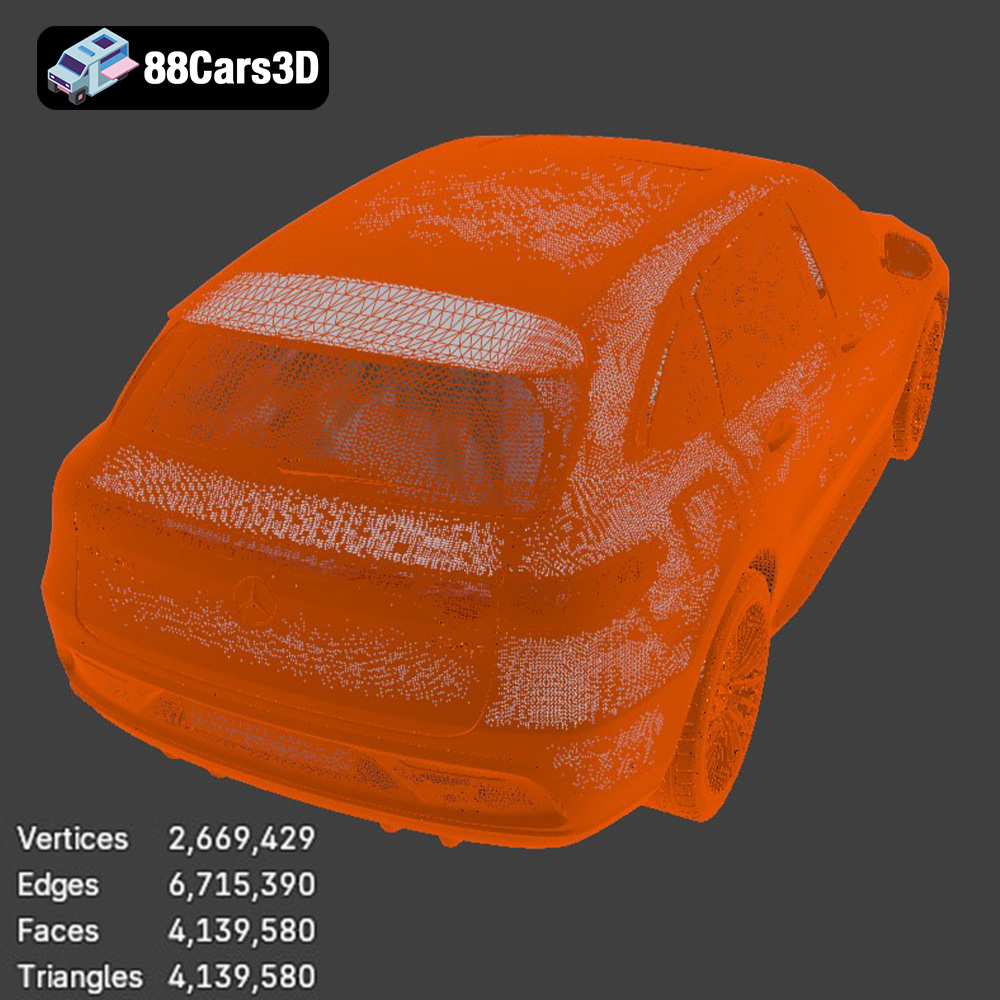
At the heart of this model’s realism is its meticulously sculpted geometry. With a triangle count of 4,139,580, this high-fidelity asset strikes an impressive balance. For high-end cinematic automotive rendering, this polycount allows for breathtaking close-ups, where every curve and surface reflects light flawlessly, free from visible faceting. The smooth surfaces and accurate topology ensure realistic reflections and refractions, crucial for conveying the luxury and sophistication of a Mercedes-Benz. Yet, this high detail doesn’t come at the cost of usability. The model is carefully optimized to be “game-ready,” meaning its geometry is structured efficiently enough for real-time engines like Unreal and Unity. This careful balance ensures that the model can serve as a stunning hero asset in pre-rendered animations while simultaneously being suitable for demanding interactive experiences. Logical part separation, such as distinct panels, wheels, and interior components, further aids in optimization, allowing developers to implement Level of Detail (LOD) systems or selectively hide parts to maintain performance.
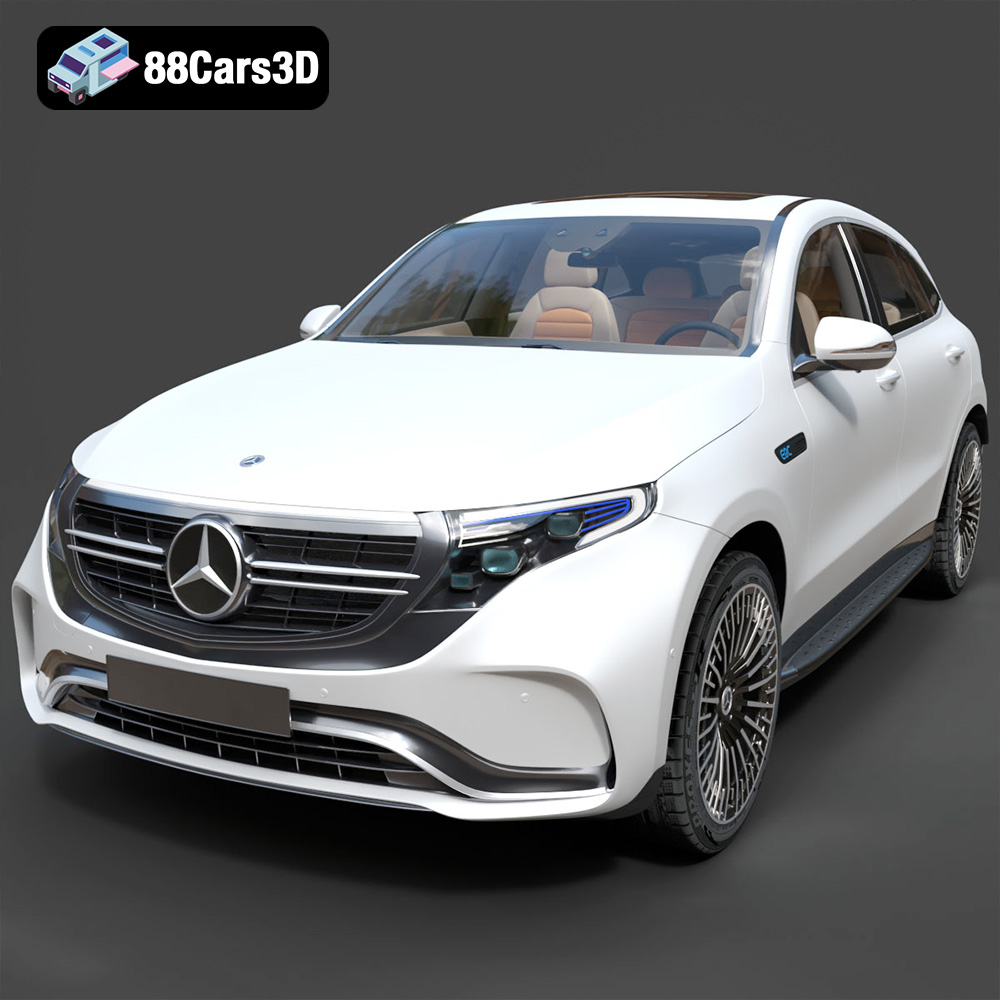
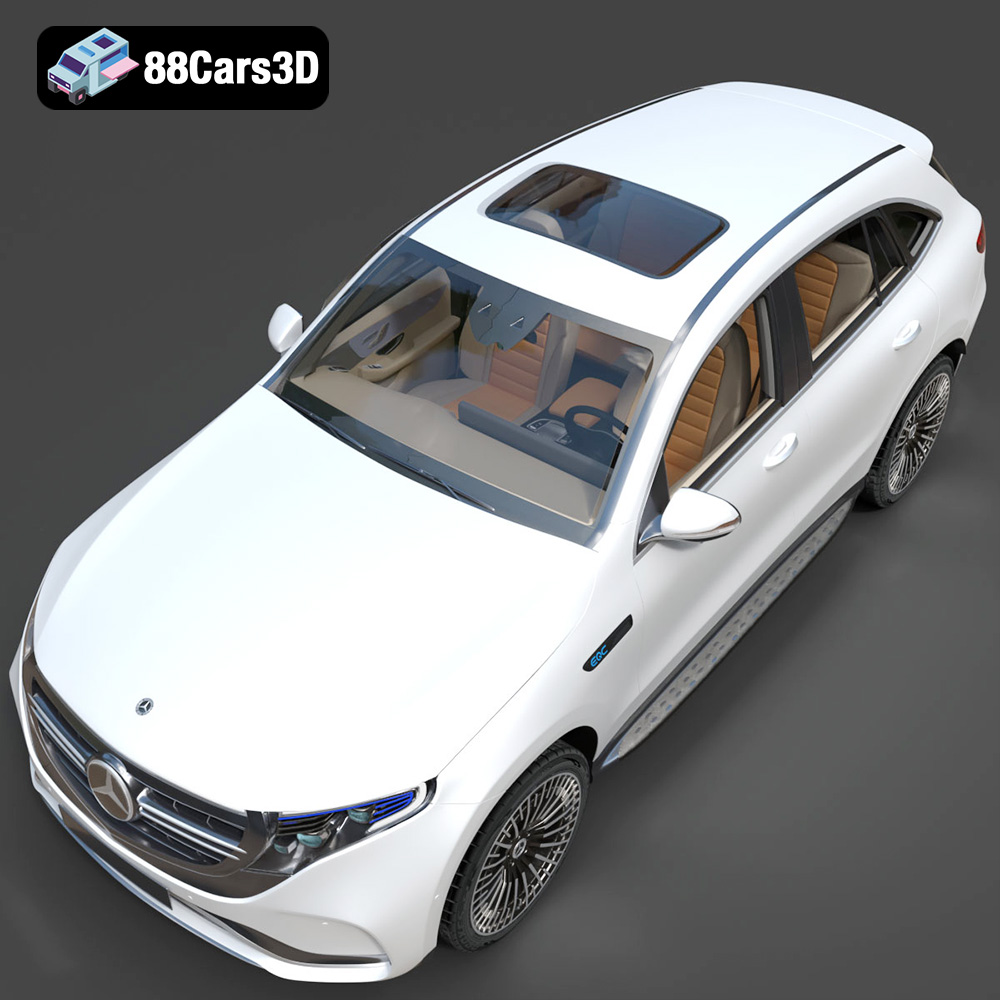
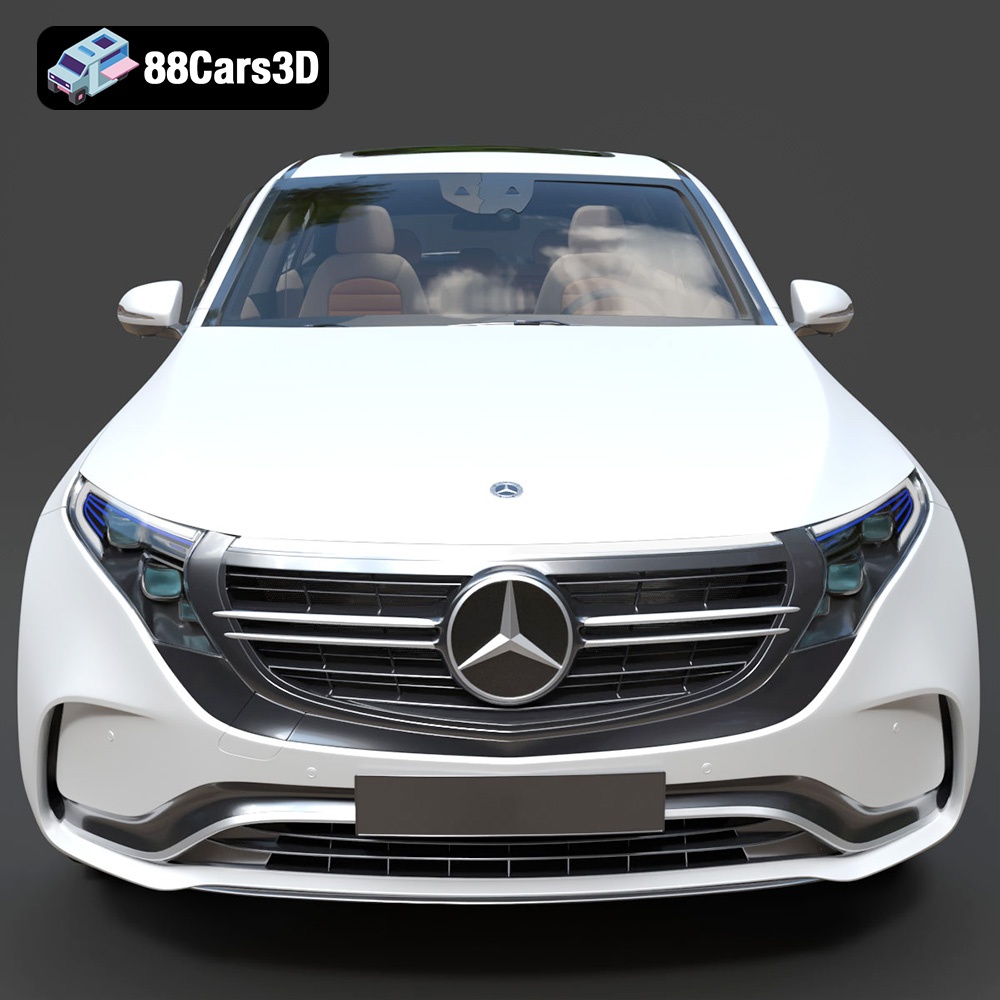
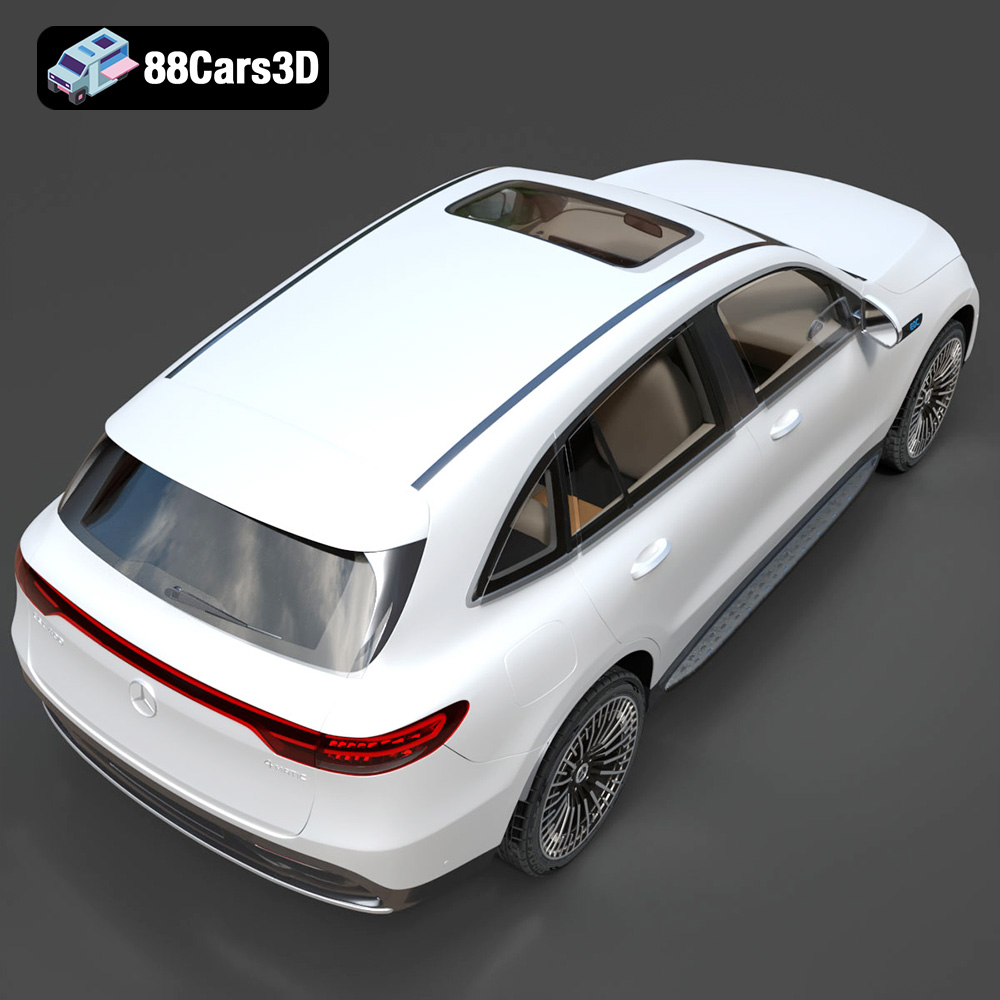
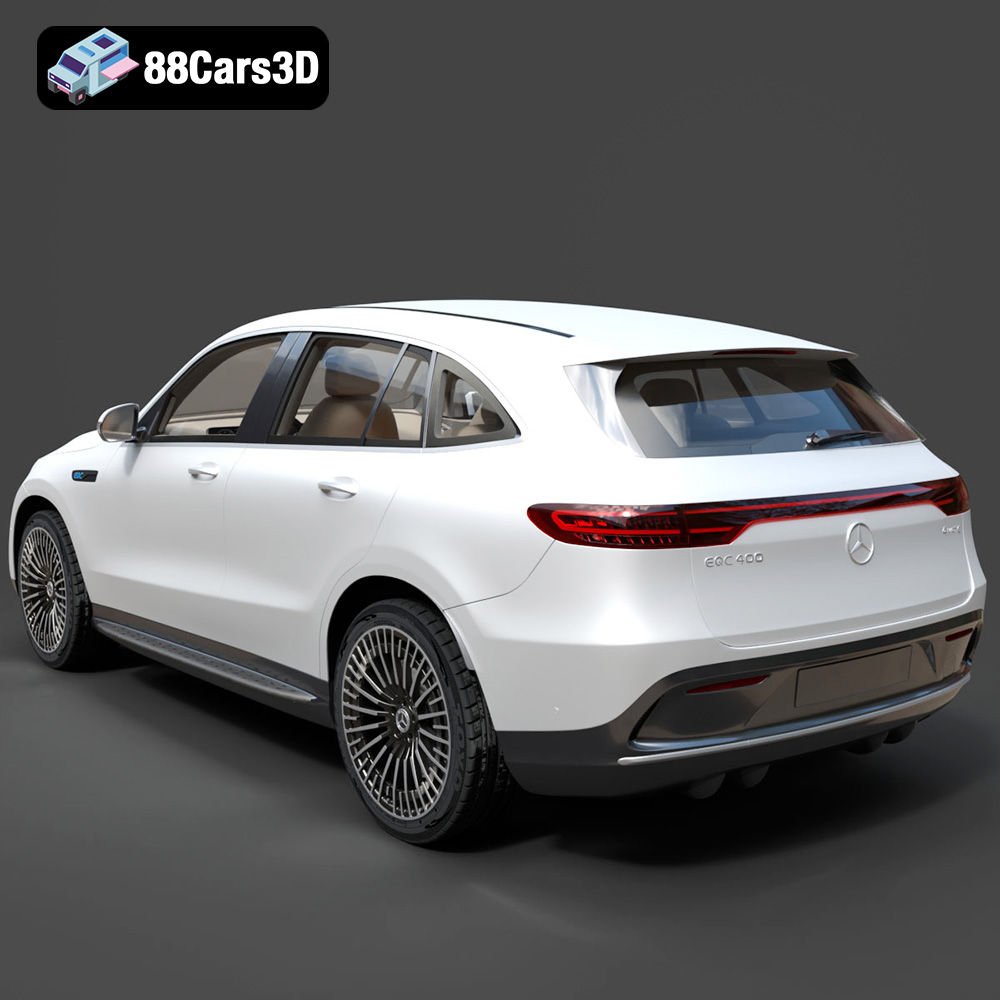
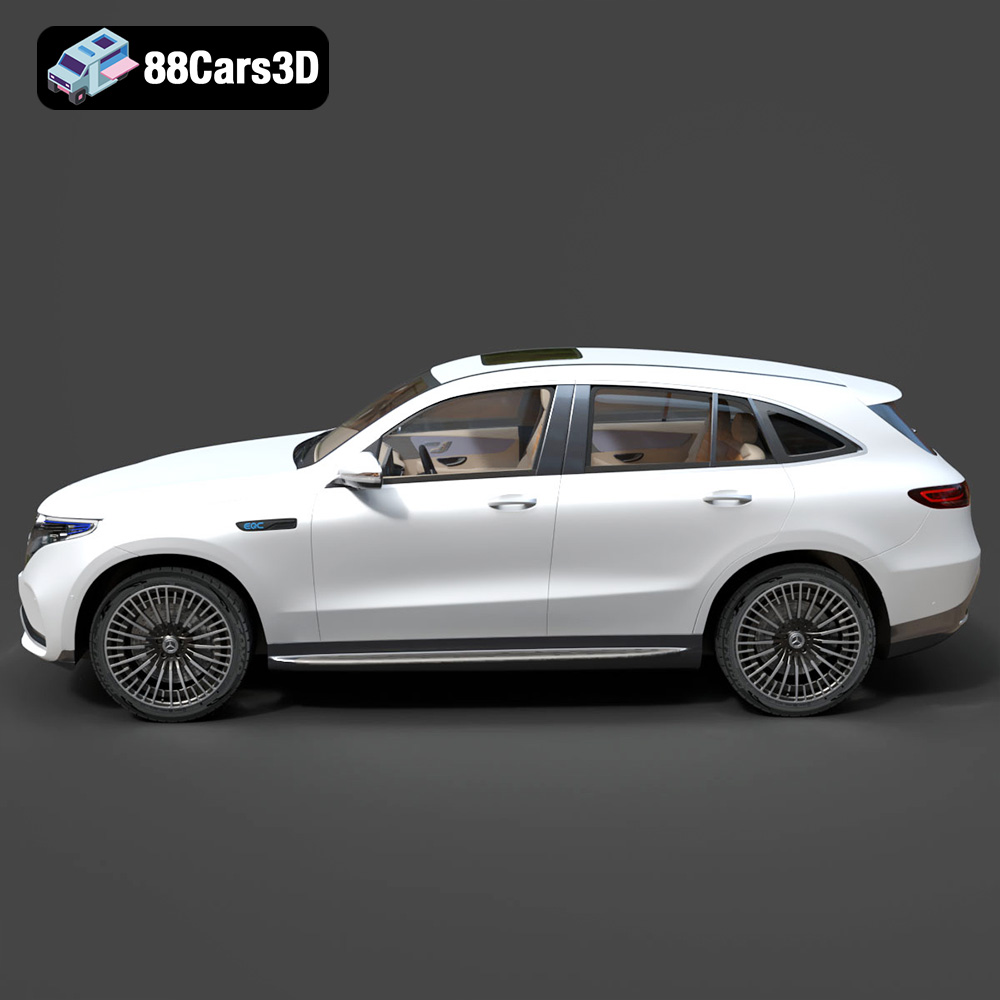
Every aspect of the Mercedes-Benz EQC’s distinctive design has been painstakingly replicated in this 3D model. From the exterior, you’ll find accurate chassis geometry and proportions, mirroring the real vehicle. The aerodynamic underbody and front fascia design, crucial elements of an EV, are rendered in exquisite detail, as are the absence of traditional exhaust systems. The EQC’s signature continuous LED light bands, distinctive multibeam headlights, and unique taillights are precisely modeled, ready to illuminate any scene. The aero-optimized multi-spoke alloy wheels are paired with realistic tire treads, and even the independent suspension details are present, making it ideal for realistic animations of driving dynamics. Inside, the “cockpit and interior features” are equally impressive. Premium contoured seats boast realistic upholstery flow, while the multifunction steering wheel includes detailed touch control buttons. The widescreen cockpit dual-display instrument cluster and MBUX interface are faithfully recreated, alongside a detailed central console, pedals, and intuitive EV drive selectors. This level of interior detail is especially valuable for first-person POV shots in gaming or VR, where immersion is paramount, making it an invaluable asset for any project requiring detailed automotive rendering.
A high-quality 3D car model is a versatile tool, designed to integrate seamlessly into diverse professional pipelines. The Mercedes-Benz EQC 3D Model offers not just visual fidelity but also the technical specifications to empower a wide range of creators, from game developers to architects.
For game developers, the EQC model is a genuine “game-ready” asset. Its optimized polycount, while high for visual fidelity, is meticulously balanced to ensure smooth performance in demanding real-time environments like Unreal Engine and Unity. The inclusion of an .fbx file, along with the specific .unreal designation, streamlines the import process. Developers can confidently bring the EQC into their game world, knowing it’s built with proper pivot setups for steering, wheel rotation, and suspension travel, essential for creating realistic driving mechanics. This allows for immediate implementation in open-world games, high-stakes racing titles, and immersive driving simulators, elevating the visual quality of interactive experiences. For instance, in an open-world urban exploration game, the EQC could serve as a premium player vehicle, or in a futuristic racing title, its distinctive design could provide unique gameplay aesthetics. The precise internal details also mean it’s ready for first-person camera perspectives, crucial for full immersion in a driving game.
In the realm of architectural visualization (arch-viz) and cinematic production, the Mercedes-Benz EQC 3D Model shines as a hero asset. Professionals using 3ds Max can utilize the native .max file for complete control over modifiers, materials, and rendering settings with V-Ray or Corona. Blender users benefit from the .blend file, allowing them to leverage Cycles or Eevee for stunning photorealism. For others, the robust .fbx or universal .obj formats ensure compatibility. Imagine the EQC elegantly parked outside a luxurious modern home in an arch-viz render, or gliding through a futuristic cityscape in a car commercial. Its high-fidelity geometry ensures flawless reflections on its glossy surfaces, crucial for convincing visual storytelling in automotive rendering. The detailed interior makes it suitable for interior shots or virtual showroom experiences where clients can explore the car’s luxurious cockpit. This model is engineered to withstand extreme close-ups, making it perfect for brand campaigns and studio lighting setups.
The future of product showcase is increasingly interactive, driven by Augmented Reality (AR) and Virtual Reality (VR). The EQC model is perfectly poised for these applications, particularly with its included .glb format. This highly optimized format is ideal for efficient loading and display in AR/VR configurators, mobile AR experiences, and web-based 3D viewers. Whether it’s a prospective buyer exploring the EQC’s features on their smartphone via AR, or experiencing a full-scale virtual showroom in VR, the model’s performance and visual quality remain paramount. Developers can integrate the EQC into immersive virtual showrooms, allowing users to customize colors, explore features, and even “sit inside” the car in a truly interactive and engaging manner. This capability transforms static product images into dynamic, memorable experiences that drive engagement and sales for automotive brands.
The utility of a comprehensive 3D car model extends beyond digital screens. For engineers, hobbyists, and product designers, the ability to translate a virtual model into a tangible object is a powerful asset. The Mercedes-Benz EQC 3D Model provides the necessary components for this transition, offering capabilities for both physical prototyping and precise analysis.
The inclusion of the .stl format makes the Mercedes-Benz EQC 3D Model ready for 3D printing. This means enthusiasts can produce physical scale models, designers can create prototypes for physical analysis, or educators can craft teaching aids. The product description provides specific 3D print settings, which are crucial for achieving successful results. Recommended scales like 1:12, 1:18, or 1:24 allow for various display sizes. Critical advice such as using a layer height of 0.04–0.12 mm and recommending resin printing for fine details ensures that the intricate curves and small components of the EQC, like mirrors and the steering wheel, are accurately reproduced. Practical guidance on wall thickness, infill, and the necessity of supports for overhangs further aids the printing process. The suggestion to print the frame angled for structural integrity and wheels separately is a hallmark of expert advice, ensuring a robust and detailed final print. Post-processing, including sanding, primer, and applying authentic factory colors with metallic finishes, allows for a truly professional and display-worthy miniature of this luxury electric vehicle.
While often associated with 3D scanning, the .ply (Polygon File Format) also plays a role in precision analysis and CAD workflows. For tasks requiring highly accurate mesh data beyond simple visualization, such as reverse engineering, quality control, or scientific analysis of geometry, the .ply format offers a robust solution. It can store not just vertex positions but also additional attributes like color, normal vectors, and even transparency per vertex or face. While perhaps less common for direct use of this specific model in production, its inclusion ensures that the EQC’s geometric data is available in a format suitable for highly specialized engineering or analytical software, highlighting the comprehensive nature of the asset package from 88cars3d.com.
Investing in a high-quality 3D car model is an investment in versatility and longevity. The Mercedes-Benz EQC 3D Model is built with customization in mind, ensuring it remains a valuable asset for years to come, adapting to evolving project requirements and creative visions.
The true power of a meticulously structured 3D model lies in its adaptability. The EQC model provides extensive customization options, allowing artists and designers to truly make it their own. This includes the ability to effortlessly change body and “tank” (referring to the vehicle’s “fuel” or battery compartment area for styling purposes) colors to match specific brand aesthetics or client preferences, from authentic factory colors to custom metallic or matte finishes. The flexibility extends to modifying tire textures, enabling the swap between street variants for sleek urban scenes and potentially off-road textures for more adventurous visualizations, although the EQC is primarily an urban luxury SUV. Adjusting material finishes for various parts—headlights, trim, interior elements—allows for nuanced aesthetic control, from glossy reflections to subtle matte textures. Furthermore, the model’s design facilitates the adaptation of lighting for different environments, whether it’s the warm glow of a sunset, the starkness of a studio, or the ambient light of an open-world game. This level of granular control, supported by logically separated parts and clean topology, empowers creators to integrate the EQC seamlessly into any scene, ensuring it complements the overall artistic direction.
In a fast-paced industry, time is a critical resource. Sourcing high-quality, pre-built game assets and visualization models like the Mercedes-Benz EQC 3D Model saves countless hours that would otherwise be spent on modeling, texturing, and optimization. This allows creative teams to focus on iteration, refinement, and other high-value tasks, significantly accelerating project timelines. Furthermore, an asset of this caliber, with its diverse file format support and optimized geometry, is inherently future-proof. It remains relevant and usable across new software versions, evolving rendering technologies, and emerging platforms like advanced AR/VR hardware. Choosing premium 3D car models from reputable sources like 88cars3d.com ensures that you are investing in assets that not only meet your immediate project needs but also continue to provide value and flexibility for future endeavors, upholding consistent quality and realism across your entire portfolio.
The Mercedes-Benz EQC represents the pinnacle of electric luxury, and its digital counterpart, the Mercedes-Benz EQC 3D Model, is a truly exceptional asset for any professional in 3D visualization, game development, or design. From its meticulously detailed exterior and interior to its optimized geometry and comprehensive file format support, this model is engineered for excellence across every application.
Whether you are producing stunning automotive rendering for a marketing campaign, integrating a highly realistic vehicle into an immersive open-world game, developing an interactive AR configurator, or even crafting a physical collectible through 3D printing, this EQC model provides the robust foundation you need. Its versatility, technical precision, and ease of customization ensure that it will not only meet but exceed the demands of your most ambitious projects.
By choosing high-quality 3D car models from trusted marketplaces like 88cars3d.com, professionals can unlock unparalleled efficiency and elevate the realism and impact of their digital creations. Embrace the future of automotive design and enhance your workflow with the Mercedes-Benz EQC 3D Model—a truly indispensable tool for the modern digital artist and developer.
Experience the future of luxury mobility with this exceptionally detailed 3D model of the Mercedes-Benz EQC. As the pioneer of the Mercedes-EQ family, this fully electric SUV combines avant-garde styling with legendary Mercedes craftsmanship. The model accurately captures its seamless, aerodynamic silhouette, the signature black-panel radiator grille, and the distinctive continuous LED light bands at the front and rear that define its striking electro-aesthetic. Boasting a highly detailed topology with a triangle count of 4,139,580, this high-fidelity 3D model offers unparalleled visual realism suitable for extreme close-ups while maintaining logical part separation for optimization. The geometry ensures flawless reflections and smooth surfaces, making it an exceptional asset for high-end rendering, virtual showrooms, and advanced interactive experiences. Perfect for cinematic automotive renders, cutting-edge AR/VR configurators, luxury lifestyle visualizations, and high-fidelity racing simulations.
$90.00
.blend
.eqc
.fbx
.glb
.max
.obj
.ply
.rendering
.stl
.unreal
car-3d-model
electric-vehicle
game asset
game-ready
high poly
luxury car
mercedes-benz
optimized
SUV
VR/AR