Get 20% OFF All Premium 3D & STL Models!

In the dynamic world of 3D content creation, the pursuit of photorealism and technical precision is paramount. For automotive enthusiasts, game developers, architects, and visual artists, a meticulously crafted 3D car model is more than just an asset; it’s the foundation upon which captivating experiences are built. Few vehicles embody the fusion of timeless design and raw power quite like the Mercedes-Benz SLR-08. This grand tourer, a modern homage to a legendary racer, demands an equally impressive digital representation. Today, we’re taking an in-depth look at how a premium asset like the Mercedes-Benz SLR-08 3D Model elevates professional projects across various industries, from high-fidelity rendering to real-time game development and beyond.
Crafting a digital twin of such an iconic vehicle requires an understanding of intricate geometries, material science, and the specific demands of diverse software environments. This particular model, available on 88cars3d.com, stands out for its exceptional detail, clean topology, and multi-format compatibility, making it an indispensable tool for anyone aiming for the pinnacle of digital automotive artistry. Let’s explore the technical nuances and creative possibilities it offers.
The versatility of a 3D model often hinges on its compatibility with various software and platforms. Understanding the nuances of different file formats is crucial for optimizing workflows and ensuring that a high-quality asset like the Mercedes-Benz SLR-08 3D model can be seamlessly integrated into any project. Each format serves a specific purpose, offering unique advantages for particular applications, whether it’s for game development, high-end rendering, or even 3D printing.
The .blend format is native to Blender, a powerful open-source 3D creation suite. When you receive a .blend file, you’re getting a fully editable scene, complete with materials, textures, lighting, camera setups, and even animation data if present. For the Mercedes-Benz SLR-08 model, a .blend file provides the ultimate flexibility for artists who use Blender as their primary DCC (Digital Content Creation) tool. You can easily modify geometry, adjust shaders, re-rig components, or tweak the scene environment directly within Blender, making it ideal for custom automotive rendering projects or adding unique flair to the vehicle.
The .fbx (Filmbox) format is arguably the most widely adopted interchange format in the 3D industry, particularly for game development. Developed by Autodesk, FBX excels at preserving a wide range of data, including geometry (meshes), materials, textures, animations, skinning, and camera information. It’s the go-to format for importing 3D car models into real-time engines like Unreal Engine and Unity, thanks to its robust support for hierarchical data and animation. For assets like the game-ready Mercedes-Benz SLR-08, an FBX file ensures that all separated components (wheels, doors, suspension) and their pivot points are correctly transferred, facilitating animation and physics setup in a game environment.
The .obj (Wavefront Object) format is a universal standard for storing 3D geometry. It’s renowned for its simplicity and wide compatibility, making it an excellent choice for cross-software data exchange. An OBJ file primarily stores vertex positions, UV coordinates, normals, and polygonal faces. While it doesn’t typically embed animation or advanced material properties, it often comes accompanied by an .mtl (Material Template Library) file, which defines basic material attributes and references texture maps. For the Mercedes-Benz SLR-08, the .obj format provides a clean, raw mesh that can be imported into virtually any 3D software for texturing, rendering, or further refinement, offering a reliable fallback for maximum compatibility.
The .glb (GL Transmission Format Binary) is an increasingly popular format, especially for AR (Augmented Reality), VR (Virtual Reality), and browser-based 3D applications. It’s a binary version of the glTF format, designed to be compact and self-contained, embedding all textures and animations directly into a single file. This “asset delivery format” is optimized for fast loading and efficient rendering on web platforms and mobile devices, making it perfect for interactive virtual showrooms or product configurators featuring the Mercedes-Benz SLR-08. Its efficiency allows for smooth, real-time experiences even on less powerful hardware.
The .stl (Stereolithography) format is the de facto standard for 3D printing. It represents a 3D model as a collection of triangles, defining only the surface geometry without color, texture, or other CAD attributes. For hobbyists or professionals looking to bring the Mercedes-Benz SLR-08 into the physical world, an STL file is essential for preparing the model for additive manufacturing. Similarly, .ply (Polygon File Format) is another precision mesh format often used for storing 3D scanned data or models requiring highly accurate surface definitions, suitable for CAD applications or detailed analysis where mesh integrity is paramount. While both focus on geometry, .ply can store more data types like color per vertex or additional properties, offering a richer representation for certain engineering or scientific contexts.
The .unreal format typically refers to an asset that is either packaged specifically for Unreal Engine or already imported and configured within an Unreal Engine project, often in the form of a .uasset file. These are engine-ready assets, pre-optimized and set up with materials, collisions, and other properties tailored for the Unreal ecosystem. For developers, this means a near plug-and-play experience with the Mercedes-Benz SLR-08 in Unreal Engine. The .max format is proprietary to Autodesk 3ds Max, one of the leading software packages for architectural visualization, animation, and high-end rendering. A .max file contains the entire scene data, offering full editability within 3ds Max, similar to a .blend file for Blender users. It allows for advanced rigging, complex material setups, and cinematic animation production, making it ideal for studio professionals who utilize 3ds Max in their pipelines.
Creating a high-fidelity 3D car model is an intricate blend of artistic vision and technical precision. It’s about more than just replicating a vehicle’s form; it’s about capturing its essence, its mechanical integrity, and its visual presence in a digital realm. For a supercar like the Mercedes-Benz SLR-08, this challenge is amplified by its iconic status and complex design language.
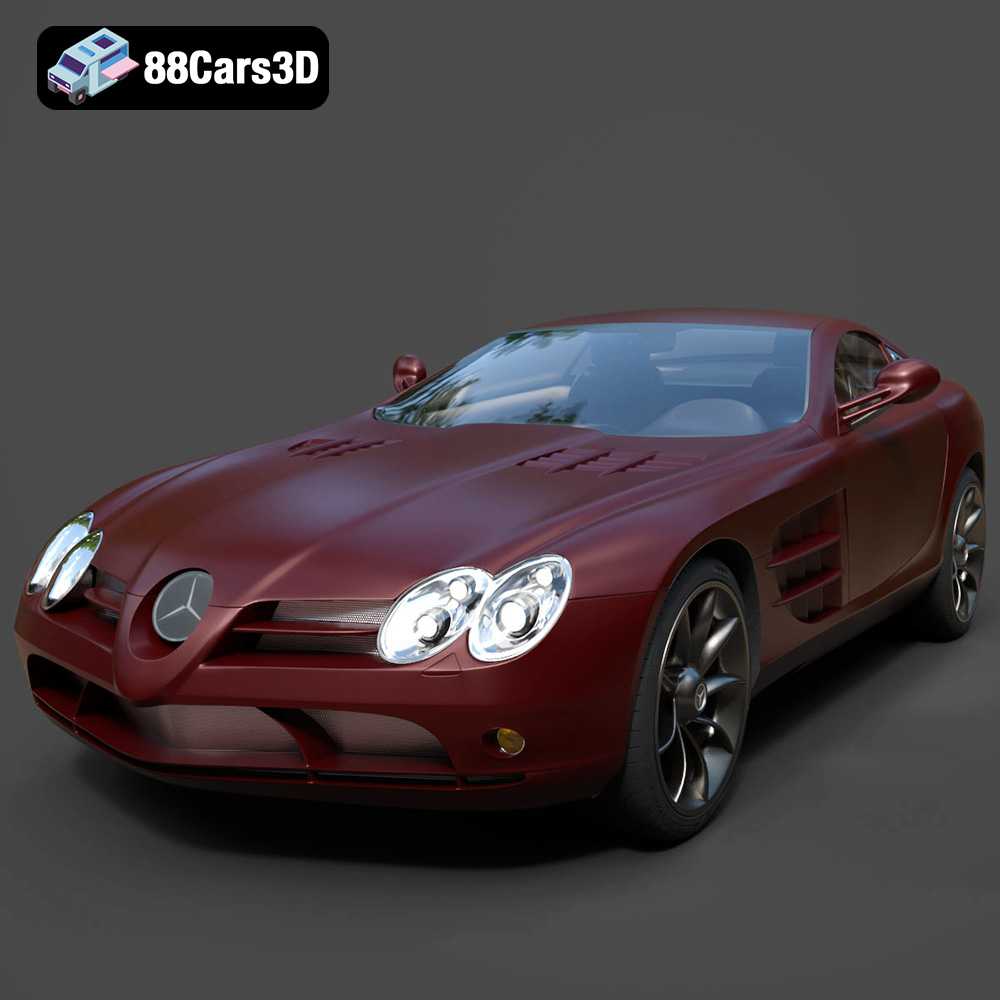
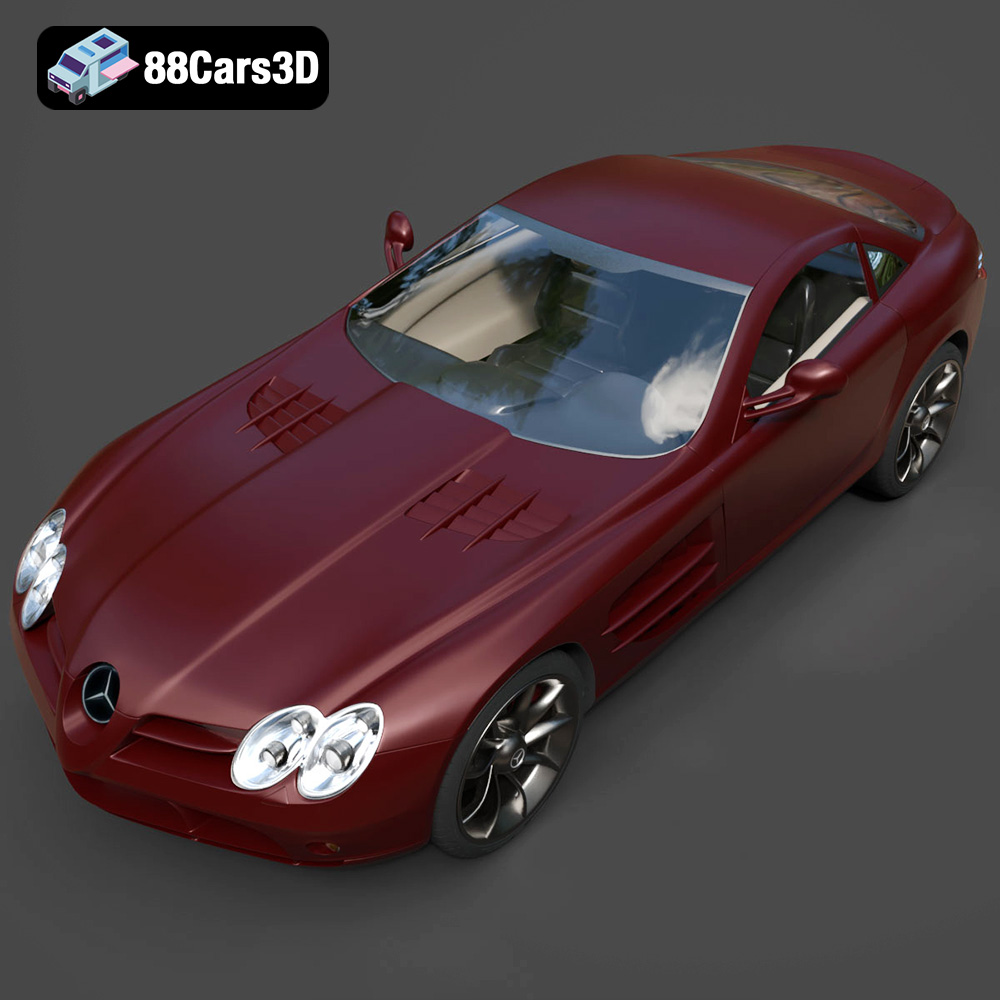
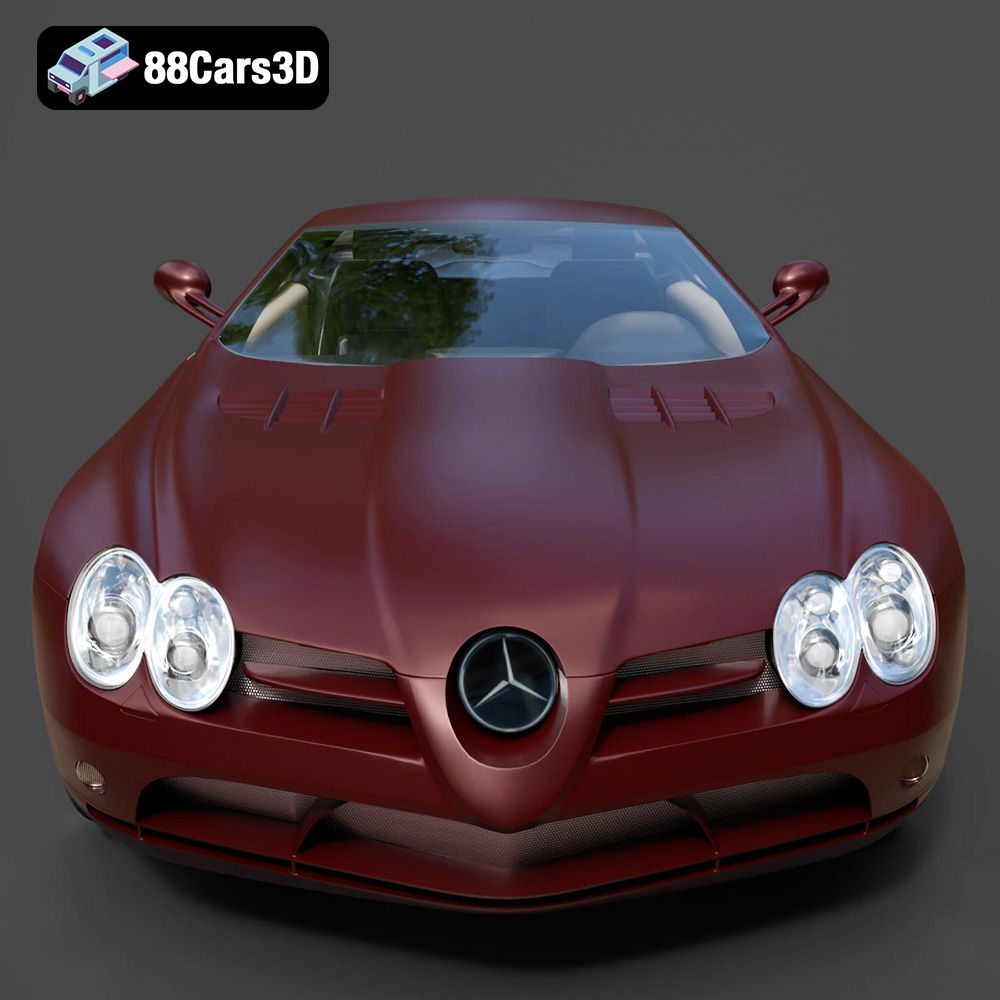
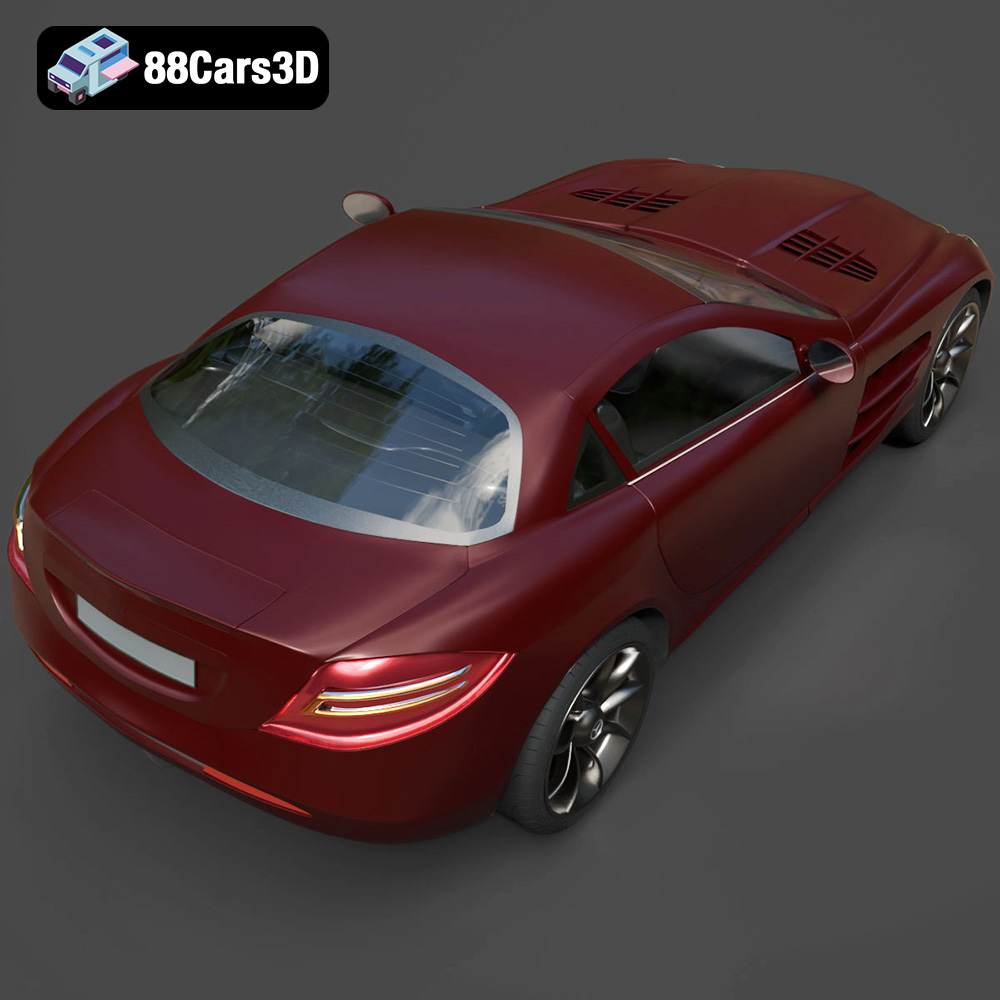
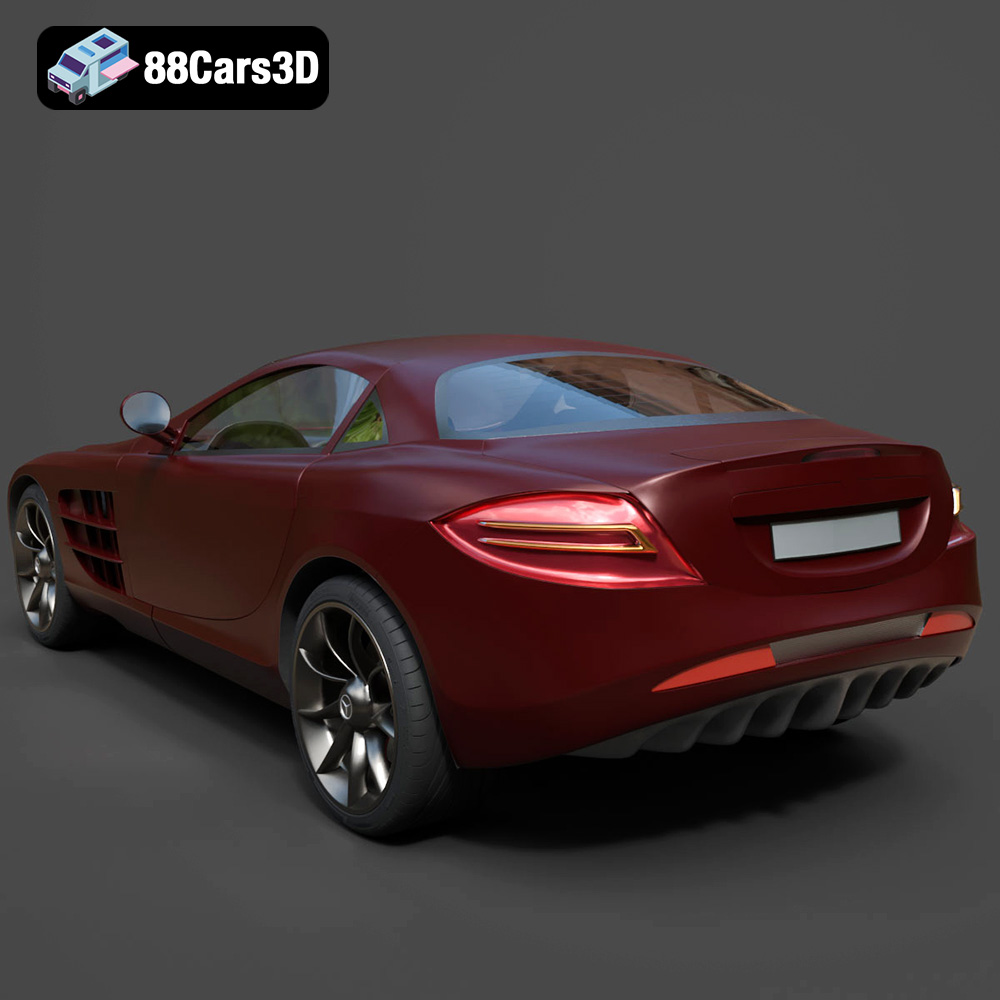
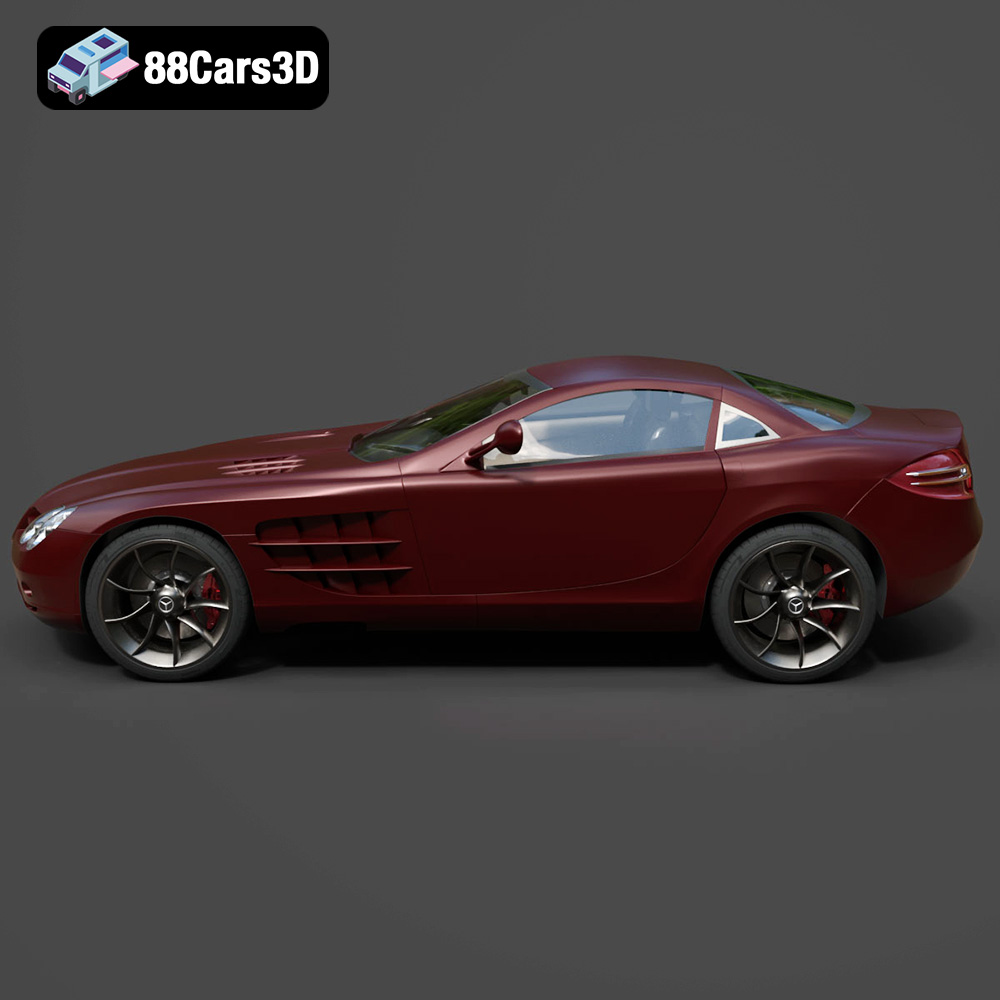
The Mercedes-Benz SLR-08 is a masterpiece of automotive design, characterized by its elongated hood, striking gullwing doors, and Formula 1-inspired aesthetics. Translating these features into a 3D model requires meticulous attention to detail. The model available at 88cars3d.com achieves this by accurately reproducing the vehicle’s frame geometry and proportions, ensuring that every curve and crease aligns with the real-world counterpart. From the distinctive twin-pod headlights to the signature side-exit exhaust system and turbine-style alloy wheels, no element is overlooked. This dedication to accuracy makes the SLR-08 3D model an exceptional benchmark for photorealistic automotive rendering and visualization projects.
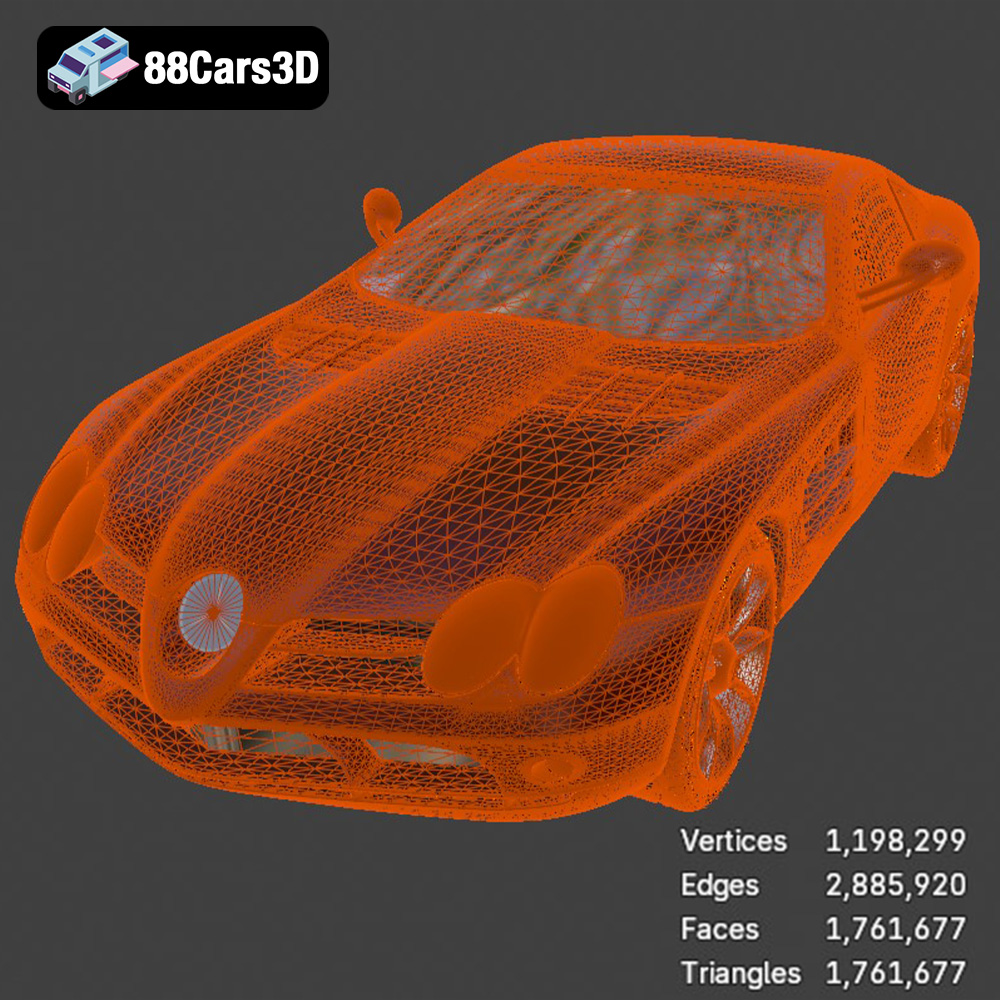
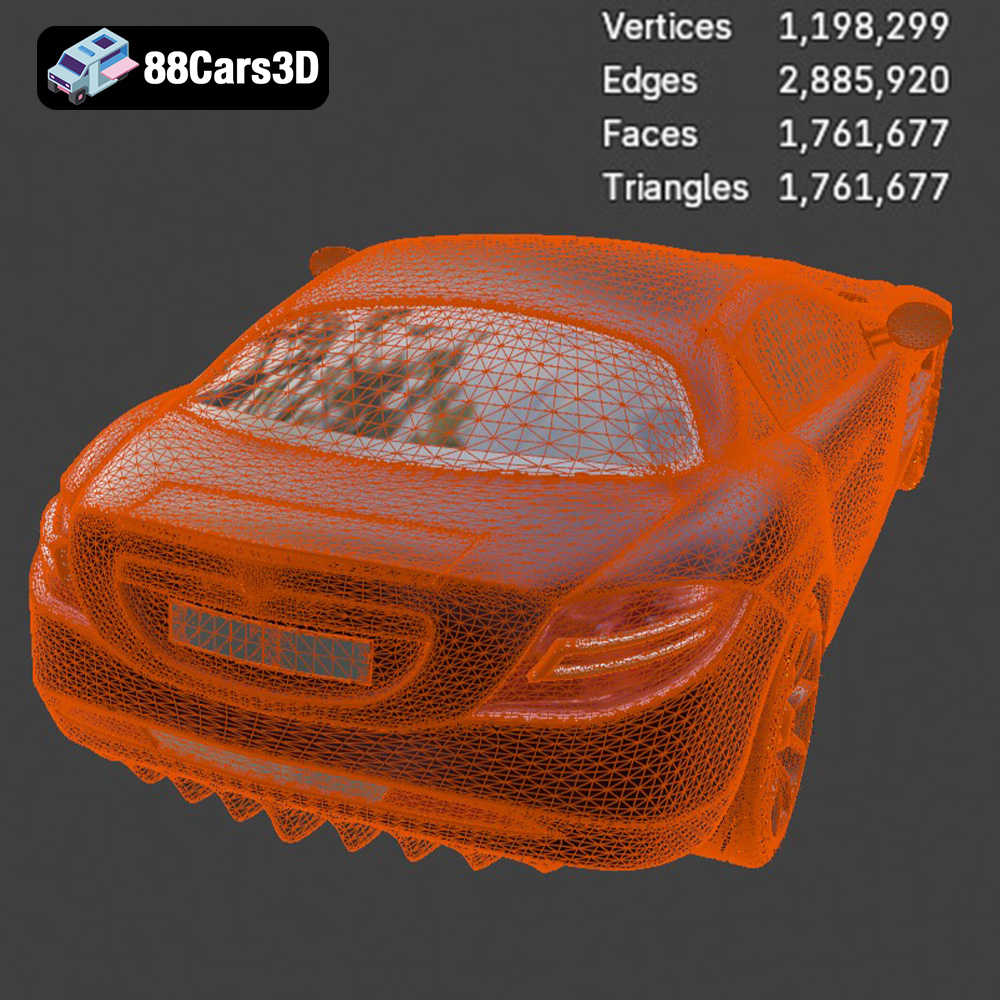
A critical aspect of a professional 3D model is its topology – the arrangement of polygons. Clean topology is essential for smooth deformations, efficient UV unwrapping, and optimal performance, especially in real-time applications. The Mercedes-Benz SLR-08 3D model boasts a triangle count of 1,761,677. This figure strikes a perfect balance: high enough to ensure unparalleled visual fidelity for close-up renders and detailed cinematic sequences, yet optimized to function efficiently in game engines like Unreal and Unity without excessively taxing system resources. The geometry is clean, ensuring that sub-division surfaces can be applied smoothly if even higher detail is required for extreme close-ups, while the raw polycount is well-suited for game-ready performance.
The true value of a versatile 3D asset lies in its adaptability across various professional pipelines. The Mercedes-Benz SLR-08 3D model is engineered to seamlessly integrate into diverse workflows, offering creators immense flexibility.
For game developers, integrating a detailed vehicle like the Mercedes-Benz SLR-08 requires more than just a good mesh. It demands a “game-ready” asset. This model’s optimized polycount (1,761,677 triangles) is ideal for open-world games, racing titles, and high-fidelity simulators. Furthermore, its separate wheels, suspension, and steering components, along with proper pivot setups, are crucial for implementing realistic physics, complex animations, and interactive gameplay. Imagine the SLR-08 roaring through a virtual city in Unreal Engine, its active rear airbrake deploying dynamically, or performing drifts with realistic wheel articulation. The included .fbx and .unreal formats significantly streamline the import process, allowing developers to quickly move from asset acquisition to in-engine implementation, saving valuable production time.
In the realm of automotive rendering and visualization, photorealism is the ultimate goal. Artists using software like 3ds Max or Blender will find the Mercedes-Benz SLR-08 3D model to be an exceptional starting point. The included .max and .blend files provide full editability, allowing render artists to fine-tune materials, lighting, and camera angles to perfection. From showcasing the intricate stitching on the carbon-fiber bucket seats to highlighting the polished tips of the side-exit exhausts under studio lighting, the model’s high level of detail ensures that every render tells a compelling story. Its real-world scale accuracy further aids in creating believable compositions, whether for brand campaigns, lifestyle scenes, or architectural visualizations where a luxury vehicle adds contextual richness.
The advent of AR and VR technologies has opened new avenues for automotive visualization. The Mercedes-Benz SLR-08 3D model is perfectly suited for creating immersive virtual showrooms, interactive configurators, and mobile AR experiences. The .glb format, optimized for these applications, ensures efficient loading and smooth real-time performance. Users can virtually walk around the SLR-08, open its gullwing doors, explore the detailed cockpit in first-person view, or even customize its body colors and material finishes in a dynamic, engaging environment. This capability is invaluable for marketing, sales, and educational purposes, offering a level of interaction previously unattainable.
Beyond its aesthetic appeal, the Mercedes-Benz SLR-08 3D model offers a host of technical advantages that make it a robust and flexible asset for demanding projects.
The exterior of the SLR-08 model is a testament to precision modeling, accurately reproducing the aerodynamic hood, the unique twin-pod headlights, and the iconic gullwing doors. Underneath the sweeping hood, a detailed supercharged V8 engine block is faithfully recreated, adding an extra layer of realism that is crucial for close-up inspections or even engine bay animations. The interior, too, reflects exceptional fidelity, featuring premium contoured carbon-fiber bucket seats, an aircraft-inspired center console, and a custom steering wheel. The driver-focused instrument cluster with highly detailed dials and accurate control details, including pedals, levers, and the iconic starter button on the shifter, ensures that the cockpit is fully optimized for first-person POV in gaming or detailed interior renders.
For any interactive or animated project, the ability to manipulate individual parts of a vehicle is essential. The Mercedes-Benz SLR-08 3D model excels in this regard, with separate wheels, suspension, and steering components. Crucially, proper pivot setups are established for steering, wheel rotation, and suspension travel. This means animators can easily rig the model for complex driving sequences, suspension compression, or wheel spins without extensive setup. The active rear airbrake spoiler can also be animated, adding dynamic realism to any high-speed scene. This pre-configured readiness significantly reduces the time and effort typically associated with preparing a vehicle for animation or simulation.
A professional asset should also offer room for creative customization. The SLR-08 model is designed with adaptability in mind. Users can easily change body colors, applying authentic factory shades or experimenting with custom finishes like matte, gloss, or metallic effects. Tire textures can be modified to switch between off-road and street variants, further expanding its application range. Material finishes can be adjusted across various components, and lighting can be adapted for different environments, from a sun-drenched desert road to a moody, rain-soaked city street. This flexibility ensures that the model can be tailored to meet the specific artistic and technical requirements of virtually any project.
The journey of a 3D model isn’t always confined to the digital screen. With the rise of affordable 3D printing, high-quality models can transition into tangible objects. The Mercedes-Benz SLR-08 3D model, specifically through its .stl format, offers an exciting opportunity for enthusiasts and model makers to own a physical representation of this automotive icon.
The .stl file format is optimized for additive manufacturing, encoding the model’s surface geometry as a series of interconnected triangles. While the digital model is incredibly detailed, preparing it for 3D printing involves considering physical constraints. The recommended scale of 1:12, 1:18, or 1:24 provides a good balance between detail retention and manageable print size. It’s crucial to understand that features like the detailed engine block or interior components might require support structures during printing to prevent sagging or collapse. The model’s optimized geometry, however, provides a solid foundation, minimizing potential printing issues.
For optimal results when 3D printing the Mercedes-Benz SLR-08, using resin printing is highly recommended, especially for fine details like exhaust tips, mirrors, or intricate interior elements, as it allows for much finer layer heights (0.04–0.12 mm) compared to FDM printing. Recommended wall thickness ranges from 1.2–2.0 mm, with an infill of 20–30% to ensure structural integrity without excessive material usage. Print orientation is also key: printing the main frame angled can enhance strength, while wheels should be printed separately for better detail and easier assembly. Post-processing, including sanding, priming, and painting with authentic factory colors and metallic finishes, transforms the raw print into a stunning miniature display model, a physical testament to the digital craftsmanship found on 88cars3d.com.
The Mercedes-Benz SLR-08 is more than just a car; it’s a statement of performance and luxury. Its digital counterpart, the Mercedes-Benz SLR-08 3D Model, reflects this same commitment to excellence. From its meticulously recreated exterior and interior features to its animation-ready components and multi-format compatibility, this model stands as a premium asset for any professional or enthusiast.
Whether you’re developing the next-generation racing simulator, crafting breathtaking automotive visualizations, designing immersive AR/VR experiences, or even bringing a piece of digital art into the physical world through 3D printing, this model provides the foundational quality and versatility you need. It represents a significant investment in your creative toolkit, offering unparalleled detail and optimization for a wide array of applications. Explore the possibilities and elevate your projects with this exceptional 3D car model, available now at 88cars3d.com.
Experience the pinnacle of automotive engineering with the Mercedes-Benz SLR-08, a striking grand tourer that pays homage to the legendary 300 SLR. This iconic vehicle is renowned for its breathtaking design, featuring an elongated aerodynamic hood, striking gullwing doors, and signature side-exit exhaust pipes. Powered by a supercharged V8 engine, the SLR-08 perfectly blends Formula 1-inspired technology with uncompromised luxury, making it a timeless masterpiece of performance and style. This premium 3D model boasts an exceptional level of detail with a triangle count of 1,761,677, ensuring unparalleled visual fidelity for close-up renders while maintaining a clean topology. Engineered for versatility, it is meticulously optimized for game development, high-end animation, AR/VR applications, and photorealistic visualization. The model captures every curve and crease of the real vehicle, providing creators with a digital twin that elevates any project. Perfect for luxury virtual showrooms, high-octane racing simulators, architectural visualizations, and cinematic automotive animations.
$81.99
.blend
.fbx
.glb
.max
.obj
.ply
.rendering
.sports car
.stl
.supercar
.unreal
car-3d-model
game asset
game-ready
grand-tourer
low-poly
mercedes-benz
optimized
slr-08
VR/AR