Get 20% OFF All Premium 3D & STL Models!

In the dynamic world of 3D visualization, the demand for highly realistic, optimized, and versatile assets is ever-growing. From blockbuster game titles to intricate architectural visualizations and immersive AR/VR training simulations, high-quality 3D models form the bedrock of compelling digital experiences. While 3D car models and automotive rendering often capture the spotlight, the realm of heavy machinery and industrial equipment presents equally complex and crucial challenges for 3D artists.
Creating these detailed industrial assets from scratch can be an incredibly time-consuming and resource-intensive endeavor. It requires not only artistic skill but also a deep understanding of engineering principles, material science, and optimization techniques. This is where pre-made, professionally crafted 3D models become invaluable. Today, we’re taking a closer look at a prime example of such an asset: the Articulated Tandem Road Roller Dusty 3D Model. This particular model, available on 88cars3d.com, encapsulates the rugged essence and heavy-duty presence of essential construction machinery, offering a perfect blend of visual fidelity and performance optimization for a wide range of professional applications.
Navigating the landscape of 3D modeling often involves choosing the right file format for your specific project needs. Each format offers unique advantages regarding compatibility, data retention, and optimization. Understanding these differences is crucial for any professional working with 3D car models, industrial assets, or game assets. The Articulated Tandem Road Roller Dusty 3D Model from 88cars3d.com comes equipped with a comprehensive suite of formats, ensuring maximum versatility.
The .blend format is the native file type for Blender, an incredibly powerful and popular open-source 3D creation suite. A .blend file typically contains the entire Blender scene, including mesh data, materials, textures, lighting setups, cameras, animation data, rigging, modifiers, and even custom scripts. This makes it an ideal choice for Blender users who need full editability and control over every aspect of the model. For the Articulated Tandem Road Roller, the .blend file would allow artists to dive deep into its construction, modify components, adjust PBR materials directly within Blender’s node editor, or integrate it seamlessly into a larger Blender project without any conversion losses.
.fbx (Filmbox) is a proprietary file format developed by Autodesk, renowned for its robust support across various 3D software and game engines. It’s often considered the gold standard for transferring 3D data because it can store not only mesh geometry but also hierarchies, animation, skinning, camera, and lighting information. This makes it exceptionally suitable for pipelines involving multiple software packages like 3ds Max, Maya, Cinema 4D, and critically, game engines like Unreal Engine and Unity. When importing the road roller as an .fbx, artists can expect its structural integrity, pivot points for articulation, and basic material assignments to transfer reliably, making it an excellent format for setting up dynamic game assets.
The .obj (Wavefront Object) format is one of the oldest and most universally supported 3D file formats. It’s a simple, text-based format primarily used for transferring geometric data, including vertices, faces, normals, and UV coordinates. While it doesn’t typically store animation, rigging, or complex material definitions (it refers to an accompanying .mtl file for basic material properties), its widespread compatibility makes it a safe bet for basic mesh exchange between virtually any 3D software. For the Articulated Tandem Road Roller, the .obj file serves as a reliable fallback for static renders or for importing into software that might not fully support more advanced formats.
.glb (GL Transmission Format Binary) is the binary version of glTF, an increasingly popular, open-standard file format designed for efficient transmission and loading of 3D scenes and models by engines and applications. What makes .glb stand out is its “self-contained” nature: it bundles all necessary assets (model, textures, animations, PBR materials) into a single file. This optimization is crucial for web-based 3D viewers, augmented reality (AR), and virtual reality (VR) applications, where quick loading times and seamless integration are paramount. The Articulated Tandem Road Roller .glb file is therefore perfect for immersive safety training modules or virtual product showcases.
The .stl (STereoLithography) format is the industry standard for 3D printing. It represents a 3D model as a series of connected triangles (a tessellation of the surface). Critically, .stl files contain only geometric information – no color, texture, or unit data. This makes it simple and efficient for conveying the shape to 3D printers. For the road roller, the .stl file allows hobbyists and professionals alike to bring the digital model into the physical world, creating display-scale models or components for dioramas. While it loses aesthetic data, its precision for additive manufacturing is unmatched.
.ply (Polygon File Format) is another mesh format capable of storing a wider range of properties than .obj or .stl. It can include color, transparency, surface normals, texture coordinates, and other data per vertex or per face. While not as universally adopted as .obj or .fbx, .ply is commonly used for storing 3D scan data, scientific visualizations, and applications where precise geometric and property information is critical, such as certain CAD workflows or mesh analysis tools. Its inclusion for the road roller signifies attention to detail for engineers or specific analytical uses.
The .unreal format, or assets specifically packaged and optimized for Unreal Engine, streamlines the process of integrating complex models into game environments. While often referring to .fbx files configured for Unreal, it can also imply assets with pre-setup materials, collision meshes, or even basic Blueprints (Unreal’s visual scripting system) for immediate functionality. For the Articulated Tandem Road Roller, an .unreal-ready asset means reduced setup time within the engine, allowing developers to focus on gameplay and scene composition rather than asset preparation.
Similar to .blend for Blender, the .max format is the native scene file for Autodesk 3ds Max, a leading software for 3D modeling, animation, rendering, and visual effects. An .max file contains the complete scene, including all models, lights, cameras, materials (often V-Ray or Corona specific), animations, and modifiers. This format is essential for professionals who rely on 3ds Max for high-end rendering, complex animation sequences, or detailed architectural and industrial visualizations. The road roller’s .max file provides full flexibility for intricate scene setup and advanced rendering techniques.
The Articulated Tandem Road Roller Dusty 3D Model stands out as a testament to meticulous craftsmanship and technical foresight. It’s not just a model; it’s a carefully engineered digital asset designed to meet the rigorous demands of various industries.
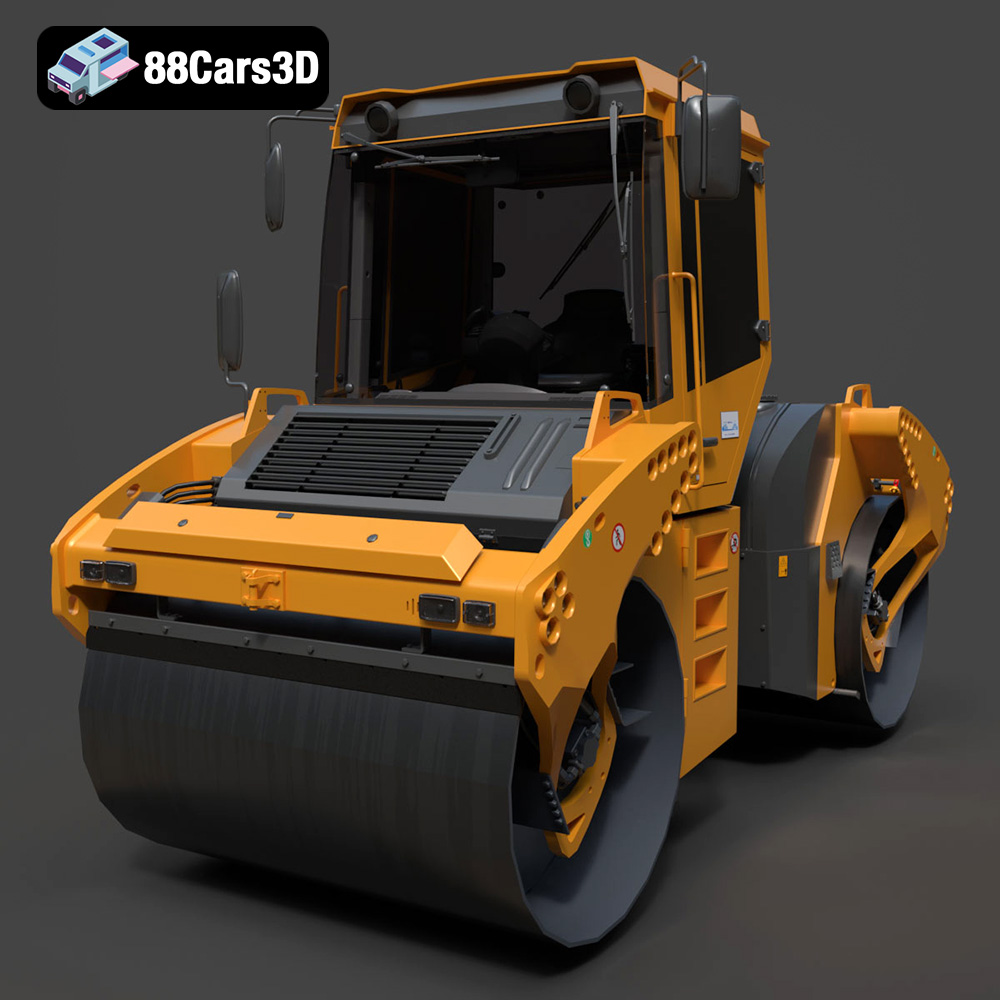
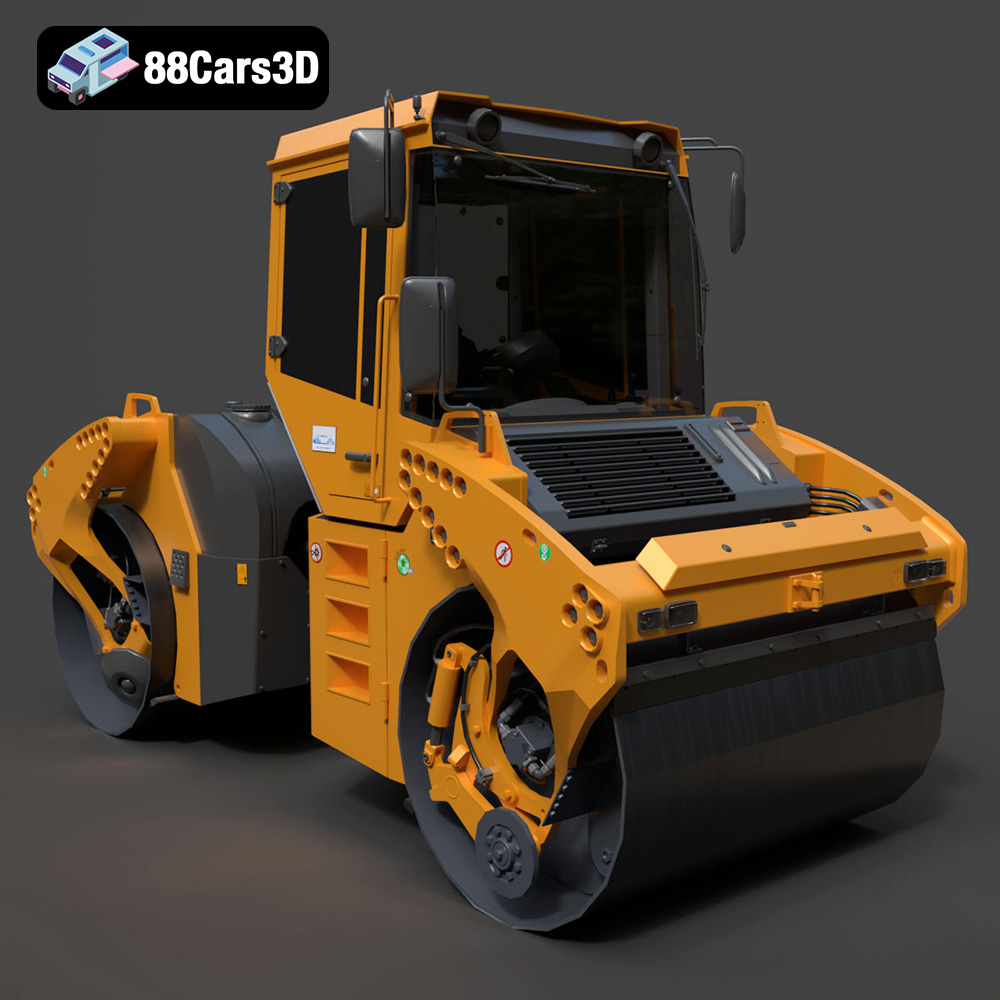
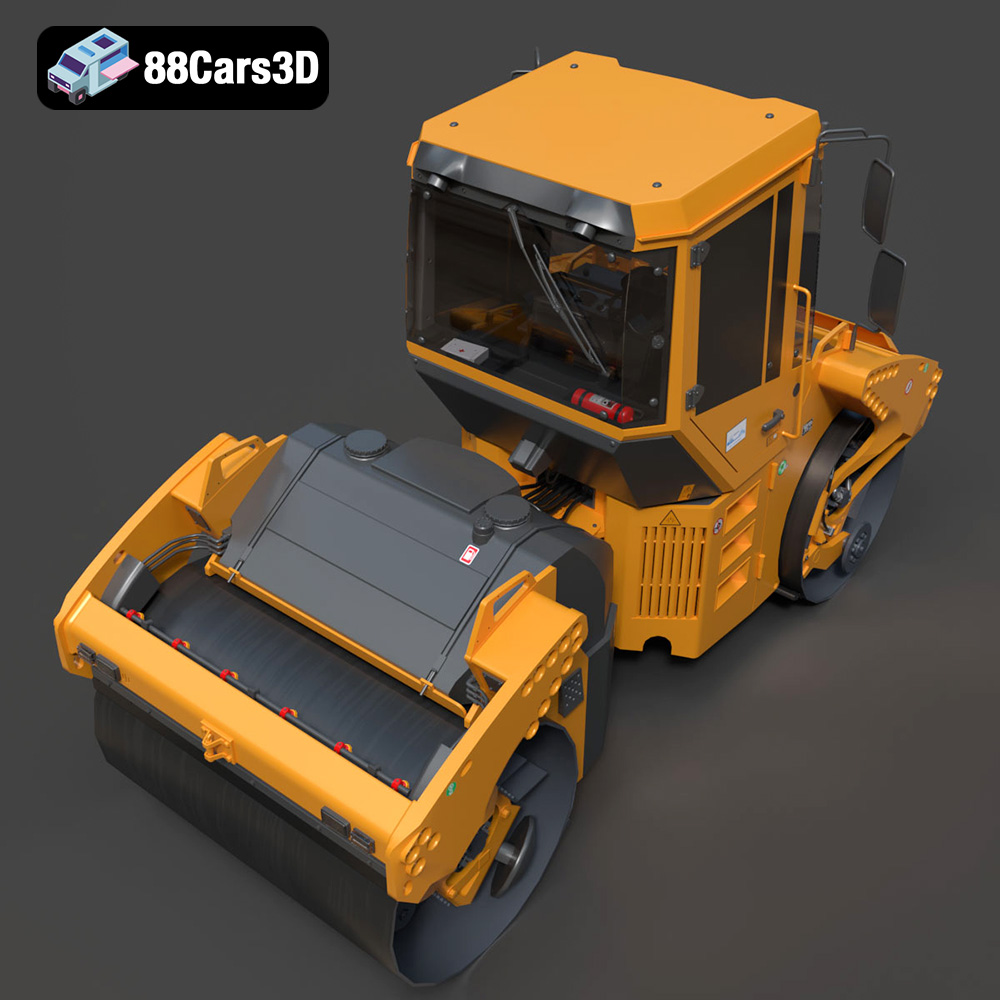
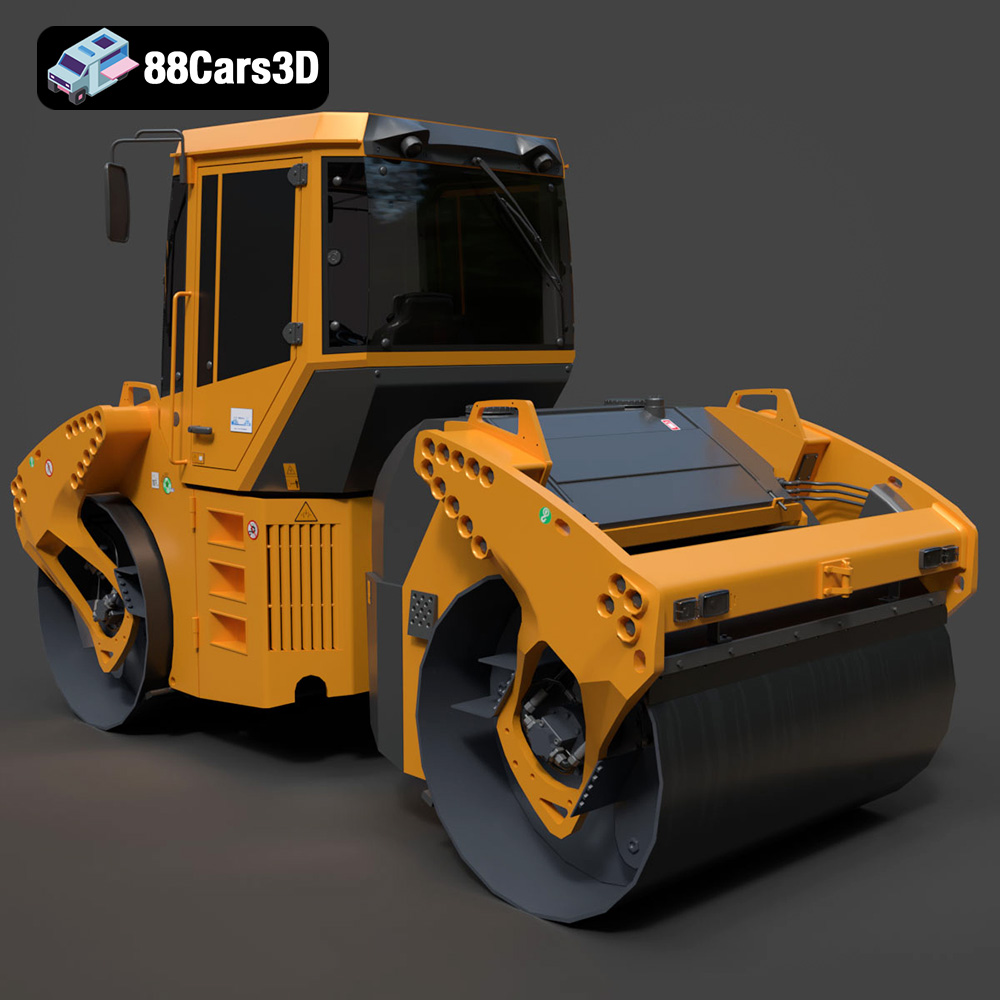
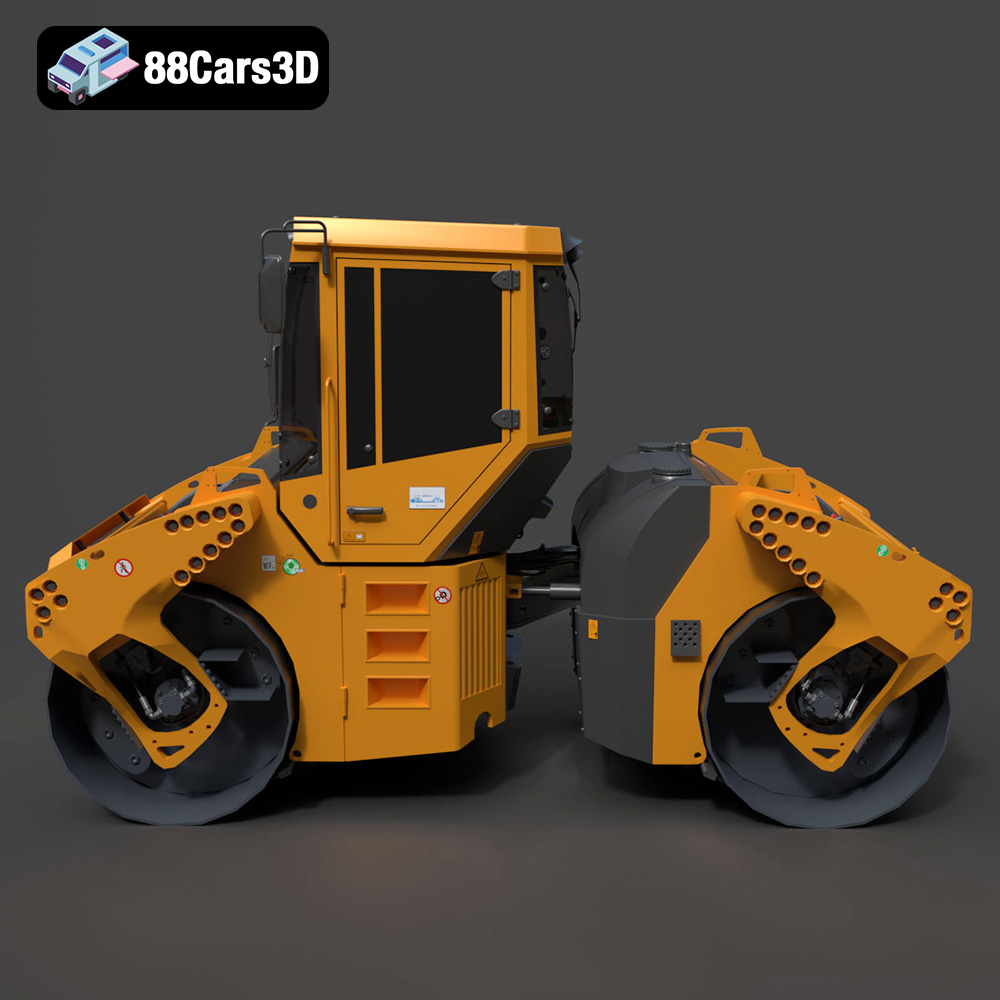
One of the most striking aspects of this model is its commitment to authentic industrial realism. The “dusty edition” captures the rugged essence of construction machinery, complete with a realistic weathered finish. This isn’t merely a cosmetic overlay; it’s a testament to detailed texturing work that brings character and history to the asset. From the intricate hydraulic routing that snakes along the chassis to the robust operator platform and the iconic dual steel compaction drums, every visual element reflects the true nature of earthmoving and paving equipment. This level of detail is crucial for projects where visual accuracy is paramount, whether for training simulations or marketing materials.
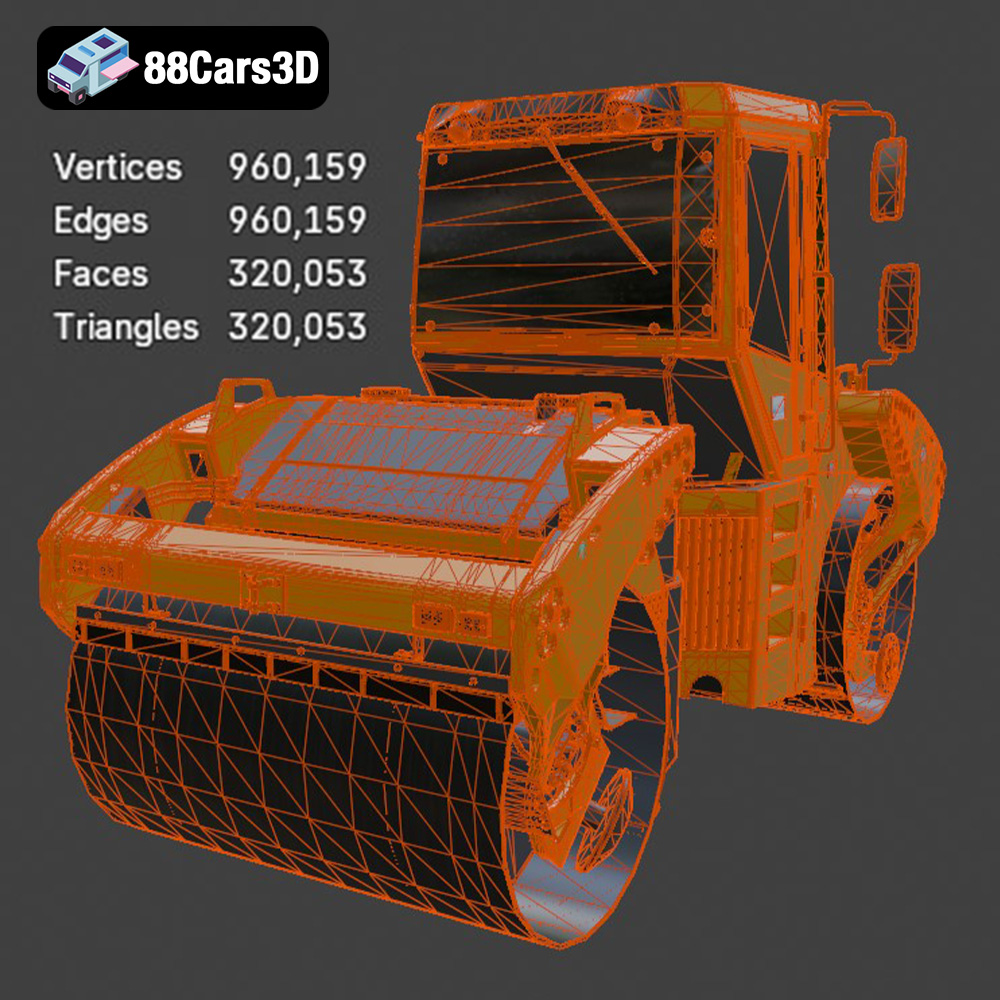
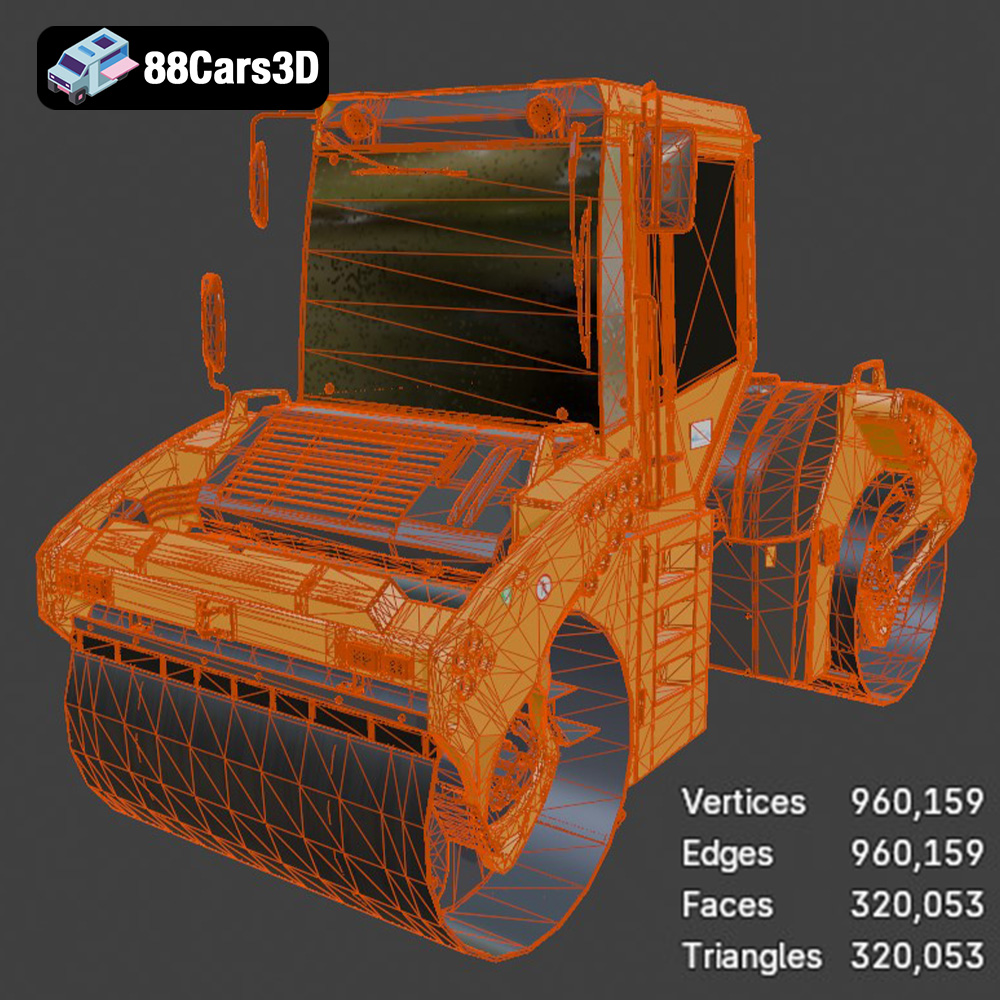
In 3D, striking the right balance between visual fidelity and performance is a constant challenge, especially for game assets and real-time applications. This Articulated Tandem Road Roller model achieves this with an efficient topology of 320,053 triangles. This poly count is high enough to retain crucial details for high-end rendering yet optimized to ensure smooth integration into real-time engines like Unreal and Unity. The geometry is structured to support seamless integration, meaning less work for developers to optimize it further. Furthermore, its real-world scale accuracy, based on actual paving vehicle dimensions, ensures consistency within any scene, while proper pivot setup for articulation, drum rotation, and chassis flex makes it immediately animatable.
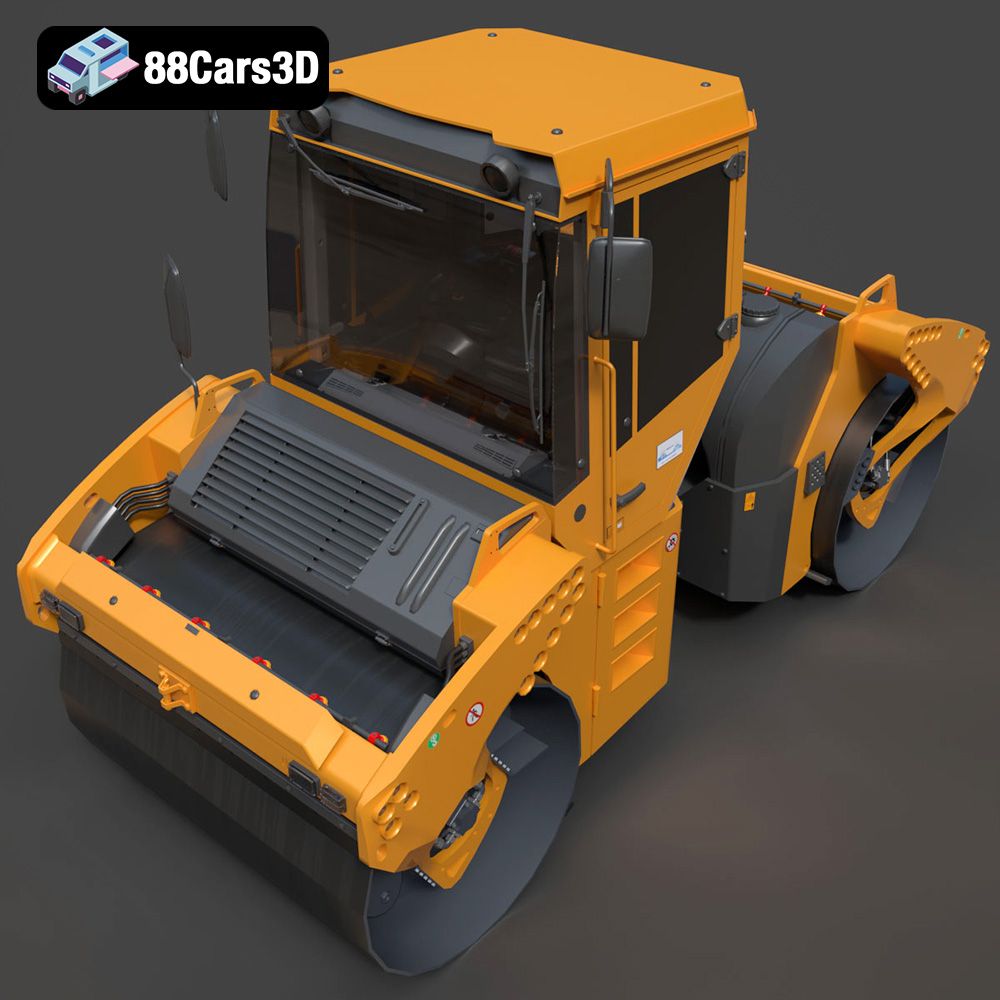
The model’s exterior features are comprehensive, including accurate frame geometry, detailed hydraulic rams and hoses, authentic work lights, beacons, and safety indicators. The robust roll-over protection structure (ROPS) and safety railings are precisely modeled, as are the chassis components and side-mounted engine access panels. But the immersion extends beyond the exterior. The cockpit and interior features include an ergonomic operator suspension seat, textured floor mats, a detailed steering wheel, precise directional joysticks, an accurate instrument cluster, and an industrial control panel with safety switches, levers, and pedals. This level of internal detail is critical for first-person POV experiences in heavy machinery simulators, providing a truly convincing and immersive environment.
The versatility of the Articulated Tandem Road Roller Dusty 3D Model truly shines when integrated into various professional 3D workflows. Its multiple file formats and optimized structure enable seamless use across different software ecosystems.
For artists and studios focused on high-end architectural visualization, advertising, or cinematic rendering, 3ds Max remains a cornerstone. Importing the .max file of the road roller allows for complete scene control. Artists can quickly set up intricate lighting scenarios using HDRI maps for realistic sky illumination, complemented by targeted area lights to highlight specific details of the machinery. Applying advanced PBR (Physically Based Rendering) materials using renderers like V-Ray or Corona takes advantage of the model’s detailed texture maps, bringing out the nuances of the dusty metal, rubber tires, and glass surfaces. This workflow is ideal for creating stunning marketing visuals for construction companies or integrating the roller into large-scale site development plans.
Blender users benefit immensely from the native .blend file, which retains all original data. This allows for direct manipulation of the model’s geometry, easy adjustment of its PBR materials within Blender’s Cycles or Eevee render engines, and straightforward animation. Thanks to the pre-set pivots, animating the articulated steering, drum rotation, and chassis flex is intuitive, making it a powerful asset for creating animated short films, product showcases, or educational content. Imagine a scenario where the road roller is animated to drive across a construction site, compacting virtual asphalt, demonstrating its functionality in a dynamic and engaging manner.
For game development and real-time interactive experiences, Unreal Engine offers unparalleled capabilities. The inclusion of .fbx and specifically .unreal formats for the road roller ensures a smooth import process. Once in Unreal, artists can efficiently assign or create PBR materials, taking full advantage of Unreal’s advanced material editor. Crucially, the model’s optimized polycount and proper pivot setup make it perfectly suited for basic vehicle physics implementation or interactive Blueprints. Developers can quickly create functionalities like controllable steering, rotating drums, or toggling work lights, transforming a static model into an interactive element within a construction simulator game level or an immersive AR/VR training module.
The utility of a high-quality 3D asset extends far beyond traditional static rendering. The Articulated Tandem Road Roller Dusty 3D Model is designed with diverse applications in mind, making it an incredibly versatile tool for various industries.
The gaming industry thrives on realism and performance, and the Articulated Tandem Road Roller is a prime example of a game-ready asset. Its optimized 320,053 triangle count strikes a perfect balance, allowing it to be integrated into complex game environments without heavily impacting frame rates. Game developers working on construction simulators, open-world environments, or industrial sandbox games will find this model invaluable. The proper pivot setup for articulation, steering, and drum rotation means less time spent on rigging and more time on developing engaging gameplay. Its dusty, weathered textures also contribute to a believable in-game world, grounding players in a realistic construction site experience.
AR/VR technologies are revolutionizing training, visualization, and remote collaboration. The Articulated Tandem Road Roller, particularly in its .glb format, is ideally suited for these immersive experiences. For instance, in an industrial context, it can be used to develop safety training modules where operators can virtually interact with the machinery, learning controls and safety protocols in a risk-free environment. Manufacturers can leverage it for virtual showrooms, allowing potential clients to explore the vehicle in 3D, customize colors, and even place it in their real-world environment via AR. Its optimized nature ensures smooth performance on AR/VR devices, delivering a fluid and convincing experience.
For hobbyists, educators, or professionals requiring physical prototypes or display models, the inclusion of the .stl format opens up the world of 3D printing. The Articulated Tandem Road Roller can be brought to life as a tangible object, perfect for creating detailed dioramas, scale models for educational purposes, or even as a unique desk ornament. The recommended 3D print settings, such as 1:35/1:50/1:87 scale, fine layer height (0.04–0.12 mm for resin printers for intricate hydraulic lines), and specific support requirements, ensure a successful print. Post-processing with sanding, primer, and authentic industrial colors with weathering finishes can transform the printed model into a miniature masterpiece.
A truly professional 3D asset provides a solid foundation, but also allows for extensive customization to meet diverse project requirements. The Articulated Tandem Road Roller Dusty 3D Model excels in this regard, offering numerous ways to adapt its appearance and functionality.
The beauty of a well-structured 3D model lies in its flexibility. Artists can easily change the equipment’s color scheme, moving from the standard industrial yellow or orange to custom fleet colors to match specific brand identities. The weathering and dirt textures can be modified to reflect different scenarios—from a clean, factory-fresh look to heavy mud and dust variants, perfect for showcasing the roller in various environmental conditions. Furthermore, material finishes can be adjusted, allowing for matte metal, rusted steel, or gloss paint effects, each contributing to a different aesthetic and narrative. Even lighting setups can be adapted, transitioning from bright daylight construction scenes to atmospheric night-time environments with working headlights and flashing beacons, adding depth and drama to any render.
Investing in a high-quality 3D asset like the Articulated Tandem Road Roller from 88cars3d.com is an investment in efficiency and future-proofing. A model with clean topology, proper UVs, and well-organized hierarchies provides a robust base for future modifications and expansions. Having access to the source files (.blend, .max) means artists can delve deeper, add custom components, or integrate it into larger, more complex scenes without starting from scratch. This reusability significantly extends the asset’s value across multiple projects, reducing development cycles and costs in the long run. Whether it’s for a new game expansion, an updated training module, or a different marketing campaign, this model’s adaptability ensures it remains a valuable tool in any professional’s arsenal.
The Articulated Tandem Road Roller Dusty 3D Model is more than just a digital representation of heavy machinery; it’s a meticulously crafted, highly optimized asset designed to meet the rigorous demands of contemporary 3D production. From its authentic weathered aesthetic and detailed interior to its efficient topology and broad file format compatibility, it provides an unparalleled foundation for a multitude of applications. Whether you’re a game developer crafting immersive simulations, an architect visualizing a construction site, an AR/VR specialist creating interactive training modules, or a hobbyist bringing a digital model to life through 3D printing, this road roller offers versatility and quality.
Choosing high-quality 3D car models, industrial vehicles, and game assets is paramount for delivering professional-grade results and staying competitive in today’s fast-paced digital landscape. The Articulated Tandem Road Roller Dusty 3D Model, available at 88cars3d.com, exemplifies this commitment to excellence, providing a robust, ready-to-use solution that streamlines workflows and elevates visual experiences across the board. Its comprehensive feature set and thoughtful optimization make it an indispensable asset for any creative professional.
The Articulated Tandem Road Roller Dusty edition captures the rugged essence and heavy-duty presence of essential construction machinery. Featuring its iconic dual steel compaction drums and a highly detailed articulated center pivot, this model showcases a realistic weathered, dusty finish that brings authentic industrial character to any scene. From the intricate hydraulic routing to the robust operator platform, every visual element is meticulously crafted to reflect the true nature of earthmoving and paving equipment.
Boasting a highly detailed yet efficient topology of 320,053 triangles, this 3D model offers the perfect balance between high-end visual fidelity and game-ready optimization. The geometry is structured to support seamless integration into real-time engines and complex renders, making it an exceptional asset for game development, AR/VR experiences, industrial animation, and professional visualization.
Perfect for construction site simulations, heavy machinery games, industrial visualizations, and detailed diorama renders.
.blend, .fbx, .obj, .glb, .stl, .ply, .unreal, .max
Tags:
articulated-tandem-road-roller, road-roller, construction-vehicle, heavy-machinery, dusty, game-ready, low-poly, optimized, car-3d-model, game-asset, rendering, vr-ar, blend, fbx, obj, glb, stl, ply, unreal, max
$34.50
.blend
.fbx
.glb
.max
.obj
.ply
.rendering
.stl
.unreal
articulated-tandem-road-roller
car-3d-model
construction-vehicle
dusty
game asset
game-ready
heavy-machinery
low-poly
optimized
road-roller
VR/AR