Get 20% OFF All Premium 3D & STL Models!

The automotive industry has always been at the forefront of design and innovation, and in the digital age, this extends to breathtaking 3D visualizations. From the sleek curves of a concept car to the intricate engineering of a flagship SUV, translating these vehicles into virtual realms demands an exceptional level of detail, precision, and technical understanding. Whether for photorealistic advertising campaigns, immersive game environments, or detailed architectural visualizations, the quality of a 3D car model can make or break a project’s realism and impact.
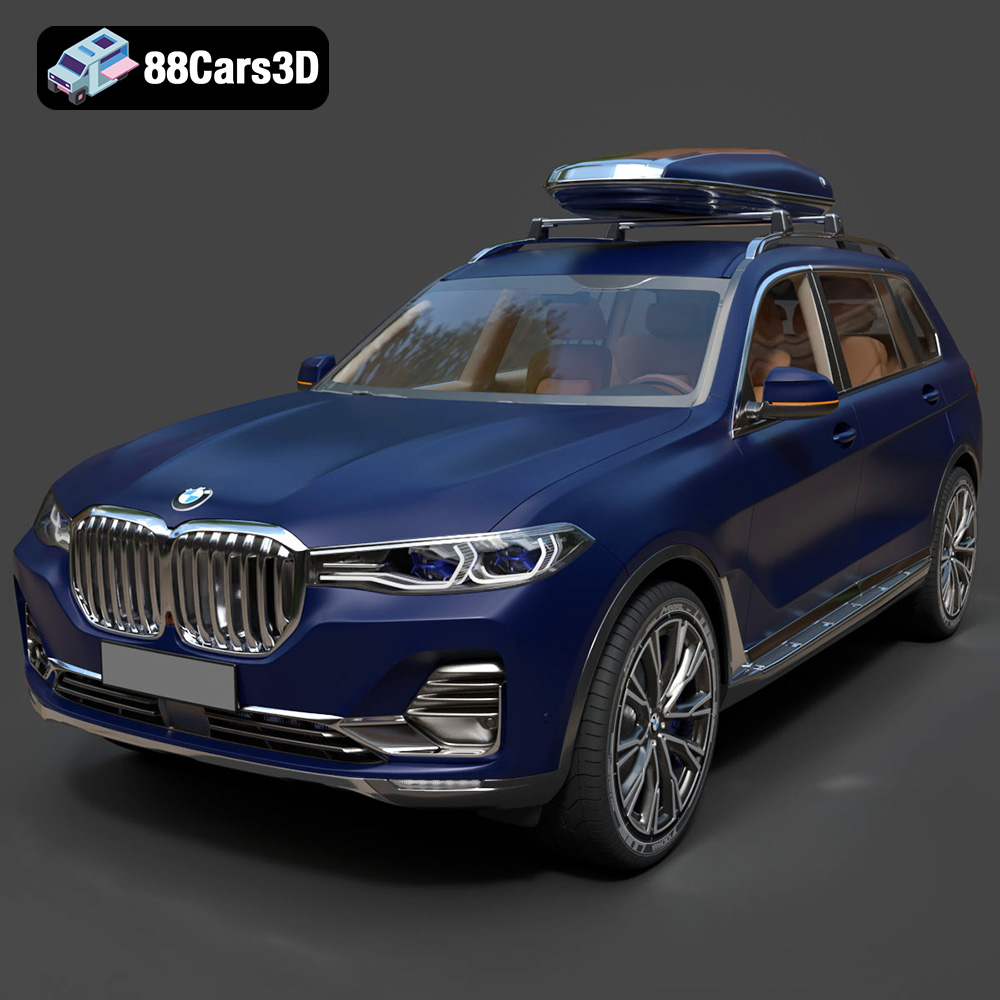
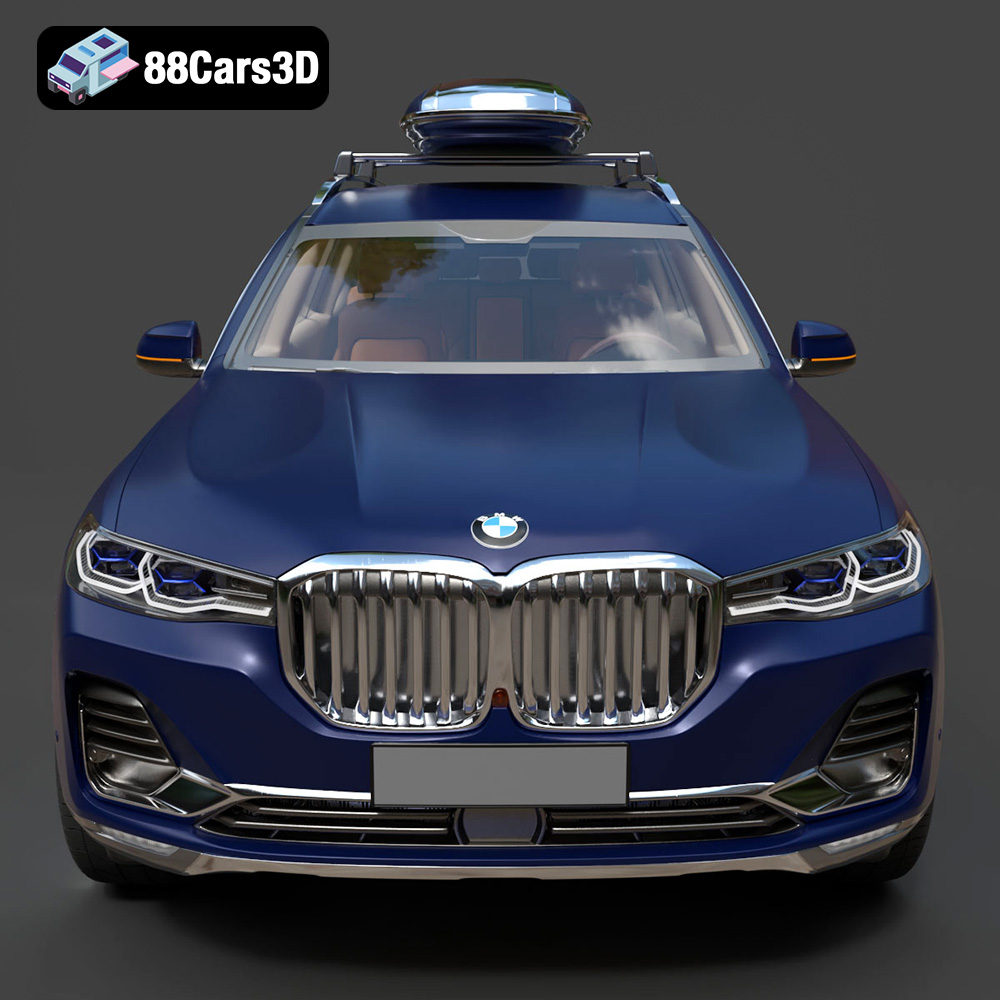
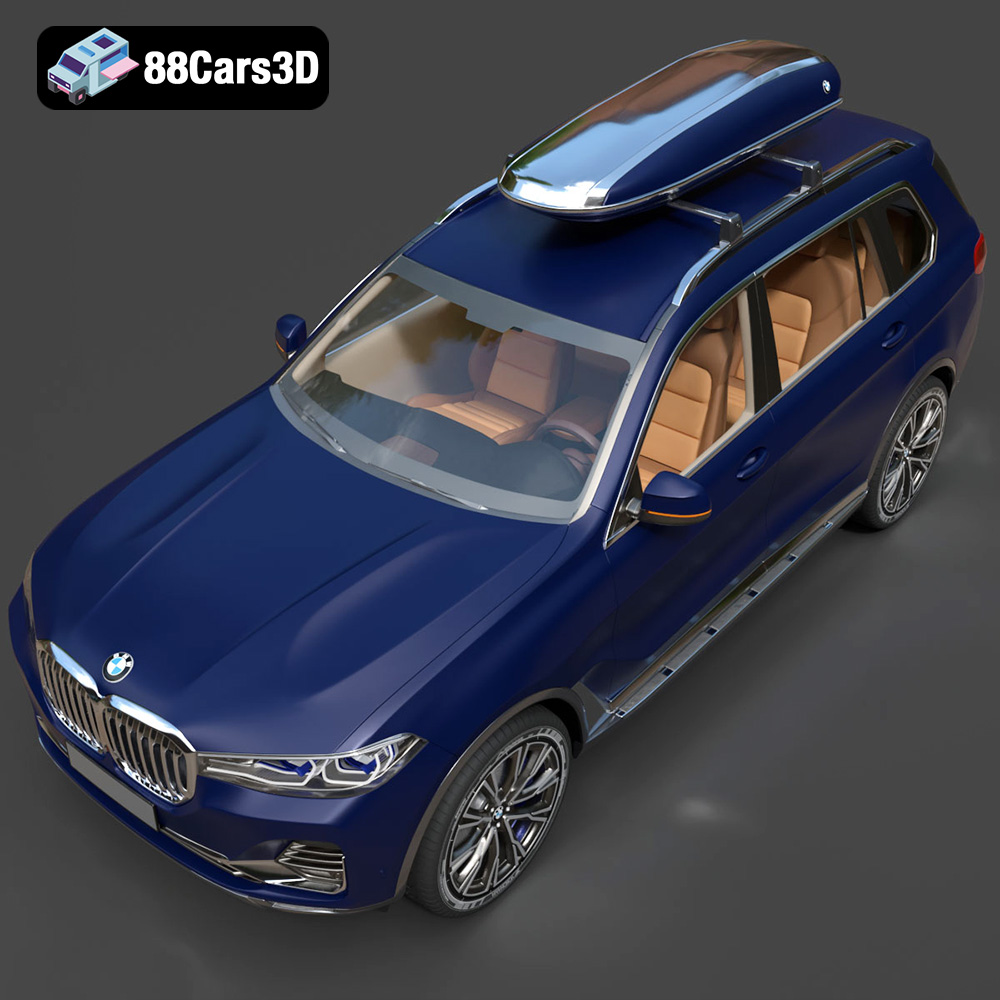
This pursuit of digital perfection is epitomized by models like the BMW X7 Travel 3D Model. This particular asset embodies the pinnacle of luxury SUV design, meticulously recreated to capture every nuance from its imposing illuminated kidney grille to its sophisticated aerodynamic lines. Such a model is not merely a visual representation; it’s a versatile digital asset designed for professional application across a multitude of platforms. Join us as we delve into the technical intricacies of creating and deploying such high-quality 3D car models, exploring the workflows, file formats, and applications that empower artists and developers to bring automotive dreams to life.
The world of 3D modeling is vast, and navigating its diverse ecosystem requires a clear understanding of the various file formats available. Each format serves a specific purpose, offering unique advantages in terms of compatibility, data retention, and optimization for different stages of a project, from initial design to final deployment. The BMW X7 Travel 3D Model, for instance, is offered in a comprehensive suite of formats, ensuring its adaptability across virtually any professional workflow. Understanding these formats is crucial for maximizing efficiency and achieving desired outcomes.
The .blend format is Blender’s native file type. It’s much more than just a mesh container; it’s a complete scene file. This means it stores everything within your Blender project: the 3D model geometry, materials, textures, lighting setups, cameras, animations, physics simulations, modifiers, sculpting data, and even the UI layout. For artists working primarily in Blender, the .blend file offers unparalleled flexibility, allowing for full editability and easy iteration. When you download a .blend file for the BMW X7 Travel, you gain access to the original project, enabling deep customization, tweaking of materials, or repurposing components with ease within the Blender environment.
Similar to .blend for Blender, the .max format is the native project file for Autodesk 3ds Max, a long-standing industry standard for 3D modeling, animation, and rendering, particularly in architectural visualization and product design. A .max file encapsulates the entire 3ds Max scene, including geometry, lights, cameras, materials, textures, modifiers, and animation data. Professionals relying on 3ds Max for high-end rendering with V-Ray or Corona Renderer will find the .max format indispensable. It provides the most comprehensive data when working within the 3ds Max ecosystem, offering the same level of full editability and control as a .blend file does for Blender users.
.fbx (Filmbox) is arguably one of the most widely adopted 3D interchange formats, developed by Autodesk. Its strength lies in its ability to store a broad range of 3D data, including model geometry (meshes), materials, textures, animations (skeletal and blend shapes), cameras, and lights, all in a single file. This makes .fbx ideal for transferring assets between different 3D software applications and, crucially, for game engines like Unreal Engine and Unity. For the BMW X7 Travel, an .fbx file ensures that all key elements like separate wheels, suspension, and steering components, along with their pivot points for animation, are preserved, making it perfectly suited for real-time pipelines and complex animated sequences.
The .obj (Wavefront OBJ) format is a universal, widely supported file type primarily used for exchanging 3D geometry data. It stores vertex positions, UV coordinates, normals, and face information, making it excellent for transferring static mesh data between almost any 3D software. While it doesn’t natively store animation or complex material definitions (it typically links to an accompanying .mtl file for basic material properties), its simplicity and ubiquity make it a reliable choice for cross-software compatibility. When you need just the raw, clean mesh of the BMW X7 Travel to bring into a new software environment for further texturing and rigging, .obj is a solid, dependable option.
.glb (GL Transmission Format Binary) is the binary version of glTF, a royalty-free specification for the efficient transmission and loading of 3D scenes and models by applications. Think of it as the “JPEG of 3D” – it’s designed for efficiency. A .glb file packages all necessary data (geometry, textures, materials, animations) into a single, self-contained binary file, making it incredibly easy to share and integrate into web applications, AR/VR experiences, and mobile platforms. Its compact size and optimized structure ensure fast loading times and smooth performance, perfect for showcasing the BMW X7 Travel in immersive virtual showrooms or interactive web configurators.
The .stl (Stereolithography) format is the de facto standard for 3D printing. It represents 3D surfaces as a collection of unconnected triangular facets, making it simple for 3D printers to interpret the geometry. It does not carry color, texture, or material information, focusing purely on the physical shape. When preparing the BMW X7 Travel for a physical manifestation, converting it to .stl is the crucial step. The product description highlights its suitability for 3D printing, recommending specific scales and settings for optimal results, especially with resin printers for capturing fine details.
.ply (Polygon File Format, or Stanford Triangle Format) is another format for storing 3D data, particularly useful for scanned data, CAD, and scientific analysis. Like .obj, it stores geometric data (vertices, faces, normals), but it can also include properties like color per vertex, transparency, or even confidence values. While less common for general game or rendering assets, .ply offers a robust, precision mesh format that can be valuable for niche applications where detailed surface information or CAD integration is paramount for models like the BMW X7 Travel.
The inclusion of the .unreal format signifies an asset specifically prepared and optimized for direct import into Unreal Engine. While Unreal Engine can import .fbx files, a .unreal file indicates that the model has likely gone through an additional layer of engine-specific optimization, material setup, and perhaps even collision mesh generation within Unreal’s native environment. This ready-to-use format streamlines the integration process, offering a truly “plug-and-play” experience for game developers and cinematic artists working with the BMW X7 Travel in Unreal Engine 5, ensuring optimal performance and visual fidelity.
Creating a 3D car model that stands up to professional scrutiny, like the BMW X7 Travel available on 88cars3d.com, is a complex endeavor that blends artistic skill with rigorous technical execution. It’s about more than just replicating a shape; it’s about capturing the essence, the engineering, and the visual impact of the real-world vehicle.
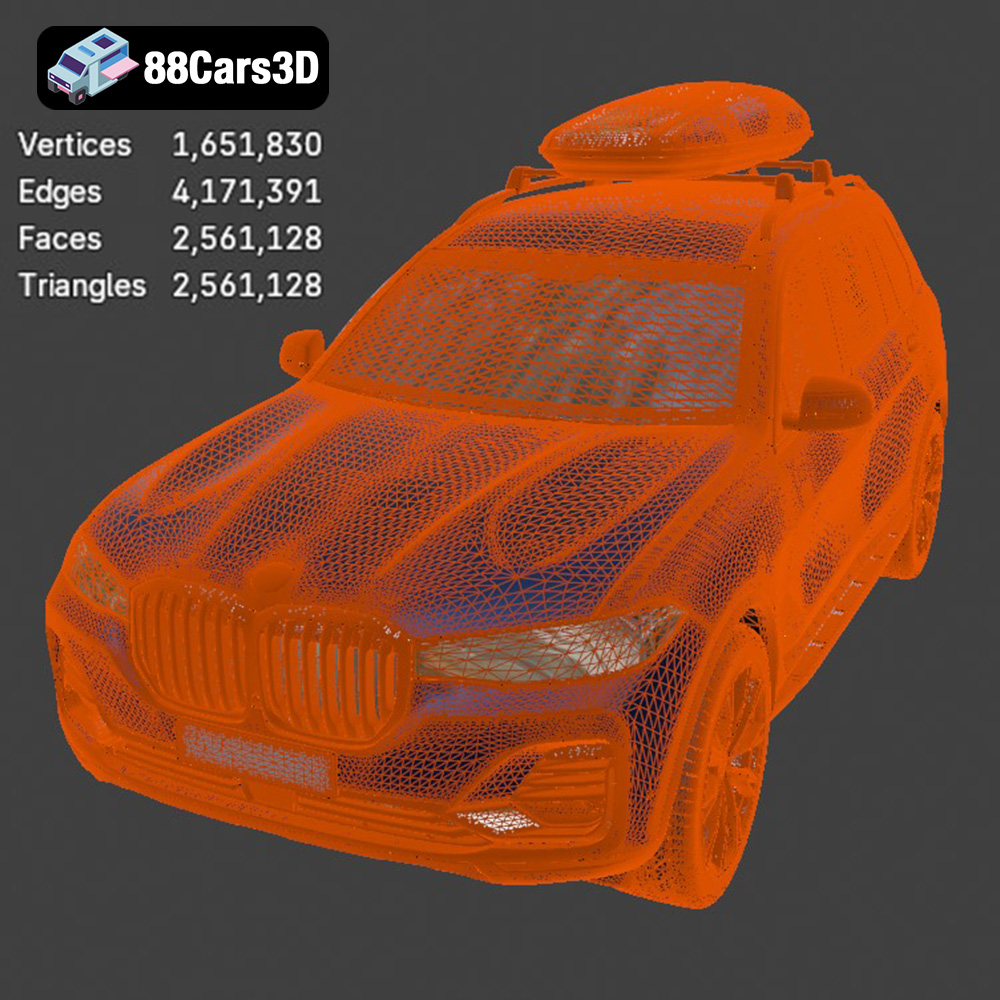
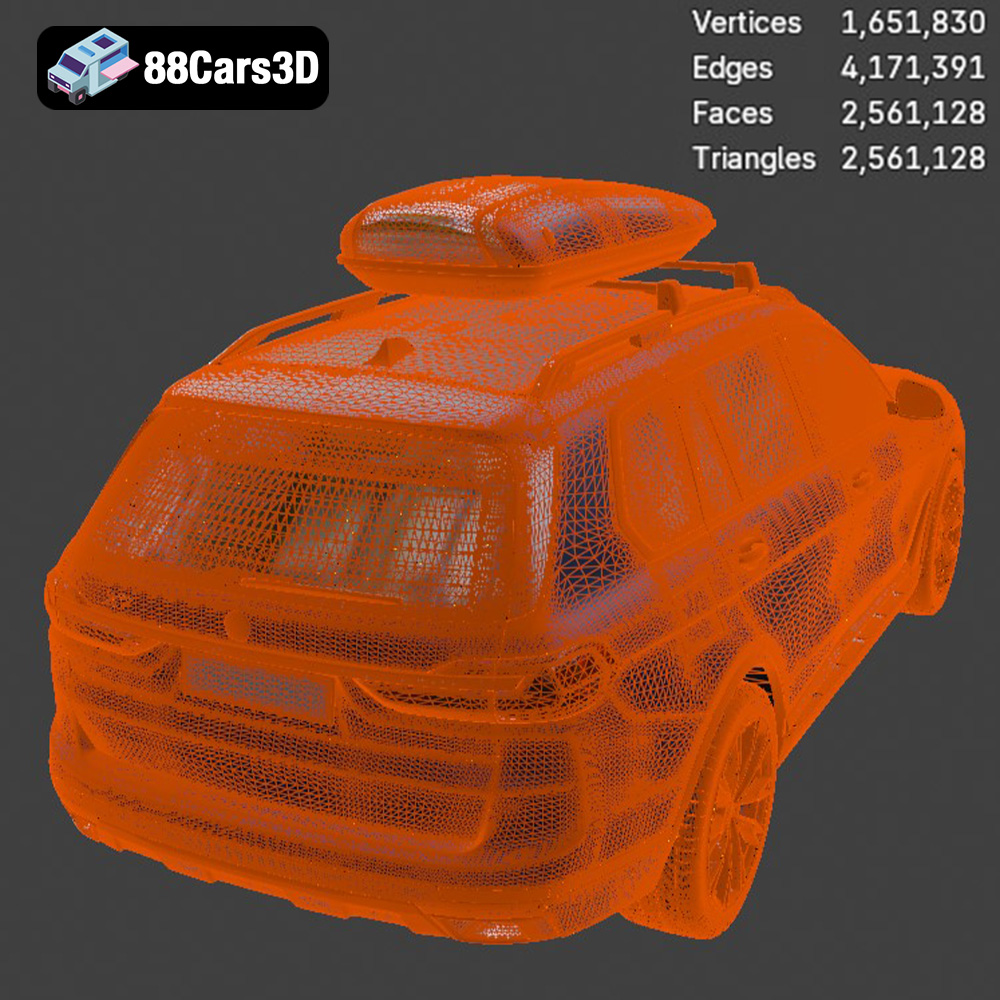
One of the most critical aspects of a high-quality 3D model is its topology – the arrangement of vertices, edges, and faces that form the mesh. A well-constructed topology is clean, efficient, and facilitates deformation and rendering. For complex subjects like cars, this involves striking a delicate balance between visual fidelity and performance, especially for real-time applications.
The BMW X7 Travel 3D Model boasts an exceptionally detailed 2,561,128 triangle topology. This figure is not arbitrary; it represents a carefully considered budget that allows for uncompromising visual realism – capturing the intricate details of the illuminated kidney grille, the precise panel gaps, and the sophisticated contours – while remaining optimized enough for high-end game engines like Unreal and Unity. For comparison, models designed purely for offline cinematic rendering might push into tens of millions of polygons, while extreme low-poly game assets might sit below 100,000. The X7 Travel model occupies the sweet spot, delivering stunning realism without crippling real-time performance, thanks to its expert optimization for diverse applications.
Beyond the mesh itself, the materials and textures applied to a 3D model are paramount in achieving photorealism. Modern rendering techniques rely heavily on Physically Based Rendering (PBR) workflows, where materials mimic real-world light interaction. This means defining properties like base color (albedo), roughness, metallicness, normal maps for fine surface details, and ambient occlusion. For a luxury vehicle like the BMW X7 Travel, the accuracy of these material definitions is crucial.
High-quality material definitions mean the paintwork accurately reflects light, exhibiting the subtle metallic flakes and clear coat reflections found on a real BMW. Chrome finishers gleam authentically, glass refracts light correctly, and the intricate multi-spoke alloy wheels showcase realistic metallic sheen and grime. UV mapping, the process of unwrapping the 3D mesh onto a 2D plane for texture application, must be pristine to avoid stretching or distortion, ensuring that every decal, panel line, and texture element is rendered perfectly. The pursuit of accurate reflections and precise curves mentioned in the product description is a direct outcome of meticulous material and texturing work.
A truly professional 3D car model goes beyond aesthetics; it incorporates a level of engineering precision that reflects the real vehicle. This includes:
The versatility of a well-crafted 3D car model like the BMW X7 Travel 3D Model lies in its adaptability across various professional industries. From powering immersive gaming experiences to creating stunning marketing visuals, these assets are fundamental tools for digital artists and developers.
Game development demands a unique blend of visual quality and performance. “Game-ready” assets are specifically optimized to render efficiently in real-time engines like Unreal Engine and Unity. The BMW X7 Travel model, with its 2,561,128 triangle polycount, strikes an excellent balance, making it ideal for:
Key technical advantages for game development include the proper pivot setup for steering, wheel rotation, and suspension travel, enabling seamless integration with vehicle physics systems. The availability of the .fbx and specific .unreal formats further streamlines the import process into these engines, reducing setup time and allowing developers to focus on gameplay and interaction.
For pre-rendered content – whether a high-budget commercial, a product configurator, or a stunning architectural scene – the goal is often absolute photorealism. Here, high-poly models shine, providing the intricate details necessary for close-up shots and sophisticated lighting setups.
The BMW X7 Travel model excels in these scenarios:
The precise curves and high-fidelity split-headlight design ensure that the model looks stunning even under the most scrutinizing camera angles.
Augmented Reality (AR) and Virtual Reality (VR) offer immersive ways to interact with 3D models. The BMW X7 Travel is perfectly suited for such applications:
The optimized geometry for first-person POV in gaming and VR is a significant advantage, allowing for a seamless and comfortable user experience within these immersive environments. The .glb format, optimized for AR/VR and browser-based display, further enhances its utility for these modern applications.
While the primary application for 3D car models is often digital visualization, a growing and exciting field is the transition from virtual asset to physical object through 3D printing. High-quality models, like those found on 88cars3d.com, are increasingly designed with this capability in mind, offering a tangible connection to the digital world.
The process of 3D printing begins with converting the digital model into a format that a 3D printer can understand, most commonly the .stl format. As mentioned earlier, .stl simplifies the complex geometry into a series of triangular facets, purely defining the model’s outer shell. For a detailed model like the BMW X7 Travel, careful preparation is essential to ensure a successful physical print.
The product description provides specific, invaluable guidelines for 3D printing, highlighting the technical considerations that hobbyists and professionals should heed:
This level of detail in the product’s 3D print settings demonstrates that the BMW X7 Travel 3D Model is not merely an afterthought for 3D printing, but a well-considered asset ready for physical manifestation.
3D printed car models serve various purposes beyond simple display:
The ability to convert the BMW X7 Travel 3D Model to .stl format opens up a new dimension of interaction, allowing users to move from passive viewing on a screen to active creation of a tangible object, further enhancing the model’s value.
A truly professional 3D asset provides more than just a static model; it offers a foundation for endless creative possibilities. The BMW X7 Travel 3D Model is designed with versatility in mind, allowing artists and designers to adapt it to a myriad of contexts and artistic visions.
One of the most powerful customization options lies in the ability to modify materials and colors. A high-quality model is built with a clear separation of material IDs and well-defined UVs, making these changes straightforward:
This level of control over materials and finishes means the BMW X7 Travel model can be seamlessly integrated into diverse scenes, from a serene sunset drive to a bustling urban street, maintaining its visual integrity and luxury appeal.
The inherent customization options also extend the practical life cycle of the 3D asset. Instead of creating a new model for every unique requirement, artists can leverage the existing high-quality base model to:
Ultimately, the extensive customization capabilities of the BMW X7 Travel 3D Model underscore its value as a versatile and enduring asset for any professional involved in automotive rendering, game development, or visualization. It provides a powerful foundation that can be tailored to meet virtually any creative challenge, ensuring that its investment continues to pay dividends across numerous projects.
The world of 3D modeling has revolutionized how we perceive and interact with automotive design. From the initial concept to the final virtual showroom, high-quality 3D car models are indispensable tools for conveying realism, luxury, and engineering excellence. The journey from a real-world vehicle to a meticulously crafted digital asset involves intricate technical decisions, from optimizing topology and defining materials to selecting the right file format for specific applications.
The BMW X7 Travel 3D Model stands as a prime example of such an asset, meticulously designed to meet the rigorous demands of professionals across game development, cinematic rendering, AR/VR, and even 3D printing. Its comprehensive technical specifications – including its balanced polycount, real-world scale, separate animated components, and rich material definitions – ensure it performs flawlessly in various pipelines. Furthermore, its availability in a wide array of file formats like .blend, .fbx, .obj, .glb, .stl, .ply, .unreal, and .max guarantees maximum compatibility and flexibility for artists and developers.
Investing in such a high-fidelity 3D car model is an investment in unparalleled realism, efficiency, and creative freedom. Whether you’re building the next-generation racing game, producing a breathtaking architectural visualization, or crafting a bespoke 3D-printed collectible, the BMW X7 Travel 3D Model provides the robust and customizable foundation you need to elevate your projects. For those seeking professional-grade 3D car models that deliver on every technical and aesthetic front, exploring offerings like this one at 88cars3d.com is a definitive step towards digital mastery.
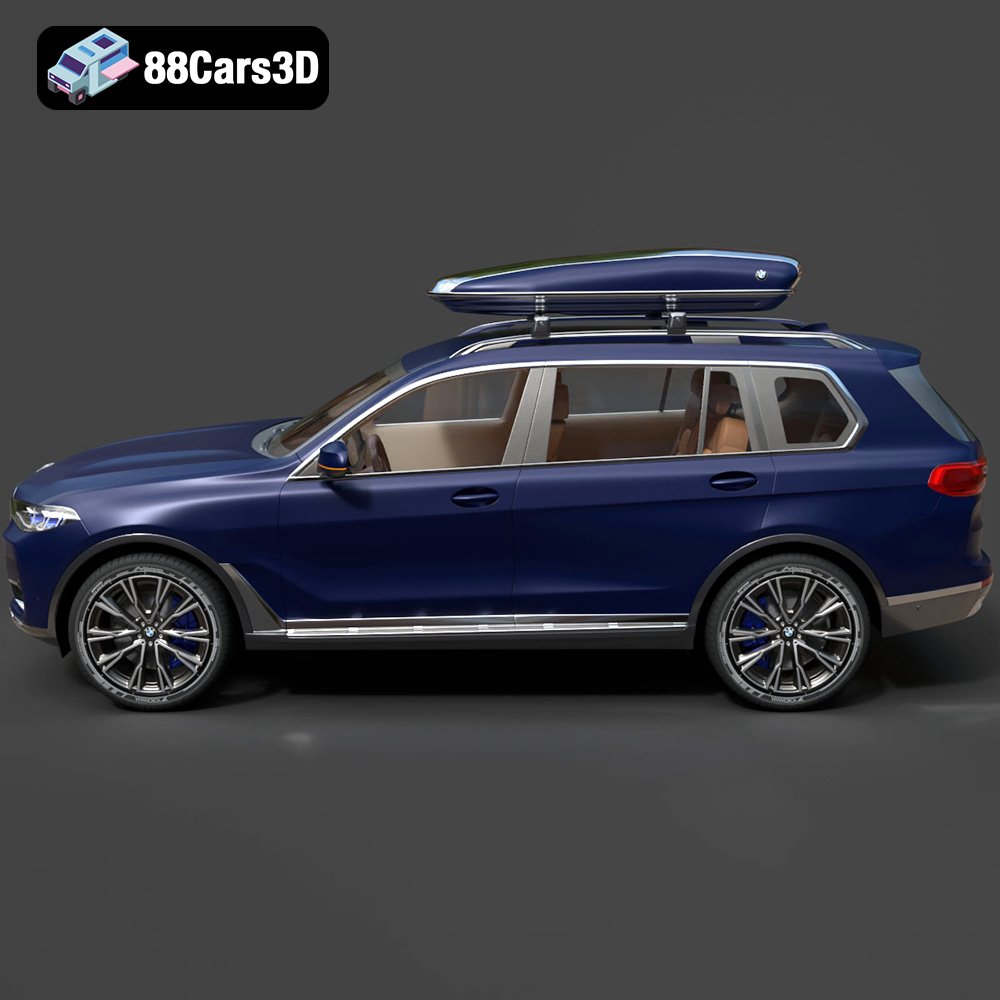
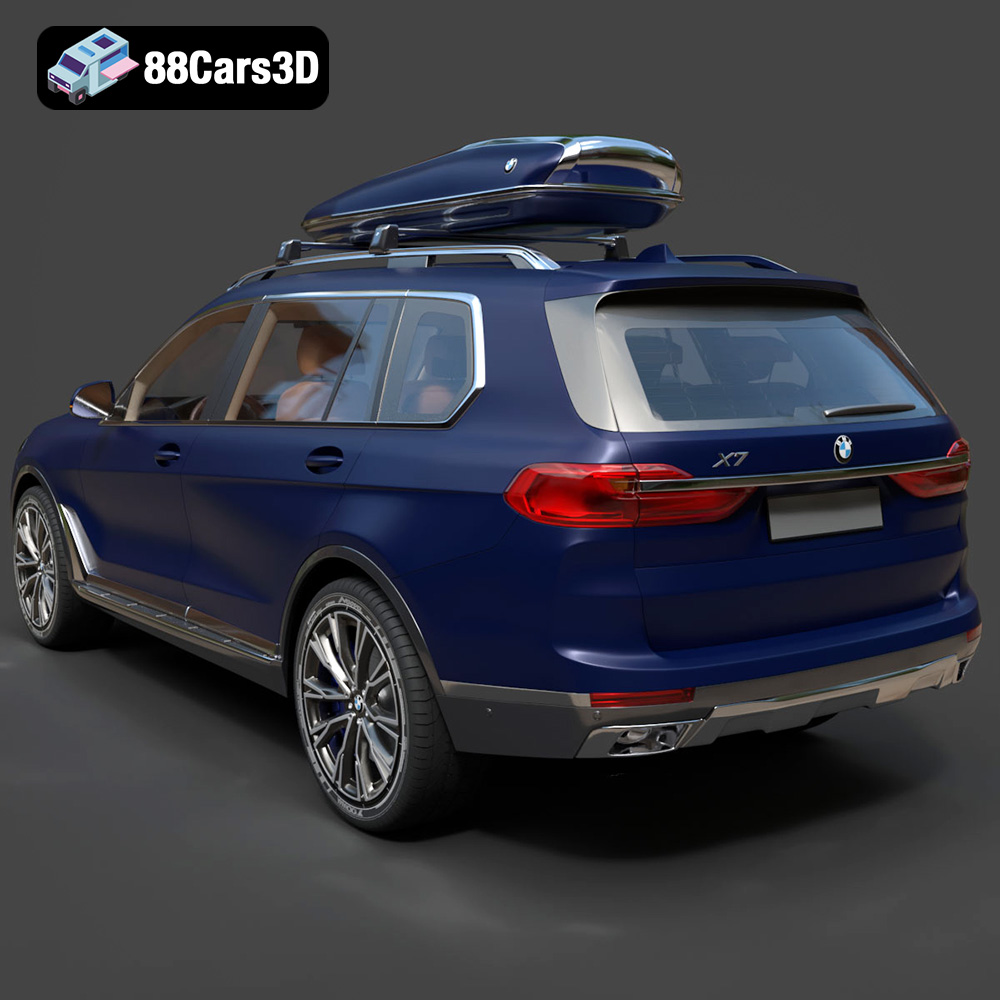
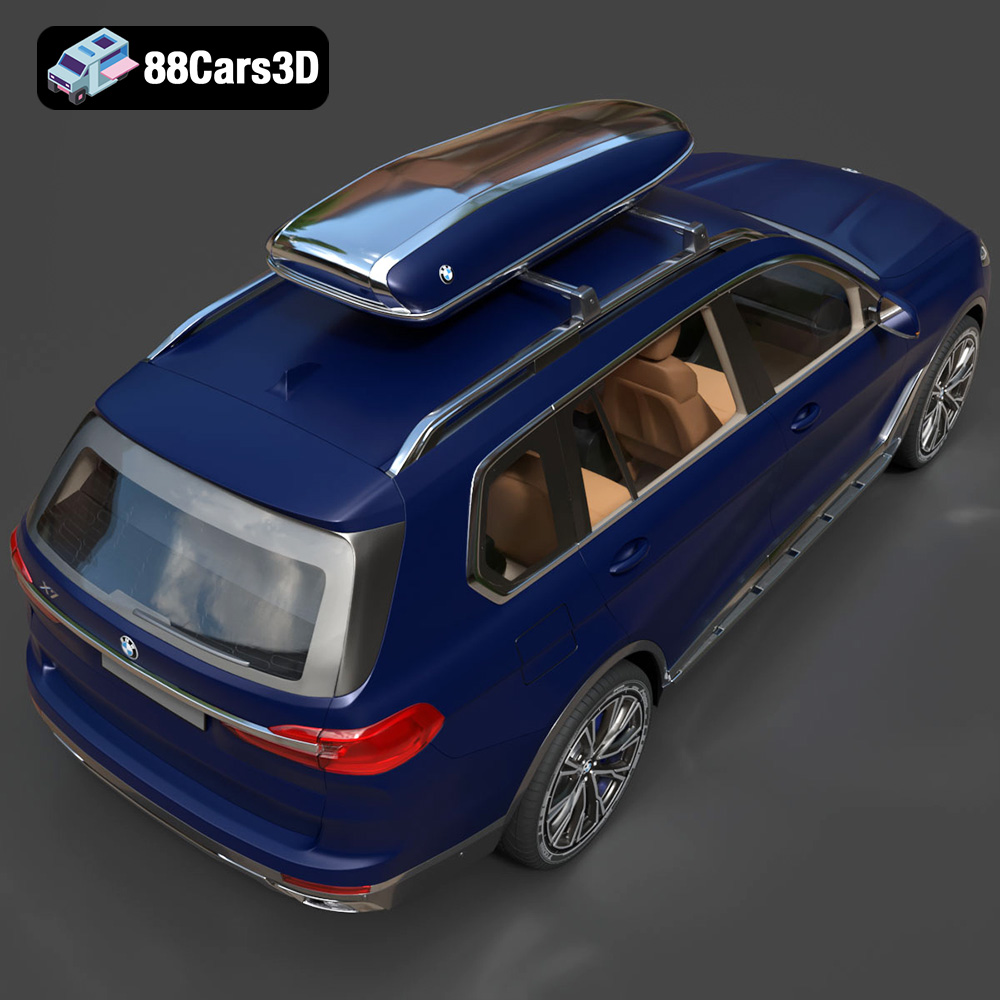
The BMW X7 Travel represents the pinnacle of luxury SUV design, combining robust all-terrain capability with premium touring comfort. This highly detailed 3D model captures the imposing illuminated kidney grille, sophisticated aerodynamic lines, muscular stance, and signature split-headlight styling that defines the flagship X7 series. Enhanced with travel-specific elements, it embodies the ultimate grand tourer aesthetic.
$90.00
.blend
.bmw
.fbx
.glb
.luxury suv
.max
.obj
.ply
.rendering
.stl
.unreal
car-3d-model
game asset
game-ready
low-poly
optimized
VR/AR
x7-travel