Get 20% OFF All Premium 3D & STL Models!

In the high-octane realm where automotive engineering meets digital artistry, the demand for hyper-realistic and functionally robust 3D models is constantly accelerating. From breathtaking cinematic renders to immersive virtual experiences and the adrenaline-fueled environments of AAA gaming, a truly exceptional 3D car model forms the bedrock of visual excellence. It’s about more than just aesthetics; it’s about capturing the soul of a machine, every curve, every texture, every meticulous detail, and translating that into a versatile digital asset.
Few vehicles embody raw power, opulent luxury, and an uncompromising stance quite like the Brabus G 800. Based on the iconic Mercedes-Benz G-Class, the Brabus G 800 is a statement of intent, a blend of off-road prowess and supercar-level performance aesthetics, draped in an aggressive widebody kit and signature carbon fiber elements. Imagine bringing this automotive behemoth into your next project with unparalleled fidelity. This is precisely what the Brabus G 800 3D Model offers – a meticulously crafted digital twin designed to meet the rigorous demands of professional visualization and real-time applications. Whether you’re an automotive designer, a game developer, an architect, or an AR/VR innovator, a model of this caliber from platforms like 88cars3d.com can dramatically elevate your creative output.
The versatility of a 3D model is often defined by the range of file formats it supports. Each format serves a specific purpose, offering unique advantages for different stages of a project lifecycle, from initial design and editing to real-time deployment and even physical manufacturing. The Brabus G 800 3D model from 88cars3d.com, for instance, provides a comprehensive suite of formats, ensuring maximum compatibility and utility across diverse professional workflows.
The .blend format is native to Blender, a powerful open-source 3D creation suite. When you receive a .blend file, you’re getting a fully editable Blender scene, complete with materials, textures, lighting, cameras, and even animation data. This format is ideal for artists who primarily work in Blender, offering the highest degree of flexibility for customization, tweaking topology, modifying materials, or setting up complex rendering scenes. For a model like the Brabus G 800, having the .blend file means complete control over every aspect of the asset, allowing for deep dives into its intricate geometry and material setup within Blender’s ecosystem.
As Autodesk’s proprietary format, .fbx (Filmbox) has become an industry standard for exchanging 3D data between various software applications. It’s particularly favored in game development and real-time pipelines due to its robust support for mesh data, materials, textures, animations, and even rigging. Unreal Engine and Unity both have excellent .fbx importers, making it the go-to format for bringing complex 3D car models like the Brabus G 800 into game environments or virtual reality experiences. Its ability to maintain hierarchy and animation ensures that components like wheels and suspension can be easily animated and controlled within an engine.
The .obj (Wavefront OBJ) format is one of the oldest and most widely supported 3D file formats. It’s a universal standard, prized for its simplicity and cross-software compatibility. While it primarily stores geometry (vertices, faces, normals, UVs), it often comes accompanied by an .mtl (material) file for basic material definitions. .obj files are excellent for static models and are readily imported into almost any 3D software, making them a safe choice for broad compatibility. When you need to quickly get the Brabus G 800 geometry into an unfamiliar application, .obj is a reliable choice.
.glb (GL Transmission Format Binary) is a relatively newer format that’s gaining significant traction. It’s designed to be an efficient, single-file container for 3D scenes, including geometry, materials, textures, and animation. Crucially, .glb is highly optimized for AR, VR, and browser-based display, making it perfect for interactive web experiences, virtual showrooms, or mobile augmented reality applications. Its self-contained nature and efficiency mean faster load times and smoother performance, essential for presenting detailed 3D car models like the Brabus G 800 on a multitude of devices.
The .stl (Stereolithography) format is synonymous with 3D printing. It represents a 3D model as a collection of unconnected triangles, defining only the surface geometry without color or texture information. For enthusiasts and professionals looking to physically manifest the Brabus G 800, the .stl file is indispensable. It allows for the model to be sliced and prepared for fabrication, enabling hobbyists to print detailed replicas or designers to create physical prototypes.
The .ply (Polygon File Format or Stanford Triangle Format) is primarily used for storing 3D data from scanners, CAD applications, or for scientific analysis. It can store not just geometry, but also properties like color, transparency, and texture coordinates. While less common for direct rendering than .fbx or .obj, it’s a precision mesh format valuable for engineering, reverse engineering, or integrating the Brabus G 800 into workflows that demand high accuracy and additional data attributes.
A specialized offering, the .unreal format (or directly packaged Unreal Engine asset) implies a model that has been specifically prepared and configured for optimal use within Unreal Engine. This often means correctly imported meshes, assigned materials, texture packing, collision setups, and sometimes even blueprint configurations. For game developers leveraging Unreal Engine, an .unreal asset of the Brabus G 800 saves immense setup time, providing an engine-ready asset that can be dropped directly into a project and perform optimally in real-time environments.
Similar to .blend for Blender, the .max format is native to Autodesk 3ds Max. This file contains the complete 3ds Max project, including all scene objects, modifiers, materials, lights, cameras, and animation data. It offers the full power of 3ds Max for further editing, rendering with advanced renderers like V-Ray or Corona, and integrating the Brabus G 800 into complex architectural visualizations or cinematics. For users deeply integrated into the 3ds Max ecosystem, the .max file provides the ultimate flexibility and control over the asset.
The provision of such a wide array of formats for the Brabus G 800 3D model underscores its professional-grade utility, ensuring that creative professionals across various disciplines can seamlessly integrate this exceptional asset into their preferred toolchains.
Creating a 3D model of a high-performance vehicle like the Brabus G 800 is an intricate dance between artistic interpretation and technical precision. It demands an understanding of automotive design, material science, and computational geometry to translate a physical masterpiece into a digital asset that holds up under the closest scrutiny. This particular Brabus G 800 3D model excels in this endeavor, showcasing remarkable fidelity.
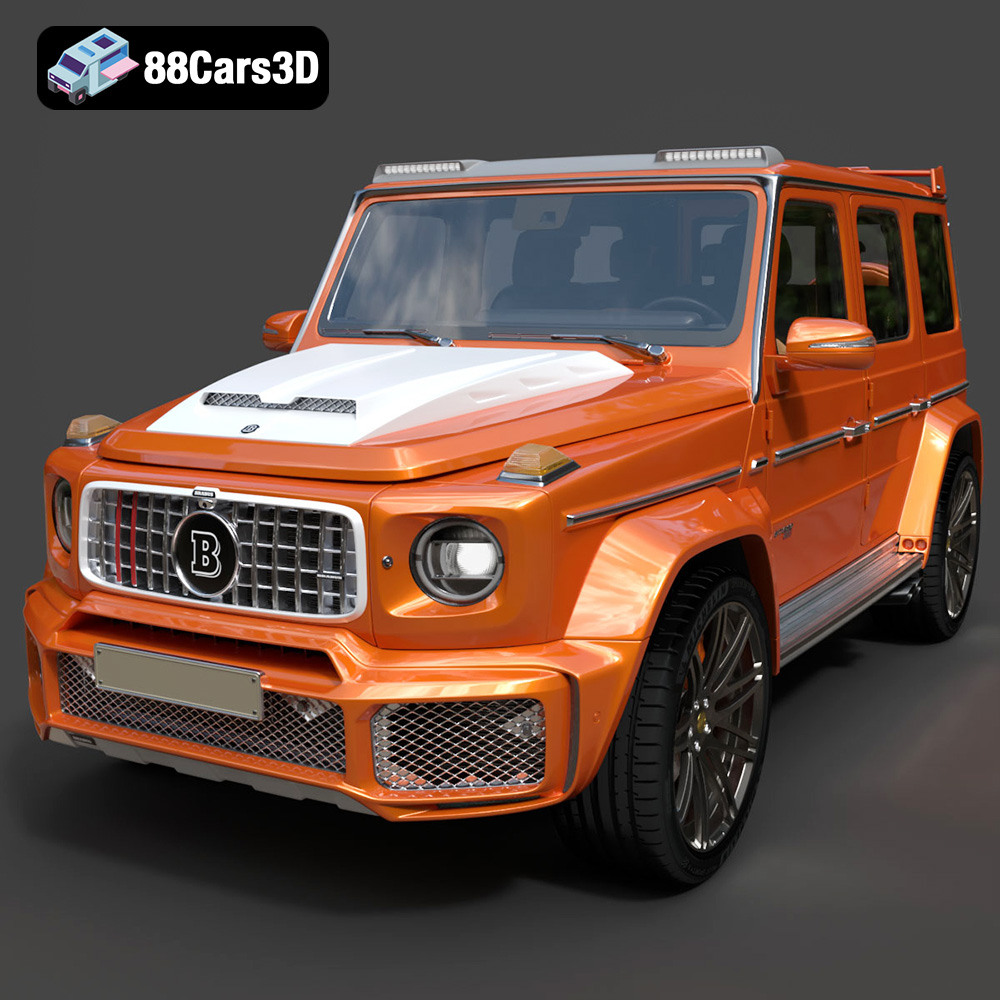
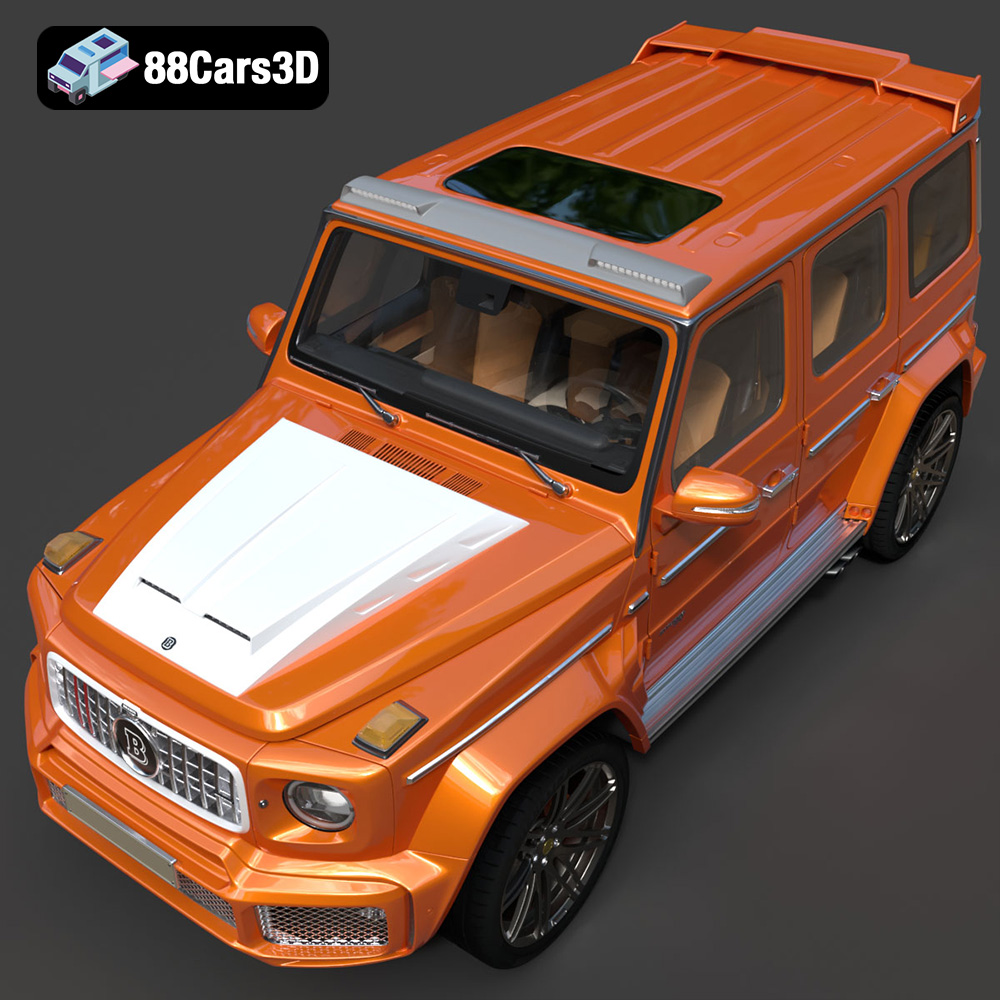
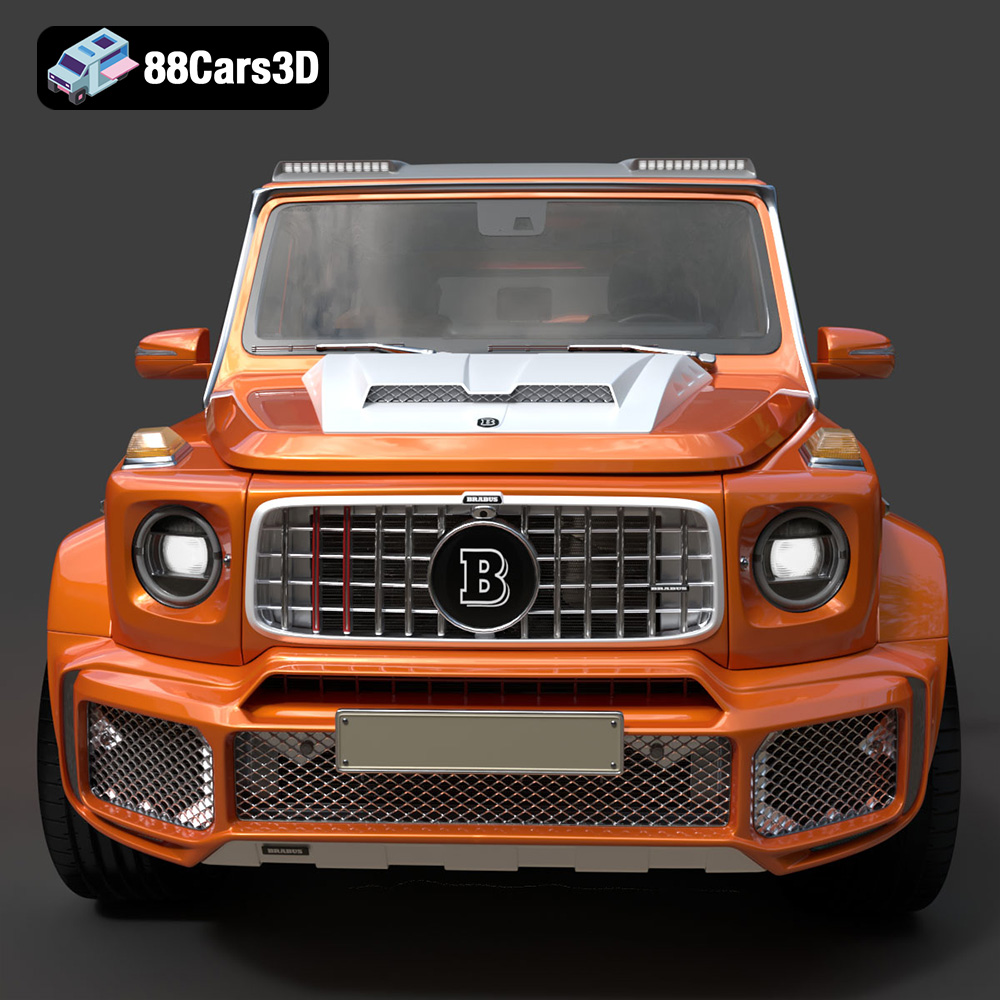
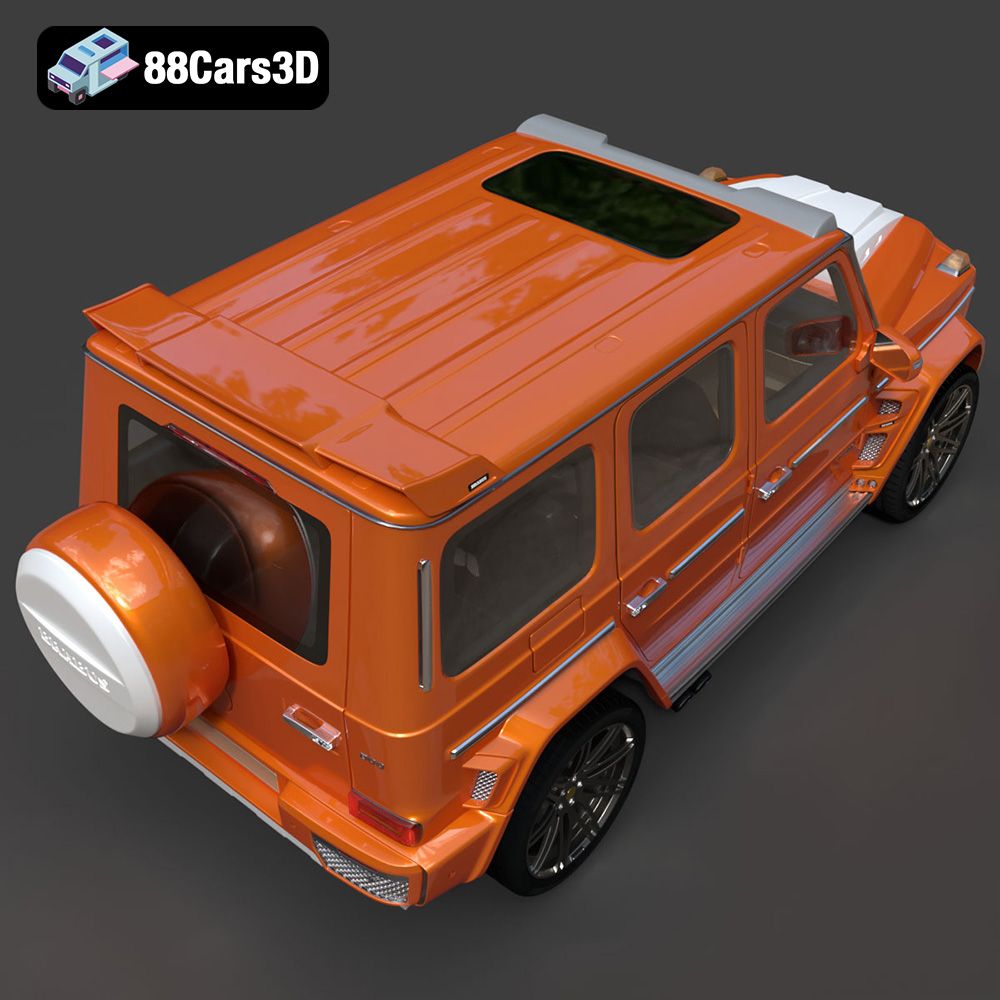
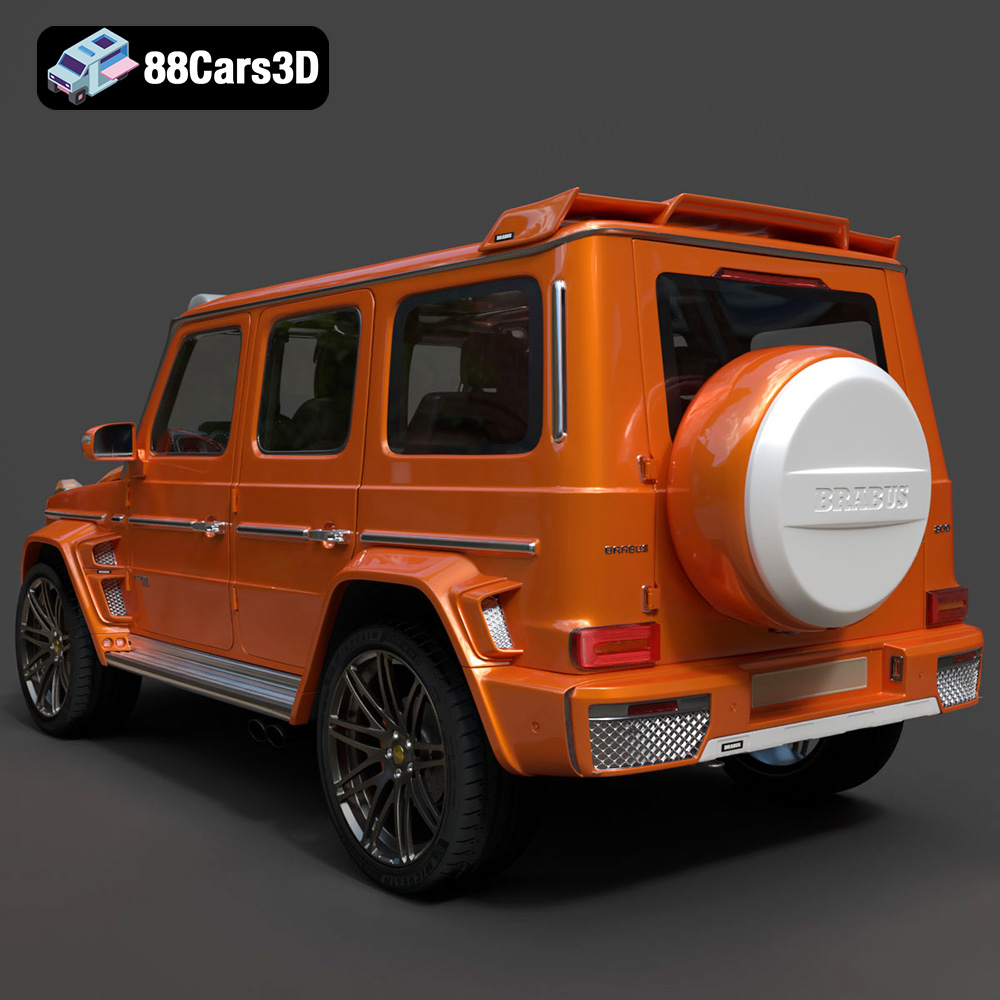
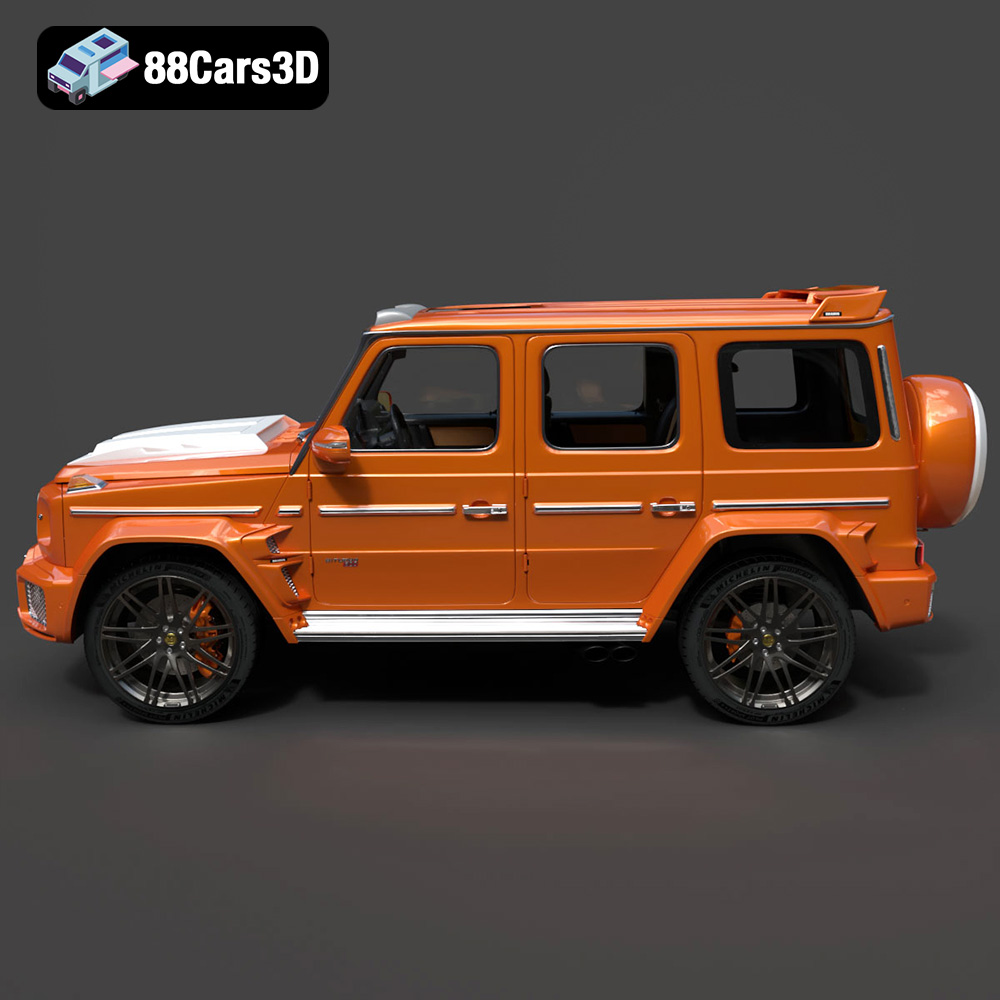
The moment you examine this Brabus G 800 3D model, its commitment to authenticity is immediately apparent. The aggressive widebody frame geometry, a signature of Brabus engineering, is faithfully recreated, capturing the muscular proportions that define its imposing stance. Every carbon fiber aerodynamic element, from the distinctive hood scoop to fender flares and mirror caps, features accurate weave patterns and reflective properties that mimic the real material.
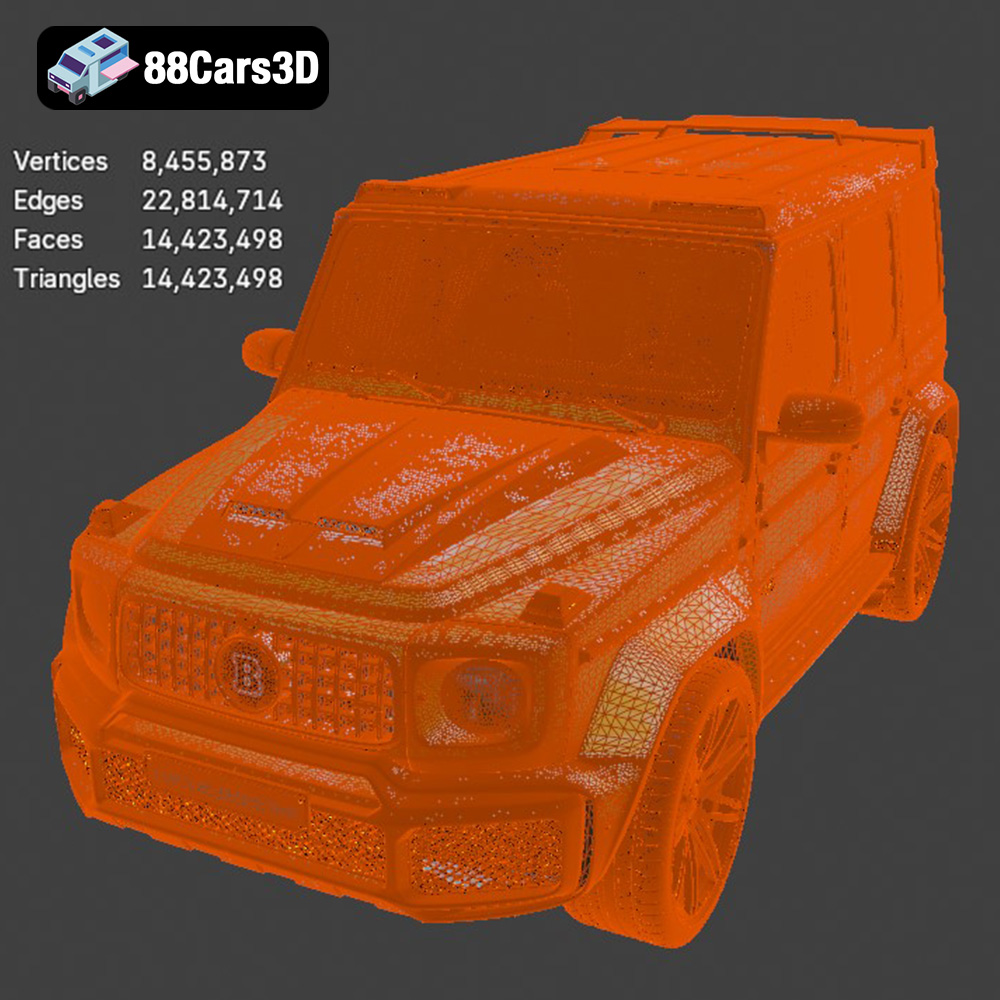
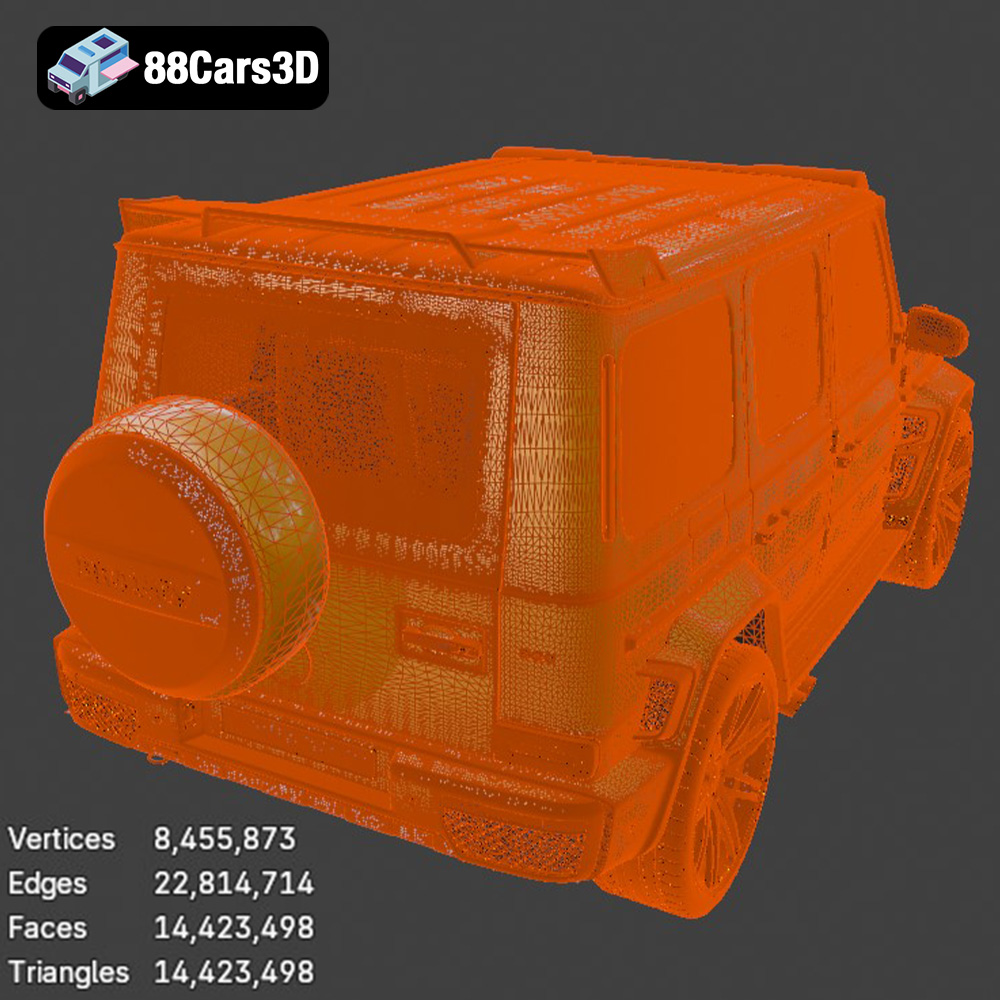
A deep dive into the technical specifications reveals an incredibly detailed topology of 14,423,498 triangles. This high polygon count is a testament to the model’s visual fidelity, ensuring that even the most minute details are preserved. From the detailed twin-turbo V8 engine block visible through the grille openings to the signature side-exit sports exhaust system, every component is rendered with precision. The distinctive LED daytime running lights, headlights, and smoked taillights are modeled with individual light sources in mind, making them ready for sophisticated lighting setups. Furthermore, the massive Brabus Monoblock wheels, wrapped in high-performance tires, are meticulously designed, with upgraded suspension components and a detailed undercarriage that would satisfy even the most discerning automotive enthusiast. Crucially, separate components for wheels, suspension, and steering ensure seamless animation and realistic movement in any dynamic scenario.
The exterior only tells half the story of a luxury vehicle, and the interior of the Brabus G 800 3D model is no less impressive. Step inside the virtual cockpit, and you’re greeted by luxurious quilted leather seats, complete with intricate stitching patterns that speak to hours of meticulous modeling. The custom performance steering wheel, adorned with carbon fiber accents, is fully detailed, as are the high-resolution digital dual-screen instrument cluster, center console, pedals, and paddle shifters. Even the air vents are accurately modeled, contributing to an overall sense of opulence and realism.
For game developers, the interior’s optimized geometry is a significant advantage, making it perfect for first-person point-of-view (POV) in gaming. This attention to detail ensures that players or viewers feel truly immersed, whether they are navigating an open-world environment or exploring a virtual showroom. The seamless transition from exterior grandeur to interior lavishness makes this Brabus G 800 model a truly comprehensive digital asset.
The true value of a premium 3D model lies in its ability to integrate seamlessly into diverse professional pipelines, offering both visual splendor and technical robustness. The Brabus G 800 3D model, with its high detail and optimized structure, is engineered to excel across multiple industries.
For automotive studios, marketing agencies, and visualization artists, the Brabus G 800 3D model is an invaluable asset. Its unparalleled visual fidelity makes it excellent for brand campaigns, luxury lifestyle rendering scenes, and studio lighting setups. Artists can manipulate material finishes – from matte and gloss to various metallic paints – to create stunning, photorealistic images that showcase the vehicle in its best light. Whether it’s a sleek studio shot emphasizing its carbon fiber elements or an outdoor scene reflecting environmental realism, the model’s detailed textures and precise geometry ensure breathtaking results. This allows designers to experiment with new colors, wheel options, and even environmental reflections without the cost and time of physical prototypes, accelerating the design and marketing process significantly.
Game developers constantly seek assets that strike a perfect balance between visual realism and real-time performance. With 14,423,498 triangles, the Brabus G 800 3D model is explicitly designed to be “Game-Ready & Optimized” for real-time engines like Unreal and Unity. This polycount, while high, is meticulously structured to ensure visual richness without bogging down engine performance in high-end AAA titles. The model’s real-world scale accuracy and proper pivot setup for steering, wheel rotation, and suspension travel are critical for realistic vehicle physics and animation in racing games, open-world adventures, and advanced simulators. The model essentially offers a plug-and-play solution for creating compelling and believable vehicle interactions, saving countless hours of optimization and rigging.
The burgeoning fields of Augmented Reality (AR) and Virtual Reality (VR) demand highly optimized yet visually stunning assets to create truly immersive experiences. The Brabus G 800 model is perfect for virtual showrooms, interactive configurators, and mobile AR applications, especially with its inclusion of the .glb format. Imagine prospective buyers exploring every angle of the Brabus G 800 in a virtual environment, changing colors, opening doors, and even “sitting” inside the cockpit, all with real-time feedback. This level of interaction, enabled by high-quality 3D car models, transforms product showcasing into an engaging, memorable experience, bridging the gap between digital representation and tangible interaction.
A truly versatile 3D asset extends its utility beyond digital screens, offering pathways to physical manifestation and creative adaptation. The Brabus G 800 3D model exemplifies this by catering to both physical production and extensive digital customization.
For hobbyists, collectors, or even professional model makers, the ability to 3D print a digital asset is a game-changer. The Brabus G 800 model is convertible to the .stl format, making it ready for display-scale fabrication. The provided 3D print settings are invaluable guidelines: recommended scales of 1:12, 1:18, or 1:24, with layer heights between 0.04–0.12 mm. Resin printing is specifically recommended for achieving the model’s fine details, capturing the intricate grille patterns, exhaust tips, and interior stitching. With precise wall thickness recommendations (1.2–2.0 mm), moderate infill (20–30%), and clear instructions for supports and print orientation, even complex parts like the exhaust and mirrors can be successfully reproduced. Post-processing steps, including sanding, primer, and applying authentic factory colors with metallic finishes, allow for a physical replica that rivals commercial die-cast models. This aspect highlights the incredible versatility of high-quality 3D car models from sources like 88cars3d.com, transforming pixels into tangible objects.
One of the most compelling advantages of owning a professional-grade 3D model is the freedom it grants for customization. The Brabus G 800 model allows for extensive modifications to suit specific project needs or creative visions. Artists can easily change body colors, experimenting with a vast palette of factory tones or creating bespoke custom finishes. Tire textures can be swapped to depict off-road variants for rugged scenes or sleek street tires for urban environments. Material finishes can be adjusted between matte, gloss, and metallic to perfectly match desired aesthetics. Furthermore, adapting lighting for different environments – from a dramatic sunrise to an overcast industrial setting – can drastically alter the mood and impact of any render. This inherent adaptability ensures that the Brabus G 800 can be a central element in a myriad of scenes, always feeling fresh and tailored to the narrative at hand. This level of flexibility is paramount for professionals who need to iterate quickly and produce unique visual content.
Choosing the appropriate 3D model is a critical decision that impacts project quality, efficiency, and budget. With an abundance of options available, understanding what constitutes a truly valuable asset is key. The Brabus G 800 3D model stands as an exemplar of professional-grade quality.
When assessing 3D car models, several technical specifications must be scrutinized. A detailed model, like the Brabus G 800 with its 14,423,498 triangles, indicates a high level of fidelity. However, mere polycount isn’t enough; clean topology, proper UV mapping, and a well-structured mesh are crucial for efficient rendering and texturing. Real-world scale accuracy ensures that the model integrates seamlessly with other assets and environments, avoiding disproportionate elements. Crucially, correct pivot points for movable parts (wheels, steering, suspension) are essential for realistic animation and interaction in game engines. The availability of multiple file formats, as seen with the Brabus G 800, signifies a developer’s commitment to broad compatibility and usability across various software and pipelines. Always look for transparent documentation of these specifications, which empowers you to make informed decisions about your purchases.
While the initial cost of a high-quality, pre-made 3D model might seem significant, it pales in comparison to the time, resources, and expertise required to build such an asset from scratch. Developing a vehicle with the complexity and detail of the Brabus G 800 would demand hundreds of hours from skilled 3D artists, modelers, and texture artists. By acquiring a professionally made asset, creative teams can immediately focus on integration, rendering, and scene composition, drastically accelerating project timelines and reducing overheads. This makes premium 3D car models an incredibly cost-effective solution for studios, freelancers, and large enterprises alike. Platforms like 88cars3d.com specialize in providing these meticulously crafted assets, enabling professionals to access top-tier content without the exorbitant development costs, allowing them to truly unlock their creative potential.
The digital landscape of automotive design, gaming, and visualization is constantly evolving, demanding assets that are not only visually stunning but also technically robust and highly adaptable. The Brabus G 800 3D model exemplifies these qualities, offering an unparalleled level of detail, accuracy, and versatility across a spectrum of professional applications. From its meticulously recreated exterior and luxurious interior to its optimized geometry for real-time engines and comprehensive file format support, this model is a testament to what’s achievable in 3D automotive artistry.
Whether you are crafting a breathtaking architectural visualization, developing the next-generation racing simulator, designing an immersive AR/VR experience, or even bringing a detailed replica to life through 3D printing, the Brabus G 800 provides the perfect foundation. It’s more than just a model; it’s a gateway to accelerating your workflow, enhancing your visual fidelity, and empowering your creative vision. Explore this exceptional asset and other premium 3D car models at 88cars3d.com, and elevate your projects with the very best in digital automotive content.
Experience the ultimate expression of luxury and raw power with the Brabus G 800. Based on the legendary G-Class, this masterpiece of automotive engineering features an aggressive widebody kit, signature carbon fiber aerodynamic elements, and iconic side-exit sports exhausts. Known for its imposing boxy stance and twin-turbo V8 powerplant, the G 800 blends off-road heritage with hypercar-level performance aesthetics. This premium 3D model boasts an incredibly detailed topology of 14,423,498 triangles, delivering unparalleled visual fidelity. Despite its high polygon count, the geometry is meticulously structured for high-end rendering, AAA game development, architectural visualization, and immersive AR/VR experiences. Every curve, carbon weave, and interior stitch has been faithfully recreated. Perfect for high-end automotive visualizations, luxury lifestyle rendering scenes, interactive VR showrooms, and cinematic animations.
$90.00
.blend
.brabus
.fbx
.glb
.luxury suv
.max
.obj
.ply
.rendering
.stl
.unreal
car-3d-model
g-800
g-class
game asset
game-ready
off-road
SUV
VR/AR