Get 20% OFF All Premium 3D & STL Models!

The roar of a classic muscle car engine, the gleam of chrome, and the undeniable presence of American automotive design have a timeless appeal. For creators in the digital realm, capturing this essence requires more than just passion; it demands precision, technical excellence, and an understanding of how to translate physical power into virtual fidelity. Whether you’re a game developer crafting the next racing epic, an architect visualizing a scene with a touch of nostalgia, or a marketer producing a high-impact cinematic, the quality of your 3D assets is paramount. It’s here that a meticulously crafted model like the custom Pontiac Firebird Trans Am 1970 Tuning 3D Model truly shines, offering an unparalleled foundation for a myriad of projects.
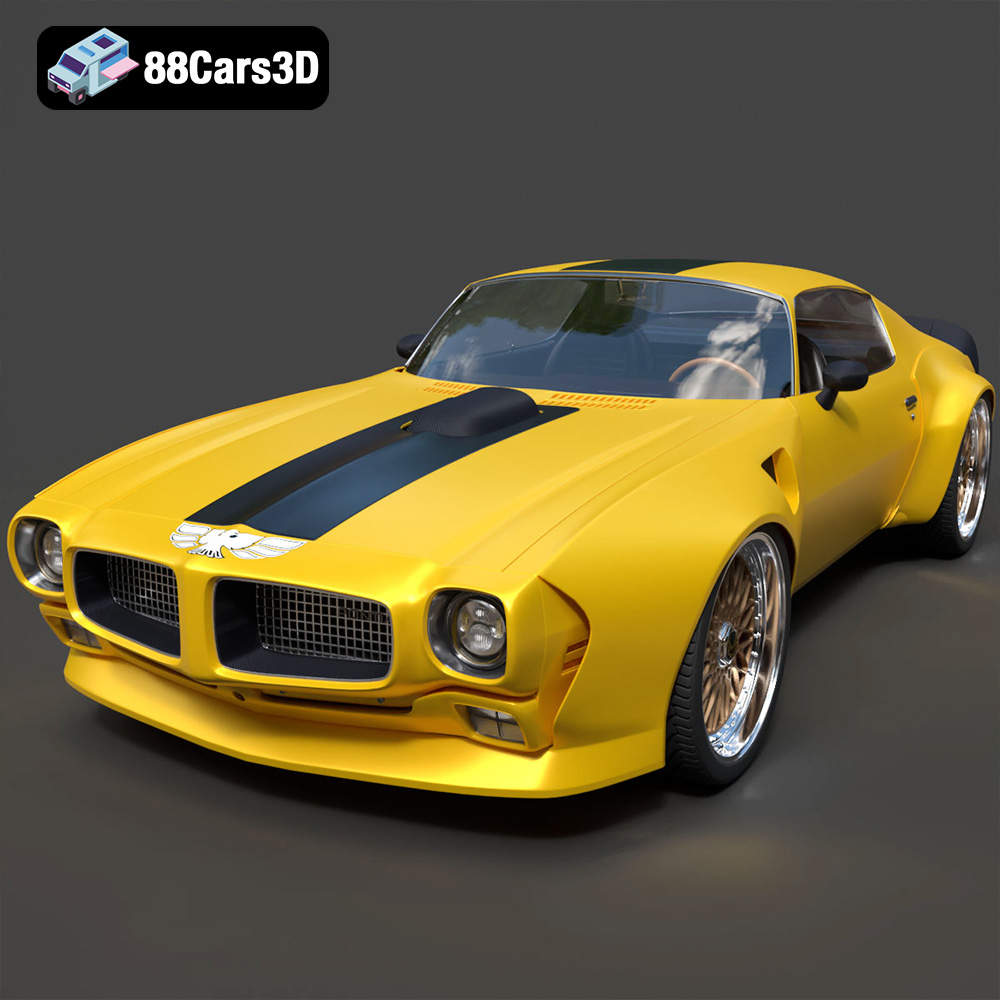
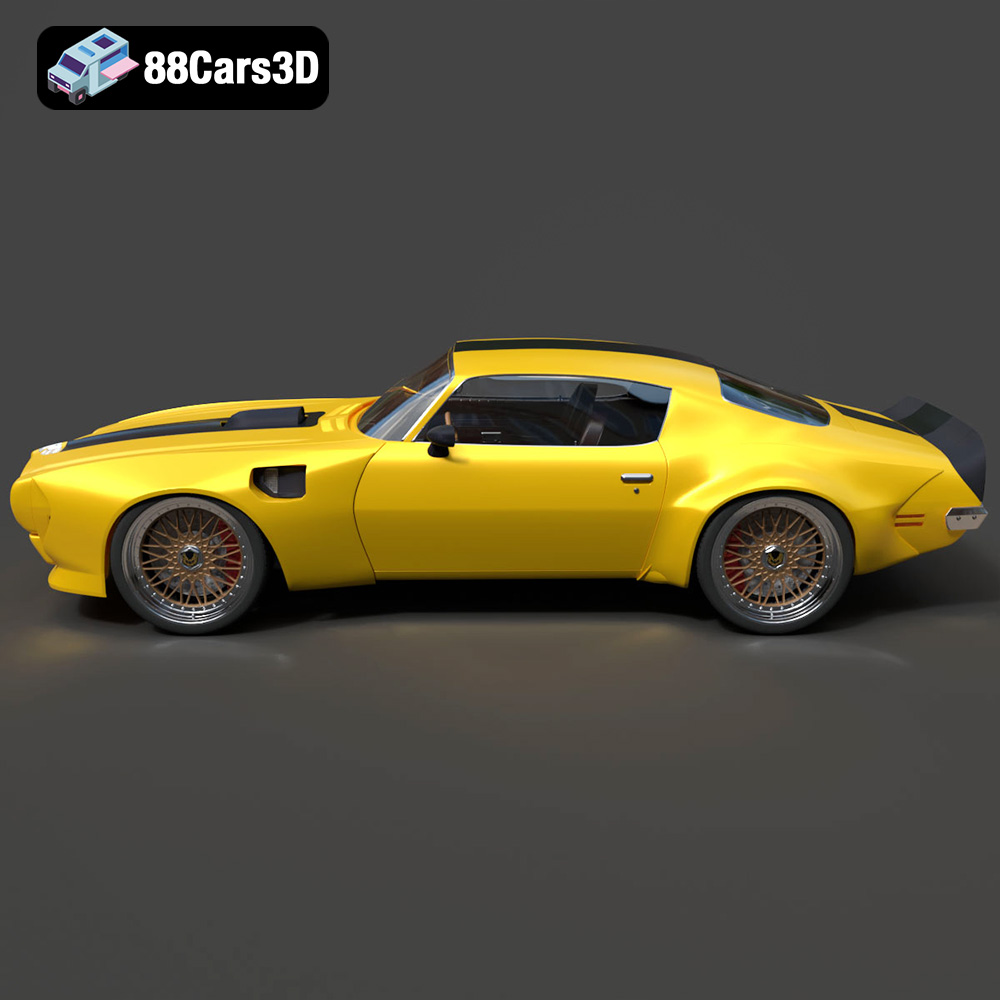
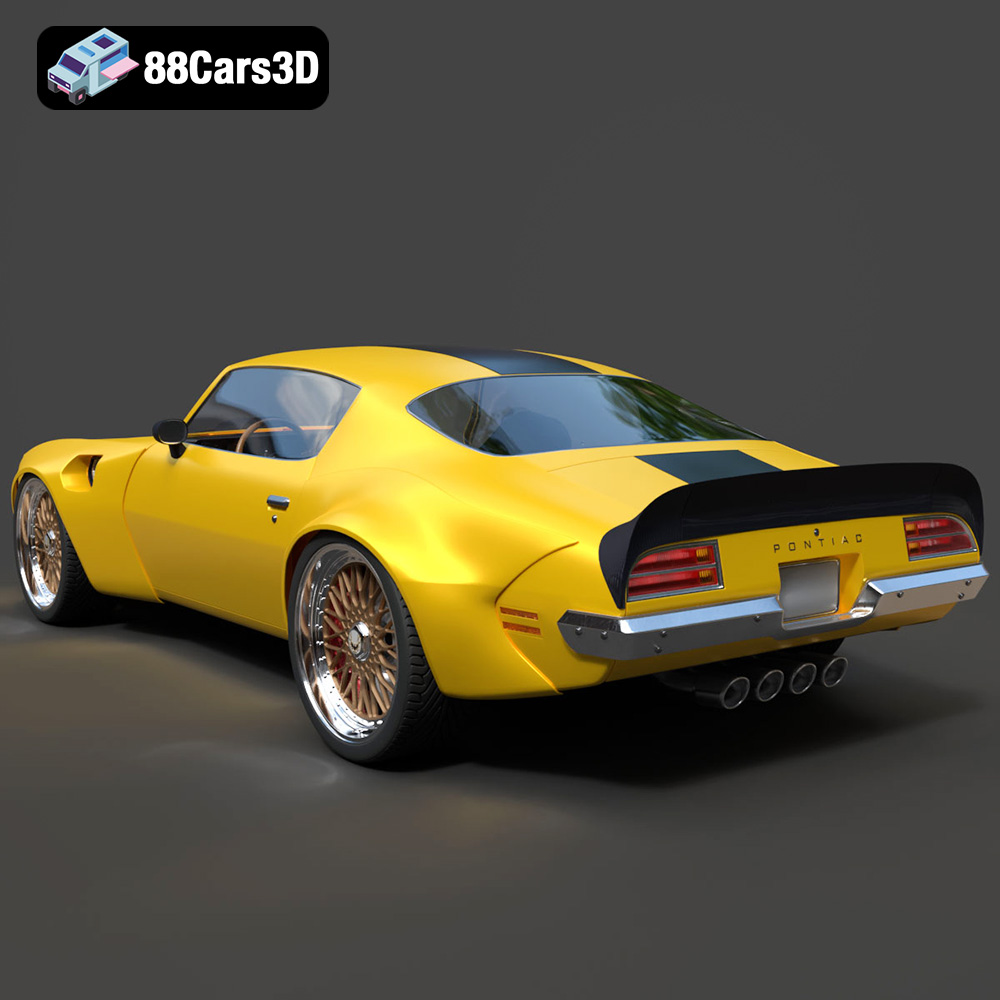
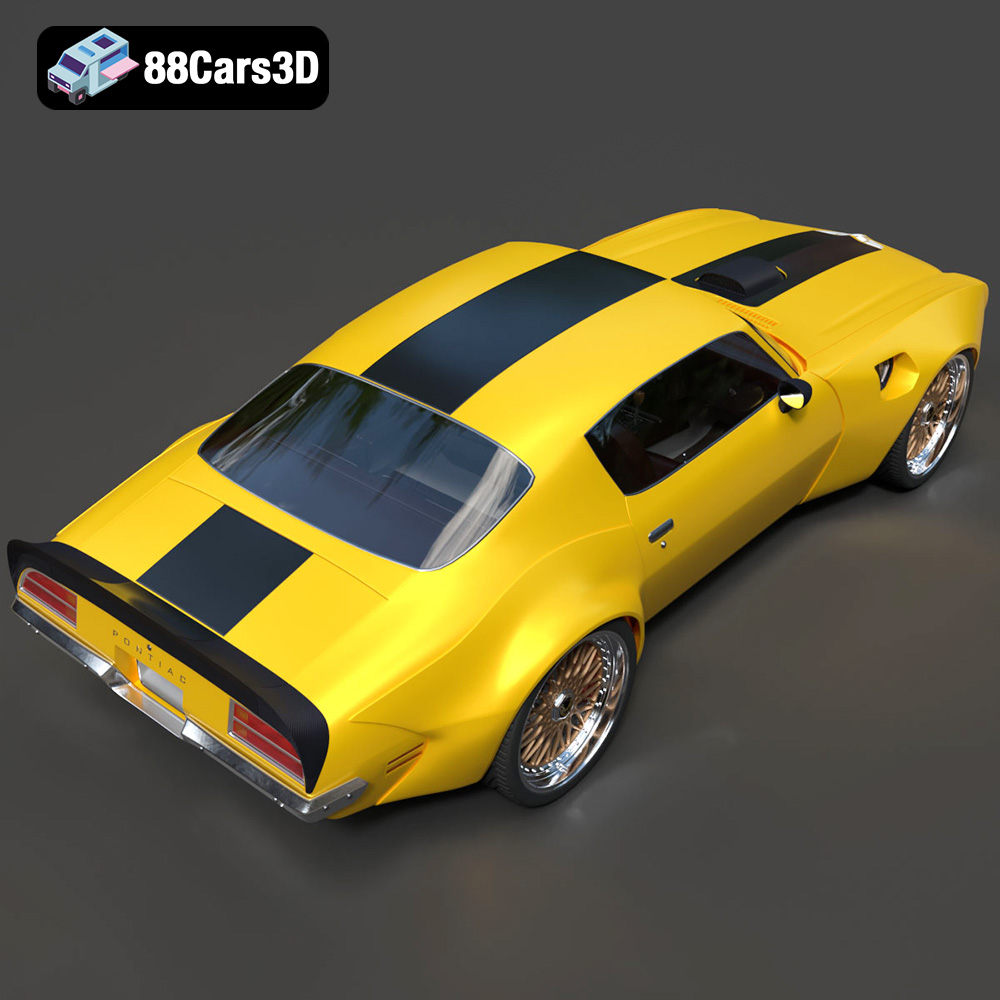
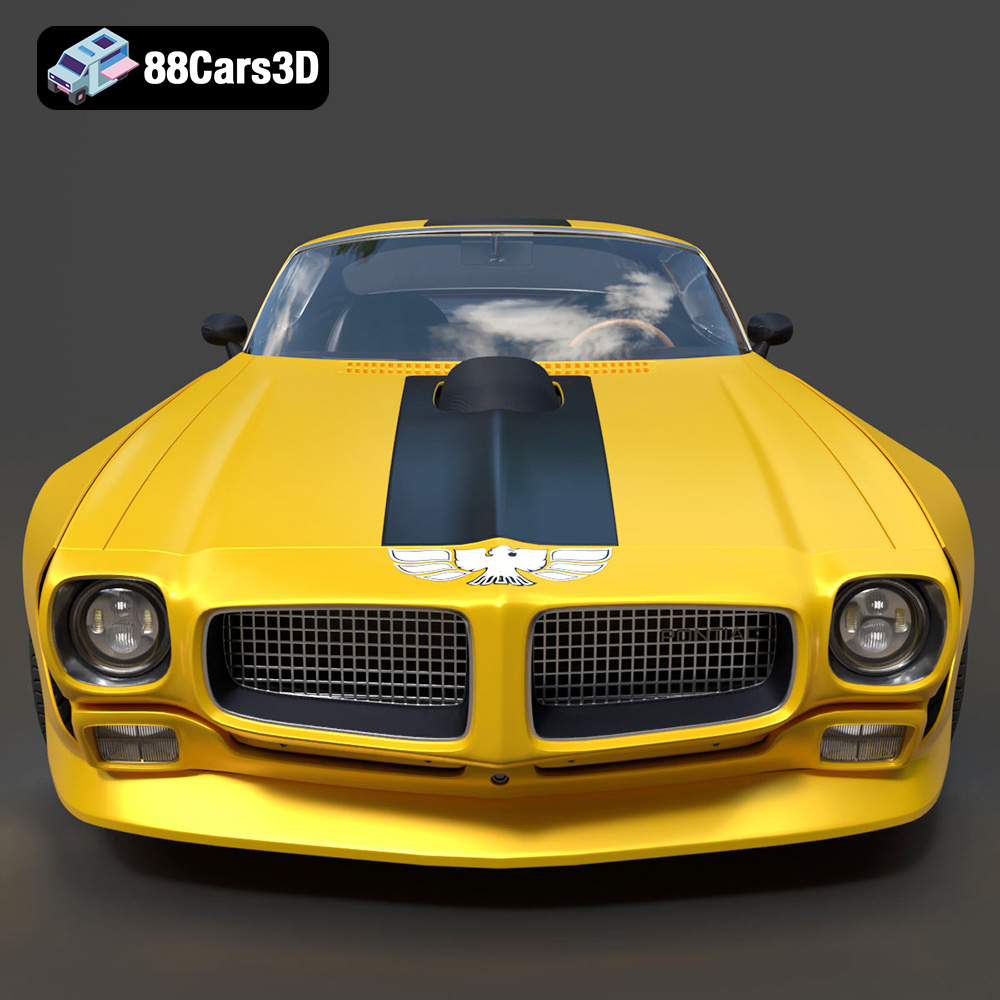
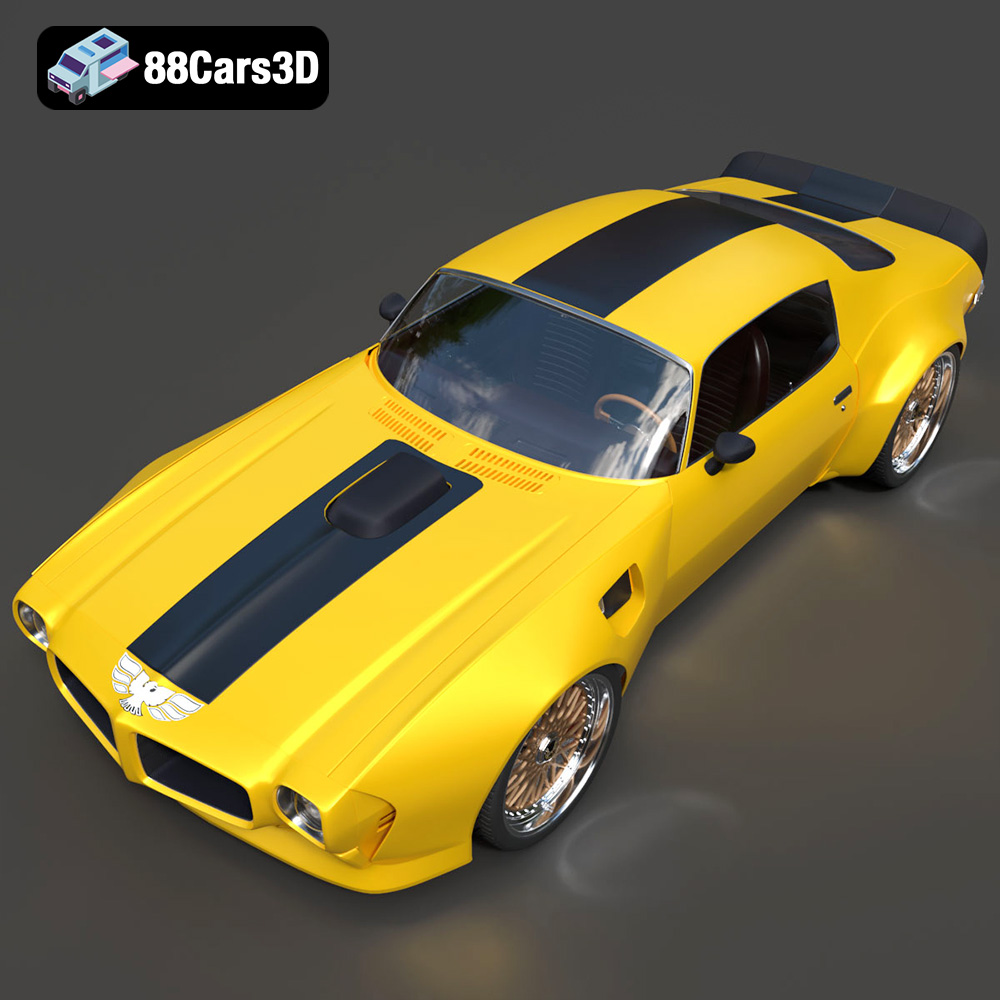
This isn’t just any vintage car model; it’s a testament to detailed digital craftsmanship, blending the raw, aggressive styling of the iconic 1970 Firebird Trans Am with tasteful modern tuning modifications. From its lowered stance and widebody flares to the modernized LED lighting and the legendary shaker hood scoop, every element has been considered. The custom V8 engine block styling and sport exhaust system further amplify its commanding visual presence, respecting its heritage while integrating contemporary performance aesthetics. Such a model, found on platforms like 88cars3d.com, becomes an invaluable tool, ready to be deployed across various professional pipelines.
Creating a truly exceptional 3D car model is a complex interplay of artistic vision and rigorous technical execution. It’s about more than just matching blueprints; it’s about capturing the soul of the machine, ensuring that every curve, reflection, and shadow contributes to a convincing digital representation. When sourcing 3D car models, professionals look for assets that not only look stunning but are also built with a deep understanding of downstream applications.
The Pontiac Firebird Trans Am 1970 Tuning 3D Model exemplifies this fusion. It takes an automotive icon revered for its aggressive lines and powerful stance and reimagines it with modern tuning elements. This means not just replicating the original vehicle, but enhancing it with details like deep-dish custom alloy wheels, low-profile performance tires, and an upgraded sport suspension. The challenge is to introduce these modern touches without sacrificing the authentic feel of the 1970s muscle car. This requires a keen eye for design harmony and an understanding of both eras’ aesthetics.
A closer inspection reveals the depth of detail present in this particular 3D model. The exterior features accurate Pontiac Firebird Trans Am 1970 tuned frame geometry and widebody proportions. Crucially, the detailed high-performance V8 engine block with its iconic shaker hood scoop is not just a texture but a sculpted element. Moving to the interior, custom racing bucket seats with detailed harness slots, a performance-oriented steering wheel, and a retro-modern instrument cluster are meticulously modeled. These interior details are particularly important for applications like first-person view in racing games or virtual reality walkthroughs, where immersion hinges on such fidelity.
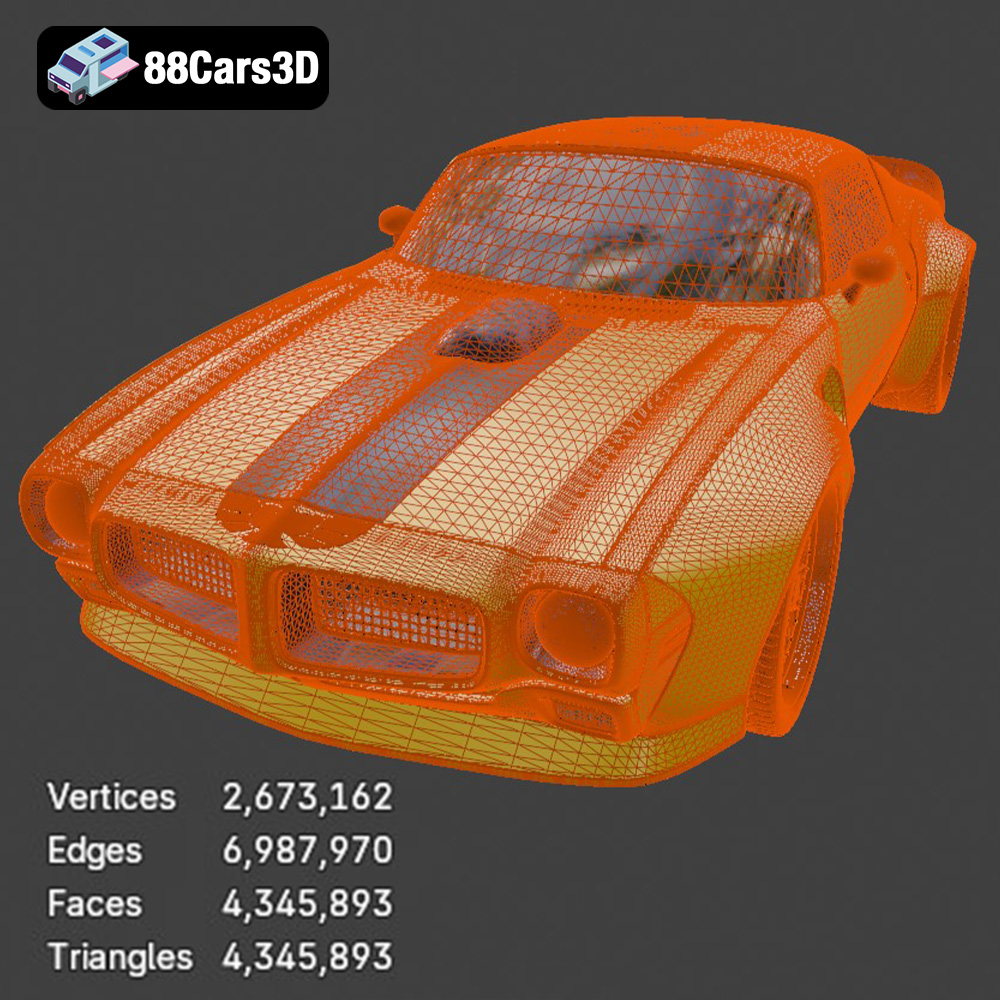
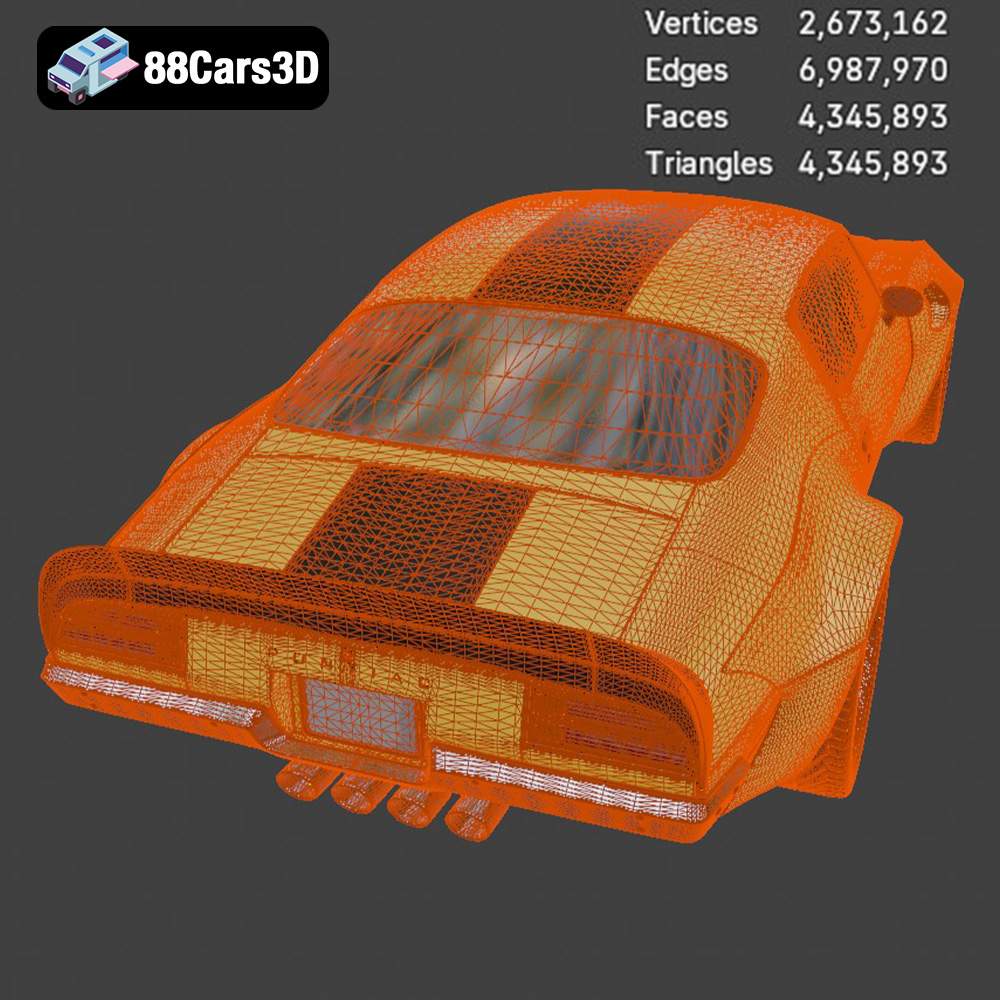
In the world of 3D, detail often comes at the cost of performance. However, premium 3D car models manage to strike a delicate balance. The Pontiac Firebird Trans Am 1970 Tuning model boasts a highly detailed 4,345,893 triangle count. While this might seem substantial, for high-end rendering and cinematic productions, this level of detail delivers unparalleled visual fidelity. What’s more critical than the raw number is the quality of the topology. The model’s topology is carefully structured to ensure pristine reflections and smooth shading, which is essential for realistic renders and high-fidelity game development. Optimized geometry also means the model is “game-ready,” capable of being efficiently integrated into real-time engines like Unreal or Unity without excessive strain on system resources.
The versatility of a 3D model is often defined by the range of file formats it supports. Each format is designed with specific use cases and software ecosystems in mind, making it crucial for digital artists and developers to understand their distinctions. The Pontiac Firebird Trans Am 1970 Tuning 3D Model, available on 88cars3d.com, is delivered with a comprehensive suite of formats, ensuring maximum compatibility across various professional pipelines.
The .blend format is the native file type for Blender, the popular open-source 3D creation suite. When a model is provided in .blend format, it means you’re getting a fully editable Blender scene. This includes not only the mesh geometry but also materials, textures, lighting setups, animation data, and even physics simulations specific to Blender. For users deeply integrated into the Blender ecosystem, this format offers the most flexibility for further customization, rigging, animation, or scene integration. It allows artists to dive directly into the model’s construction, understand its material nodes, and make granular changes without any loss of data that might occur during format conversions.
The .fbx (Filmbox) format is an industry standard for 3D data exchange, particularly favored in game development and animation. It’s excellent for transferring geometry, materials, textures, animations, and even skeletal rigs between different 3D software applications (like 3ds Max, Maya, Blender) and game engines (Unreal, Unity). Its robust support for animation makes it ideal for models like the Firebird, which feature separate wheels, suspension, and steering components ready for complex animation sequences. Conversely, the .obj (Wavefront OBJ) format is a more universal, albeit simpler, interchange format. It primarily stores geometry (vertices, normals, UVs, faces) and references external material files (.mtl). While it doesn’t support animation or advanced scene data, its widespread compatibility ensures that virtually any 3D software can open and import an .obj file, making it a reliable fallback for cross-software integration and a staple for pure mesh transfer.
.glb (GL Transmission Format Binary) is increasingly becoming the go-to format for efficient 3D model delivery, especially for web-based AR (Augmented Reality), VR (Virtual Reality), and browser-based display. It’s a binary container format that embeds all necessary assets—model data, textures, animations—into a single, self-contained file. This optimization makes .glb files lightweight and quick to load, perfect for interactive 3D viewers on websites or mobile AR applications. The inclusion of an .unreal format signifies that the model is delivered as an engine-ready asset specifically tailored for Unreal Engine. This often means pre-optimized meshes, correctly set up materials, and potentially even blueprint integrations or physics assets, saving significant time and effort for Unreal Engine developers by minimizing import and setup processes.
For those looking to bring their digital car models into the physical world, .stl (Stereolithography) is the undisputed standard for 3D printing. It represents 3D surfaces as a collection of unconnected triangles, essentially defining the outer skin of the object. While it lacks color or material information, its simplicity makes it universally compatible with 3D printers and slicing software. The Pontiac Firebird Trans Am model’s availability in .stl ensures hobbyists and professionals can effortlessly prepare it for physical reproduction. The .ply (Polygon File Format) is another precision mesh format often used for storing 3D scanner data, CAD models, or for analysis. It can store more complex information than .stl, including color per vertex or face, normals, and texture coordinates, making it valuable for detailed mesh analysis or applications where color information is tied directly to the geometry.
Finally, the .max format is the native file type for Autodesk 3ds Max, a powerful and widely used 3D modeling, animation, and rendering software, particularly prevalent in architectural visualization, automotive design, and film/TV production. A .max file provides a fully editable 3ds Max project, containing all scene data—geometry, materials, textures, cameras, lights, animation, modifiers, and plugin-specific data. For professionals working within 3ds Max, this format offers the highest degree of control and flexibility, allowing them to dissect, modify, and render the Pontiac Firebird model within their familiar environment, often leveraging advanced rendering solutions like V-Ray or Corona Renderer.
The true value of a high-quality 3D car model lies in its seamless integration into diverse professional workflows. The Pontiac Firebird Trans Am 1970 Tuning 3D Model is designed with this versatility in mind, offering advantages for several key industries.
For professional automotive rendering, precision and realism are paramount. Utilizing the .max file format, artists can import the Pontiac Firebird model directly into 3ds Max. Here, the meticulously structured topology and detailed components become a canvas for creating breathtaking visuals. Leveraging powerful render engines like V-Ray or Corona Renderer, artists can apply physically accurate materials, set up studio-quality lighting, and compose cinematic camera angles. The model’s clean mesh ensures pristine reflections on its widebody surfaces and smooth shading, crucial for photorealistic outcomes in advertising campaigns, product showcases, or lifestyle scenes. Its separate, animatable parts (wheels, suspension, steering) also facilitate dynamic renders, showcasing the vehicle in motion or interacting with its environment.
In the fast-paced world of game development, assets need to be visually rich yet performance-optimized. The Pontiac Firebird Trans Am 1970 Tuning 3D Model, with its game-ready 4.3 million triangle count, strikes this balance perfectly. The inclusion of an .unreal specific format and .fbx ensures a smooth pipeline into Unreal Engine. Developers can utilize its real-world scale accuracy and proper pivot setup for steering, wheel rotation, and suspension travel to implement realistic vehicle physics and controls. The optimized geometry for first-person POV in the cockpit is a significant advantage for racing titles or open-world games where players spend considerable time inside the vehicle. This asset serves as a robust foundation for building immersive racing simulators and detailed virtual environments.
Augmented Reality (AR) and Virtual Reality (VR) are transforming how we interact with products, especially in the automotive sector. The Pontiac Firebird model is an excellent candidate for virtual showrooms and configurators. Its .glb format is ideal for efficient, browser-based AR experiences on mobile devices, allowing potential buyers to “place” the car in their driveway. In VR, the highly detailed exterior and interior provide an immersive experience, letting users explore every angle, sit inside the cockpit, and appreciate the tuning modifications up close. The optimized polycount ensures smooth framerates in these demanding real-time environments, offering a seamless and engaging user experience for virtual product launches or interactive educational content.
The journey of a 3D model doesn’t always end on a digital screen. For hobbyists, collectors, and prototyping professionals, the ability to transform a virtual asset into a tangible object is a powerful capability. The Pontiac Firebird Trans Am 1970 Tuning 3D Model is specifically designed with 3D printing in mind, thanks to its availability in the .stl format.
Converting a high-detail digital model into a physical print requires careful consideration. The .stl format provides the essential geometric data needed by 3D printers. The model’s intricate details, from the widebody flares to the shaker hood scoop and even the custom V8 engine block, are preserved in the .stl output. This allows for the creation of display-scale models that capture the aggressive styling and custom features of the digital asset. Whether aiming for a 1:12, 1:18, or 1:24 scale, the underlying geometry is robust enough to translate effectively.
Achieving a high-quality 3D print, especially for intricate automotive models, depends heavily on print settings. For a model like the Pontiac Firebird, resin printing is highly recommended. Resin printers (SLA/DLP/LCD) offer significantly finer detail resolution compared to filament-based FDM printers, crucial for capturing the smooth surfaces, sharp edges, and delicate components. A layer height of 0.04–0.12 mm is suggested for resin printing to ensure crisp details. For structural integrity, wall thickness should be between 1.2–2.0 mm, and an infill of 20–30% provides a good balance of strength and material usage. Supports are almost always required for complex geometries, especially for overhangs like the exhaust system, mirrors, and the underside of the frame. Proper print orientation, such as printing the frame angled, is also crucial for structural strength and minimizing support contact points on visible surfaces.
Once printed, the physical model offers new avenues for customization. Post-processing is a critical step, involving sanding to remove support marks, applying primer for a uniform surface, and then painting. Hobbyists can delve into applying authentic factory colors with metallic finishes, weathering effects, or even custom liveries to further personalize their creation. This bridge from digital asset to physical collectible highlights the versatility of high-quality 3D car models available on marketplaces like 88cars3d.com.
In competitive game development, the quality of your 3D assets can be a significant differentiator. A meticulously crafted vehicle model like the Pontiac Firebird Trans Am 1970 Tuning offers strategic advantages, contributing to both visual fidelity and development efficiency.
The 4,345,893 triangle count of this model is carefully balanced to deliver high-end visual realism without crippling real-time engine performance. This means developers can integrate the Firebird into open-world environments, racing titles, or simulators, confident that it will look stunning while maintaining playable framerates. The optimized topology ensures that real-time reflections and shadows behave correctly, enhancing the overall graphical immersion. This meticulous optimization saves significant development time that would otherwise be spent simplifying or re-modeling less efficient assets, allowing teams to focus on gameplay and other creative aspects.
One of the key technical advantages of this 3D car model is its modularity. With separate wheels, suspension, and steering components, animators and developers have granular control over the vehicle’s movement. This enables realistic physics simulations for suspension travel over uneven terrain, precise steering responses, and authentic wheel rotation. For racing games, this modularity is indispensable for creating dynamic driving experiences. It also facilitates easier implementation of damage models or vehicle customization options, where individual parts can be swapped or modified without affecting the entire mesh. This level of preparation elevates the asset from a static model to a truly interactive game element.
Authenticity is key to immersion. The real-world scale accuracy of the Pontiac Firebird Trans Am 1970 Tuning 3D Model ensures that it fits seamlessly into virtual environments, interacting correctly with other game elements and characters. When players encounter a vehicle that looks and behaves realistically, their sense of presence in the game world is significantly enhanced. Beyond just racing, such a model can enrich open-world games, add historical context to narratives, or serve as a centerpiece in virtual car shows. High-quality 3D car models are not just props; they are integral components in crafting believable and engaging digital worlds.
A premium 3D model is an investment, and its value is amplified by its ability to adapt and be customized across various projects. The Pontiac Firebird Trans Am 1970 Tuning 3D Model offers extensive customization options, further extending its utility.
The model provides a strong foundation for bespoke customization. Artists can easily change body and tank colors, applying anything from classic factory finishes to modern metallic or matte custom paints. Modifying tire textures can switch the car’s persona from a street racer to a rugged rally vehicle, while adjusting material finishes allows for unique looks. Adapting lighting for different environments is also straightforward, enabling artists to place the Firebird in a neon-lit urban scene, a sun-drenched desert, or a moody studio setup. This flexibility means a single purchase can serve multiple creative briefs, offering a strong return on investment for studios and individual artists.
The versatility of this 3D car model extends its applications far beyond gaming and rendering. In cinematic trailers, its detailed geometry and aggressive styling make it a captivating focal point, capable of carrying emotional weight. For advertising, the Pontiac Firebird can evoke nostalgia or represent modern performance, depending on the campaign’s direction. Educational projects can use it for studying automotive design, engineering principles, or even historical context. Its adaptability makes it suitable for virtual tours, interactive training simulations, or even as a high-fidelity benchmark asset for testing new rendering techniques. Such a comprehensive asset truly provides value across a broad spectrum of digital industries.
In the dynamic world of 3D content creation, the demand for high-quality, versatile, and technically sound assets is ever-present. The Pontiac Firebird Trans Am 1970 Tuning 3D Model stands as a prime example of what a premium automotive asset should be: a perfect blend of iconic design, meticulous detail, and exceptional optimization across multiple file formats. From its game-ready triangle count and pristine topology to its compatibility with industry-standard software and specific suitability for 3D printing, this model offers immense value to professionals across game development, automotive rendering, AR/VR, and beyond.
Whether you’re aiming for photorealistic renders in 3ds Max, building an immersive racing experience in Unreal Engine, or even fabricating a physical replica, this model provides the foundation you need for success. Its thoughtful engineering ensures seamless integration into complex workflows, while its rich detailing captivates audiences. For creators seeking to elevate their projects with a truly outstanding 3D car model, looking to high-quality marketplaces like 88cars3d.com for assets such as this custom Pontiac Firebird Trans Am 1970 Tuning 3D Model is a strategic decision that pays dividends in quality and efficiency.
Experience the raw power and aggressive styling of the custom Pontiac Firebird Trans Am 1970 Tuning. This iconic American muscle car has been meticulously modeled with extreme attention to its tuning modifications, featuring an aggressive lowered stance, modernized lighting, widebody flares, and the legendary shaker hood scoop. The custom V8 engine block styling and sport exhaust system give it a commanding visual presence that respects its 1970s heritage while integrating modern performance aesthetics. Boasting a highly detailed 4,345,893 triangle count, this model delivers unparalleled visual fidelity for high-end rendering and cinematic productions. Despite its immense detail, the topology is carefully structured to ensure pristine reflections and smooth shading, making it an outstanding asset for high-fidelity game development, virtual reality showrooms, and professional automotive visualizations.
$90.00
.blend
.fbx
.firebird
.glb
.max
.obj
.ply
.pontiac
.rendering
.stl
.tuning
.unreal
american-muscle
car-3d-model
classic-car
game asset
game-ready
low-poly
muscle-car
optimized
trans-am-1970
VR/AR