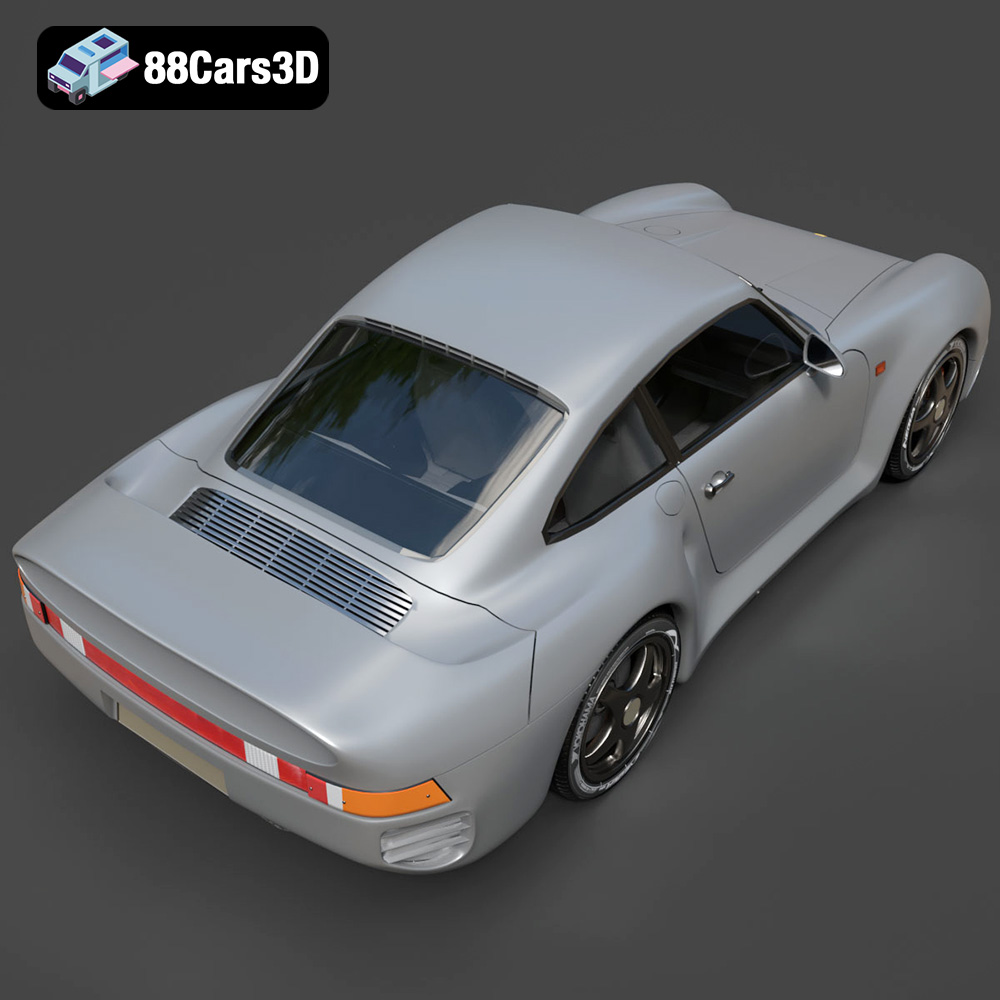
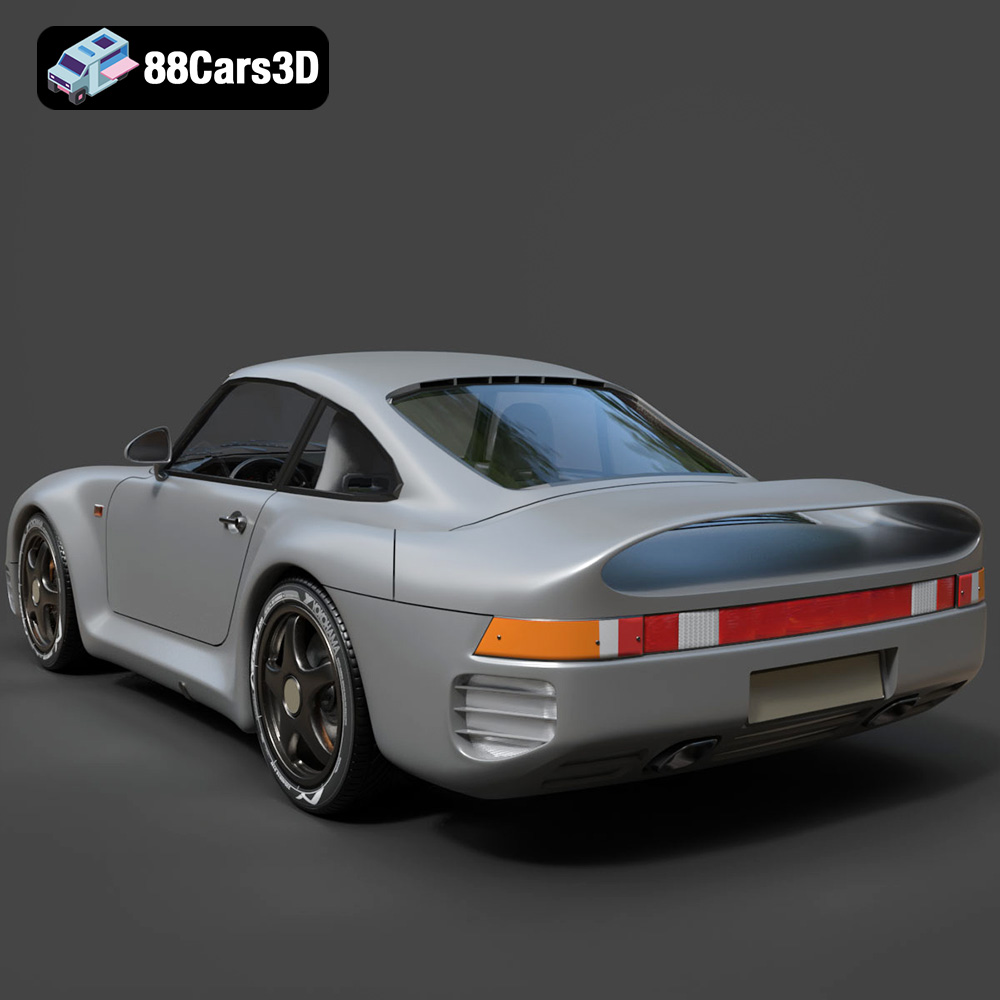
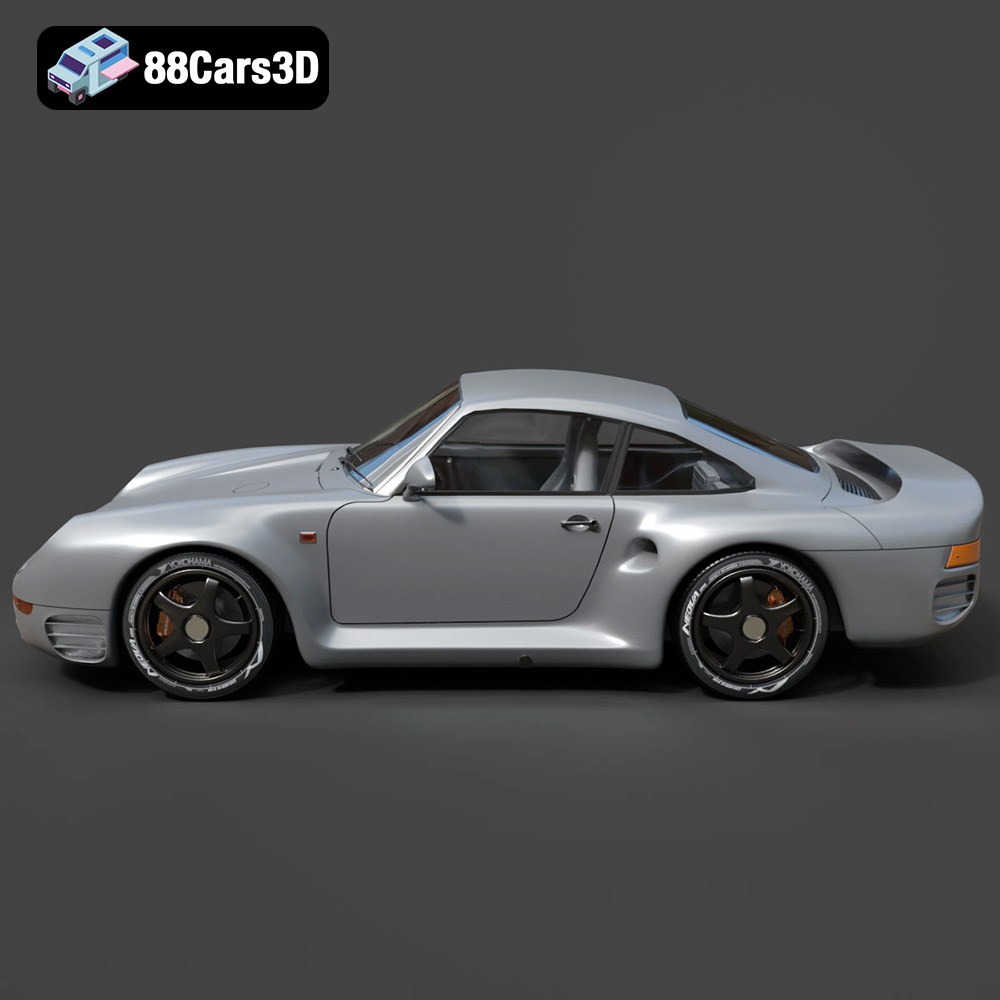
Get 20% OFF All Premium 3D & STL Models!

In the pantheon of automotive legends, few cars command the same reverence and admiration as the Porsche 959. A true technological tour de force of the 1980s, it redefined what a supercar could be, blending blistering performance with unparalleled engineering innovation. Today, its iconic silhouette and groundbreaking features continue to inspire, not just on the road, but increasingly in the intricate landscapes of 3D digital art and game development.
For designers, animators, game developers, and visualization specialists, the challenge and reward of recreating such a masterpiece in three dimensions are immense. It requires an extraordinary blend of artistic skill and technical precision to capture every curve, every vent, and every detail that made the original so special. This is where high-quality 3D car models become indispensable assets, providing a meticulously crafted foundation upon which to build immersive experiences. Today, we’re diving deep into one such exemplary asset: the Porsche 959 1986 3D Model available on 88cars3d.com, exploring how such a detailed model empowers professionals across various digital domains.
The original Porsche 959 was more than just a car; it was a rolling laboratory. Developed initially for Group B rallying, it showcased advancements like an electronically controlled all-wheel-drive system, active ride height, and a twin-turbocharged flat-six engine. Its aerodynamic styling, characterized by the integrated rear spoiler and widebody proportions, was both functional and aesthetically revolutionary. These attributes make it an ideal subject for digital recreation, offering a rich tapestry of details for 3D artists to explore and replicate.
Translating such an intricate piece of machinery into a high-fidelity 3D car model demands obsessive attention to detail. Every rivet, every seam, and every component must be accurately represented to truly convey the car’s legendary status. The Porsche 959 1986 3D Model excels in this regard, capturing the essence of the original with remarkable precision, ensuring that its digital counterpart carries the same gravitas as the physical vehicle.
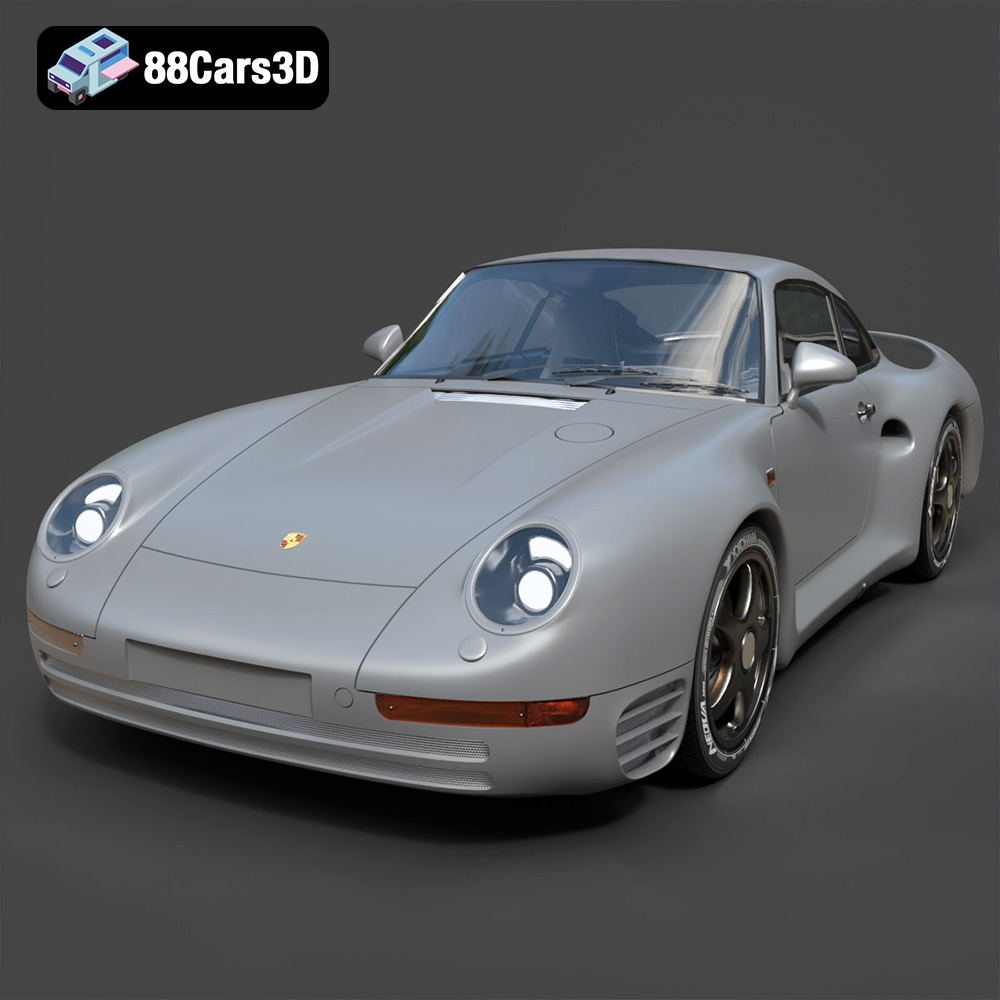
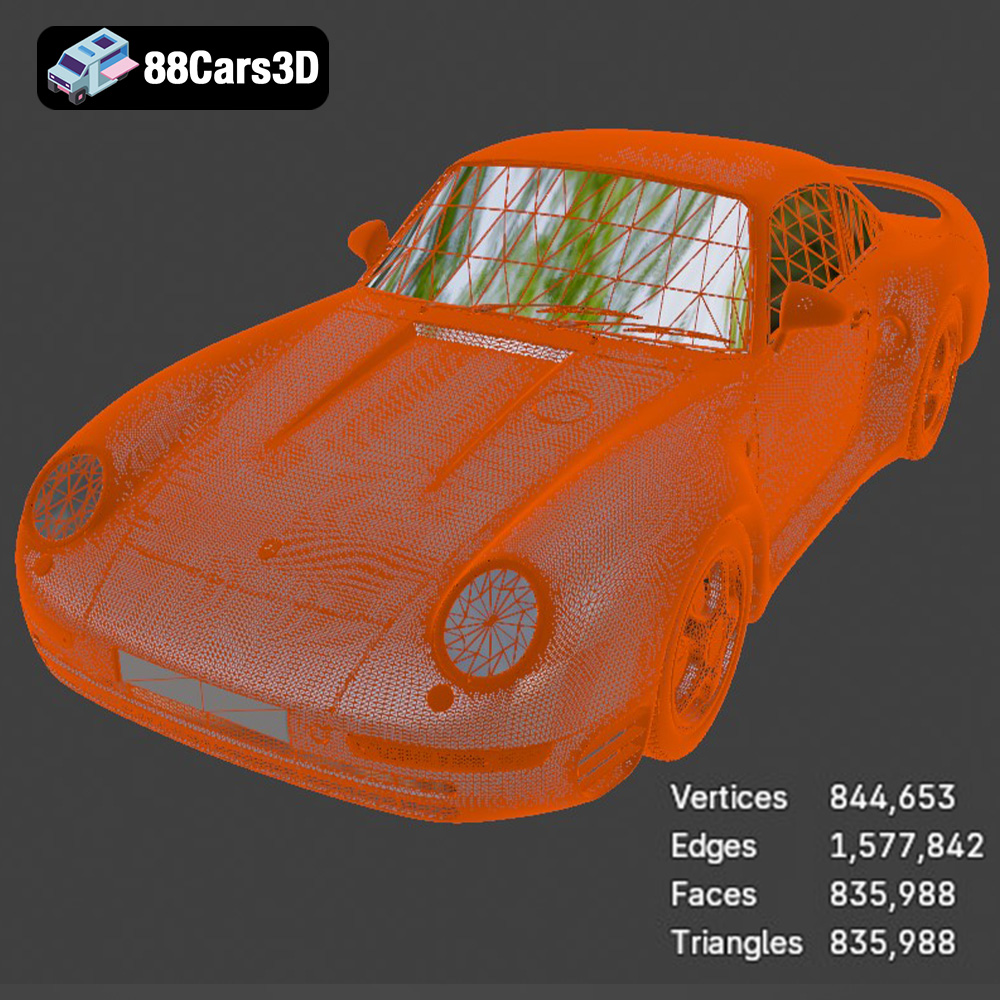
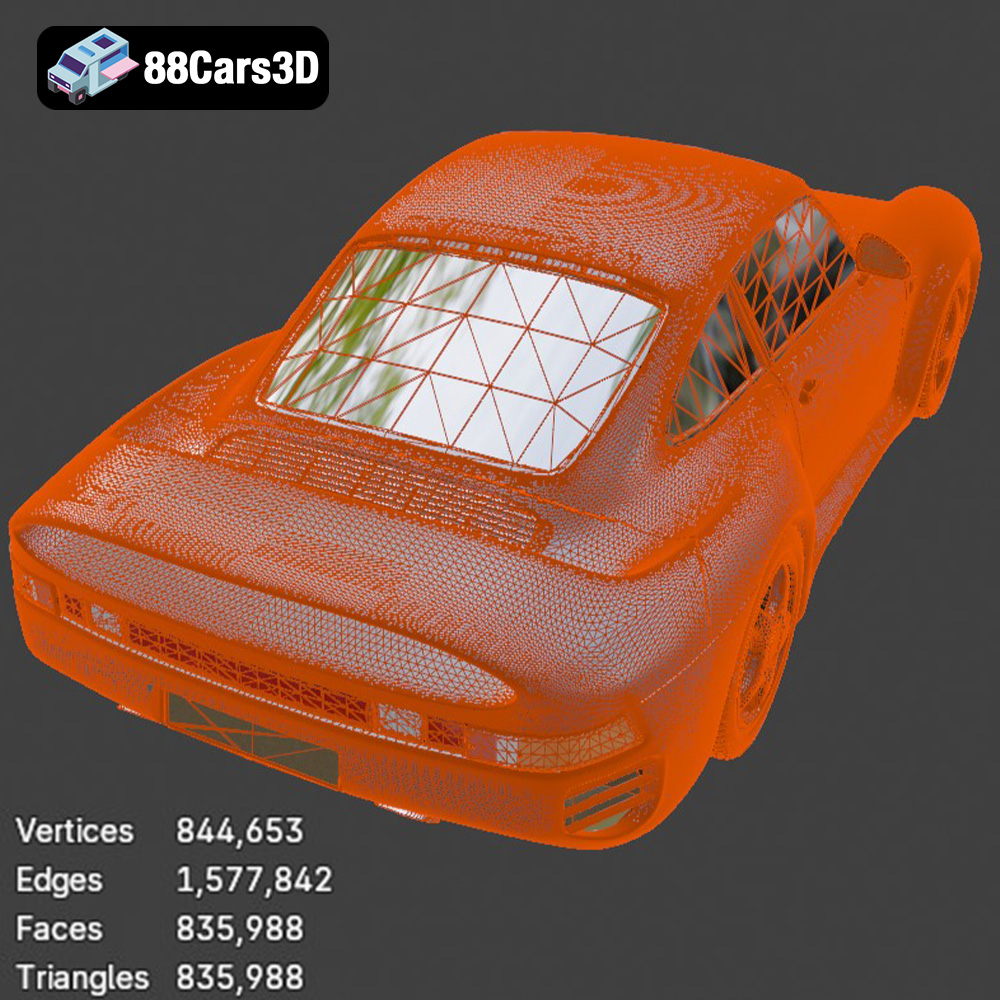
The allure of classic cars in modern media is undeniable. From period-accurate films to nostalgic racing games, these vehicles offer a tangible connection to automotive history. However, simply having a 3D model isn’t enough; it must be technically sound and visually stunning. This particular Porsche 959 1986 3D Model, with its impressive 835,988 triangles, strikes a fine balance, offering maximum visual fidelity for close-up renders while remaining optimized for real-time applications.
This level of detail means artists can zoom in on the iconic hollow-spoke magnesium alloy wheels, examine the intricate independent suspension, or showcase the detailed twin-turbo flat-six engine block with confidence. For automotive rendering professionals, this translates to compelling visuals that resonate with enthusiasts and clients alike, effectively bridging the gap between historical significance and cutting-edge digital representation.
The world of 3D modeling is rich with a variety of file formats, each designed for specific purposes and workflows. Understanding these formats is crucial for any professional working with 3D car models, as the choice of format can significantly impact compatibility, performance, and the availability of crucial data within your project. The Porsche 959 1986 3D Model from 88cars3d.com is provided in a comprehensive suite of formats, ensuring maximum flexibility for diverse applications.
The .blend format is native to Blender, the popular open-source 3D creation suite. When you download a .blend file, you’re receiving a complete Blender scene, often including not just the mesh data but also materials, textures, lighting setups, cameras, and even animation data. This makes it ideal for users who primarily work in Blender, offering full editability and the ability to dissect and modify every aspect of the model within its native environment. For the Porsche 959, this means access to the original project file, allowing for deep customization and understanding of its construction.
The .fbx (Filmbox) format is an industry-standard proprietary file format developed by Autodesk, known for its robust support for 3D models, animation, and scene data. It’s exceptionally versatile and is the go-to format for transferring assets between different 3D software packages and, critically, into game engines like Unreal Engine and Unity. FBX files can efficiently store mesh geometry, materials (including PBR definitions), textures, skeletal animations, and blend shapes. For game developers and real-time visualization specialists, the .fbx version of the Porsche 959 1986 3D Model is indispensable for a smooth import into their real-time pipelines.
The .obj (Wavefront OBJ) format is one of the most widely adopted and universal 3D file formats. It’s a simple, text-based format that primarily stores mesh geometry, including vertices, normals, UV coordinates, and faces. While it doesn’t typically store advanced features like animation or complex material definitions (these are usually handled by an accompanying .mtl file for basic materials), its strength lies in its widespread compatibility. Almost every 3D software can import and export .obj files, making it an excellent choice for cross-software compatibility or when you only need the raw mesh data for static models or further processing.
The .glb (GL Transmission Format Binary) is a binary version of the glTF (GL Transmission Format) specification, specifically optimized for efficient transmission and loading of 3D scenes and models. What makes .glb stand out is its “all-in-one” nature; it packages geometry, materials, textures, and animation into a single, compact file. This makes it perfectly suited for web-based 3D applications, augmented reality (AR), virtual reality (VR), and mobile experiences where file size and quick loading times are paramount. The .glb version of the Porsche 959 is ideal for virtual showrooms or interactive web configurators.
The .stl (Stereolithography) format is the de facto standard for 3D printing. It represents a 3D model as a series of connected triangles, essentially describing the surface geometry without any color, texture, or material information. When preparing the Porsche 959 1986 3D Model for physical fabrication, the .stl file is the one you’ll use. It’s crucial for hobbyists and professionals looking to create physical scale models of this iconic car, with the product description even providing recommended print settings.
The .ply (Polygon File Format) is another widely used format for storing 3D data, particularly precise mesh data often derived from 3D scanning or scientific applications. It supports various properties like color, transparency, normals, texture coordinates, and even confidence values for scan data. While less common for everyday artistic workflows than FBX or OBJ, it’s valuable for applications requiring high precision or for integration into CAD software or analytical tools where detailed surface information is critical.
While “.unreal” isn’t a single file format in the traditional sense, it signifies that the asset is specifically prepared or delivered in a manner that makes it “engine-ready” for Unreal Engine. This often implies that the included .fbx file has been rigorously tested for clean import, proper scaling, correct material assignments (PBR-ready), and optimized mesh for real-time performance. It might also refer to a specific Unreal Engine project file or asset pack structure. For the Porsche 959, an “Unreal-ready” designation ensures that developers can drop the model into their projects with minimal setup, taking advantage of its optimized polycount and real-world scale for immediate integration.
Similar to .blend for Blender, the .max format is the native file type for Autodesk 3ds Max. This format captures the entire 3ds Max scene, including the 3D model, its materials, textures, lighting, cameras, animation, modifiers, and any rigging. For professionals working within the 3ds Max ecosystem, the .max file provides full access to the original project, enabling complete customization, modification, and integration into complex architectural visualization or cinematic rendering pipelines.
The versatility of the Porsche 959 1986 3D Model lies not just in its stunning detail, but also in its adaptability across a multitude of professional 3D workflows. From the demanding environments of game development to the high-stakes world of automotive rendering, this asset proves its value.
In the realm of game development, performance is paramount. Every polygon counts, especially in expansive open-world games or fast-paced racing titles. The Porsche 959 1986 3D Model is described as “Game-Ready & Optimized,” boasting 835,988 triangles. This polycount strikes an excellent balance, offering a high degree of visual realism without overly taxing modern game engines like Unreal Engine or Unity. The inclusion of separate wheels, suspension, and steering components, coupled with proper pivot setup, means developers can easily rig and animate the vehicle for realistic driving physics and in-game interactions.
A typical workflow involves importing the .fbx file into Unreal Engine. Developers would then set up PBR (Physically Based Rendering) materials using the provided textures, ensuring the car reacts realistically to light. Collision meshes are often generated or custom-built, and the separate animated parts (wheels, steering) are connected to the vehicle’s physics system. Imagine this Porsche 959 tearing through a virtual track, its detailed engine compartment visible during a pit stop, or its iconic frame gleaming under the virtual sun in a high-fidelity racing simulator. The optimized geometry ensures smooth framerates even with multiple instances of the vehicle.
For marketing campaigns, virtual showrooms, or high-end architectural visualizations, photorealistic rendering is the goal. The Porsche 959 1986 3D Model’s meticulous detail, from the authentic leather-trimmed sport seats to the classic Porsche 5-dial instrument cluster, makes it an ideal candidate for stunning cinematic shots and static renders. The ability to utilize the .max or .blend files allows full control over materials, lighting, and camera angles within powerful rendering engines like V-Ray, Corona, or Cycles.
Artists can import the .max or .blend file, set up studio-quality lighting, and craft intricate scene environments. Imagine a luxurious virtual showroom featuring the Porsche 959, where reflections dance across its glossy paintwork and the intricate details of its interior are highlighted with subtle ambient occlusion. The model’s real-world scale accuracy is critical here, ensuring it integrates seamlessly into existing scenes, be it parked in front of a modern architectural marvel or showcased against a dramatic, moody backdrop for an advertisement. The “maximum visual fidelity for close-up renders” ensures every pixel contributes to a believable and captivating image.
The true value of a premium 3D asset lies not just in its initial appearance, but in the depth of its detail and the flexibility it offers for adaptation. The Porsche 959 1986 3D Model sets a high standard in both areas, making it a powerful tool for diverse projects.
The product description highlights an array of meticulously modeled features that underscore the asset’s high fidelity. On the exterior, “Accurate Porsche 959 frame geometry and aerodynamic widebody proportions” are foundational, ensuring the vehicle’s unmistakable silhouette is faithfully represented. This extends to the “detailed engine compartment featuring the iconic twin-turbo flat-six block” and the “accurate dual exhaust system configuration,” details that elevate the model beyond a simple shell. Crucially, the “separate wheels, suspension, and steering components for animation” provide the necessary granular control for dynamic simulations and interactive experiences.
The interior is equally impressive, with “authentic leather-trimmed sport seat models,” an “accurate four-spoke steering wheel design,” and a “detailed classic Porsche 5-dial instrument cluster.” These elements are vital for first-person perspectives in games or for showcasing the car’s luxurious cockpit in high-resolution renders. The “optimized geometry for first-person POV in gaming” specifically addresses the need for detailed yet efficient interior modeling, a testament to the model’s thoughtful design.
No two projects are exactly alike, and the ability to customize a 3D model is essential for fitting it into unique creative visions. The Porsche 959 1986 3D Model offers significant customization options:
This level of adaptability ensures that the Porsche 959 1986 3D Model isn’t just a static representation but a dynamic asset that can be tailored to meet the exacting demands of any professional project, making it a truly valuable addition to any artist’s library, especially those found on curated marketplaces like 88cars3d.com.
Beyond traditional rendering and game development, the detailed Porsche 959 1986 3D Model opens doors to innovative and immersive digital experiences, pushing the boundaries of interaction and physical presence.
Augmented Reality (AR) and Virtual Reality (VR) represent the next frontier of digital interaction, offering users unparalleled immersion. For automotive applications, AR/VR is transforming everything from virtual showrooms to interactive configurators. The Porsche 959 1986 3D Model is “Perfect for immersive virtual showrooms, configurators, and mobile AR experiences,” primarily due to its optimized polycount and the inclusion of the .glb file format.
Imagine stepping into a virtual showroom where the Porsche 959 sits, gleaming in exquisite detail. Users can walk around it, open doors, examine the interior from a first-person perspective, and even change its color or wheel options in real-time. The .glb format, with its compact size and integrated textures, is ideal for delivering this model efficiently to AR/VR headsets or web-based viewers. Its “game-ready” optimization ensures smooth performance even on less powerful mobile AR devices, bringing this classic supercar directly into a user’s physical space through their smartphone or tablet.
The ability to transition a digital asset into a physical object via 3D printing is a fascinating aspect of modern 3D workflows. For enthusiasts and collectors, having a meticulously accurate physical model of the Porsche 959 is a tangible connection to the legend. The Porsche 959 1986 3D Model is “Convertible to .stl format for display-scale hobbyists,” making this translation seamless.
The provided “3D Print Settings” offer a clear guide for those looking to bring the digital model to life. Recommended scales (1:12 / 1:18 / 1:24) cater to various display preferences, while detailed advice on layer height (0.04–0.12 mm) and material (resin printing recommended for fine details) ensures optimal print quality. Requirements for supports on intricate parts like the exhaust and mirrors, along with suggested print orientation for structural integrity, guide users through the often-complex printing process. Finally, post-processing steps like sanding, priming, and applying authentic factory colors with metallic finishes ensure the physical model rivals its digital counterpart in visual appeal, creating stunning display pieces for any enthusiast.
In the competitive world of 3D production, time is money, and quality is reputation. Relying on premium assets, such as the Porsche 959 1986 3D Model from 88cars3d.com, is not merely a convenience; it’s a strategic decision that impacts efficiency, professionalism, and ultimately, project success.
Modeling a high-fidelity car from scratch is an incredibly time-consuming and labor-intensive process, often requiring hundreds of hours of work for a single vehicle. This is time that could be spent on other critical aspects of a project, such as environment design, animation, or material refinement. By investing in a pre-built, high-quality 3D car model, artists and studios can dramatically reduce production timelines, allowing them to take on more projects and meet tighter deadlines without compromising on detail.
Furthermore, a professionally crafted asset guarantees a level of accuracy and technical cleanliness that might be difficult to achieve in-house, especially under pressure. Models from reputable sources like 88cars3d.com are typically optimized for various uses, come with clean topology, proper UV mapping, and a range of compatible file formats, providing a solid foundation that minimizes future headaches and rework.
The visual quality of a project often dictates its perceived value. Using a stunningly detailed asset like the Porsche 959 1986 3D Model immediately elevates the aesthetic of any rendering, game scene, or interactive experience. This impact is critical for client presentations, marketing materials, and attracting target audiences.
Whether you’re crafting an evocative automotive rendering for a luxury brand, developing a cutting-edge racing game that demands historical accuracy, or creating an immersive AR experience, the quality of your 3D car models will be a defining factor. The Porsche 959 model, with its impressive detail, game-ready optimization, and extensive file format support, serves as a prime example of how premium assets can transform good projects into exceptional ones, allowing creators to focus on narrative and innovation rather than the tedious specifics of asset creation.
The Porsche 959 remains a beacon of automotive innovation, and its digital counterpart, the Porsche 959 1986 3D Model, carries that legacy into the modern era of 3D content creation. From its meticulously crafted exterior and interior details to its optimized geometry and extensive file format support, this model is a testament to the power of high-fidelity 3D assets.
Whether you are a game developer building the next blockbuster racing title, an automotive renderer creating breathtaking visualizations, an AR/VR innovator crafting immersive experiences, or a hobbyist bringing digital designs to life through 3D printing, this 3D car model offers the precision, flexibility, and quality required to succeed. By understanding the nuances of different 3D file formats and leveraging the detailed features of models like this Porsche 959, professionals can streamline their workflows and deliver truly outstanding results. Explore this and other premium 3D car models to elevate your projects to legendary status at 88cars3d.com.
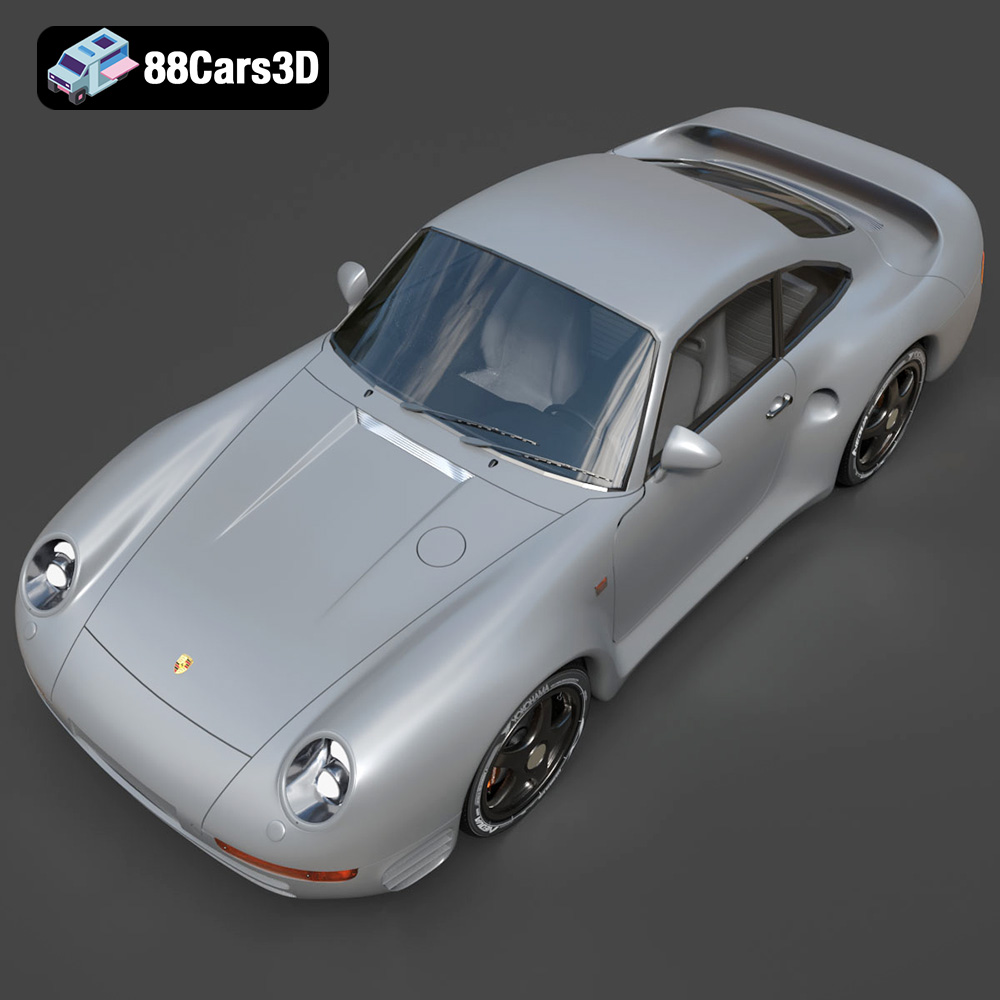
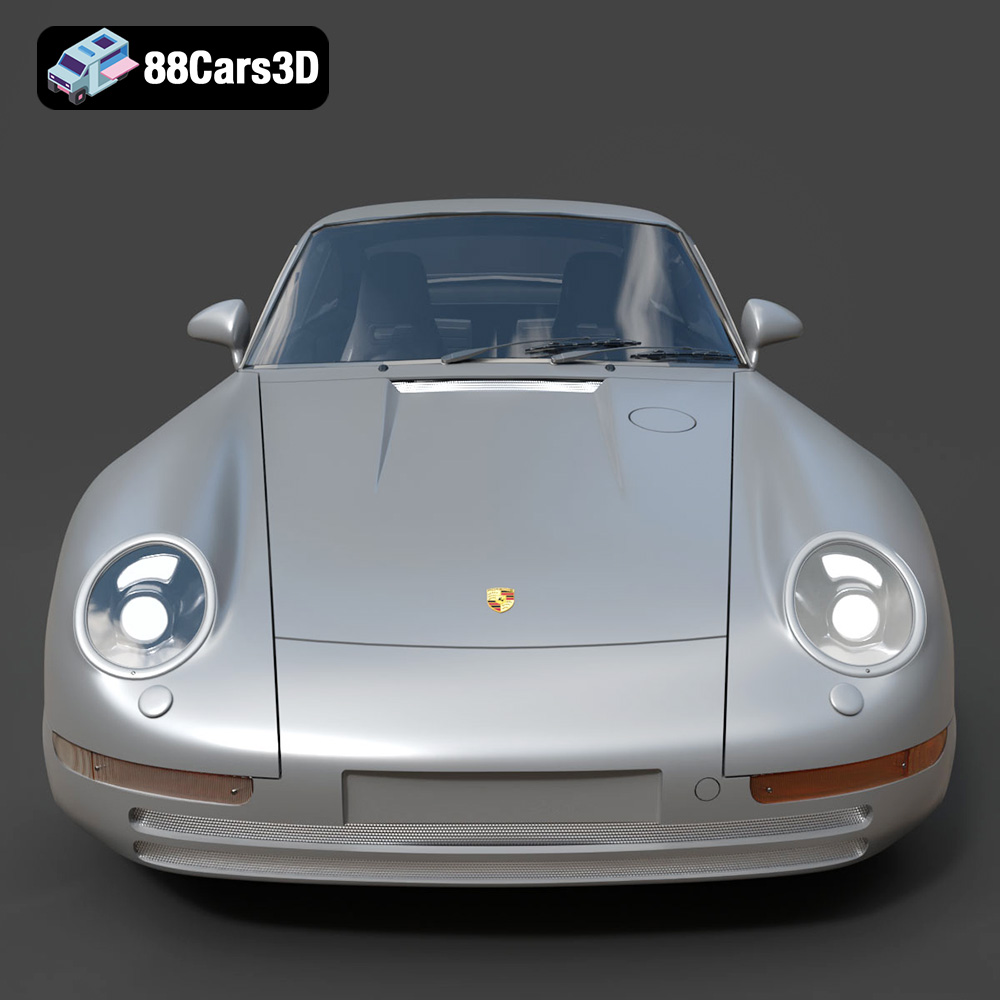
The Porsche 959 is a legendary supercar, originally developed as a Group B rally car and later becoming one of the most technologically advanced road cars of the 1980s. Known for its iconic aerodynamic styling, integrated rear spoiler, twin-turbo flat-six engine, and advanced all-wheel-drive system, it remains a masterpiece of automotive engineering. This highly detailed 3D model boasts an impressive 835,988 triangles, ensuring maximum visual fidelity for close-up renders and high-end applications. Meticulously optimized for realism, it serves as a stunning asset for game development in modern engines, AR/VR experiences, cinematic animation, and high-resolution automotive visualization.
$57.00
.blend
.fbx
.glb
.max
.obj
.ply
.porsche
.rendering
.sports car
.stl
.unreal
959
car-3d-model
classic-car
game asset
game-ready
low-poly
optimized
VR/AR