Get 20% OFF All Premium 3D & STL Models!

In the exhilarating world where automotive passion meets digital artistry, the demand for meticulously crafted 3D car models has never been higher. From breathtaking cinematic visualizations to immersive real-time gaming experiences, the foundation of any compelling project lies in the quality and fidelity of its assets. Professionals across industries – game developers, automotive designers, VFX artists, and marketing strategists – constantly seek models that not only capture the essence of iconic vehicles but also offer the technical flexibility required for demanding production pipelines.
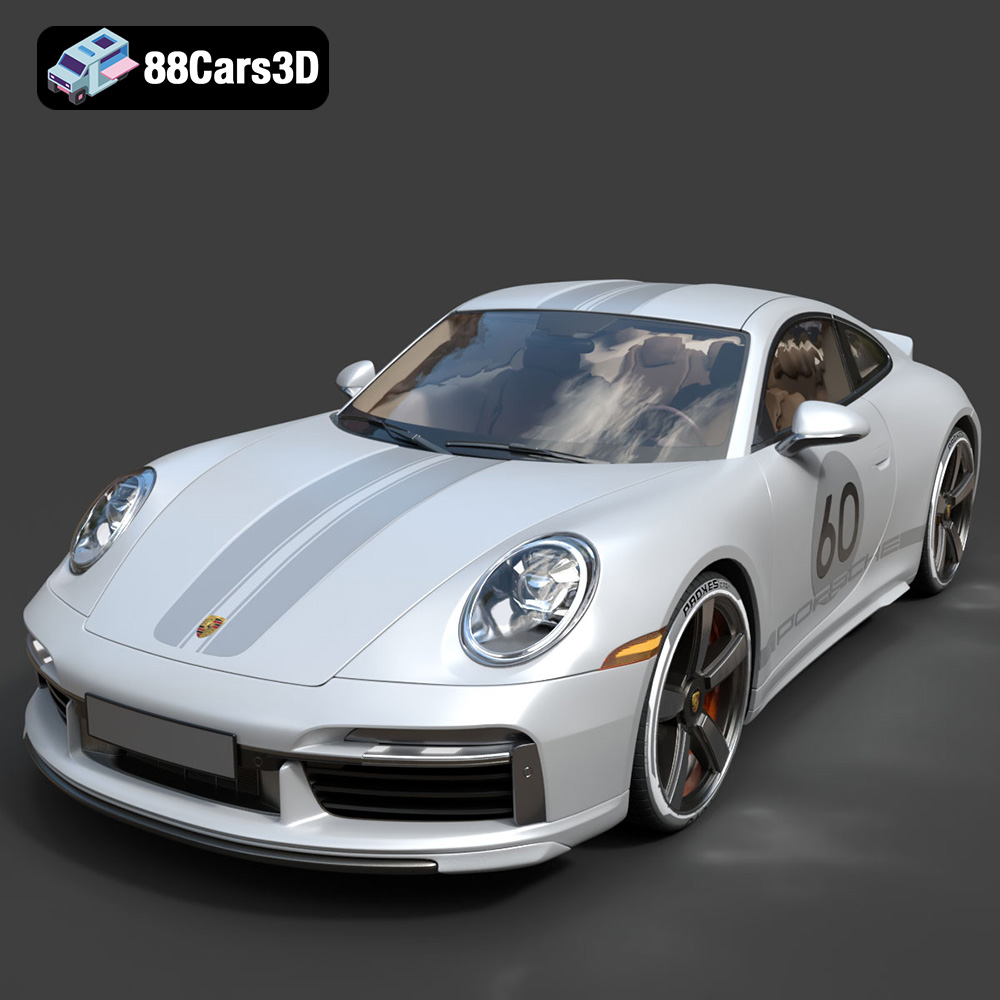
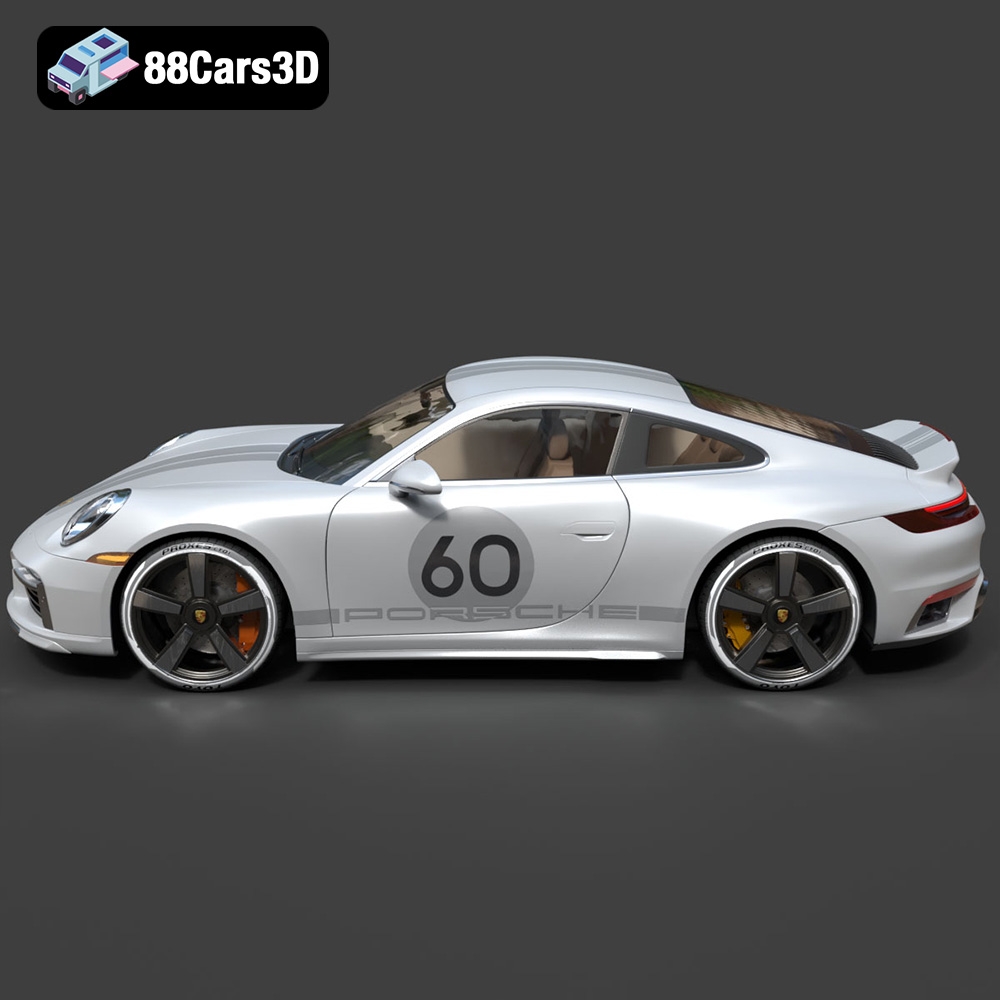
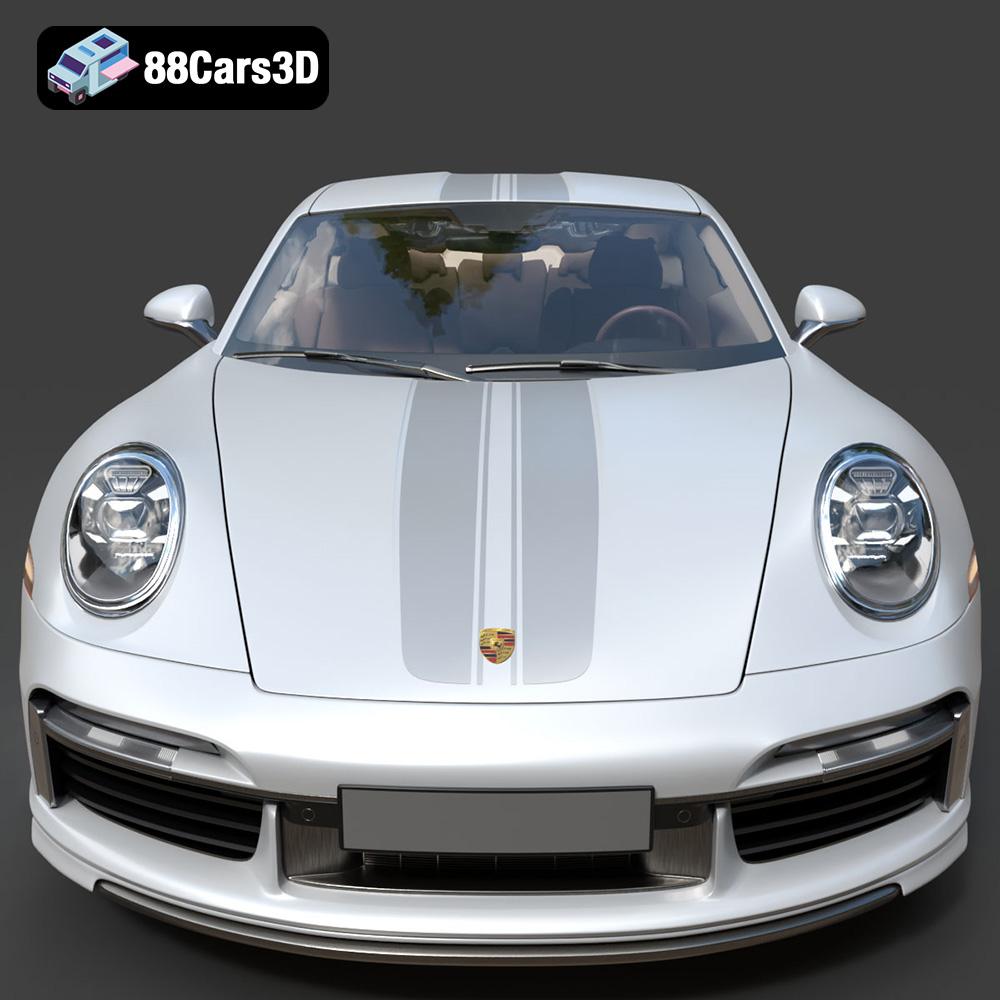
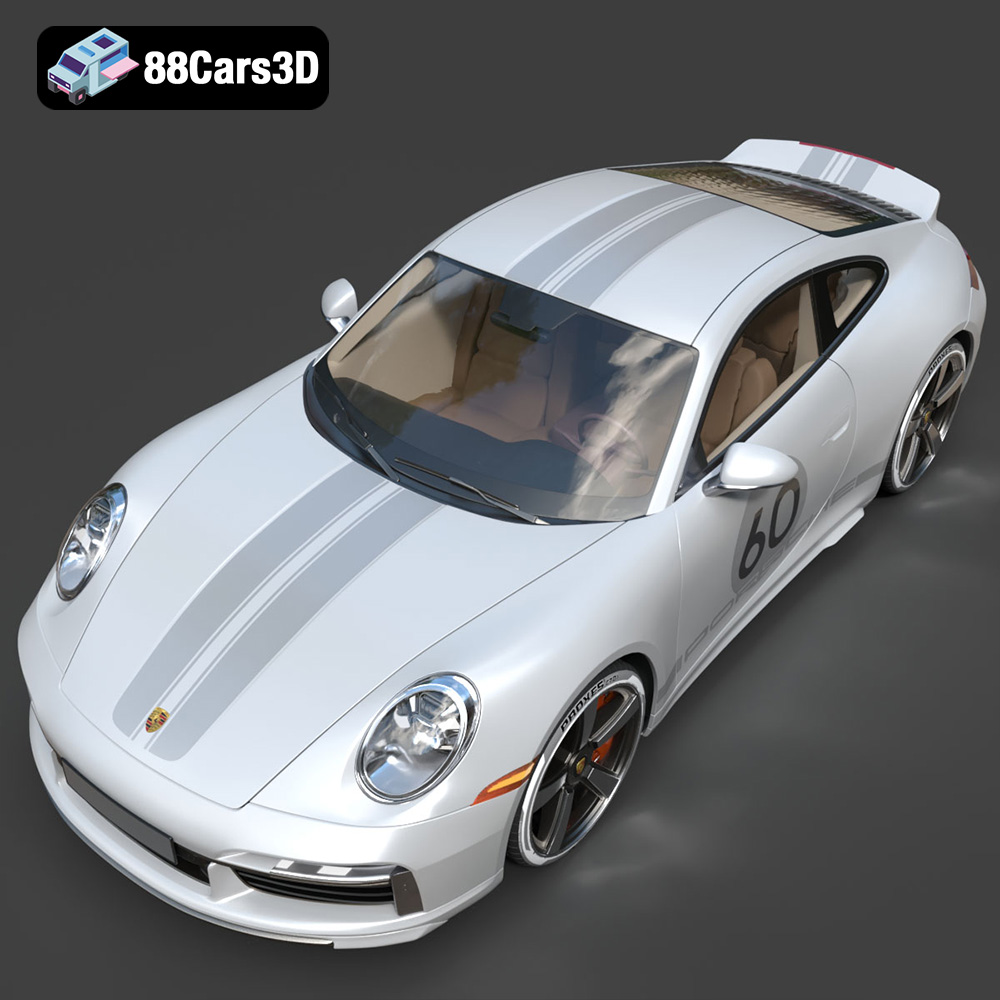
Today, we delve into a prime example of such digital excellence: the Porsche 911 Sport Classic 3D model. This exquisite asset is more than just a collection of polygons; it’s a testament to precision and a gateway to unparalleled creative possibilities. It encapsulates the spirit of the modern homage to classic Porsche design, bringing its distinctive ducktail spoiler, Fuchs-style wheels, and powerful stance to life in the digital realm. Whether you’re aiming for photorealistic renders, seamless integration into a next-gen game, or a detailed AR/VR experience, a high-quality 3D car model like this provides the robust foundation you need to elevate your projects to a professional standard.
The versatility of a 3D model often hinges on the range and quality of its included file formats. Each format serves specific purposes, catering to different software environments, rendering pipelines, and end-use applications. When acquiring a premium 3D car model, understanding these formats is crucial for seamless integration into your workflow and for maximizing the model’s potential. The Porsche 911 Sport Classic 3D model, for instance, comes equipped with an impressive array of formats, ensuring broad compatibility and professional utility.
The .blend file format is Blender’s native project file. It provides a fully editable Blender scene, complete with materials, textures, lighting setups, and even animation data. For artists who primarily use Blender for modeling, sculpting, animation, and rendering, this is the most valuable format. It allows for direct manipulation of the mesh, modification of UVs, adjustment of shader nodes, and full control over the scene’s composition without any conversion artifacts. For the Porsche 911 Sport Classic, the .blend file would offer the most flexibility for those working within the Blender ecosystem.
As Autodesk’s proprietary format, .fbx (Filmbox) has become an industry standard for exchanging 3D data between various software applications. It’s exceptionally robust, capable of storing not just geometry and materials but also animations, rigs, cameras, and lights. For real-time pipelines like Unreal Engine and Unity, .fbx is often the go-to format due to its efficiency in transferring complex scenes and its widespread support. When importing the Porsche 911 Sport Classic into a game engine, the .fbx file ensures that the geometry, materials (with appropriate PBR texture maps), and pivot points for components like wheels and suspension are correctly recognized.
The .obj (Wavefront Object) format is a widely supported, universal 3D geometry definition file. It’s renowned for its simplicity and cross-software compatibility, making it an excellent fallback or primary option when specific software integrations are challenging. While it primarily stores mesh data (vertices, normals, UVs, faces) and references external material libraries (.mtl files), it doesn’t typically carry animation or rigging data. For basic imports into almost any 3D application for static renders or further modeling work, the .obj version of the Porsche 911 Sport Classic is a reliable choice.
.glb (GL Transmission Format Binary) is a relatively newer format optimized for efficient transmission and loading of 3D scenes and models in AR, VR, and web-based applications. It encapsulates everything into a single file – geometry, textures, animations – making it incredibly convenient for deploying interactive 3D content in browser-based viewers, mobile AR experiences, or virtual showrooms. Its compact nature and real-time focus make the .glb version of the Porsche 911 Sport Classic ideal for developers creating immersive digital experiences on platforms like Sketchfab or within ARKit/ARCore environments.
The .stl (Stereolithography) format is the de facto standard for 3D printing. It describes only the surface geometry of a 3D object using a collection of triangular facets, without any color, texture, or material information. For hobbyists and professionals looking to physically manifest the Porsche 911 Sport Classic, the .stl file is essential. The model’s specific details, such as its body panels, wheels, and interior, are translated into a printable mesh, allowing for scale models to be created with precision, as outlined in the product’s 3D print settings.
.ply (Polygon File Format or Stanford Triangle Format) is a file format for storing 3D data, often used in academia and for scanned data. It can store various properties beyond just geometry, such as color, transparency, and range data, making it useful for applications requiring high-fidelity mesh information for CAD, reverse engineering, or scientific analysis. While less common for direct rendering, its inclusion offers options for highly technical workflows or for conversion to other CAD-specific formats for engineering review of the Porsche 911 Sport Classic’s structure.
The .unreal format, or more accurately, an Unreal Engine project asset pack, typically refers to assets specifically prepared and optimized for direct import or integration into an Unreal Engine project. This often means pre-configured materials using Unreal’s PBR workflow, optimized collision meshes, LODs (Levels of Detail), and blueprint setups for interactivity. Having the Porsche 911 Sport Classic available in an Unreal-ready format significantly accelerates development for game studios and real-time visualization specialists, minimizing setup time and ensuring optimal performance within the engine.
Finally, the .max format is the native file type for Autodesk 3ds Max, a powerful 3D modeling, animation, rendering, and compositing software. Like .blend, it contains the entire scene data, including geometry, materials, textures, lighting, cameras, and animation keyframes. For professionals working within the 3ds Max environment, this file offers the highest degree of flexibility and control over the Porsche 911 Sport Classic model, allowing for advanced rendering setups with V-Ray or Corona, complex animations, and detailed scene compositions for advertising or product visualization.
Creating a truly exceptional 3D car model is an intricate process that demands both artistic vision and rigorous technical execution. It’s about more than just replicating shapes; it’s about capturing the soul of a vehicle, ensuring every curve, every shadow, and every material reflects its real-world counterpart. The Porsche 911 Sport Classic 3D model exemplifies this philosophy, boasting an extraordinary level of detail that caters to the most discerning professionals.
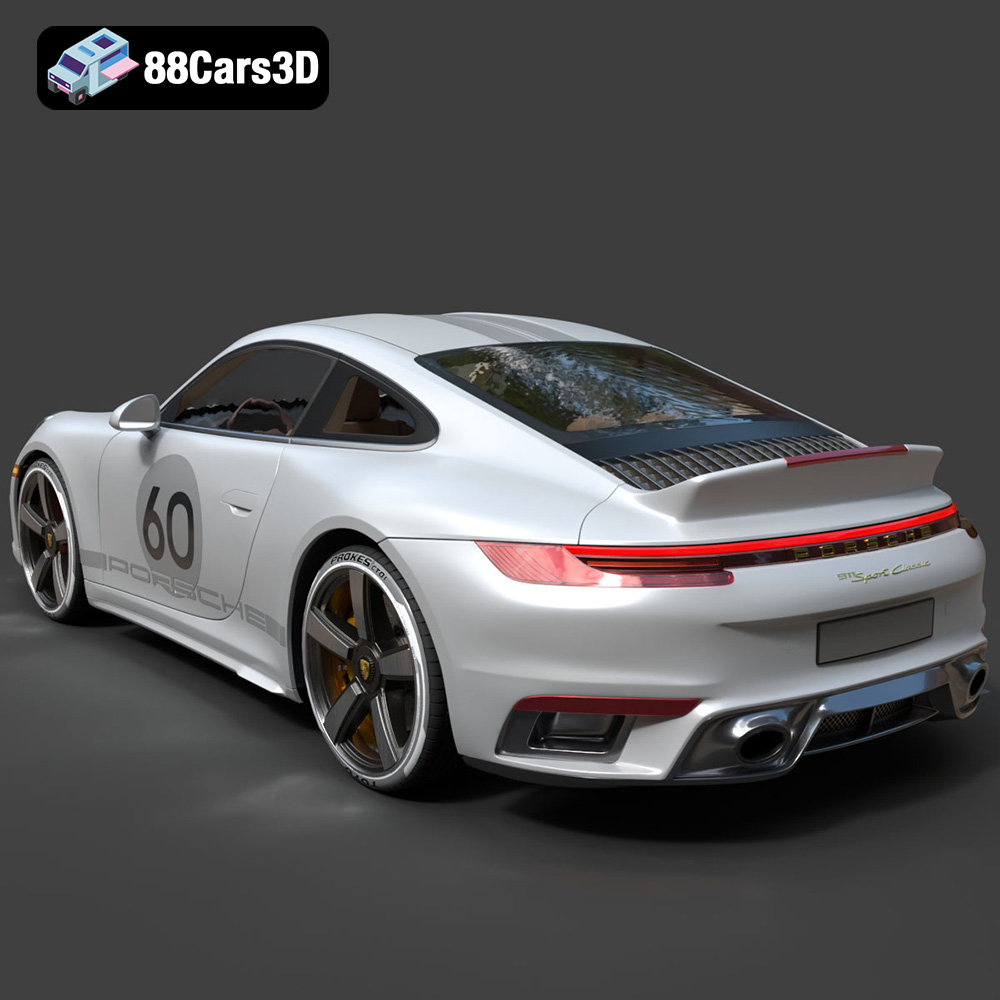
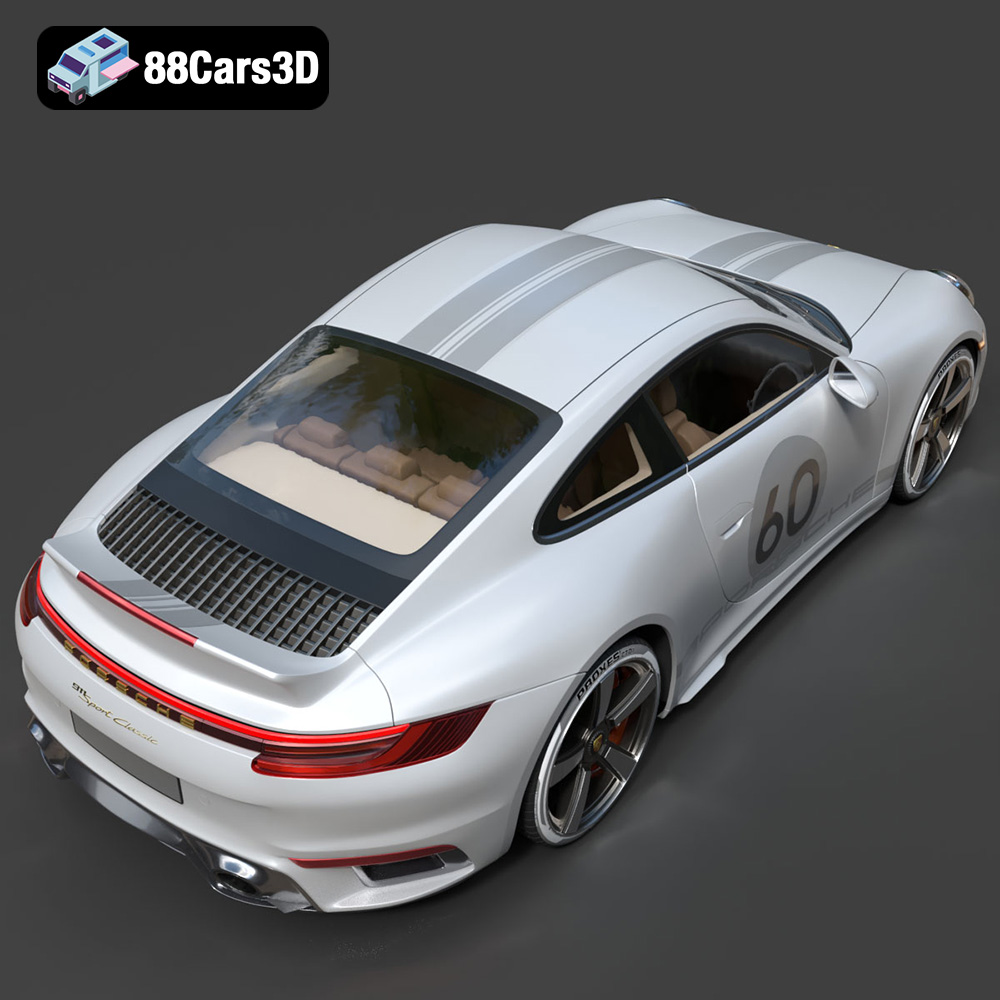
The exterior of any car model is its immediate identity. For the Porsche 911 Sport Classic, its distinctive features are critical. The model accurately reproduces the iconic wide-body proportions, the legendary ducktail spoiler, and the double-bubble roof – elements that define its classic yet modern aesthetic. The attention to detail extends to the twin-turbo flat-six engine block representation, visible through the rear, and the striking dual exhaust system. Furthermore, the LED matrix headlights and retro-inspired taillight strip are faithfully recreated, along with the classic Fuchs-style alloy wheels and low-profile performance tires. Crucially, components like the wheels, suspension, and steering are separate, offering animators and rigging artists unparalleled control for realistic motion studies or interactive configurators.
A truly complete 3D car model doesn’t stop at the exterior. The interior is where the user, whether in a game or a VR experience, spends their time. The Porsche 911 Sport Classic model brings the cockpit to life with heritage-inspired Pepita (houndstooth) seat inserts and premium leather textures. Every detail, from the multi-function GT sports steering wheel to the high-resolution digital and analog instrument cluster with its classic green accents, has been meticulously modeled. The accurate center console controls, pedals, and manual shifter contribute to an immersive environment. This level of interior fidelity is also strategically optimized for first-person POV in gaming, ensuring a seamless and engaging user experience.
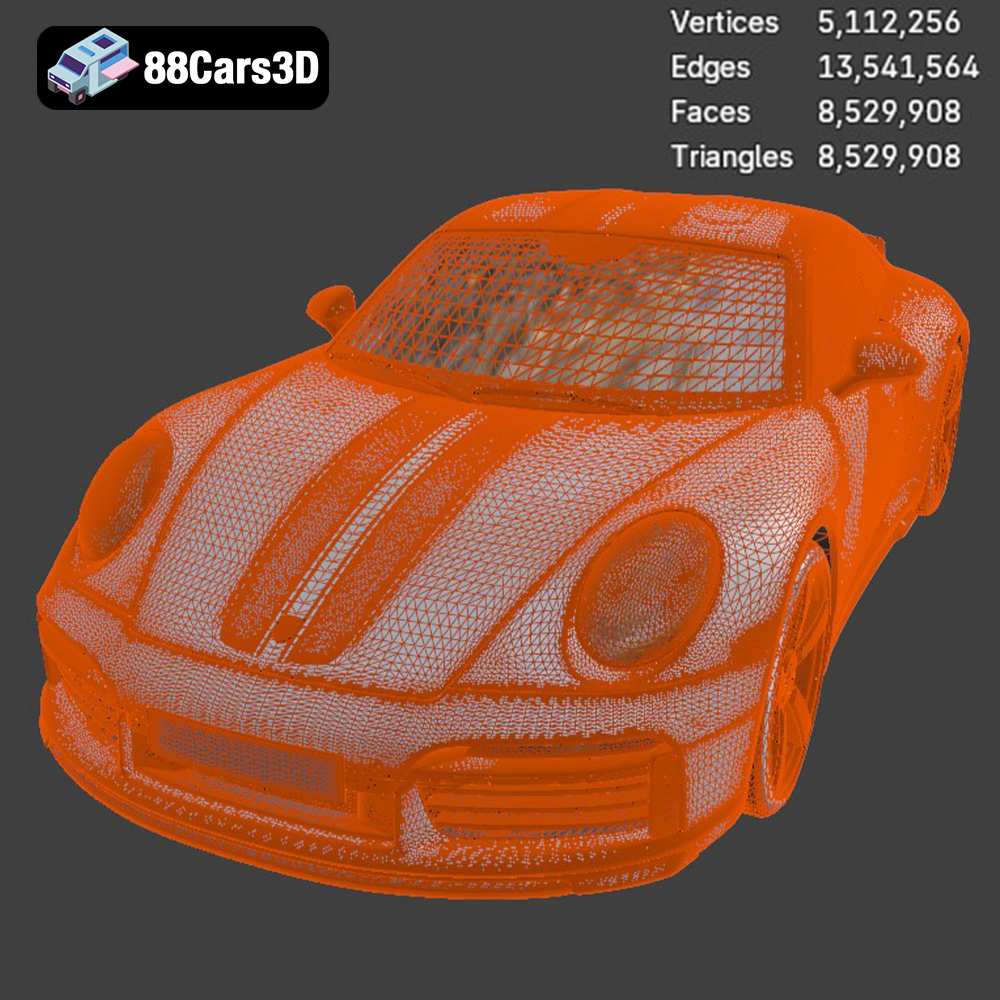
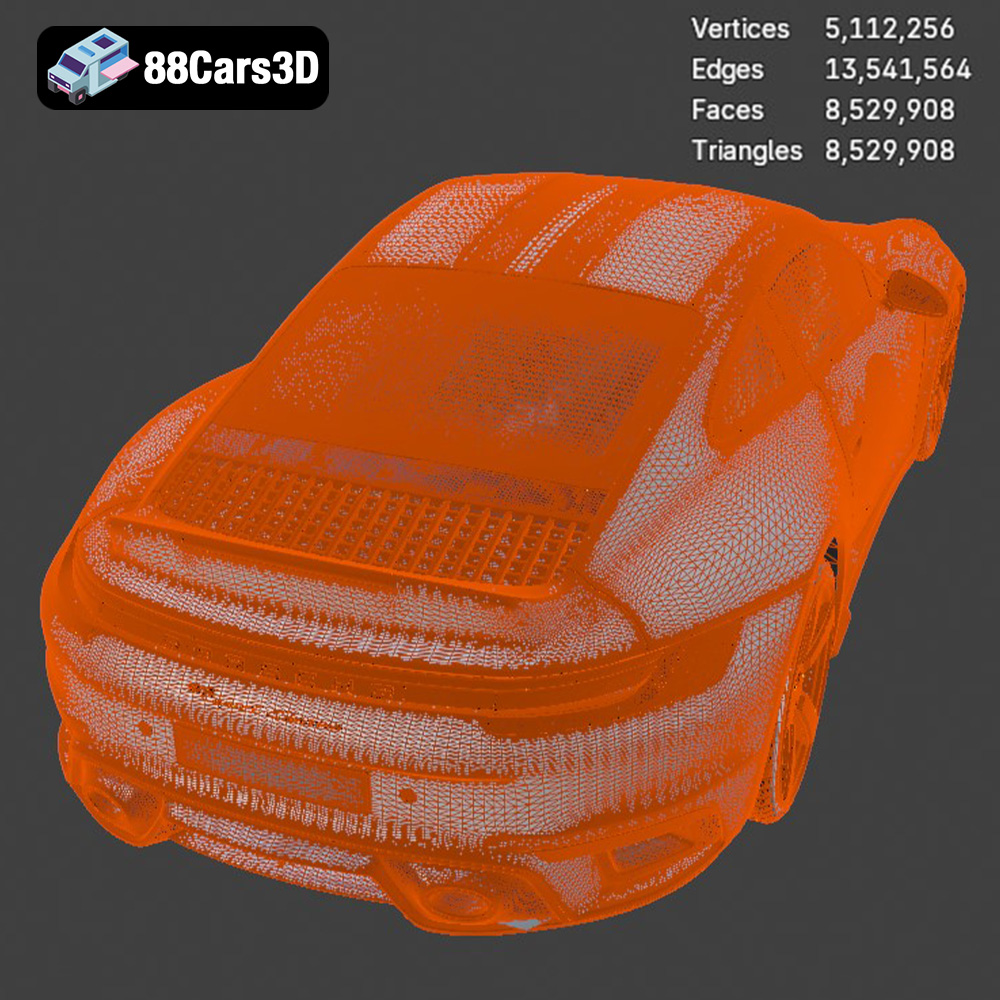
Beyond visual appeal, the technical underpinnings of a 3D model dictate its performance and flexibility. With a topology of 8,529,908 triangles, the Porsche 911 Sport Classic 3D model strikes an impressive balance. While this is a high polygon count, it is structured to deliver photorealistic visual fidelity for cinematic renders and close-up shots. Yet, it’s also described as “Game-Ready & Optimized,” meaning its geometry is managed to perform efficiently within real-time engines like Unreal and Unity. This careful balance ensures that visual realism isn’t sacrificed for performance, a critical consideration for modern game assets. Furthermore, the model is built to real-world scale accuracy and features a proper pivot setup for steering, wheel rotation, and suspension travel, essential for accurate animation and physics simulation.
The true value of a high-quality 3D asset like the Porsche 911 Sport Classic lies in its ability to seamlessly integrate into diverse professional pipelines. Its robust design and multiple file formats ensure it’s not just a beautiful static model, but a dynamic tool for a wide range of applications, from advertising to virtual prototyping.
For high-end automotive rendering, accuracy and detail are paramount. Whether you’re using 3ds Max with V-Ray or Corona Renderer, or Blender with Cycles or Eevee, the Porsche 911 Sport Classic 3D model provides an exceptional foundation. Its high polygon count allows for stunning close-ups without loss of detail, while its clean topology ensures smooth deformations and realistic reflections. Artists can leverage the .max or .blend files to explore studio lighting setups, create dynamic camera animations, and experiment with advanced material shaders to achieve photorealistic results. Imagine an advertising campaign showcasing the elegant lines of the Sport Classic, rendered with breathtaking realism, perfectly conveying its blend of heritage and modern performance. Such projects demand the kind of meticulous detail that this model provides, significantly reducing the modeling phase and allowing artists to focus on lighting, texturing, and animation.
The modern gaming landscape demands vehicles that look and feel authentic. The “Game-Ready & Optimized” nature of the Porsche 911 Sport Classic 3D model makes it an ideal candidate for open-world games, racing titles, and sophisticated simulators. With its 8.5 million triangles, it strikes a perfect balance, providing visual richness without crippling real-time performance. Its inclusion of an .unreal asset pack and .fbx format ensures smooth integration into Unreal Engine or Unity. Developers can easily import the model, apply PBR materials, set up collision meshes, and utilize its properly configured pivot points for realistic steering, wheel rotation, and suspension. This means less time spent on optimization and more time on gameplay mechanics, environmental design, and user interaction. For racing simulations, the real-world scale accuracy and detailed suspension assembly are critical for believable physics and driver feedback, making it a powerful asset for any serious game studio.
Augmented Reality (AR) and Virtual Reality (VR) are transforming how we interact with products, especially in the automotive sector. The Porsche 911 Sport Classic 3D model is perfectly suited for creating immersive virtual showrooms, interactive configurators, and mobile AR experiences. Its optimized geometry and the availability of the .glb format make it ideal for efficient loading and display in these performance-sensitive environments. Customers could “walk around” the car in VR, examine its interior details, change body colors, and even “place” it in their driveway using AR – all powered by this highly detailed and versatile 3D model. This capability is invaluable for brand marketing campaigns and pre-sales visualization, offering a unique and engaging way for potential buyers to experience the vehicle before it even hits the showroom floor.
The utility of a high-quality 3D model extends far beyond digital rendering. For enthusiasts, designers, and engineers, the ability to translate a digital asset into a physical object offers a tangible connection to the design. The Porsche 911 Sport Classic 3D model is designed with 3D printing in mind, providing specific guidance for hobbyists and professionals alike.
Converting a high-detail rendering model into a successful 3D print requires careful consideration. The .stl format provided with the Porsche 911 Sport Classic model is crucial here. The recommended scales (1:12, 1:18, 1:24) cater to various display preferences, ensuring that even at smaller sizes, the intricate details of the ducktail, Fuchs wheels, and interior elements remain discernible. The product description emphasizes the importance of resin printing for fine details and suggests layer heights between 0.04–0.12 mm, highlighting the precision required. Crucially, specific instructions are given for wall thickness, infill, and the necessity of supports for delicate parts like the exhaust and mirrors. Furthermore, the recommendation to print the frame angled for structural integrity and wheels separately shows a thoughtful approach to optimizing the model for physical production.
A raw 3D print is just the beginning. The journey to a museum-quality scale model involves a meticulous post-processing phase. The product description advises sanding to smooth layer lines, applying primer for an even surface, and finally, painting with authentic factory colors, often incorporating metallic finishes to mimic the real vehicle’s paintwork. This process allows hobbyists to add their personal touch while ensuring the final physical model retains the high-fidelity aesthetic of its digital counterpart. Imagine a beautifully finished 1:12 scale Porsche 911 Sport Classic, gracing a collector’s display, its genesis traceable back to the expertly crafted 3D model from 88cars3d.com.
One of the significant advantages of investing in a premium 3D car model is the inherent flexibility it offers for customization. Artists and developers are rarely constrained to a single, static representation. The Porsche 911 Sport Classic 3D model is designed to be a versatile canvas, allowing extensive modifications to suit diverse creative visions and project requirements.
The inherent design of the Porsche 911 Sport Classic 3D model supports a wide array of material and lighting adjustments. Artists can easily change body colors to mimic factory options or apply custom finishes, experimenting with matte, gloss, or metallic sheens to evoke different moods. Imagine the car rendered under a harsh desert sun with a metallic orange finish, or gleaming under soft studio lights in its signature Sport Grey. Modifying tire textures from low-profile performance to off-road variants can instantly transform the vehicle’s context. Beyond materials, adapting the lighting for different environments – be it a bustling city street, a serene mountain pass, or a minimalist showroom – dramatically alters the visual narrative. This level of material and lighting flexibility is crucial for automotive rendering agencies producing varied marketing collateral or for game developers aiming for dynamic in-game environments.
A static image, however beautiful, only tells part of the story. For cinematic animations, interactive showrooms, or game cutscenes, the ability to animate the vehicle is paramount. The Porsche 911 Sport Classic 3D model is built with animation in mind. Its separate wheels, suspension, and steering components, coupled with proper pivot setups, mean that animators can easily rig the vehicle for realistic movement. This allows for lifelike wheel rotations, responsive steering, and accurate suspension travel over various terrains. Imagine a dynamic camera tracking the Porsche as it gracefully navigates a winding road, the suspension compressing realistically with every turn. This “animation-ready” state significantly streamlines the production process for motion graphics artists and film studios, transforming the model from a static object into a dynamic performer.
In the evolving landscape of digital creation, the demand for high-quality, technically robust 3D assets continues to grow. The Porsche 911 Sport Classic 3D model stands as a prime example of excellence in automotive digital design, offering a compelling blend of aesthetic fidelity and practical versatility. From its meticulously recreated exterior and immersive interior to its optimized topology and broad file format support, this model empowers professionals across game development, architectural visualization, AR/VR, and 3D printing to achieve their most ambitious creative goals.
Its ability to integrate seamlessly into diverse workflows, from high-fidelity cinematic rendering in 3ds Max and Blender to efficient real-time implementation in Unreal Engine, underscores its value as a truly professional-grade asset. The thoughtful inclusion of specific 3D printing guidelines further extends its utility beyond the digital screen, allowing for the creation of tangible, high-detail physical replicas.
For anyone seeking to elevate their automotive projects with a model that combines iconic design with unparalleled technical precision, the Porsche 911 Sport Classic 3D model is an invaluable investment. It exemplifies the dedication to quality found at 88cars3d.com, a marketplace renowned for offering premium 3D car models that drive innovation and inspire creativity. Explore this exceptional model and unlock the full potential of your digital automotive dreams today.
The Porsche 911 Sport Classic is a modern homage to the golden era of sports cars, combining the iconic silhouette of the 911 with retro-inspired styling cues like the legendary ducktail spoiler and distinctive Fuchs-style wheels. Powered by a potent twin-turbo flat-six engine, this masterpiece features a wide body, double-bubble roof, and striking dual exhaust system, making it an absolute standout in the automotive world. This 3D model boasts an exceptional level of detail with a topology of 8,529,908 triangles, delivering photorealistic visual fidelity for the most demanding rendering environments. Despite the high polygon count, the geometry is structured for maximum visual impact, making it ideal for high-end automotive visualization, cinematic animations, detailed close-up shots, and advanced VR showrooms. Perfect for high-end studio lighting setups, cinematic automotive animations, virtual showrooms, and brand marketing campaigns.
$90.00
.blend
.fbx
.glb
.max
.obj
.ply
.porsche
.rendering
.sports car
.stl
.unreal
car-3d-model
classic-car
game asset
game-ready
high poly
optimized
porsche-911
sport-classic
VR/AR